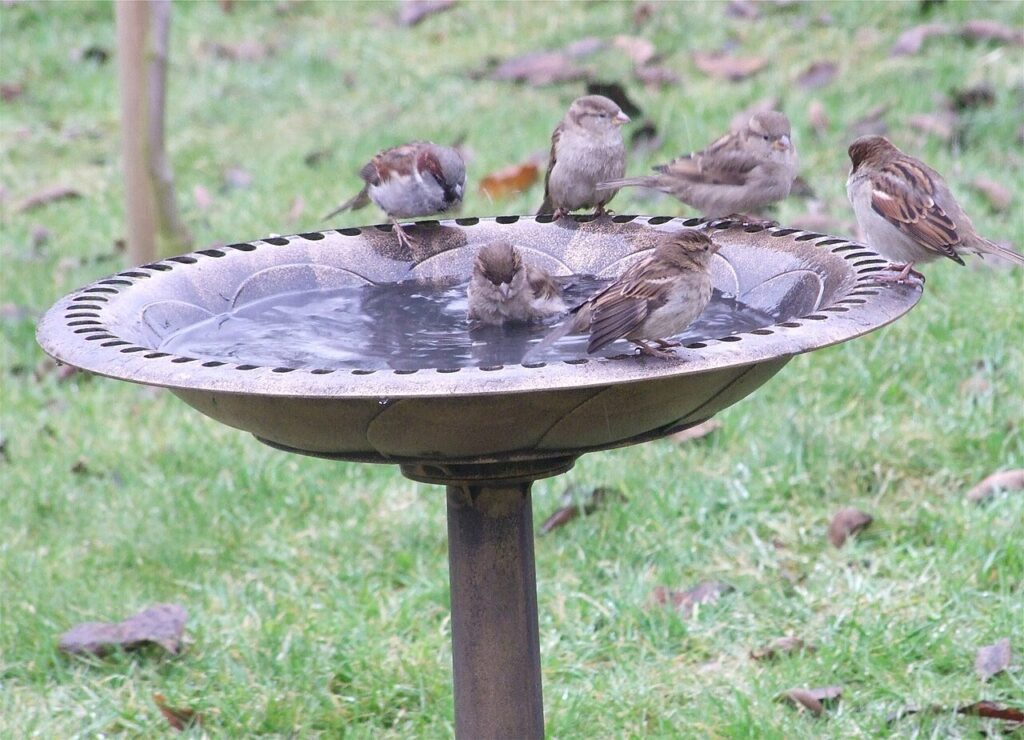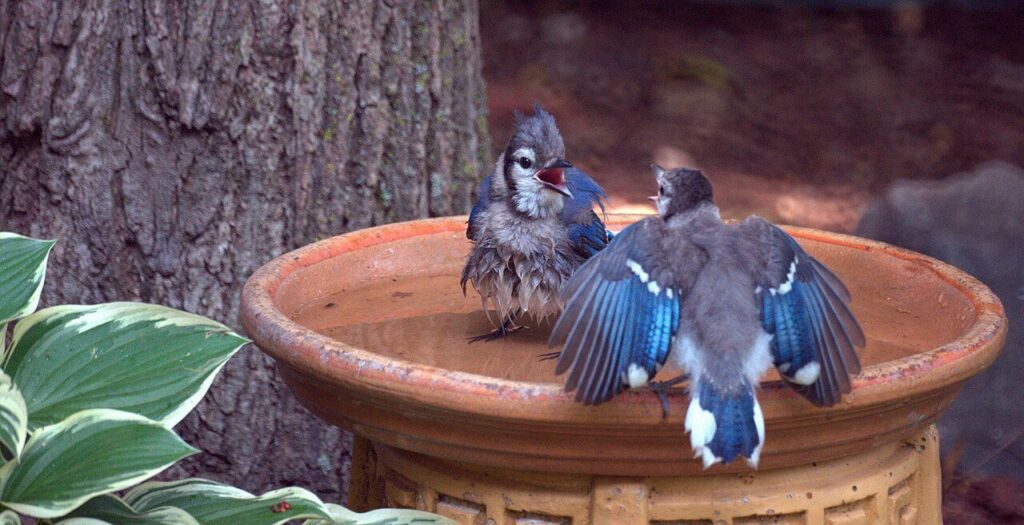
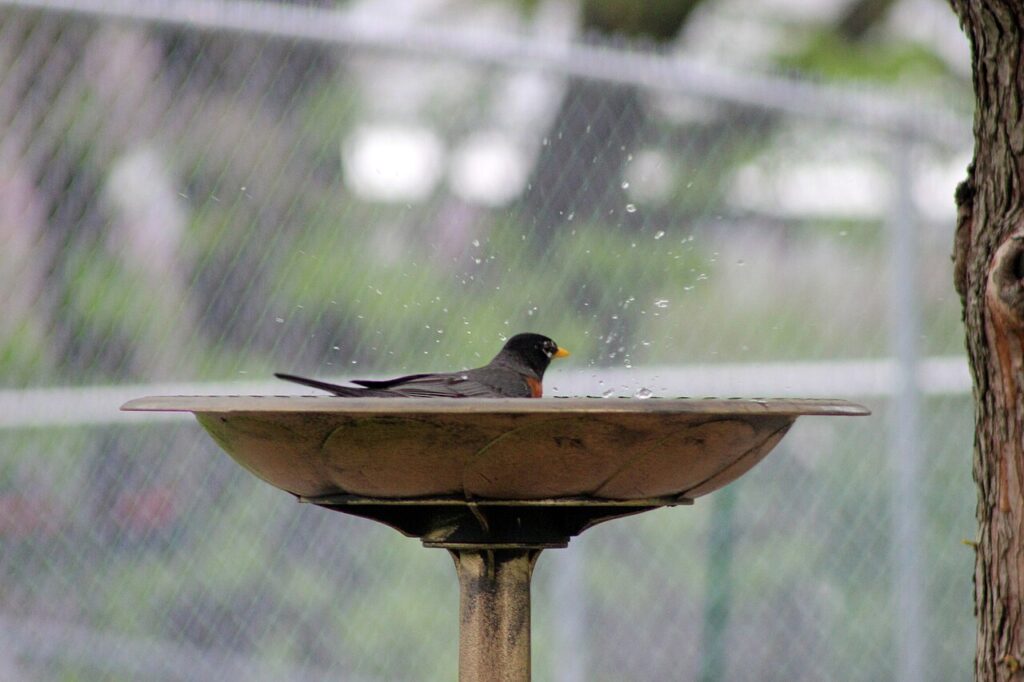
Is there a paint that is safe to use on a bird bath? It is a fair question, and most pages that answer it name a brand and move on. We went looking for a bird organization that has tested paints for bird baths and could not find one. What the Cornell Lab, Audubon and the EPA do say is enough to give a clear, careful answer: keep paint out of the water if you can, and if you do paint, choose and finish it so nothing flakes into the bowl.
The short answer
- Safest: leave the inside of the bowl unpainted, and add color to the pedestal and the outside only.
- If you paint: use a water-based exterior paint, let it cure fully before birds use the bath, and watch for chips.
- Old bath? Paint from before 1978 may contain lead. Test it or skip it.
- Not confirmed: that any paint or sealer is “bird safe” for constant contact with drinking water. We found no study or bird group that has tested this.
What the experts say about paint and birds
The closest expert guidance comes from birdhouses, not bird baths. The Cornell Lab’s NestWatch program says there are no conclusive studies on whether leftover paint fumes harm birds. Because of that, it recommends unpainted wood for nest boxes. If paint is needed, NestWatch says to put it only on the outside, and it notes that even zero- and low-VOC latex paints can release fumes for months or even years.
A bird bath is different from a nest box in one important way: birds drink the water and soak their feathers in it. That makes the inside of the bowl the part to be most careful with. Applying NestWatch’s “outside only” approach to a bath is our suggestion, not a published rule, but it follows the same reasoning: when the evidence isn’t there, keep the coating away from the bird.
Audubon’s advice on cleaning points the same way. Audubon says to skip synthetic soaps and cleansers in a bird bath because they can strip the oils from birds’ feathers. Anything that ends up in the water ends up on the birds.
Watch out for old paint and lead
If you have an older bath, or you are thinking of repainting a yard-sale find, check the old paint first. The EPA says the federal government banned the sale of lead-based paint for homes in 1978, and that chips and dust from old lead paint are one of the most common sources of lead exposure in homes.
Lead is a real danger to birds. The Pennsylvania Game Commission says lead has no known useful role in the body and is toxic to animals. Most wild birds that get lead poisoning swallow lead shot, but the agency lists paint chips among the less common sources. Mourning doves are one of the backyard species it names as affected.
Home test kits exist. The EPA recognizes three kits, and says a negative result is the reliable one when the kit is used by a trained professional. If you are unsure, the simplest choice is not to use a bath with old, flaking paint for water at all. Keep it as a planter or garden ornament instead.
If you do paint a bird bath
No paint has been proven safe for a bird bath, so these steps are about lowering risk, not removing it. If your bath is concrete, how to paint a concrete bird bath covers the cleaning and prep that help paint last.
- Paint the outside first. The pedestal, base and outer rim are where color shows most anyway. Leave the inside of the bowl bare if you can.
- Choose a water-based exterior paint. NestWatch’s guidance mentions latex paint, and it is the kind most gardeners use outdoors. Read the label and avoid anything that warns against contact with food or drinking water.
- Give it time. NestWatch says paint fumes can linger for months. Paint well before birds need the bath, and let it cure completely before you add water. A practical approach is to paint in fall and put the bath back out in spring.
- Pick a muted color. For nest boxes, NestWatch suggests tan, gray or dull green because they are less conspicuous to predators. A bath does not hide a nest, but birds are exposed while they bathe, so a calm color is a sensible choice.
- Check it every time you clean. If paint starts to chip, peel or bubble, take the bath out of use until you have stripped and redone it.
Ways to add color without paint in the water
Decorated bird baths are nothing new. Around 1890 to 1910, Tiffany Studios drew designs for mosaic birdbaths, now in the collection of The Metropolitan Museum of Art. You can get a similar look without putting paint where birds drink:

- Paint or mosaic the pedestal only, and leave the bowl plain.
- Set a shallow dish inside the bowl. A plain, sturdy pan or saucer can hold the water while the painted bowl stays dry. The Cornell Lab notes you can make a bird bath from a shallow pan, an old frying pan or even a trash can lid.
- Use color around the bath. Plant flowers nearby for color, but leave open ground between the bath and thick shrubs. The Cornell Lab says that gap gives bathing birds a better chance to see a prowling cat.
What matters more to birds than color
If your goal is more birds, the shape and the water matter far more than paint. The Cornell Lab says:
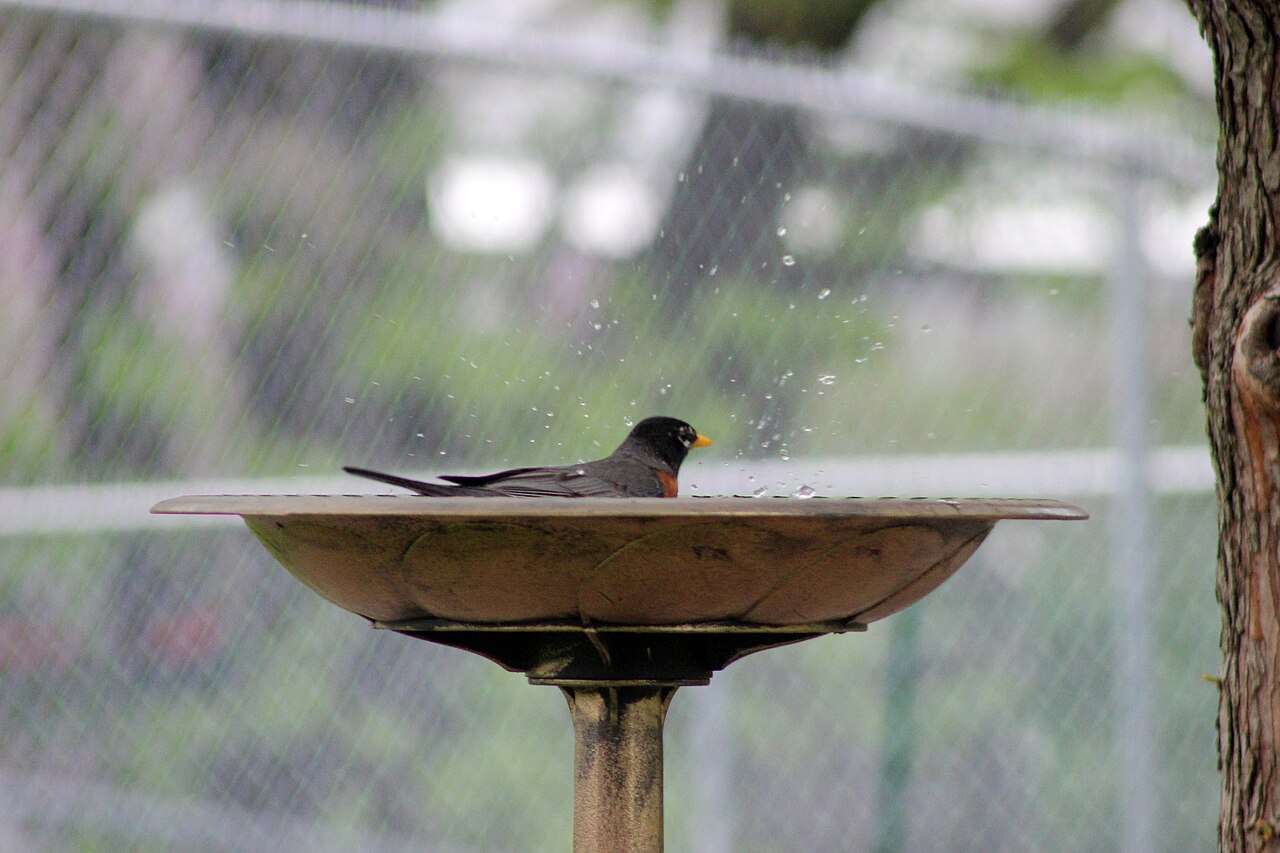
- Water should be no deeper than 1 inch at the edges and no more than 2 inches in the middle.
- A gentle slope lets birds wade in. Glazed baths can be slippery, and many concrete baths are too deep.
- Change the water every day or two, which also keeps mosquito eggs from hatching.
- Dripping or moving water draws birds in.
Audubon adds that a scrub with nine parts water to one part vinegar keeps a bath clean, and that water should be refilled every other day. For help choosing a bath in the first place, see our bird bath guide, and for cold weather, how to keep a bird bath from freezing.
Frequently asked questions
Is acrylic paint safe for a bird bath?
Not confirmed. Water-based acrylic or latex paints are the usual choice for outdoor projects, but we found no study or bird organization that has tested them in bird bath water. The Cornell Lab’s NestWatch says even low-VOC latex can give off fumes for months. Use it on the outside of the bath and keep the bowl bare if you can.
Can I seal a painted bird bath to make it safe?
A clear sealer can help stop paint from chipping, but it is another coating in the water, and we found no bird group that has tested sealers either. If you use one, let it cure fully and check it often for peeling.
Does the color of a bird bath matter to birds?
The Cornell Lab’s advice focuses on depth, slope, clean water and placement, not color. For nest boxes, NestWatch suggests muted colors that are less conspicuous to predators. Related: What color attracts birds to a bird bath?
What should I never put in a bird bath?
The Cornell Lab says never add antifreeze, which is poisonous to all animals, or glycerin, which can mat feathers and leave birds open to hypothermia. Audubon says to skip soaps and cleansers.