A concrete bird bath can look tired after a few seasons: gray, stained and patchy. Paint can freshen it up, but concrete is a tricky surface to paint, and a bird bath is not a flower pot. Birds drink the water and soak their feathers in it. This guide walks through the prep that helps paint stick to concrete, and why the safest plan is to paint the outside and leave the inside of the bowl bare.
The short answer
- Paint the pedestal, base and outer rim. Leave the inside of the bowl unpainted if you can.
- Prep matters most: scrub it clean, rinse well, remove any white crust and let it dry completely.
- Use a water-based exterior acrylic paint. Oil-based paints break down on concrete.
- New concrete needs about 30 days to cure before it takes paint well.
- Not confirmed: that any paint is safe in constant contact with bird bath water. We found no study or bird group that has tested this.
Before you start: will paint help?
Paint changes how a bath looks, not how well it works for birds. The Cornell Lab of Ornithology says traditional concrete bird baths make nice lawn ornaments but aren’t the best type for birds. They are often too deep, glazed ones may be slippery, and they can be hard to clean. Cornell recommends water no deeper than 1 inch at the edges and no more than 2 inches in the middle. If your bowl is deeper than that, a few flat stones in the water give birds a place to stand, which Cornell also suggests.
If you are repainting an old bath, check the old paint first. Paint made before 1978 may contain lead. Our guide to what paint is safe for a bird bath covers lead, test kits and what the experts say about paint and birds.
Why concrete is hard to paint
Three things about concrete cause most paint failures, according to a building digest from Canada’s National Research Council (written in 1970, but the chemistry has not changed):
- It is alkaline. Concrete is strongly alkaline, and alkali attacks oil-based paints, turning the film soft and sticky. Water moving through the concrete can keep bringing fresh alkali to the surface.
- It is porous. Concrete soaks up water and takes longer to dry than it looks. Paint over damp concrete can trap that water, which can then push salts or alkali back out under the paint.
- It can grow a white crust. That crust, called efflorescence, is salt left behind as water dries. Salt crystals forming under paint can push it off.
A bird bath holds water most of the year, which is why the prep steps below focus on cleaning and drying.
What you need
- A stiff scrub brush and a hose or bucket of water
- White vinegar, if the bath has algae or stains
- A wire brush, for loose bits and white crust
- Exterior water-based acrylic paint, plus a masonry primer if the paint label calls for one
- A couple of brushes, and a drop cloth or old sheet
- A dry spell of several days within the temperature range on the paint label
How to paint a concrete bird bath, step by step
1. Empty it and scrub it clean
Dump the water and scrub every surface you plan to paint. Audubon recommends a scrub with nine parts water to one part vinegar for bird baths, and says to skip synthetic soaps and cleansers because they can strip the oils from birds’ feathers. Rinse thoroughly. The NRC digest warns that leftover cleaner residue can also keep new paint from bonding.
2. Brush off loose bits and any white crust
Use a wire brush on flaking old paint, crumbly spots and white salt crust. The NRC digest says brushing off efflorescence isn’t enough on its own. Watch the spot for a while after cleaning. If the crust comes back, water is still moving through the concrete, and paint over it is likely to peel.
3. Check for an old sealer
If your bath was ever sealed, the NRC digest notes that water-repellent treatments can keep water-based paint from wetting the surface. It describes a simple test for brick that works the same way on a bath: sprinkle water on the surface. If it soaks in, you are fine. If it beads up, a repellent is likely there, so paint a small test patch first and check that it sticks once dry.
4. Let it dry completely
Bring the bath into a garage or shed, or wait for a dry stretch of weather, and give it time. Concrete can feel dry on the surface while still holding water inside. Brand-new concrete needs longer: Sherwin-Williams says fresh concrete starts out at a pH of 13 to 14 and takes about 30 days to drop to around 9, and that coatings do better on the less alkaline surface. If you cast your own bath, wait at least that long.
5. Choose a water-based acrylic paint
Sherwin-Williams says alkaline concrete will destroy an alkyd or oil-based paint within six months, and that acrylic paint gives the best service on these surfaces. The NRC digest likewise says latex paints have been preferred on concrete since they came out. Pick an exterior acrylic made for masonry, and prime first if the label says to. Avoid any product whose label warns against contact with food or drinking water.
6. Paint the outside, not the bowl
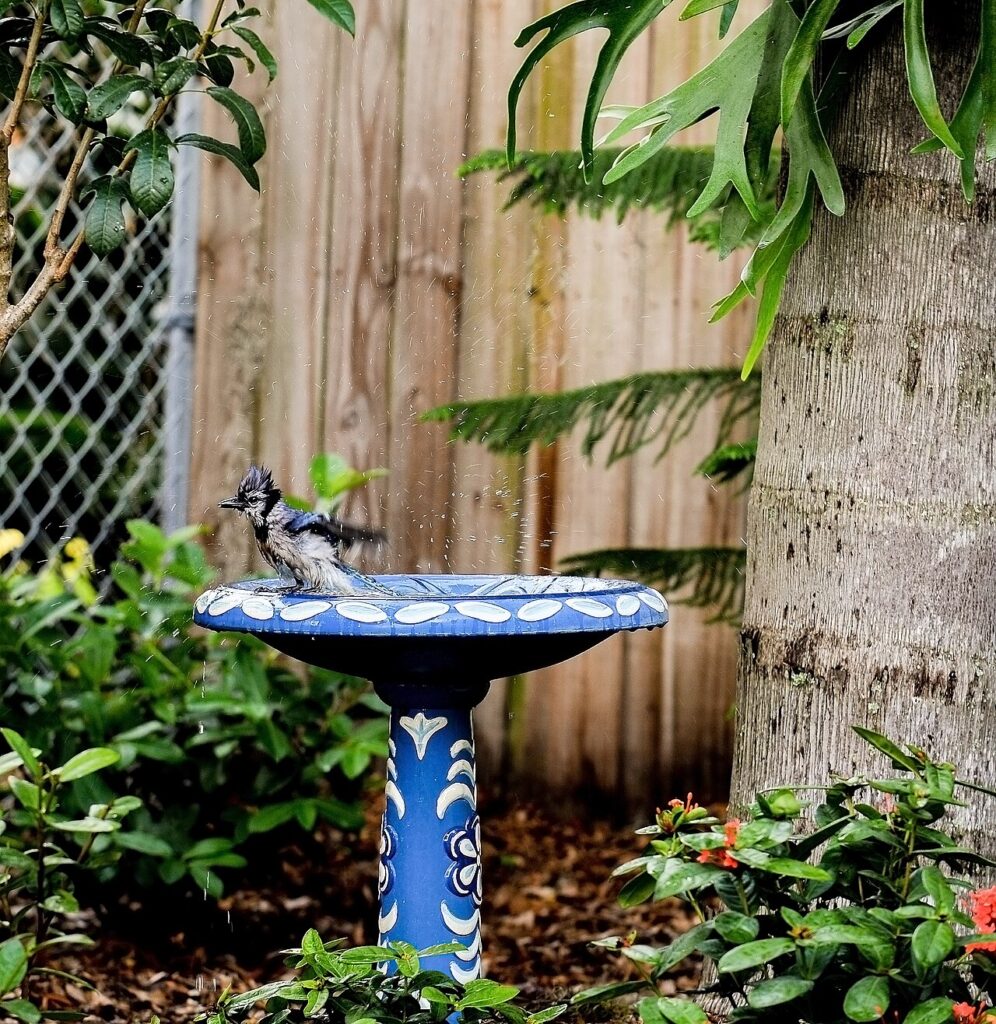
Paint the pedestal, the base, the underside of the bowl and the outer rim. That is where color shows most anyway. For the inside of the bowl, the Cornell Lab’s NestWatch guidance for birdhouses is the closest expert advice we found. It says there are no conclusive studies on whether leftover paint fumes harm birds, recommends paint only on the outside of a nest box, and notes that even zero- and low-VOC latex paints can give off fumes for months or even years. Applying that “outside only” rule to a bath is our suggestion, not a published rule, but birds drink from the bowl, so it is the part to keep bare.
Want color where the birds are? Leave the bowl plain and set a shallow dish or pan in it to hold the water. The Cornell Lab notes that a shallow pan, an old frying pan or even a trash can lid can serve as a bird bath.
7. Pick a calm color
No study has tested bird bath colors, as we explain in what color attracts birds to a bird bath. For nest boxes, NestWatch suggests tan, gray or dull green because they are less conspicuous to predators, and one feeder study found more birds at silver and green feeders than red or yellow ones. Muted greens, grays and stone tones are a sensible choice.
8. Let the paint cure before birds use it
Follow the cure time on the paint can, and then give it extra. Because NestWatch says paint fumes can linger for months, the easiest plan is to paint in fall, keep the bath out of use over winter, and set it back out in spring.
Winter, cracks and upkeep
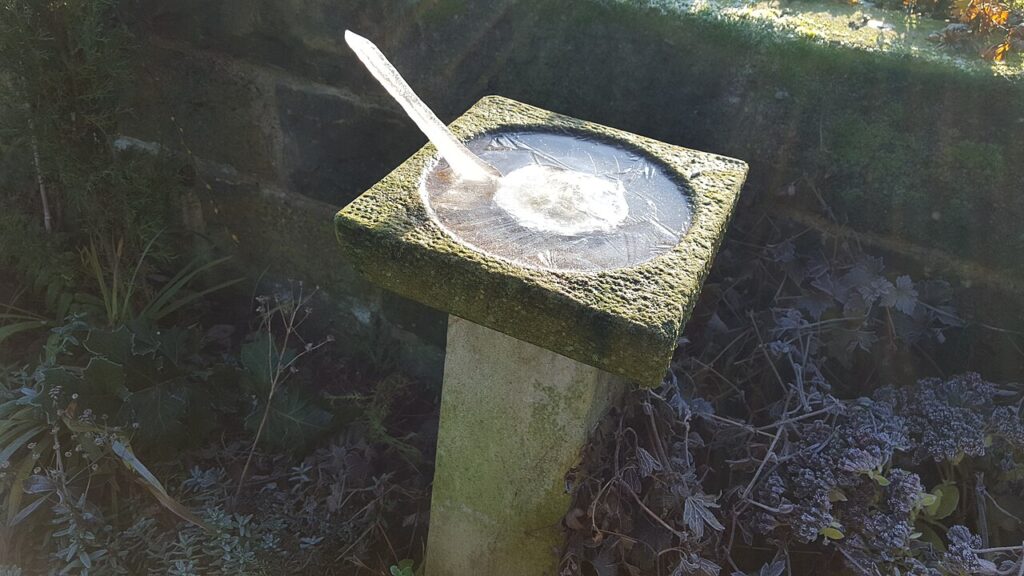
The Cornell Lab warns that concrete may crack when the temperature drops below freezing. Cracks let water into the concrete, and water under paint is what makes it bubble and peel. Sherwin-Williams advises repairing cracks and holes that let moisture in before painting. In cold areas, empty a concrete bath before hard freezes or store it in a garage or shed. Our guide to keeping a bird bath from freezing covers winter water for birds.
Check the paint each time you clean the bath. The Cornell Lab recommends changing the water every day or two. If paint starts to chip, peel or bubble, take the bath out of use until you have stripped and redone it. A bowl that is badly cracked or leaking can still serve as a planter.
For help choosing a bath in the first place, see our bird bath guide.
Frequently asked questions
What kind of paint do you use on a concrete bird bath?
An exterior water-based acrylic made for masonry. Sherwin-Williams says acrylics hold up best on alkaline concrete, while oil-based paints break down. No paint has been tested as safe for bird bath water, so keep it on the outside of the bath.
Can I paint the inside of a concrete bird bath?
We don’t recommend it. We found no study or bird group that has tested paint in bird bath water, and the Cornell Lab’s NestWatch recommends keeping paint off the parts of a nest box birds touch. A bare bowl, or a shallow dish set inside it, avoids the question.
Do I need to seal a concrete bird bath after painting?
Not confirmed either way. A clear sealer may help paint last, but it is another coating near the water, and we found no bird group that has tested sealers. If you use one, keep it off the inside of the bowl, let it cure fully and check it for peeling.
How long after painting can birds use the bath?
At least as long as the paint label’s full cure time, and longer is better. NestWatch says even low-VOC latex paints can give off fumes for months, which is why painting in fall and putting the bath out in spring is an easy plan.
Why is my painted concrete bird bath peeling?
The usual causes are water and alkali coming through the concrete, salt crust forming under the paint, a surface that was not fully dry or clean, an old sealer, or an oil-based paint. Strip the loose paint, let the bath dry well, and start again from step 1.