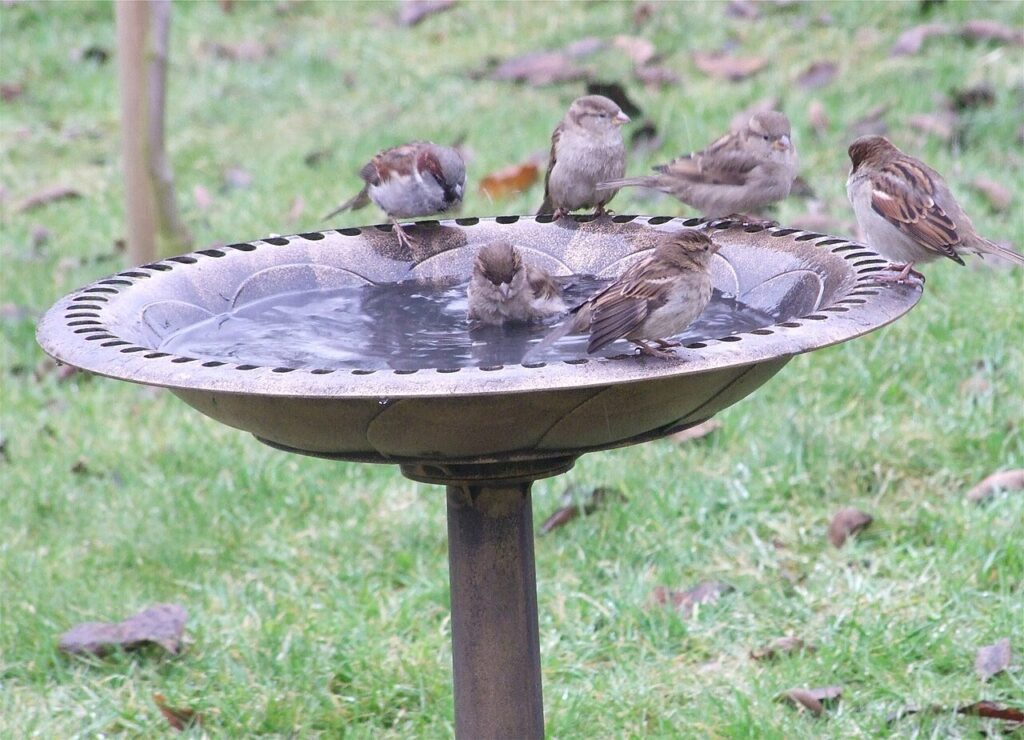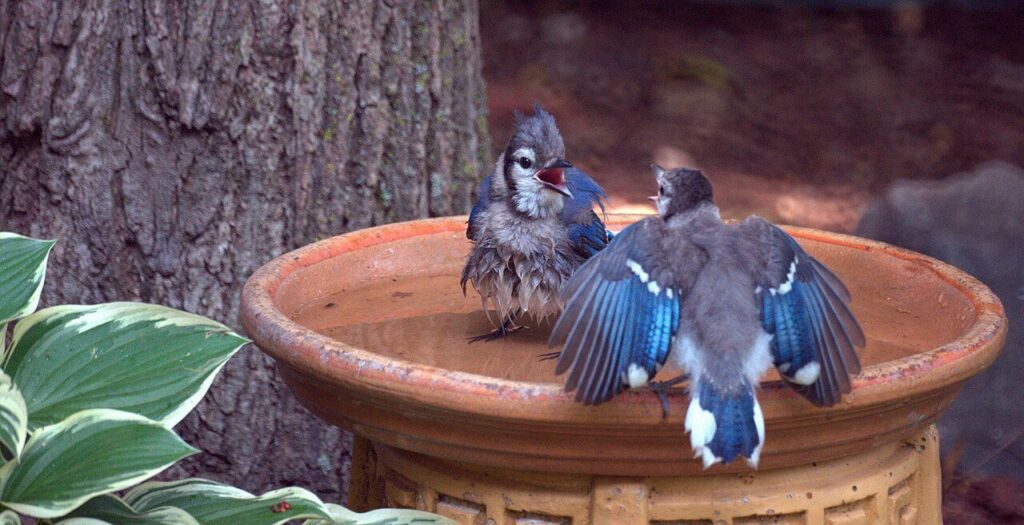
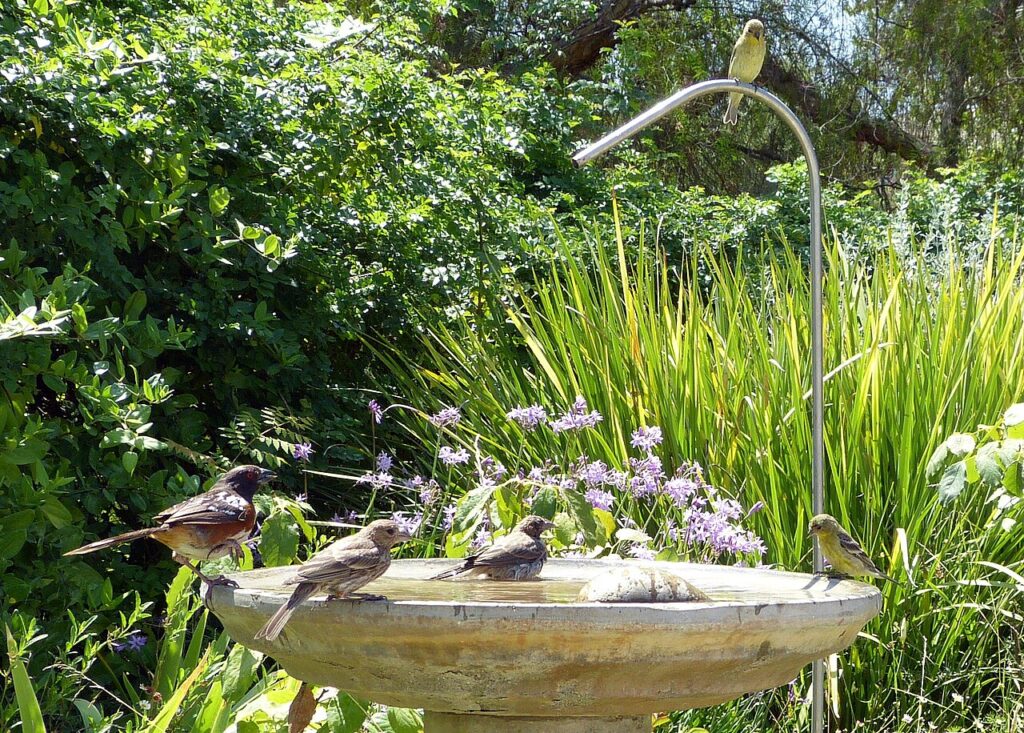
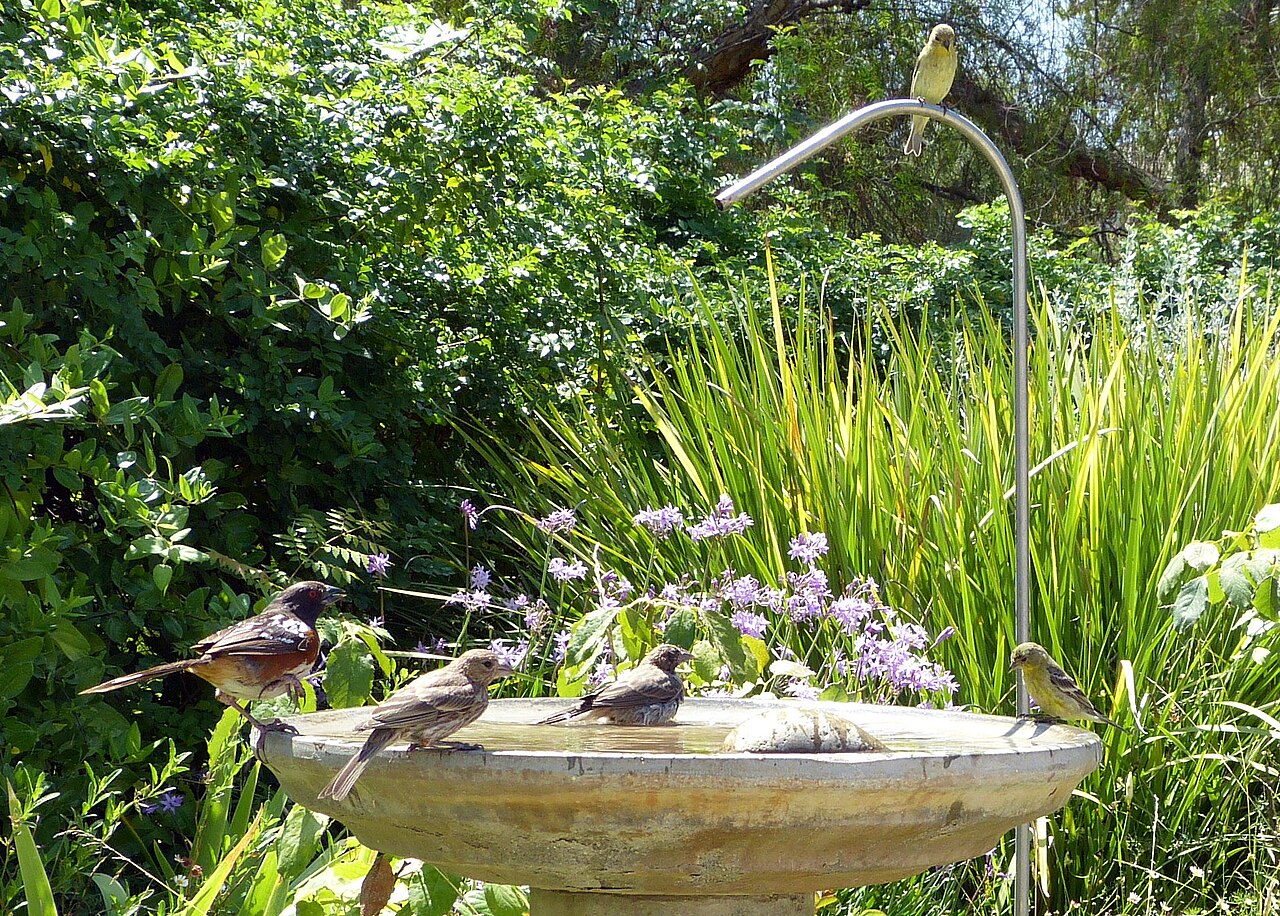
Does the color of a bird bath make a difference to the birds? Many pages say yes and name a favorite. We looked for research on bird bath colors and did not find any. What does exist is a careful study of feeder colors, solid science on how birds see, and clear advice from the Cornell Lab on what makes a bath work. Together they give a useful answer: color is a small factor, and a few other things matter much more.
The short answer
- No study has tested bird bath colors that we could find, so any “best color” claim is not confirmed.
- The closest research, a 2017 study of feeders in England, found more birds at silver and green feeders and fewer at red and yellow ones.
- Birds see more colors than we do, including ultraviolet, so a bath that looks plain to you does not look the same to them.
- What matters most, according to the Cornell Lab: shallow water, a gentle slope, clean water, moving water and a safe spot.
What the research on feeder colors found
The best evidence comes from feeders, not baths. In a 2017 study published in PLoS ONE, British researchers hung eight identical seed feeders side by side, each painted a different color, at three sites in Yorkshire, England. They counted visits over 370 half-hour watches from November 2014 to May 2015, and they shuffled the feeders’ order between watches so position would not skew the result.
Silver and green feeders drew more individuals of several common garden species. Red and yellow feeders got fewer visits. People, asked the same question, preferred red, yellow, blue and green. The authors suggested green might suit both birds and buyers.
Two cautions before you apply this to a bath. First, these were British birds at seed feeders, not American birds at water. Second, the authors said they could not find any earlier peer-reviewed study of seed feeder colors at all, so this is one study, not a settled rule.
What about hummingbirds and red?
Hummingbirds are the famous exception people point to. The same paper reviews the earlier work: flowers that hummingbirds pollinate tend to be red, and the birds tend to prefer red-pigmented flowers. But experiments with hummingbird feeders have not shown a consistent preference for any one color. Location, past experience and the quality of the nectar mattered more. So even for hummingbirds, color is not the whole story.
How birds see color
Part of the reason “best color” claims are shaky is that birds don’t see color the way we do. People have three types of color cones in the eye. Birds have a fourth. Princeton University researchers showed in 2020 that wild broad-tailed hummingbirds can tell apart combination colors, such as ultraviolet plus green, that humans cannot see at all.
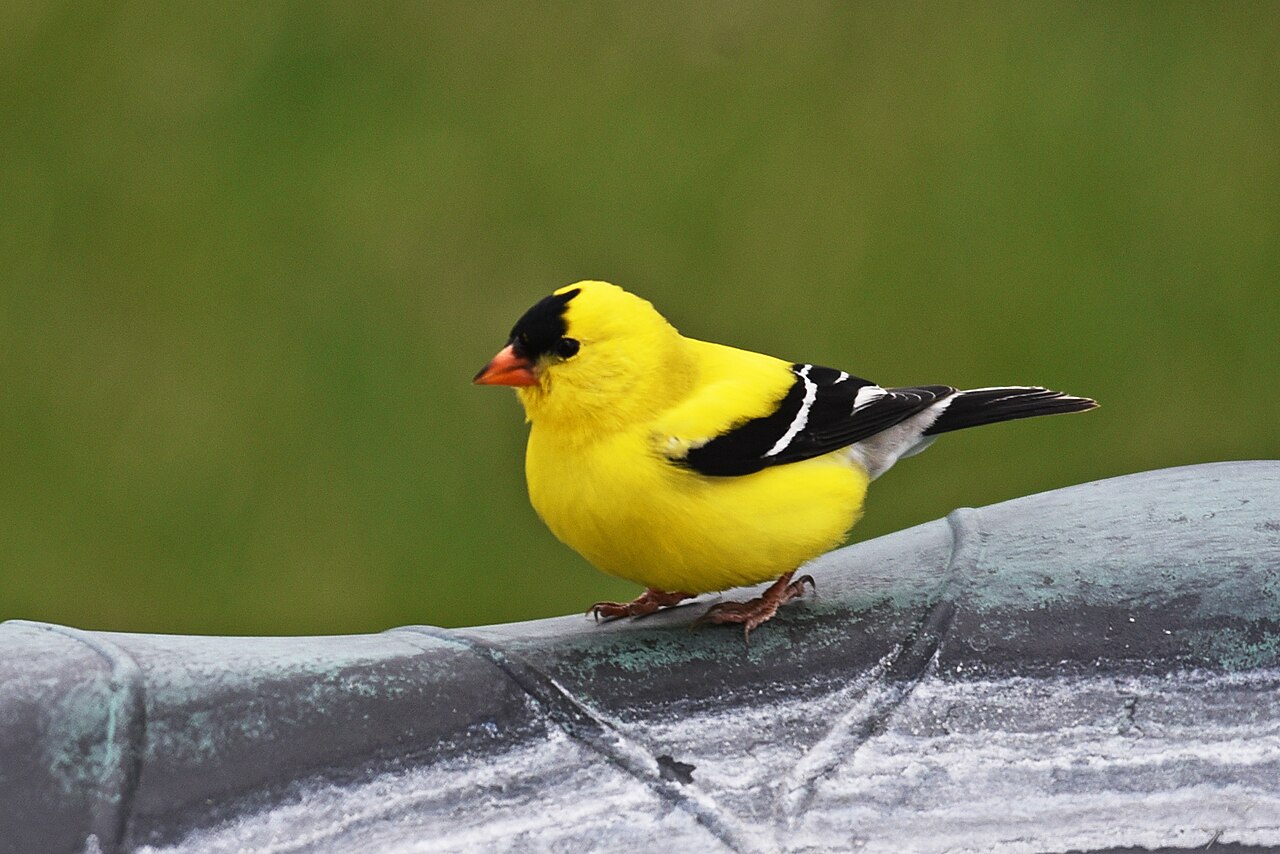
Audubon explains that some birds see ultraviolet light and others see deeper into violet. Species with ultraviolet vision include the American goldfinch, whose plumage reflects ultraviolet light differently in males and females. A bath you see as “blue” or “gray” may look quite different to a goldfinch, which is one more reason to be careful with claims about which human-named color birds like best.
What matters more than color
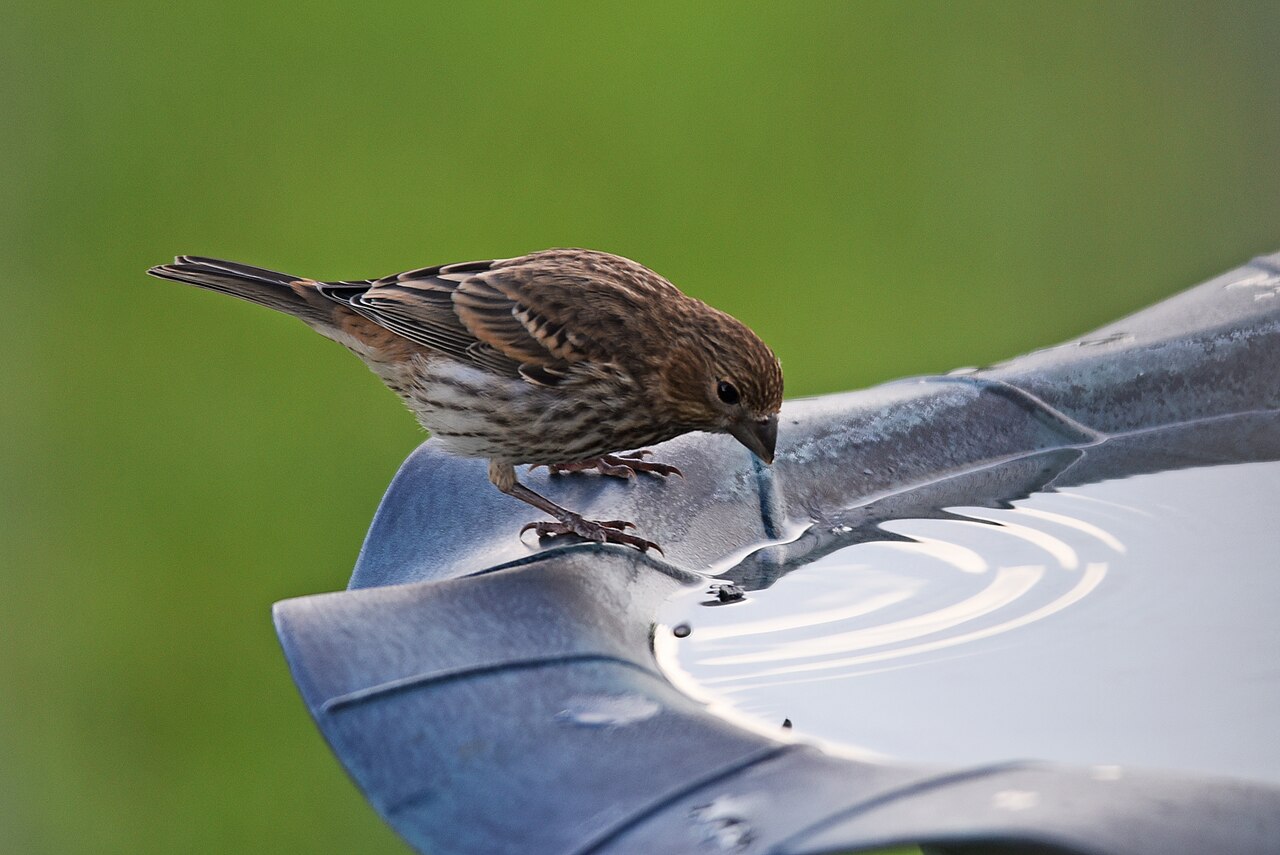
The Cornell Lab of Ornithology describes the best bird baths as ones that imitate nature’s own: puddles and shallow pools in slow streams. Its advice says nothing about color and a lot about these things:
- Depth: no more than 1 inch at the edges, sloping to 2 inches at most in the middle.
- Surface: a gentle slope birds can wade into. Glazed baths may be slippery, and many concrete ones are too deep.
- Movement: many birds find the sight and sound of moving water irresistible. A dripper or a bucket with a tiny hole hung above the bath works.
- Placement: birds seem to prefer baths at ground level. Keep open ground between the bath and thick shrubs so bathing birds can see cats coming, and put the bath in shade during hot months.
- Clean water: change it every day or two.
For more on choosing a bath, see our bird bath guide. If birds are skipping your yard altogether, why birds aren’t coming to your feeder covers the usual causes.
So which color should you choose?
Pick a color you like looking at, because the evidence doesn’t point to a clear winner for baths. If you want to lean on what research there is, these are reasonable choices:
- Green, gray, stone or metal tones. They match the feeder study’s better-visited colors and blend into a garden.
- Muted rather than loud. For nest boxes, the Cornell Lab’s NestWatch suggests tan, gray or dull green because they are less conspicuous to predators. That advice is about nests, but birds are exposed while bathing too.
If you are thinking of repainting a bath to change its color, read what paint is safe for a bird bath first. The short version: keep paint out of the bowl. For a concrete bath, how to paint a concrete bird bath walks through the prep step by step.
Frequently asked questions
Do birds prefer blue bird baths?
Not confirmed. We found no study testing blue against other bath colors. The one feeder study we found did not list blue among the colors birds visited most.
Does a red bird bath attract hummingbirds?
Not confirmed. Hummingbirds tend to favor red flowers, but feeder experiments have not shown a consistent color preference, and we found no study of hummingbirds and bath color.
Will a bright bird bath scare birds away?
We found no evidence either way for baths. In the feeder study, bright red and yellow feeders got fewer visits than silver and green ones, so a muted color is the safer bet.
What is the most important thing for attracting birds to a bath?
Shallow, clean water. The Cornell Lab recommends no more than 1 to 2 inches of depth, fresh water every day or two, and moving water if you can add it.