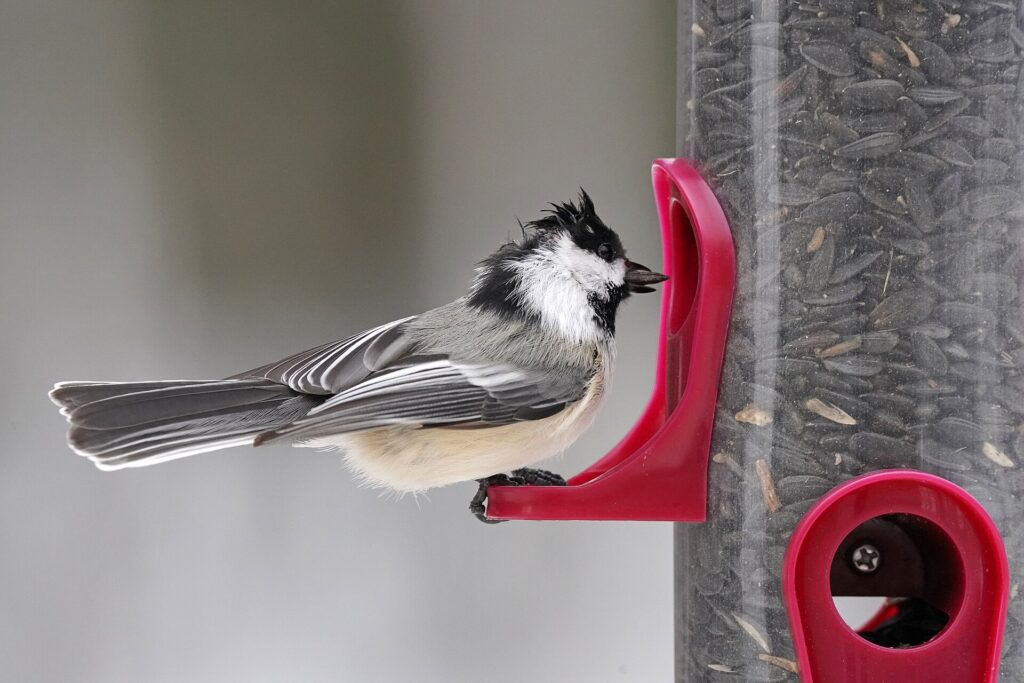
If birds aren’t coming to your feeder, the most common reason in fall is simply the season: summer birds are migrating out, winter birds haven’t settled in yet, and wild seeds, berries and insects are still easy to find. Birds prefer natural food and treat feeders as a supplement, so they drift back as the weather turns cold and wild food runs low. If the season isn’t the answer, the problem is usually the seed (old, moldy or cheap filler), a dirty feeder, the feeder’s spot in the yard, or a hawk hunting nearby. Our free checklist below walks through all ten checks in order, with a fix for each.
Free printable: the 10-point empty-feeder checklist
We made this checklist so you can diagnose a quiet feeder in a couple of minutes. Work from the top. The first three checks are seasonal and usually fix themselves; the other seven are things you can change today. Tap or click the image to open the full-size version and print it. It’s free, with no signup.
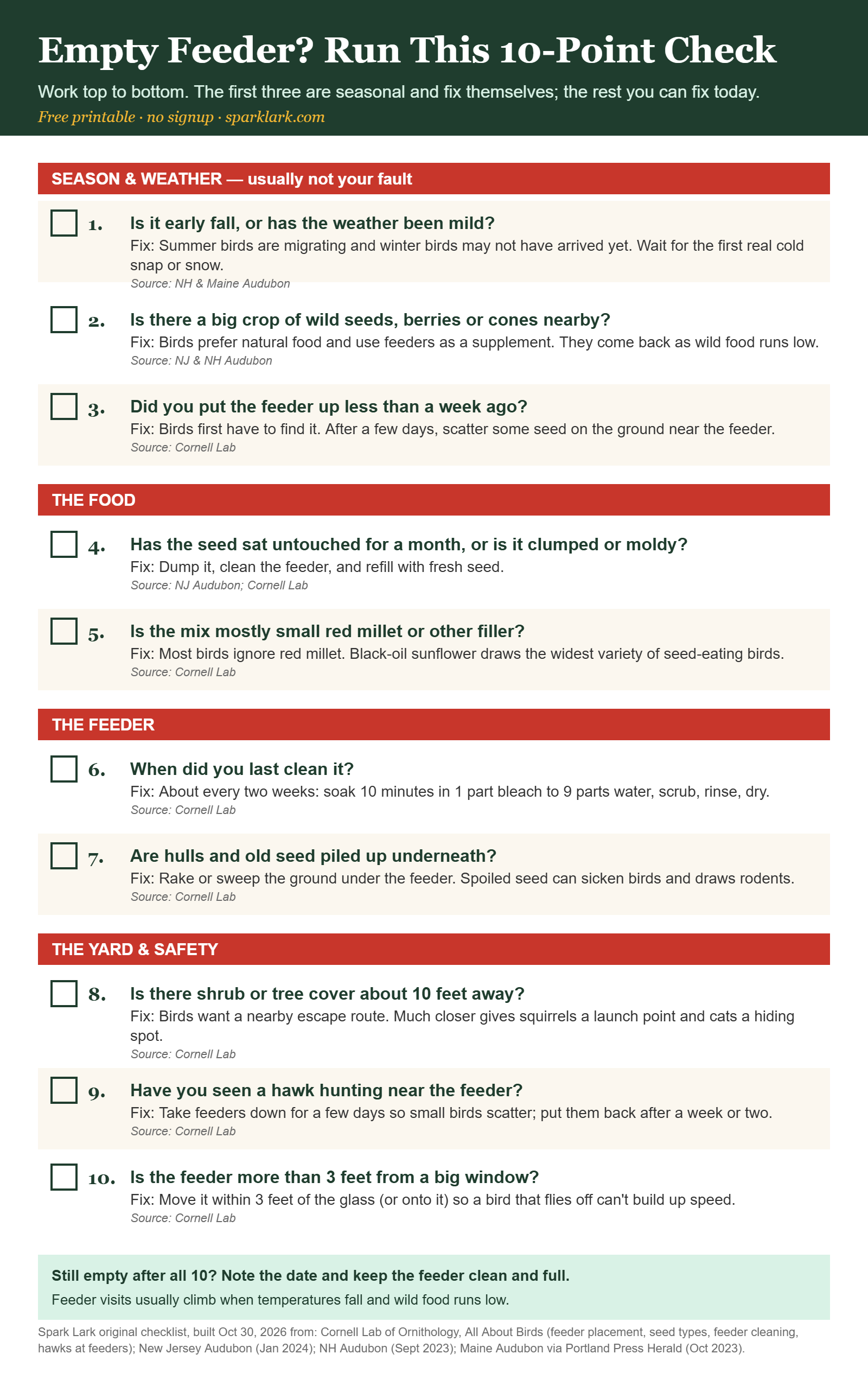
Source and method: Spark Lark checklist compiled Oct. 30, 2026 from the Cornell Lab of Ornithology’s All About Birds articles on feeder placement, seed types, feeder cleaning and hawks at feeders; New Jersey Audubon (“Why are there no birds at my feeders?”, Jan. 2024); NH Audubon (“Where are all my birds?”, Sept. 2023); and Maine Audubon’s Doug Hitchcox in the Portland Press Herald (Oct. 2023). Each line names its source on the sheet.
1. It’s fall, and the birds are on the move
Late summer and fall are the quietest stretch for many feeders, and it has little to do with you. NH Audubon explains that birds that winter in the tropics, such as rose-breasted grosbeaks, start leaving as early as August, cued by shorter days, while the northern birds that spend winter with us haven’t arrived yet. After nesting, adults and young also band together in mixed flocks that wander widely, which can leave some yards nearly empty for a few weeks. As NH Audubon’s Rebecca Suomala put it, “it has nothing to do with your feeders.”
Even birds you think of as year-round can shift. In an October column, Maine Audubon naturalist Doug Hitchcox noted that blue jays make short seasonal movements, so the jays at your feeder in summer may not be the same ones you see in winter. Red-winged blackbirds and other summer visitors are heading south at the same time.
What to do: keep the feeder clean and stocked with a modest amount of fresh seed, and wait. The northern birds that spend winter in your area arrive later in the season. Our guide to how birds survive the winter explains why feeders matter more once the cold sets in.
2. Wild food is beating your feeder
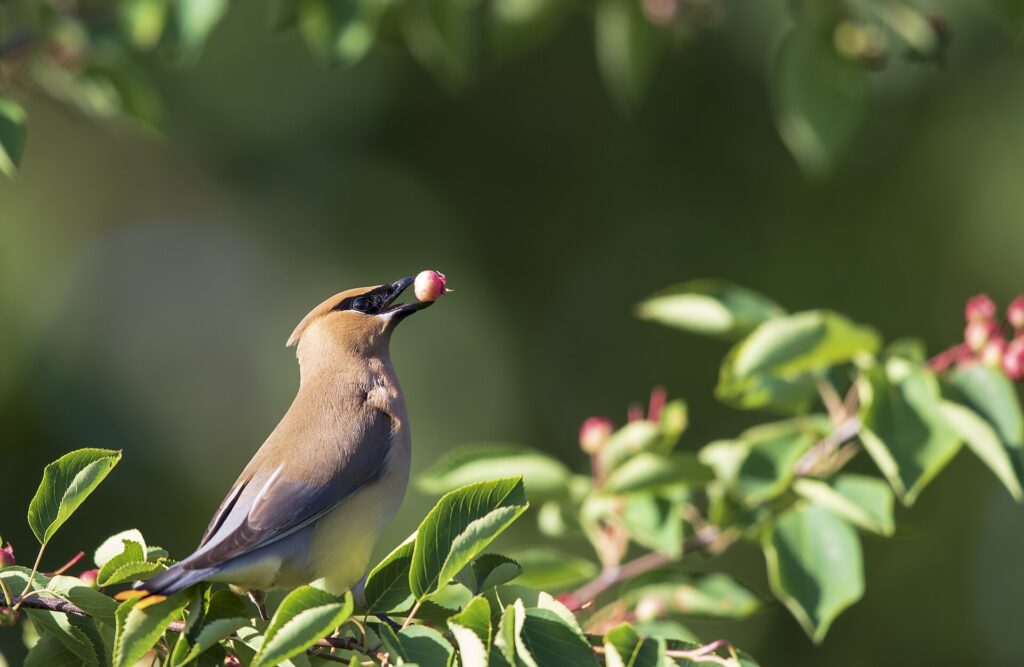
New Jersey Audubon is blunt about it: “Birds always prefer natural food sources.” The amount of wild food around you sets how busy your yard is, and the effect is strongest for seed-eaters such as finches and sparrows. NH Audubon pointed to a good crop of berries and seeds after a rainy summer, and to white pine cones opening and dropping seeds that chickadees and nuthatches eat in the woods. Hitchcox summed up the fall situation the same way: “there is better food almost everywhere right now.”
What to do: nothing is wrong, so don’t overfill and let seed go stale while you wait. If you want birds in the yard even when they skip the feeder, Hitchcox recommends native plants. Our bird-friendly garden guide covers where to start.
3. Mild weather and no snow
Warm spells lower a bird’s energy needs, so it doesn’t have to eat as much to stay warm. New Jersey Audubon adds that insects stay active when temperatures are in the 40s°F or higher, and that without snow and ice covering the ground, natural food stays exposed and easy to reach. It also notes that some winter visitors, including white-throated sparrows and dark-eyed juncos, time their movements to food, and many head north earlier after a short, mild winter.
What to do: watch the forecast. NH Audubon says birds come back to feeders when temperatures fall and natural food decreases, and they visit more often in cold, stormy weather. The first hard freeze or snowfall is often when a quiet feeder gets busy again.
4. The feeder is new and birds haven’t found it
A brand-new feeder in a yard that has never had one can sit untouched for days. The Cornell Lab’s advice: “Be patient—the local birds first have to discover the new food source.” If nothing visits within a few days, scatter some seed on the ground near the feeder. If birds gather nearby but won’t use the feeder, sprinkle a trail of seed between where they are and the feeder.
5. The seed is old, moldy or mostly filler
Seed goes stale, and birds may avoid it. New Jersey Audubon suggests replacing seed that hasn’t been touched in a month and making sure it hasn’t spoiled or grown mold. Wet weather speeds that up, which is why it pays not to overfill a quiet feeder and to store the rest of your bird seed somewhere dry.
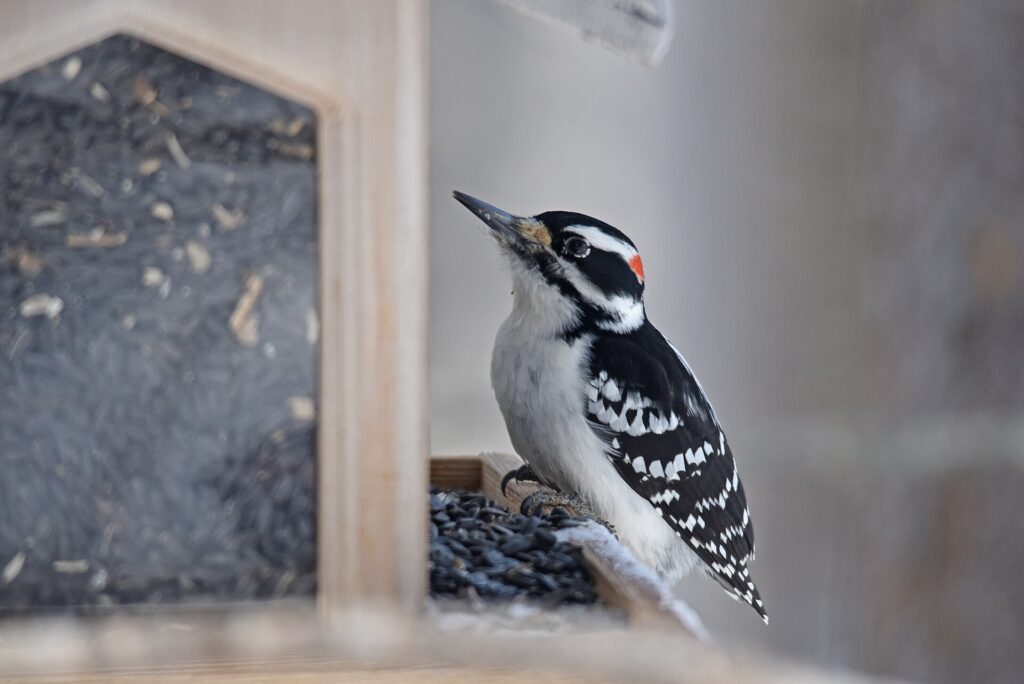
The seed itself matters too. The Cornell Lab calls black-oil sunflower the seed that attracts the widest variety of birds, because its thin shells are easy for nearly all seed-eating birds to crack and its kernels are high in fat. Cheap mixes are often padded with red millet, a filler most birds ignore. Cornell warns that leftover waste seed “becomes a breeding ground for bacteria and fungus,” which spoils the good seed faster. Read the label, and if red millet leads the list, switch. Our best bird seed guide and what to feed birds in winter go deeper.
6. The feeder is dirty, or there’s a mess underneath
Old seed and hulls that collect in feeder trays can grow mold or rot, and droppings can spread disease. The Cornell Lab recommends cleaning seed feeders about once every two weeks, and more often during heavy use, wet weather, or when you’ve seen sick birds. Its method: soak the feeder for about 10 minutes in a solution of no more than 1 part bleach to 9 parts water, scrub off debris, rinse well, and let it dry before refilling. The full routine is in our guide to cleaning a bird feeder.
Check the ground too. Cornell advises raking up hulls and uneaten seed under feeders, because spoiled food on the ground can harm birds and pets, and scattered seed draws rodents.
7. The feeder is in the wrong spot
Small birds want a quick escape route. The Cornell Lab suggests placing feeders near natural shelter, with evergreens best because they give cover all year, and keeping feeders about 10 feet from that cover. Much closer, and the shrubs give squirrels a launch point and cats a place to hide; Cornell calls 10 feet “a good compromise” and suggests experimenting. Loose brush piles near the feeder also give sparrows and other ground-feeding birds a place to duck into.
Windows are the other placement issue. Cornell recommends putting feeders within 3 feet of a window, or attaching them to the glass, so a bird that takes off toward the window can’t build up enough speed to be badly hurt. If squirrels are emptying the feeder before birds get a turn, see our tips to keep squirrels off bird feeders and our window bird feeder guide. More on glass strikes is in why birds crash into windows.
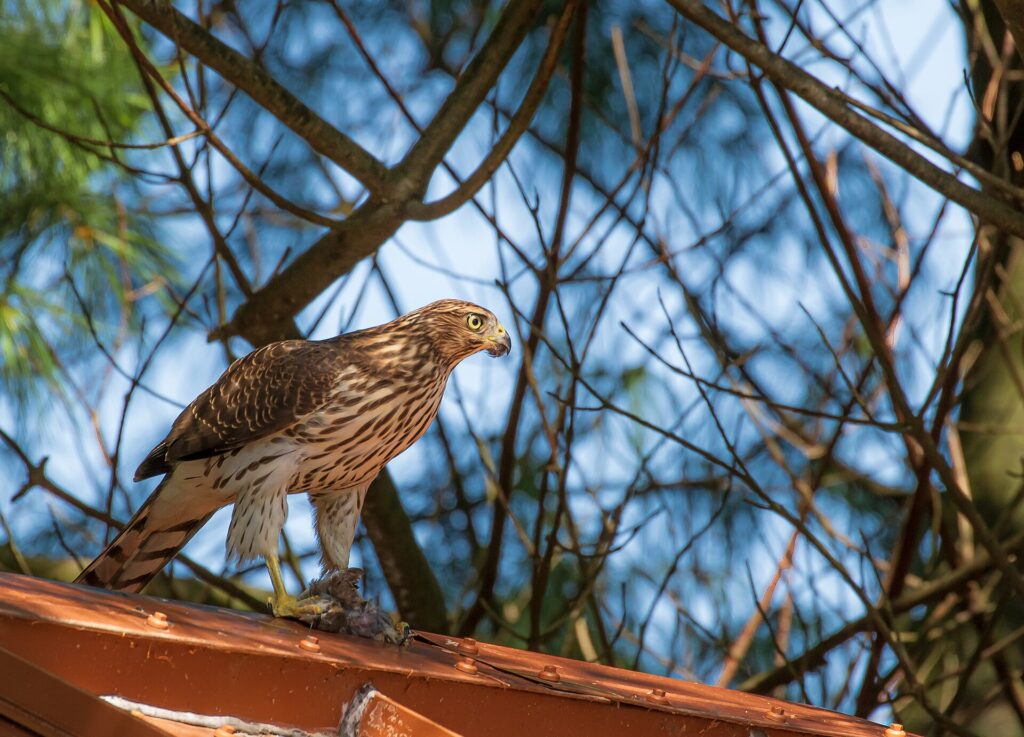
8. A hawk is hunting your yard
Feeders gather small birds in one place, and that can attract hawks that hunt them. The Cornell Lab’s All About Birds shows a Cooper’s hawk checking out a backyard feeder in its article on the problem. If the yard went silent suddenly and you’ve seen a hawk, that’s a likely reason. Cornell’s suggestion is to take the feeders down for a few days so the small birds scatter and the hawk looks elsewhere, then put them back up after a week or two. Songbirds and doves may return quickly, while the hawk may have moved on.
Quick reference: clue, likely reason, fix
| What you notice | Likely reason | Fix |
|---|---|---|
| Feeder went quiet in late summer or fall | Migration and wandering post-nesting flocks | Wait; keep seed fresh |
| Berries, seeds or cones everywhere | Wild food is easier and preferred | Wait for cold weather; plant natives |
| Warm spell, no snow on the ground | Birds need less food and can reach wild food | Expect visits after a freeze or storm |
| Feeder is only a few days old | Birds haven’t found it | Scatter seed on the ground nearby |
| Seed untouched for weeks, clumped or moldy | Stale or spoiled seed | Dump, clean, refill with fresh seed |
| Birds pick through and toss small red seeds | Filler mix (red millet) | Switch to black-oil sunflower |
| Slimy tray, droppings, hulls piled below | Dirty feeder and ground | Clean every two weeks; rake hulls |
| Feeder out in the open, far from shrubs | No nearby escape cover | Move it about 10 feet from cover |
| Yard went silent suddenly; hawk seen | Predator hunting the feeder | Take feeders down for a few days |
| Feeder several feet from a big window | Collision risk | Move within 3 feet of the glass, or onto it |
Table summarizes the sources listed under the checklist above. On a phone, swipe sideways if the table is cut off.
FAQ
Why did birds suddenly stop coming to my feeder?
A sudden stop, especially if you’ve seen a hawk, can mean a predator is hunting the yard. A slower fade in late summer or fall usually tracks migration and a big crop of wild food, which NJ, NH and Maine Audubon all describe as normal.
How long does it take birds to find a new feeder?
There’s no set time, and it can be days. The Cornell Lab suggests scattering seed on the ground near the feeder if nothing has visited after a few days.
Should I stop feeding if no birds are coming?
You don’t need to. Keep a small amount of fresh seed out and the feeder clean so it’s ready when birds return. If seed sits untouched for a month, New Jersey Audubon suggests replacing it.
When will birds come back to my feeder?
NH Audubon says birds return to feeders as temperatures fall and natural food decreases, and they visit more often in cold, stormy weather.
Can I keep track of what does show up?
Yes. Our free Project FeederWatch tally sheet makes it easy to log visitors through the winter, and the backyard bird ID chart by color helps you name newcomers. Both are free, with no signup.
Bottom line
An empty feeder in fall is usually the season, not a mistake: birds are migrating, wild food is plentiful, and mild weather means they don’t need you yet. Use the time to get the basics right: fresh black-oil sunflower instead of filler, a feeder cleaned every two weeks, a spot about 10 feet from cover and close to (or on) the window, and a short break if a hawk moves in. When the cold arrives, the birds usually follow.