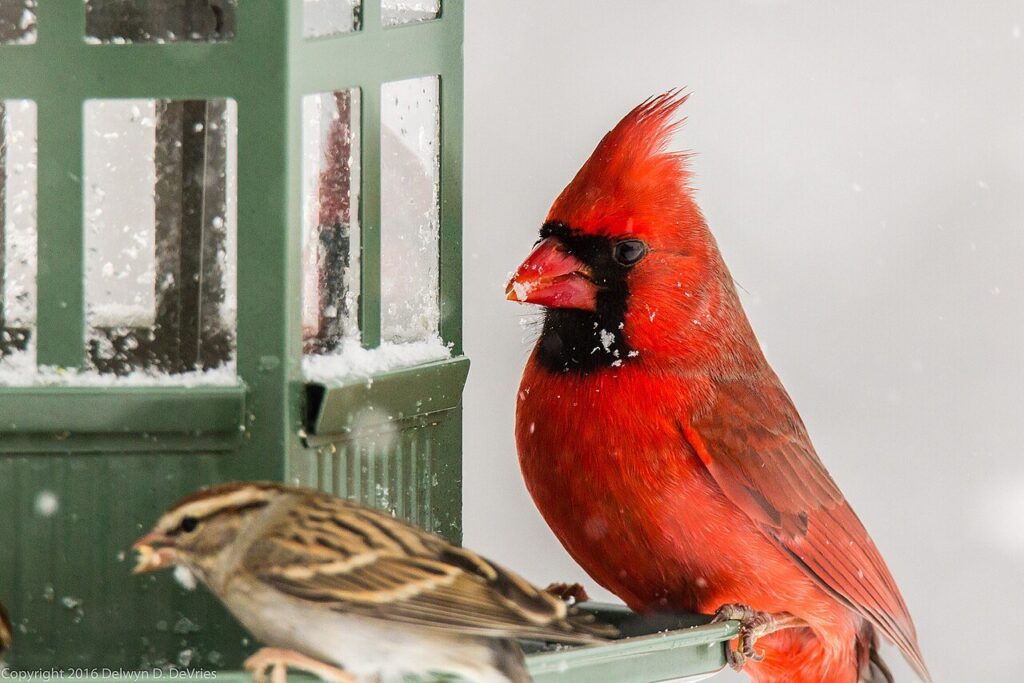
A window bird feeder is the one piece of gear that changes how you watch birds, because it moves them from thirty feet away to about eighteen inches. A cardinal at the kitchen window is a different experience from a cardinal in the yard. It’s also the cheapest way to get started (most cost less than a bag of sunflower seed), the easiest to fill without going outside, and the only feeder a squirrel can’t reach. This guide covers the five window feeders that actually stay on the glass, how to mount them so they don’t fall, and what to put in them.
Spark Lark is reader-supported. As an Amazon Associate we earn from qualifying purchases made through links on this page, at no extra cost to you.
The short version
- Best overall: Nature’s Hangout Window Bird Feeder. Quarter-inch cast acrylic, holds over four cups of seed, slide-out tray, and a lifetime guarantee on the suction cups.
- Best for no-mess refills: Nature Anywhere Window Bird Feeder. The sliding tray means you never lift the whole feeder off the glass.
- Best if suction cups keep failing: DesGully Metal Window Feeder. Rust-resistant metal that hangs on adhesive hooks instead of suction cups, 1.7 pounds of seed.
- Best value: DY-SKTY Clear Window Feeder. Five suction cups, lift-out tray, sloped roof, and the most-purchased feeder in the category.
- Best small feeder: Nature’s Way Win-3 Clear View. Two-cup capacity, four side-mounted cups, and it lifts off for cleaning without pulling the suction cups.
Why a window feeder is the right first feeder
Three reasons. First, you’ll see more. Most people who put up a pole feeder in the yard watch it for a week and then stop noticing it. A feeder on the window you stand at every morning gets watched every morning, and the birds get used to a face behind the glass faster than you’d think. Chickadees, titmice, nuthatches, and house finches will feed with you standing two feet away inside a week or two. Cardinals and jays take longer but come around.
Second, squirrels can’t climb glass. If the feeder is on a window with no ledge, gutter, shutter, or branch within ten feet, it is squirrel-proof without any baffle or cage. That’s a real advantage when you’ve been fighting squirrels on a pole feeder.
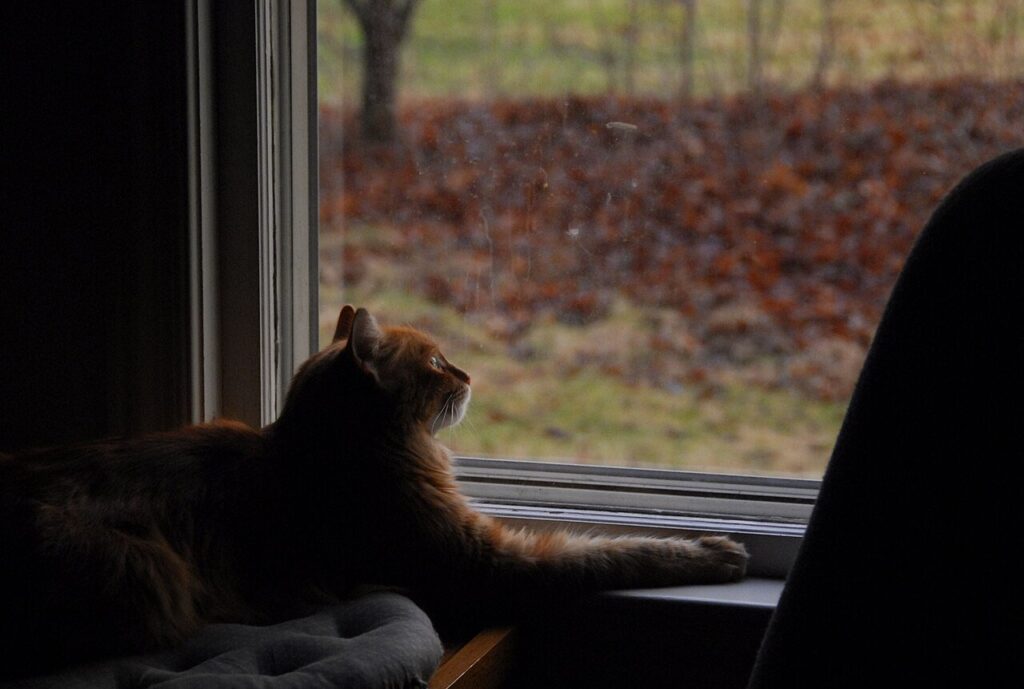
Third, it’s the best feeder for kids, for anyone who can’t get outside easily, and for cats. Plenty of people buy one so the cat has something to watch, and it works.
The five window bird feeders worth buying
1. Nature’s Hangout Window Bird Feeder, best overall
This is the feeder that has been at the top of the category for years, and the reason is the acrylic. The Nature’s Hangout is cut from quarter-inch cast acrylic, the thickest in the category, so it doesn’t yellow, craze, or crack the way the thin extruded stuff does after a couple of winters. It holds over four cups of seed, the tray slides out for cleaning, and it ships with three suction cups mounted plus three spares. The company backs the suction cups with a lifetime guarantee, which tells you where the failures happen on cheaper feeders.
Downside: it’s the most expensive feeder here, and the large size means a full load of seed is heavy, so you must mount it on clean glass exactly as directed or the cups will let go. Best for: anyone who wants one feeder that will still be on the window in five years.
2. Nature Anywhere Window Bird Feeder, best for no-mess refills
The Nature Anywhere solves the one chore people quit window feeders over: refilling. The seed tray slides out sideways while the feeder stays on the glass, so you fill it from inside with the window open and never touch the suction cups. Those cups are the company’s own heavy-duty design (four of them). Drainage holes and an air channel keep seed from clumping after rain. Nothing to assemble.
Downside: the acrylic is thinner than the Nature’s Hangout, and the tray design means it holds a bit less seed. Best for: a kitchen or office window you’ll refill often, or anyone who wants kids to be able to do it.
3. DesGully Metal Window Feeder, best if suction cups keep failing
Suction cups are the weak point of every clear feeder. They fail in cold snaps, on textured or low-E glass, and on windows that get direct afternoon sun. The DesGully skips them entirely: it’s a curved, rust-resistant metal tray that hangs on two adhesive hooks (four are included, plus positioning cards so you get it level). The removable mesh-bottom tray holds 1.7 pounds of seed and drains instantly. Because it’s metal, it will not crack or yellow..
Downside: it’s not clear, so you see the birds from the side and above rather than through the feeder, and adhesive hooks are a one-time placement (pick the spot carefully). Best for: cold climates, older windows, or anyone who has already had a clear feeder fall off.
4. DY-SKTY Clear Window Feeder, best value
If you want a clear feeder for half the price of the top two, this is the one to buy. The DY-SKTY is the best-selling window feeder on Amazon right now (several thousand a month), and it earns it: five suction cups instead of the usual three or four, a lift-out seed tray, a sloped roof so rain runs off rather than pooling on the seed, and drainage holes in the tray. Rounded edges, no sharp perch..
Downside: the acrylic is the thin extruded type, so expect some clouding after a few years in full sun, and the five cups need more careful placement on clean glass. Best for: a first window feeder, a second window, or a gift.
5. Nature’s Way Win-3 Clear View, best small feeder
Nature’s Way is an established feeder brand, and the Win-3 is their small, simple take: a two-cup tray with four suction cups mounted on the sides, a rounded perch, and a channeled tray bottom that drains well. Its best feature is that the feeder body lifts off the cup bracket, so you can bring it inside to clean and refill without ever breaking the suction seal. UV-stabilized plastic. It is the cheapest feeder on this list.
Downside: two cups of seed is a day or two of feeding once the word gets out, and it’s small enough that a jay or a dove fills it. Best for: a bedroom or bathroom window, a small apartment window, or a child’s room.
Quick comparison
| Feeder | Mount | Capacity | Material | Refill |
|---|---|---|---|---|
| Nature’s Hangout | 3 suction cups (+3 spare) | 4+ cups | 1/4″ cast acrylic | Slide-out tray |
| Nature Anywhere | 4 suction cups | About 3 cups | Acrylic | Sliding tray, feeder stays on glass |
| DesGully Metal | 2 adhesive hooks | 1.7 lb | Coated metal | Removable mesh tray |
| DY-SKTY | 5 suction cups | About 3 cups | Acrylic | Lift-out tray |
| Nature’s Way Win-3 | 4 side suction cups | 2 cups | UV plastic | Body lifts off bracket |
How to mount a window feeder so it stays up
The most common complaint about window feeders is the same: it fell off. Almost every one of those is a mounting problem, not a feeder problem. Suction cups hold on clean, smooth, warm glass and nothing else.
- Clean the glass with rubbing alcohol, not glass cleaner. Glass cleaner leaves a film. Let it dry completely.
- Warm the suction cups. Run them under hot tap water for thirty seconds, dry them, and press them on immediately. Cold, stiff cups don’t seal. In winter, mount the feeder on a mild day, not a freezing one.
- Rub a drop of cooking oil or petroleum jelly on the rim of each cup. This is the trick that turns a two-week hold into a two-year hold.
- Mount it empty, wait an hour, then fill it. Start with a cup of seed, not the full load, until you trust the seal.
- Skip windows with low-E coatings or textured glass, and skip windows that get hard afternoon sun; the cups soften and slide. If all your windows are like that, buy the adhesive-hook DesGully instead.
- Pick a window at least ten feet from any ledge, gutter, downspout, shutter, or branch a squirrel could launch from, and either within three feet of the glass or more than thirty feet from it. The three-to-thirty zone is where birds build up enough speed to hurt themselves if they spook into the window; right against the glass they can’t.
What to put in it
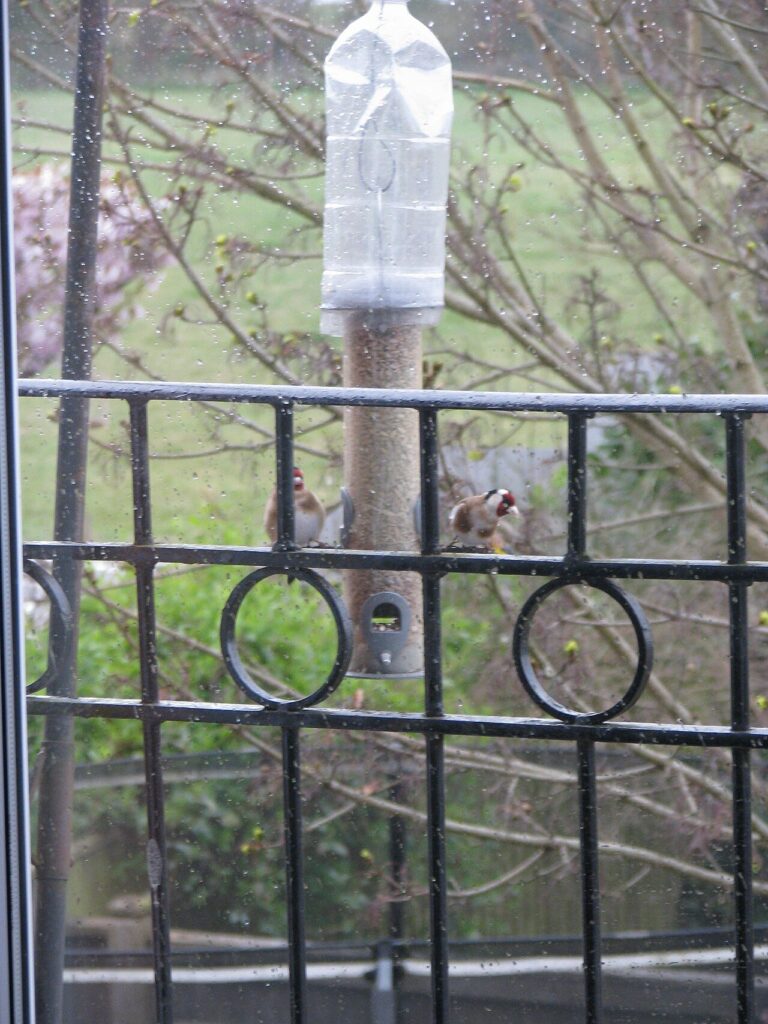
Black-oil sunflower seed, and nothing else to start. It’s the one seed almost every feeder bird in North America eats, from chickadees to cardinals, and it’s cheap. Once the birds are coming, you can experiment: shelled sunflower (no mess on the sill, and the finches love it), safflower if house sparrows or grackles take over, a few dried mealworms for bluebirds and wrens in spring. Skip cheap mixed seed with red milo and cracked corn; the birds kick it out, and it rots on the tray.
Fill it a cup at a time and refill often rather than loading it full. A small tray of fresh seed gets more visits than a big tray of week-old seed, and it keeps the feeder light on the glass.
How long until birds find it
Anywhere from an hour to three weeks. If you already have a yard feeder, move the window feeder close to it, or move the yard feeder near the window for a week, and the birds transfer over in days. If this is your first feeder, expect a wait: chickadees and titmice usually find it first, then house finches and nuthatches, then cardinals once they’ve watched the others use it. Sprinkle a little seed on the sill or the ground below for the first few days to draw attention. And close the curtains or blinds partway at first; the birds are looking at the room, and a still, dim interior reads as safe. Within a couple of weeks you’ll be able to stand right at the glass.
If it’s been three weeks with nothing, the fix is almost never the feeder. Run through the basics of attracting birds to a yard: water nearby, some cover within twenty feet, and no cat sitting in the window.
Keeping it clean
Window feeders are open trays, and birds stand in their food, so clean the tray every week or two with hot water and a drop of dish soap, and once a month with a 10 percent bleach solution, rinsed well and dried. This matters more than it does for a tube feeder, because trays collect droppings, and finches in particular pass eye disease at dirty feeders. It’s a two-minute job on every feeder above, which is the other reason to buy one with a removable tray.
Bottom line
Buy the Nature’s Hangout if you want one that lasts, the DY-SKTY if you want to spend fifteen dollars, and the DesGully if you’ve already had one fall off. Mount it with alcohol-cleaned glass and warm cups, fill it with black-oil sunflower, and give it two weeks.
Related: How to keep squirrels off bird feeders · The best oriole feeders · The ultimate bird bath guide