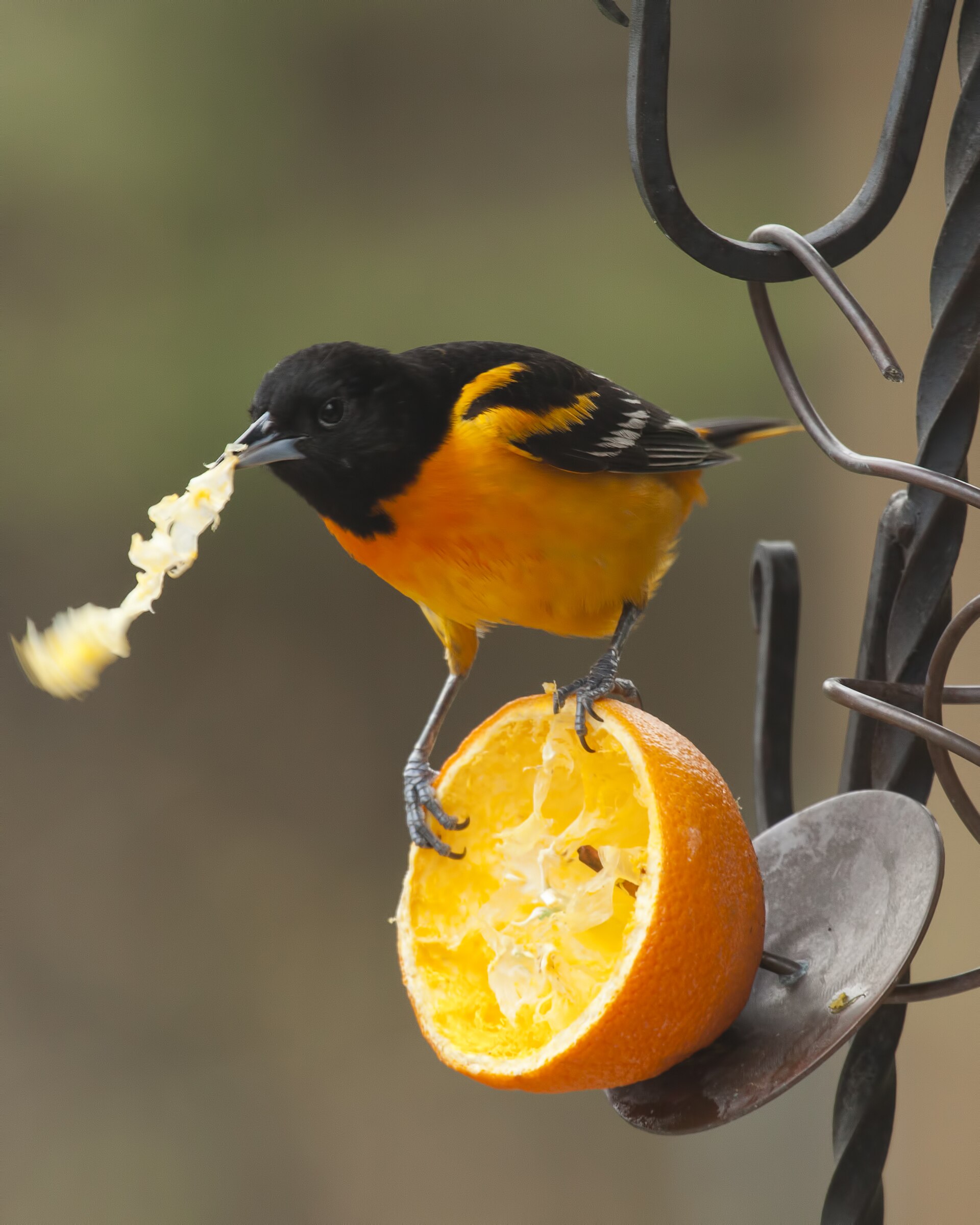
If you have ever watched a male Baltimore oriole drop onto a dish of grape jelly, you know why people build a whole corner of the yard around this one bird. The color is absurd. But orioles are picky about how they’re fed, and most “oriole feeders” sold online get at least one thing wrong. This guide covers the five feeders that actually work, what to put in them, and, because Spark Lark is based in Southwest Florida, the part most guides skip: orioles here are a winter bird, not a spring one.
Spark Lark is reader-supported. As an Amazon Associate we earn from qualifying purchases made through links on this page, at no extra cost to you.
The short version
- Best overall: Perky-Pet Oriole Jelly Feeder. Holds a full 32-ounce jar of jelly, dispenses a little at a time, and stays cleaner than open dishes.
- Best budget: a steel “Clementine” style dish feeder, an inexpensive option, holds jelly, fruit, or mealworms.
- Best for oranges: Woodlink Brushed Copper Oriole Feeder, orange spikes plus two glass jelly cups under a domed roof, lasts for years.
- Best all-in-one: Amish Toy Box Double Cup feeder, recycled plastic, two jelly cups plus two orange pegs.
- Best for nectar: Perky-Pet Top Fill Glass Oriole Feeder, 22 oz of nectar plus a jelly cup and orange spike, the only all-three-foods feeder here.
What orioles actually eat (and why seed feeders don’t work)
Orioles ignore seed. Their diet is fruit, nectar, and insects, and the mix shifts through the year: heavy on sugar when they arrive tired from migration, heavy on insects when they’re feeding chicks. A feeder that only offers one of those will get visits for a few weeks and then go quiet. The feeders below are ranked partly on how many of the three they can serve at once.
Three rules apply no matter which feeder you buy:
- Nectar is 4 parts water to 1 part plain white sugar, the same recipe as hummingbird nectar. No honey, no red dye, no brown sugar.
- Grape jelly goes out in small amounts. A tablespoon or two at a time in a shallow dish. Buy the plain kind, no artificial sweeteners or colors. Change it daily in warm weather, because mold sets in fast and a jelly-soaked bird can’t fly.
- Oranges dry out in a day. Cut fresh halves every morning, and set the feeder over a shallow dish of water or use an ant moat, or you’ll be feeding ants instead.
When to put oriole feeders out
This is where the answer depends entirely on where you live, and it’s the part most national guides get wrong for Florida readers.
Northern and Midwestern states: Baltimore and Orchard orioles arrive in late April through mid-May. Put feeders out two to three weeks before your area’s usual first sighting, because the first birds through are scouting and will remember a yard that fed them. Keep feeders up through August; the birds thin out once nesting starts and come back in numbers before fall migration.
Southern states: arrival is earlier, typically the first half of April along the Gulf Coast and Southeast.
Florida, and especially the southern half: flip the calendar. Baltimore orioles spend the winter here. In the Naples and Fort Myers area you’ll see them from roughly October through April, often at feeders on cold mornings when insects are scarce. If you’re in South Florida and you put your oriole feeder out in May like the national guides say, you’ve just missed the entire season. Plan on the first week of October to hang them and late April to take them down.
The five oriole feeders worth buying
1. Perky-Pet Oriole Jelly Feeder, best overall
This is the feeder that solves the biggest jelly problem, which is that open dishes get rained on, dried out, and swarmed by bees. The Perky-Pet holds an inverted 32-ounce container and meters jelly onto a bright orange ledge as the birds eat it. You fill it once and it runs for days instead of hours.
Downside: jelly only. No spike for oranges and no nectar, so pair it with a fruit spike or one of the dish feeders below. Best for: anyone who wants low maintenance and already knows orioles visit the yard.
2. Steel dish “Clementine” feeder, best budget
Several brands sell the same basic design (the Heath Clementine feeder is a common example): a UV-resistant powder-coated steel hanger with one or two removable cups and a spike or hook for fruit. It holds jelly, orange halves, or live mealworms, which makes it the most flexible feeder on this list for the price.
Downside: it’s small and not very visible. Orioles find feeders by color, so hang it near something orange or add an orange ribbon the first week. Best for: a first feeder, or a second station on the other side of the yard.
3. Woodlink Brushed Copper Oriole Feeder, best for oranges
The Woodlink copper feeder is the one to buy if you feed fruit first. Orange halves slide onto metal spikes, two small glass cups take jelly or marmalade, and a high domed roof keeps sun and rain off the food, which is what makes jelly go bad fastest in open feeders. Brushed copper ages to a soft brown and looks better on a patio than anything plastic. Ships fully assembled with a hanging cable.
Downside: the two jelly cups are small (2 ounces each), so you’ll refill them daily in peak season, and it’s the second most expensive feeder here. Best for: people who prefer fruit over jelly (fewer bees, less mess) and want something that looks good year-round.
4. Amish Toy Box Double Cup feeder, best all-in-one
Two removable jelly dishes, two orange pegs, double-sided so birds can feed from either direction, made from recycled plastic in a color orioles spot from across the yard. It’s the feeder to buy if you can only have one, because it covers jelly and fruit at the same time and cleans up with a hose.
Downside: price, and the open cups need daily attention in summer heat. Best for: a main feeding station where you’ll check it every morning anyway.
5. Perky-Pet Top Fill Glass Oriole Feeder, best for nectar
This is the only feeder on the list that serves all three foods. The glass reservoir holds 22 ounces of nectar behind five feeding ports with long perches sized for orioles, not hummingbirds, and it comes with a clip-on jelly cup and an orange spike. It fills from the top, a gasket keeps it from dripping, and the whole thing comes apart for cleaning.
Downside: glass, so don’t hang it where it can swing into a post, and the jelly cup is small. Best for: anyone who wants to try nectar alongside jelly and fruit without hanging three feeders.
Quick comparison
| Feeder | Jelly | Oranges | Nectar | Mealworms |
|---|---|---|---|---|
| Perky-Pet Jelly Feeder | Yes (32 oz) | No | No | No |
| Steel dish feeder | Yes | Yes | No | Yes |
| Woodlink copper feeder | Yes (2 glass cups) | Yes (spikes) | No | Yes (in cups) |
| Amish Toy Box Double Cup | Yes (2 cups) | Yes (2 pegs) | No | Yes |
| Perky-Pet Top Fill Glass | Yes (1 cup) | Yes (1 spike) | Yes (22 oz) | No |
Only the Perky-Pet Top Fill is a true nectar feeder. If you want to offer nectar from a different setup, an oriole-specific nectar feeder has larger ports and perches than a hummingbird feeder; a standard hummingbird feeder will get used too, but the birds can’t perch on it comfortably and they’ll drain it fast.
Where to hang it
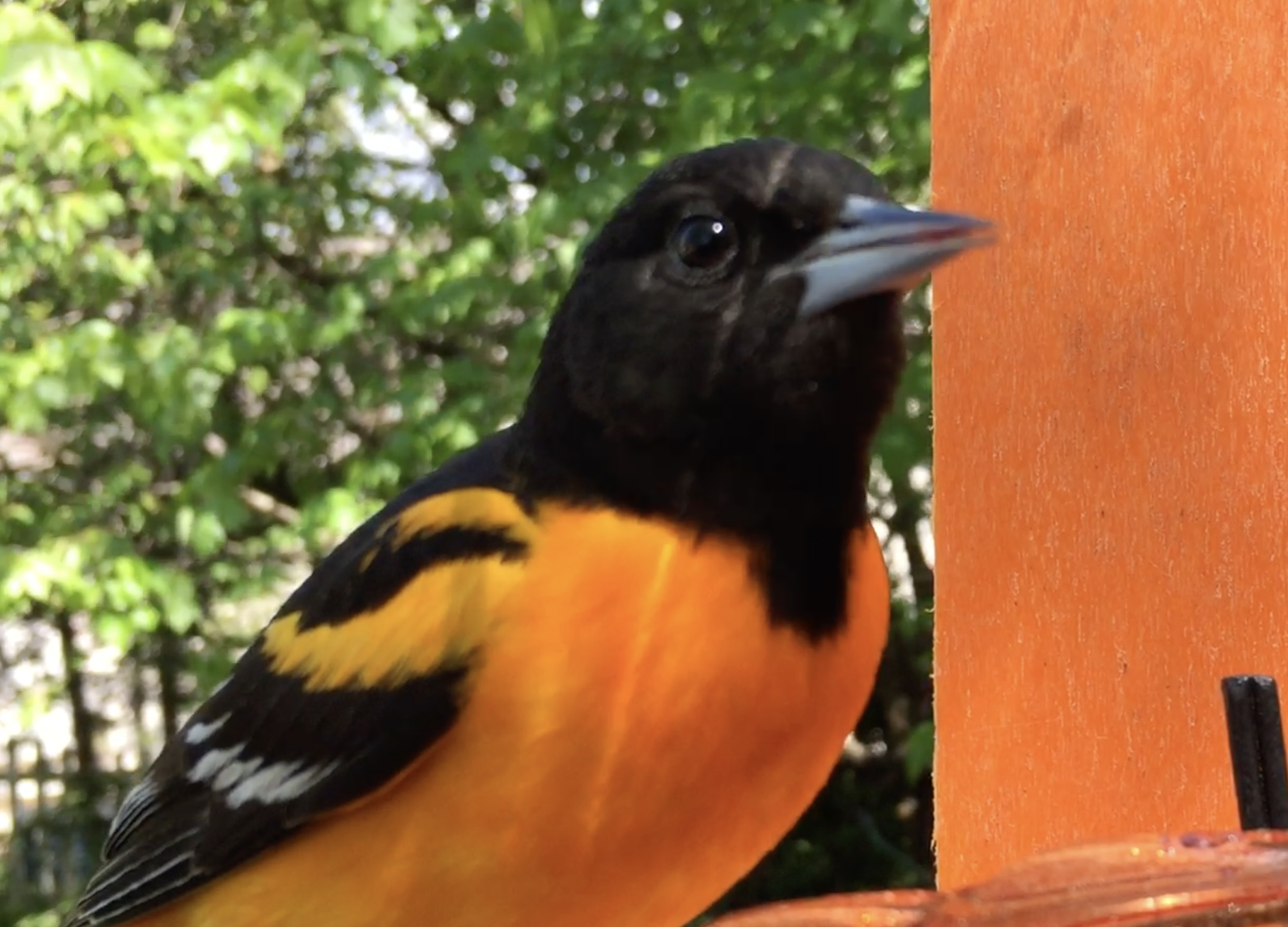
About six to seven feet up, in the open but within ten feet of a tree or tall shrub the bird can retreat to. Orioles are treetop birds and don’t like coming down into a tight space. Put it where you can see it from a window, because you’ll only keep up with the daily jelly and orange routine if the feeder is in your line of sight. Keep it away from the seed feeders; orioles don’t like the traffic, and the jelly attracts house sparrows and starlings if it’s part of a crowd.
Troubleshooting
Orioles came for a week and vanished. Normal. Once nesting starts they switch to insects. Put out mealworms in the jelly cup and they’ll come back, and keep the feeder up because they return before fall migration.
Bees and wasps on the jelly. Use less jelly, mix it 1:1 with water in a blender so it’s more like thick juice, or switch to the Perky-Pet, which exposes very little jelly at a time.
Ants. An ant moat above the feeder, or set the whole thing over a saucer of water. Never use petroleum jelly on the hanger; it gets on feathers.
Mockingbirds or catbirds hogging it. Add a second feeder 20 feet away. A mockingbird can guard one; it can’t guard two.
No orioles at all. Check the calendar above first. If you’re in the right season, make sure the feeder is visible from the air (orange color, open placement) and give it three weeks. Orioles are habit birds; a yard that fed them last year gets found in days, a new yard can take most of a season.
Bottom line
Start with the Perky-Pet jelly feeder and an orange half on a nail. That costs little and it covers the two foods orioles go for first. Upgrade to the Amish Toy Box or the Woodlink copper feeder once you know they’re coming. And if you’re in Florida, ignore the May advice and get everything out by early October.
Related: Ultimate Bird Bath Guide · Essential Rules for Attracting Birds to Your Yard