Goldfinches and house finches are the easiest colorful birds to bring to a feeder anywhere in the lower 48, and the yards that don’t get them are almost always making one of three mistakes: the wrong seed, the wrong feeder, or a feeder that’s been sitting empty or stale for a month. Fix those and a flock shows up within a couple of weeks, often within days. This guide covers the two seeds that work, which feeder to put them in, and the timing that most people get backward.
Spark Lark is reader-supported. As an Amazon Associate we earn from qualifying purchases made through links on this page, at no extra cost to you.
The short version
- Seed: hulled sunflower chips in a regular tube feeder, plus nyjer in a finch feeder. Both, not either.
- Feeder for the nyjer: iBorn 15-inch finch tube for a small yard, or the all-metal mesh finch feeder when you want a dozen birds on it at once.
- Cheapest way to test whether finches are around: a 3-pack of refillable nyjer socks.
- If house sparrows and house finches crowd out the goldfinches: the Stokes Topsy Turvy upside-down feeder. Only goldfinches will hang upside down to eat.
- Timing: keep nyjer out from March through October; peak is July and August when goldfinches nest.
Which finches you’ll get
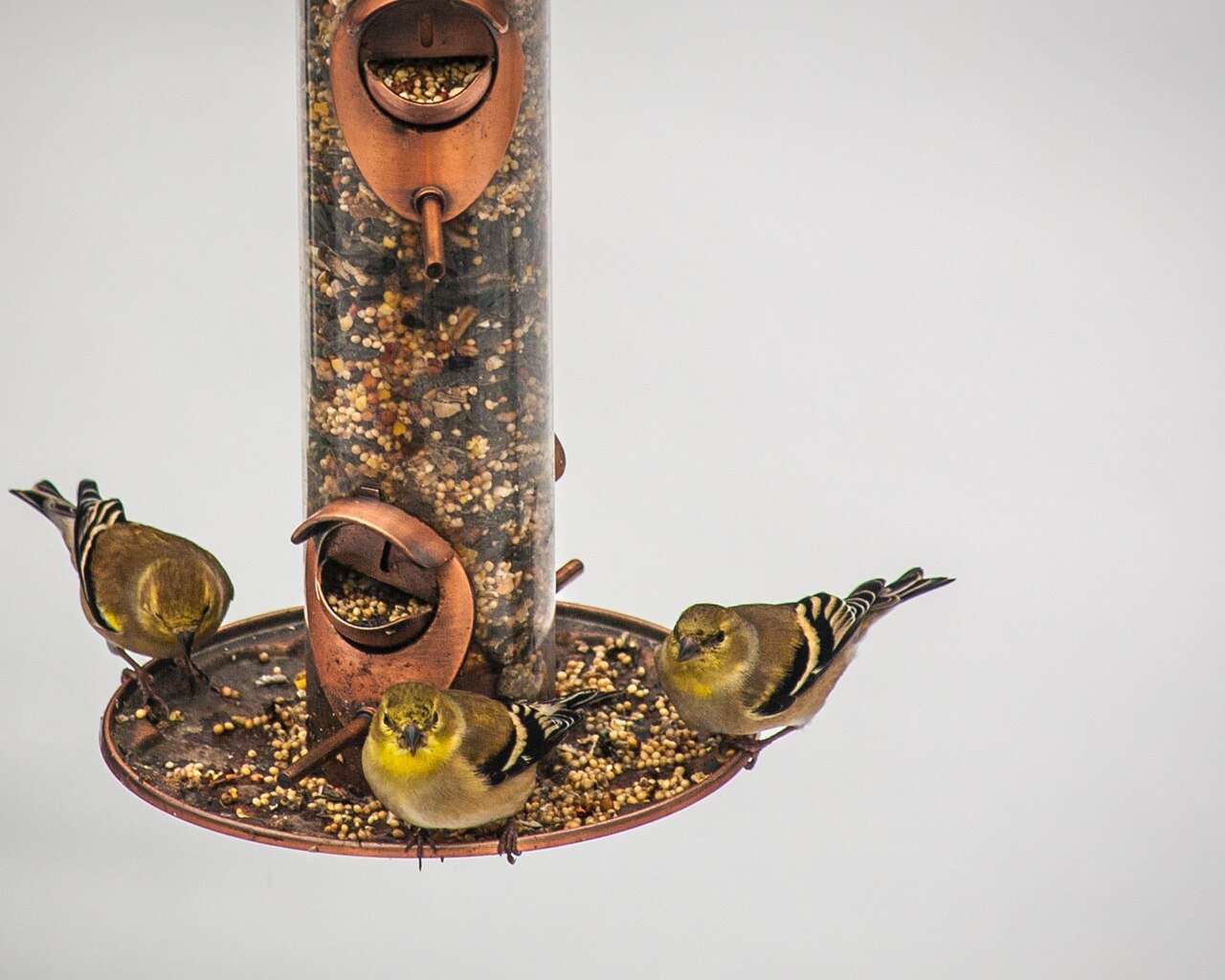
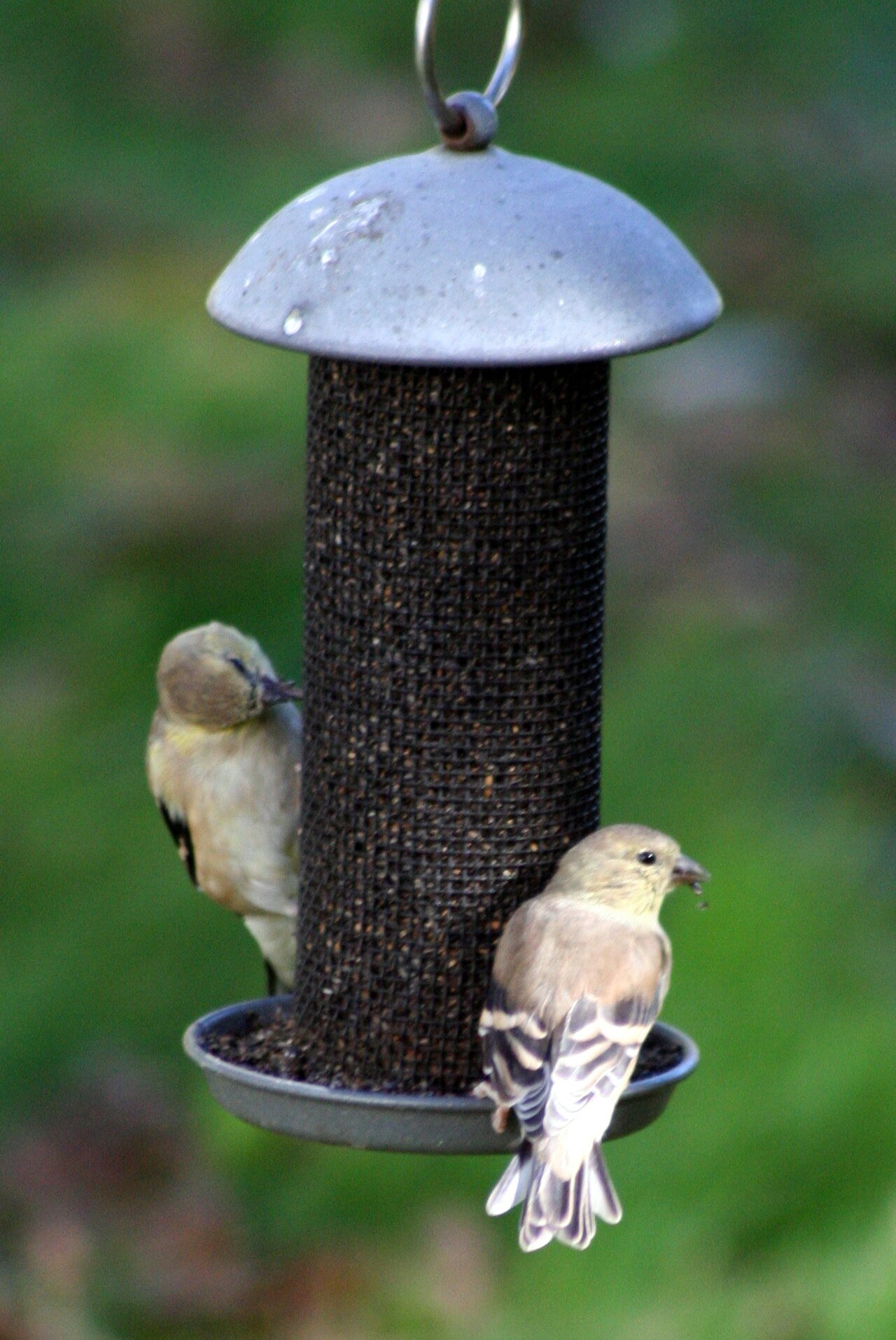
American goldfinch. The whole country except the far South in summer, everywhere in winter. The male is lemon-yellow with a black cap and wings from April to September, and then molts into a drab olive-brown that fools people into thinking the goldfinches “left.” They didn’t; they’re the streaky little birds still on the nyjer feeder in January.
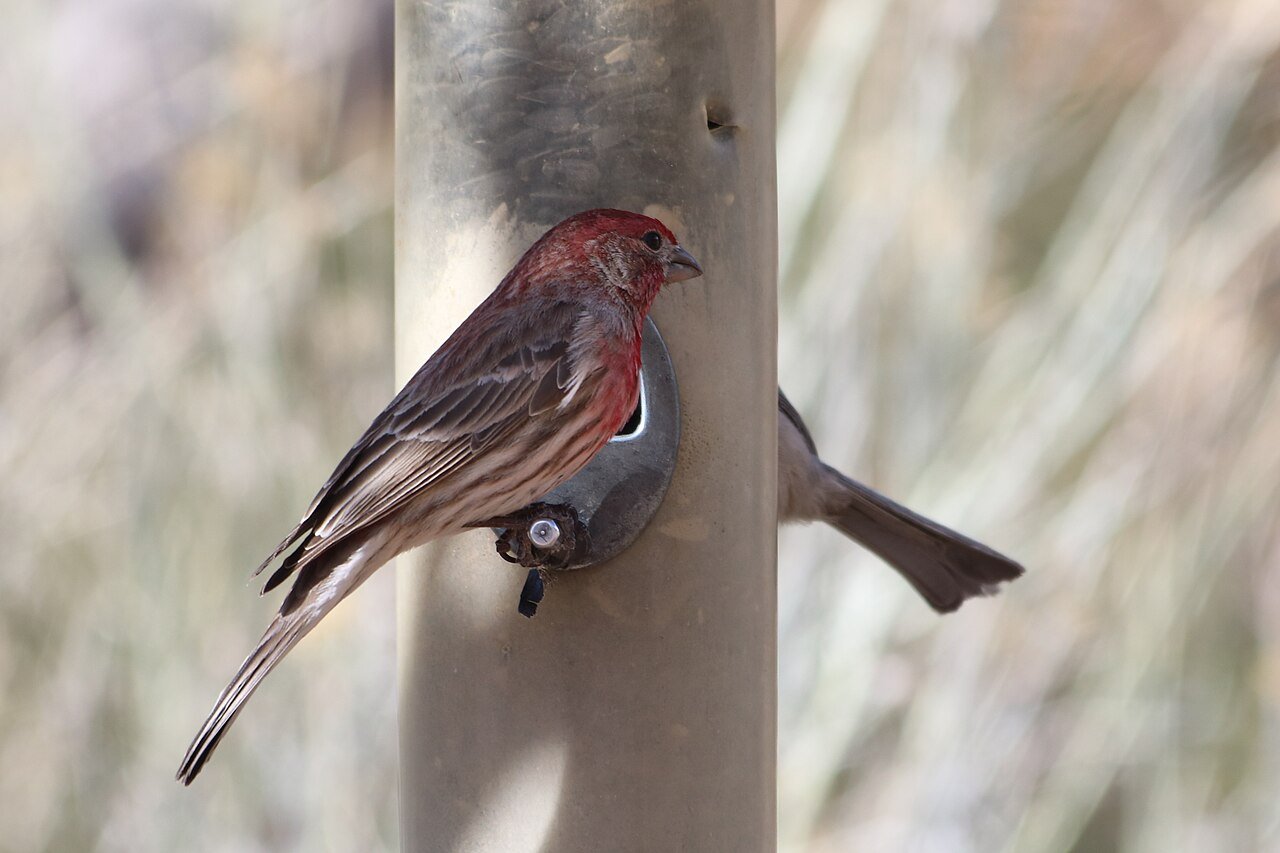
House finch. Every state, every season, city and suburb included. Streaky brown, the male with a raspberry-red head and breast. They come in flocks of a dozen, sit on the feeder for minutes at a time, and eat sunflower before anything else. If you have a feeder and live in a town, you have house finches.
Lesser goldfinch (the West and Southwest), purple finch (the North and the Pacific coast in winter), and pine siskin (an irruptive northern finch that shows up in huge numbers some winters and not at all in others) all use the same seed and the same feeders, so a yard set up for goldfinches gets them too. Our winter birds by region guide has the list for your area.
Seed: the two that work
Hulled sunflower (chips or hearts). This is the sleeper. Goldfinches and house finches eat black-oil sunflower happily, but hulling the seed removes the one thing that slows a small-billed bird down. Finches will choose a feeder of sunflower chips over a feeder of whole sunflower every time, and because there are no shells, there’s no mess under the feeder and no sprouting. The trade-off is that hulled seed spoils faster in rain, so fill lightly and keep it in a covered feeder. Chips also draw chickadees, nuthatches, cardinals and titmice, so a chip feeder is never idle.
Nyjer (thistle). The tiny black seed sold as thistle, which it isn’t; it’s an African daisy relative, sterilized so it can’t sprout. Goldfinches, siskins and the smaller finches love it, and almost nothing else eats it, which is the point: a nyjer feeder is a finch-only feeder. House sparrows, jays, grackles and squirrels ignore it. Buy Wagner’s 5-pound bag unless you’re feeding a big flock; nyjer dries out and goes stale within about six weeks of opening, and a stale feeder is the number one reason people say “the goldfinches stopped coming.” If the seed doesn’t feel oily between your fingers, dump it. Bigger flocks can go for the 10-pound bag.
Skip the “finch blend” mixes. They’re nyjer cut with canary seed and millet that the finches kick out. And skip the grocery-store wild bird mix entirely for finches; our seed-by-season guide explains why.
Feeders: what the shape does
Nyjer is too small for a regular feeder; it pours out of the ports. Finch feeders have either tiny slit ports or a fine mesh the birds pull seed through. Three shapes cover every situation.
Finch tube feeder — the standard
15 in · 8 ports
A tube with small slit ports and short perches. The iBorn is the one to buy at this price: metal ports and cap, a base that unscrews for cleaning, and eight stations so a family of goldfinches can eat together. It holds about a pound and a half of nyjer, which is right for a small yard; a bigger tube just means stale seed at the bottom.
Downside: perches mean house finches and house sparrows can use it too. In a yard with a lot of either, the goldfinches get pushed off.
Mesh finch feeder — for a flock
all metal
A cylinder of fine steel mesh with no ports at all. Finches cling to the mesh anywhere on the surface and pull seed through, so a mesh feeder will hold fifteen goldfinches at once where a tube holds eight. Metal mesh outlasts the fabric socks by years, dries fast after rain, and squirrels can’t chew it. This is the feeder for a yard that already has finches and wants more of them.
Downside: mesh drops more seed than a tube, so put it over a spot you don’t mind, or add a tray.
Stokes Topsy Turvy — the upside-down feeder
8 perches above the ports
The perches sit above the feeding ports, so a bird has to hang upside down to reach the seed. Goldfinches, siskins and chickadees do that without thinking; house finches and house sparrows mostly won’t. If your finch feeder has turned into a house sparrow feeder, this fixes it in a day.
Downside: it’s a goldfinch-only tool. If you like the house finches too, run a regular tube alongside it.
Nyjer socks — the cheap test
refillable
A mesh fabric bag you fill with nyjer and hang. It works, finches cling to it just like the metal mesh, and it’s the cheapest way to find out whether there are goldfinches in your neighborhood before you spend money on a feeder. It’s also fine as the permanent feeder if you don’t mind replacing it every season. We’ve written up the sock feeder question in more detail.
Downside: fabric holds water, so the seed molds after a wet week, and squirrels shred them.
Where to hang it
Finches are twitchy. Put the feeder within ten feet of a shrub or small tree they can drop into, five or six feet off the ground, and away from the busiest feeder in the yard; a nyjer tube hung next to a hopper full of jays and grackles will sit empty while the same tube twenty feet away is covered in goldfinches. Two smaller feeders spread apart beat one big one. And if a window is in play, a feeder mounted on the glass or within three feet of it is safer for the birds than one at fifteen feet, where a startled flock hits the window at full speed.
Timing, and why “they disappeared” usually isn’t true
Goldfinches nest in July and August, later than nearly any other songbird, because they time it to the thistle and sunflower crop. That means the feeder is busiest in late summer, exactly when most people have let their feeders go. Keep the nyjer fresh from March through October and the summer flock stays.
There are two normal dips. In May and June, wild seed is everywhere and the birds spread out. In September and October, they molt and go brown, and people stop recognizing them. Neither is the birds leaving. The one real cause of an empty finch feeder is stale seed: nyjer that’s been in the tube for two months has dried out, and the flock has moved to a neighbor with fresher stock. Dump it, wash the feeder, refill, and they’ll be back in a week.
Keeping them healthy
Finches are the one group of feeder birds that gets sick from feeders. House finch eye disease (a bacterial conjunctivitis) spreads at crowded tube feeders, and salmonella outbreaks among siskins and goldfinches happen in irruption winters. The prevention is boring and it works: scrub feeders every two weeks in a 10 percent bleach solution, rinse, dry fully before refilling; rake the shells and droppings under the feeder; and if you see a finch with swollen, crusty eyes, take all the feeders down for two weeks. The finches won’t starve, and the outbreak ends.
For the cheapest finch feeder of all, see do sock feeders work for goldfinches, and for the nesting side, how goldfinches and house finches nest.
Bottom line
Buy a bag of sunflower chips for the feeder you already have and a bag of nyjer for a finch tube or mesh feeder. Hang the nyjer feeder near cover and away from the main feeder, keep the seed fresh, and give it three weeks. If house sparrows take it over, switch to the Topsy Turvy. That’s the entire method; the goldfinches do the rest.
Related: The best bird seed for each season · Do sock feeders work? · Winter backyard birds by region