Yes. A nyjer sock, the mesh fabric bag you fill with thistle seed and hang from a branch, draws goldfinches about as well as a tube finch feeder does. The birds cling to the fabric and pull the seed through the weave, which is exactly how they feed on a real thistle head. What the sock doesn’t do is last, and that’s the part the packaging leaves out. Here’s when a sock is the right call, when to spend more, and how to get the most out of either.
Spark Lark is reader-supported. As an Amazon Associate we earn from qualifying purchases made through links on this page, at no extra cost to you.
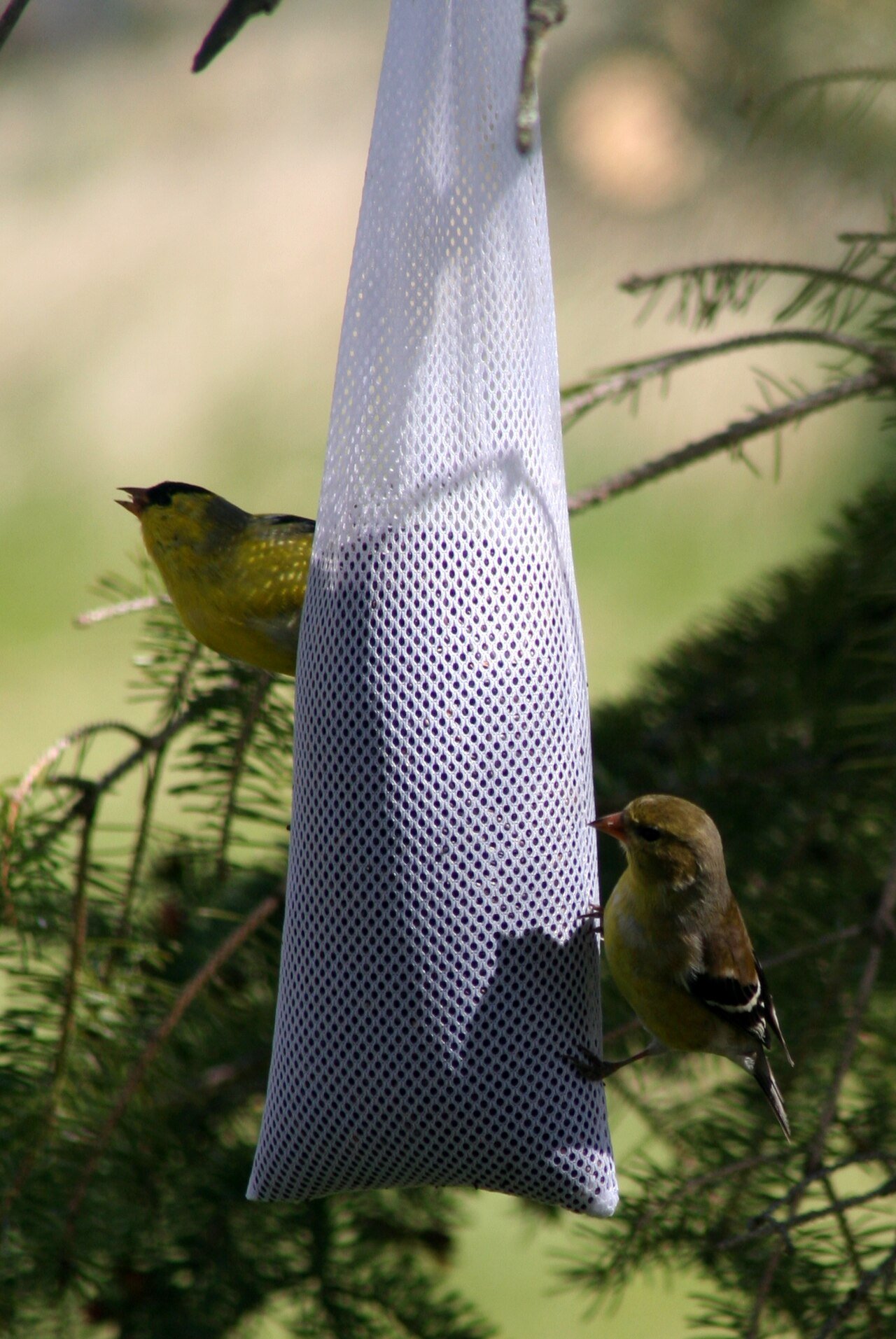
Why socks work
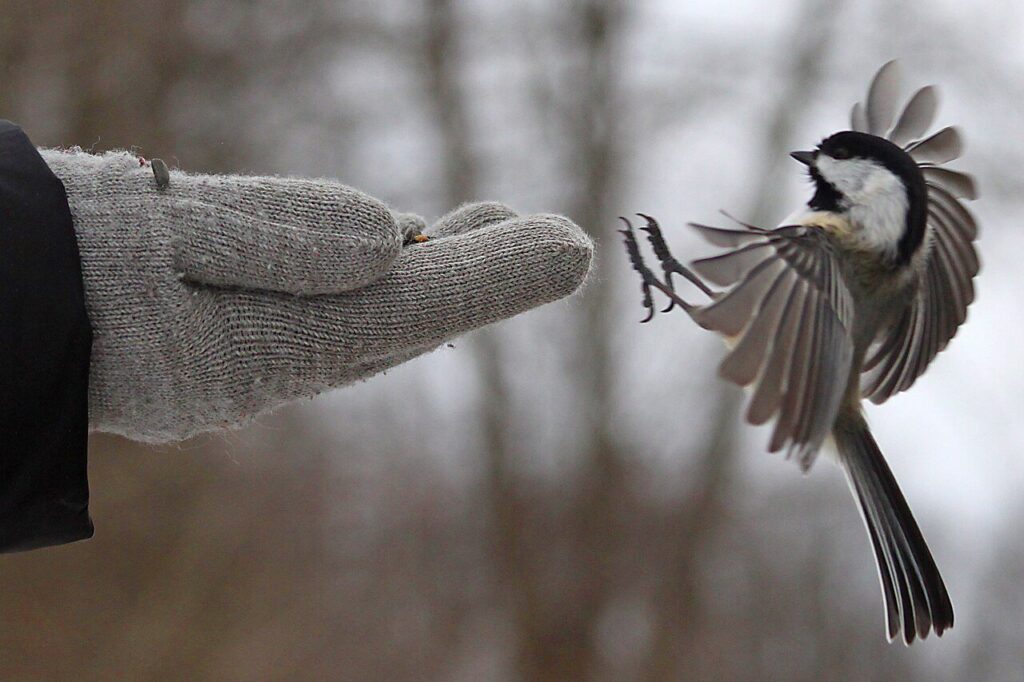
American goldfinches, lesser goldfinches, pine siskins and redpolls are clinging feeders. In the wild they hang off thistle, coneflower and sunflower heads and pick seeds out. A sock is a thistle head they can’t exhaust: a dozen birds can hang on one at once, from any angle, with no perches to fight over. Mesh feeders and socks routinely outdraw tube feeders in a yard with a big flock, simply because more birds fit. House finches, which prefer to perch, use socks less, and house sparrows, jays and squirrels don’t bother with nyjer at all. So a sock is close to a goldfinch-only feeder, which is a feature.
What goes wrong
Three things, all of them about the fabric. It holds water, so after a rainy week the nyjer inside is a moldy brick and the birds stop coming. It wears through: goldfinch bills and the weather open holes in a couple of months, and a squirrel that decides to investigate shreds one in a night. And the seed at the bottom goes stale because you can’t easily empty and refill it. A sock is a summer feeder, in practice; by the third rainstorm of fall it’s done.
Which to buy
3-pack refillable socks — the starter
, empty
Three empty socks with drawstrings. Fill each with a pound of nyjer, hang, and you’re feeding finches for about seven dollars. The refillable design means you can empty one after rain instead of throwing it away. Best use: a first test of whether goldfinches are in the area, or a second and third feeding station spread around the yard so the flock isn’t fighting at one spot.
Downside: thin fabric; expect a season, not a year.
6-pack of larger socks — for a flock
4 × 16 in
Bigger and cheaper per sock. At sixteen inches each one holds close to two pounds of nyjer and twenty birds can work it at once. Buy this if you already know you have finches and want to hang three or four socks along a fence line for the July and August nesting flock.
Downside: the same fabric problems, at a larger scale; a big sock full of wet nyjer is a lot of wasted seed.
All-metal mesh feeder — the sock that lasts
steel mesh
This is the answer to “I like the sock but I’m tired of replacing it.” A metal mesh cylinder does the same thing, birds cling anywhere on it, but it dries in an hour, squirrels can’t chew it, and the cap comes off so you can dump stale seed. Over a couple of years it’s cheaper than socks.
Downside: drops more seed than a tube feeder; hang it over bare ground or add a tray.
Getting the most from a sock
Fill it with fresh nyjer and nothing else; sunflower chips are too big for the weave. Hang it somewhere it can dry, in sun for part of the day and with air on all sides, not tucked against a wall. Put it within ten feet of a shrub and away from the busy sunflower feeder. Give it two to three weeks; goldfinches find new food by watching other goldfinches, and the first bird takes a while. If it goes a month with nothing, the seed is probably stale, or there’s simply no flock nearby yet, which the sock has just told you for seven dollars.
Once a sock is drawing birds, the upgrade path is the mesh feeder above, or a proper finch tube. Our full guide to attracting goldfinches and house finches covers the feeders, the seed, and the timing.
Bottom line
Sock feeders work, and they’re the cheapest way to start feeding goldfinches. Treat them as a warm-season feeder, keep the seed fresh, and when the fabric gives out, replace it with a metal mesh feeder instead of another sock.
Related: How to attract goldfinches and house finches · The best bird seed for each season