The seed that fills a feeder in January is the wrong seed for May, and the bag that brings goldfinches in July does nothing for the juncos in December. Birds’ diets shift with the calendar, and the feeders that stay busy year-round are the ones whose owners shift with them. This guide covers what to put out in each season across the U.S., which of the seven basic foods actually earn their price, and which bags to skip.
One rule runs through all four seasons: black-oil sunflower is the base, and everything else is an add-on. If you only ever buy one bag, buy that one. Prices below are Amazon list prices on September 20, 2026.
Spark Lark is reader-supported. As an Amazon Associate we earn from qualifying purchases made through links on this page, at no extra cost to you.
The short version
- Year-round base: Wagner’s black-oil sunflower, 5 lb. Every seed-eater takes it.
- Fall and winter: add Wildlife Sciences suet cakes, 10-pack and Pennington shelled peanuts, 5 lb for fat and calories.
- Winter, for the ground birds: white proso millet scattered under the feeder for juncos, sparrows and doves.
- Spring and summer, for finches: Kaytee nyjer (thistle), 3 lb in a mesh or sock feeder.
- Spring nesting season: Kaytee dried mealworms for bluebirds, wrens and chickadees feeding young.
- When squirrels and grackles take over: switch to Wagner’s safflower, 5 lb.
- For a deck or patio: Kaytee Ultimate No Mess blend, hulled so nothing sprouts or piles up.
Why the season matters
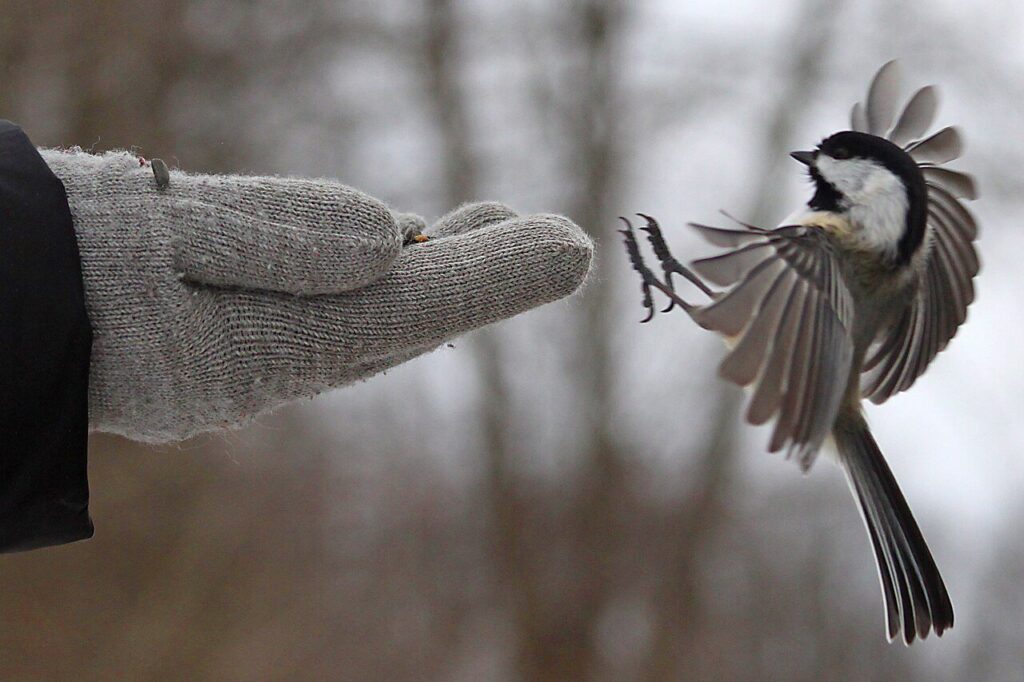
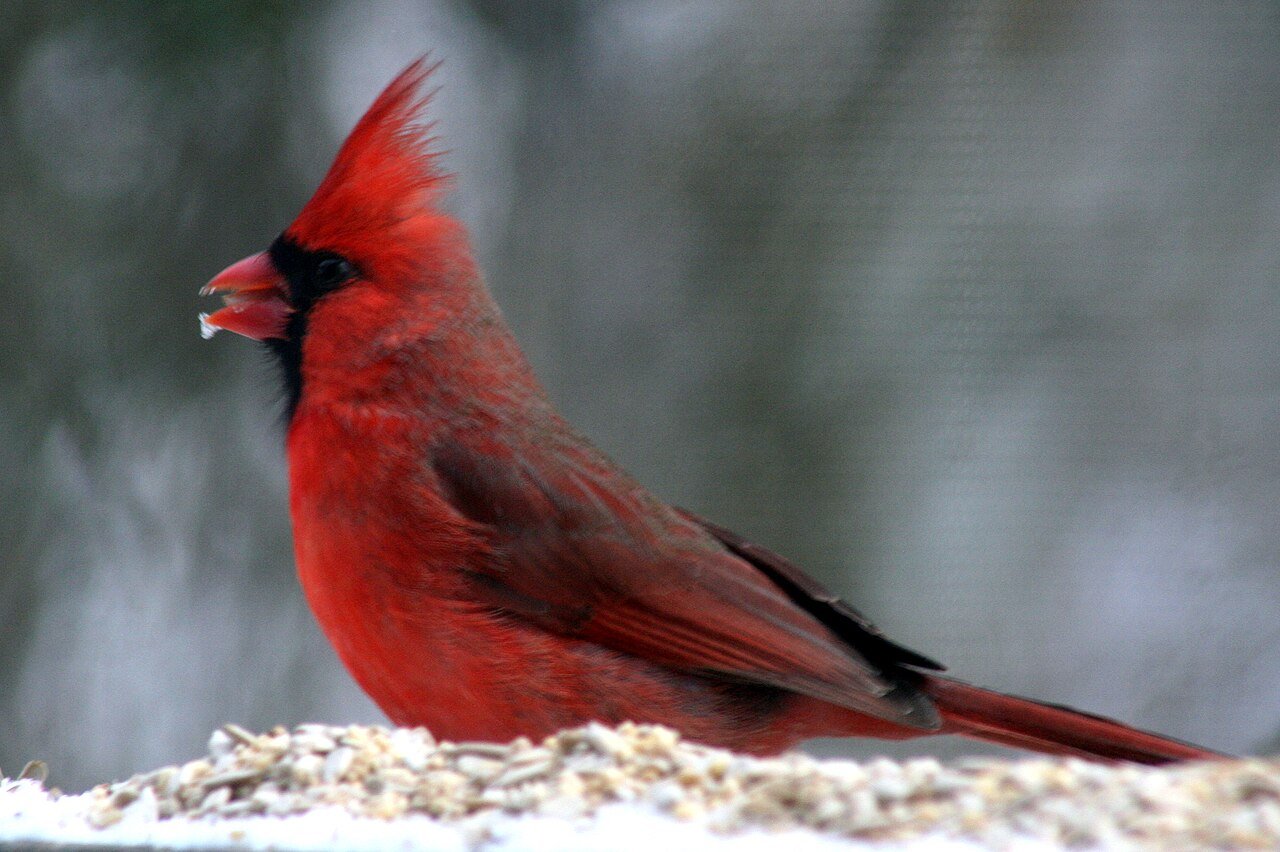
A chickadee in January is burning through fat to survive nights that can drop below zero; it wants the highest-calorie thing it can find, which is sunflower, suet and peanuts. The same chickadee in May is stuffing caterpillars into five nestlings and largely ignoring your feeder. Goldfinches nest late, in July and August, and that’s when nyjer does its best work. Migrants like rose-breasted grosbeaks and indigo buntings pass through in April and May and again in September, and they’ll stop at a sunflower feeder for a week and then vanish for a year. Feed what the birds in front of you need that month, and the feeder stays interesting.
Fall (September to November): build the winter flock
Fall is when the birds that will spend the winter in your yard decide whether your yard is worth it. Chickadees, titmice, nuthatches and jays are caching food now, carrying off one sunflower seed or peanut at a time and hiding it for later. A feeder that’s reliably full in October gets visited all winter.
Put out black-oil sunflower in a tube or hopper feeder, and start suet as soon as daytime highs stay under about 70°F, since it goes soft and rancid in heat. Add shelled peanuts in a mesh peanut feeder; jays, woodpeckers, nuthatches and titmice will empty it. Fall migration brings surprises, so keep the sunflower feeder full through October even if it seems quiet: this is when a rose-breasted grosbeak or a fox sparrow shows up for a few days.
Winter (December to February): calories and cover
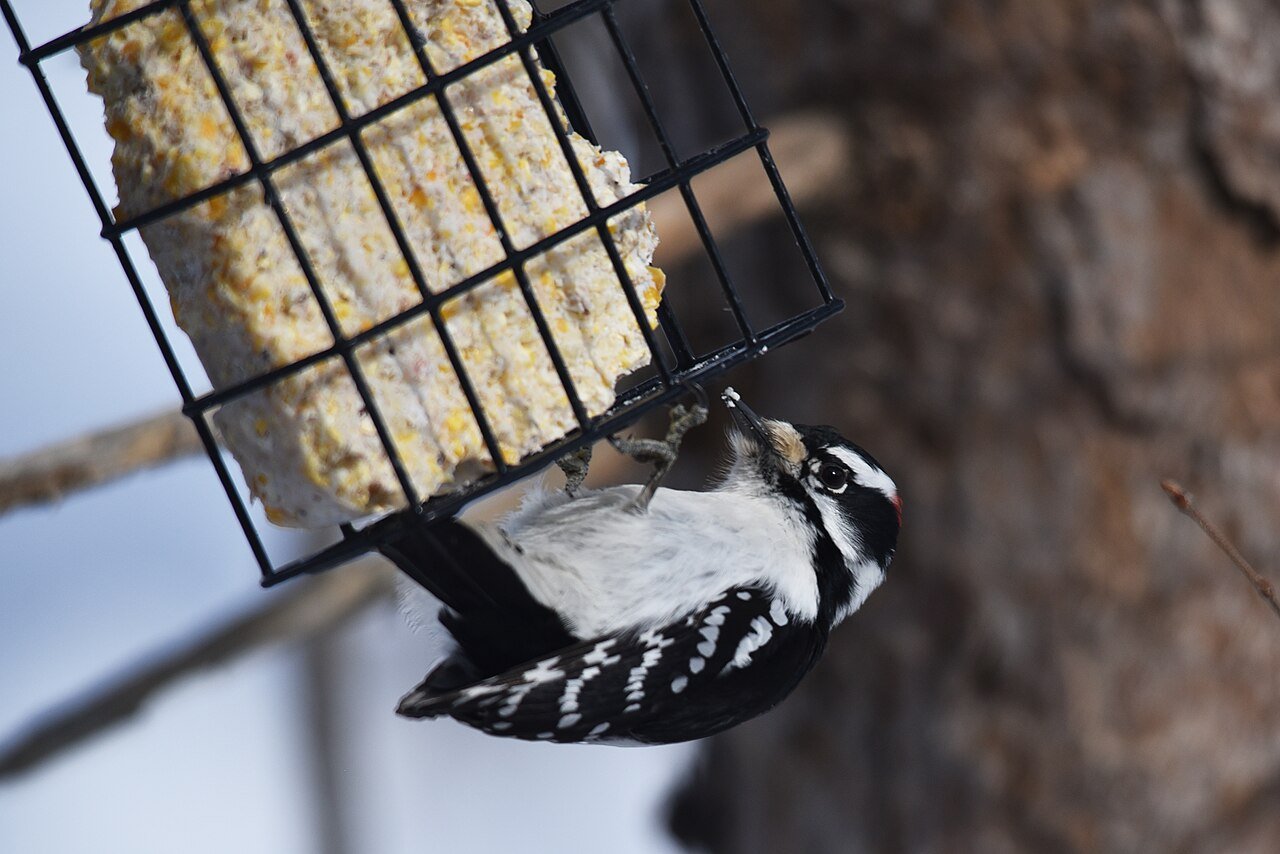
Winter is the season the feeder actually matters. Sunflower and suet stay the core, and this is when peanuts and suet earn their price: a downy woodpecker will visit a suet cage a dozen times a day when it’s ten degrees out. Buy suet in the ten-pack; a single cake lasts about a week in a busy yard and you’ll go through it faster than you expect.
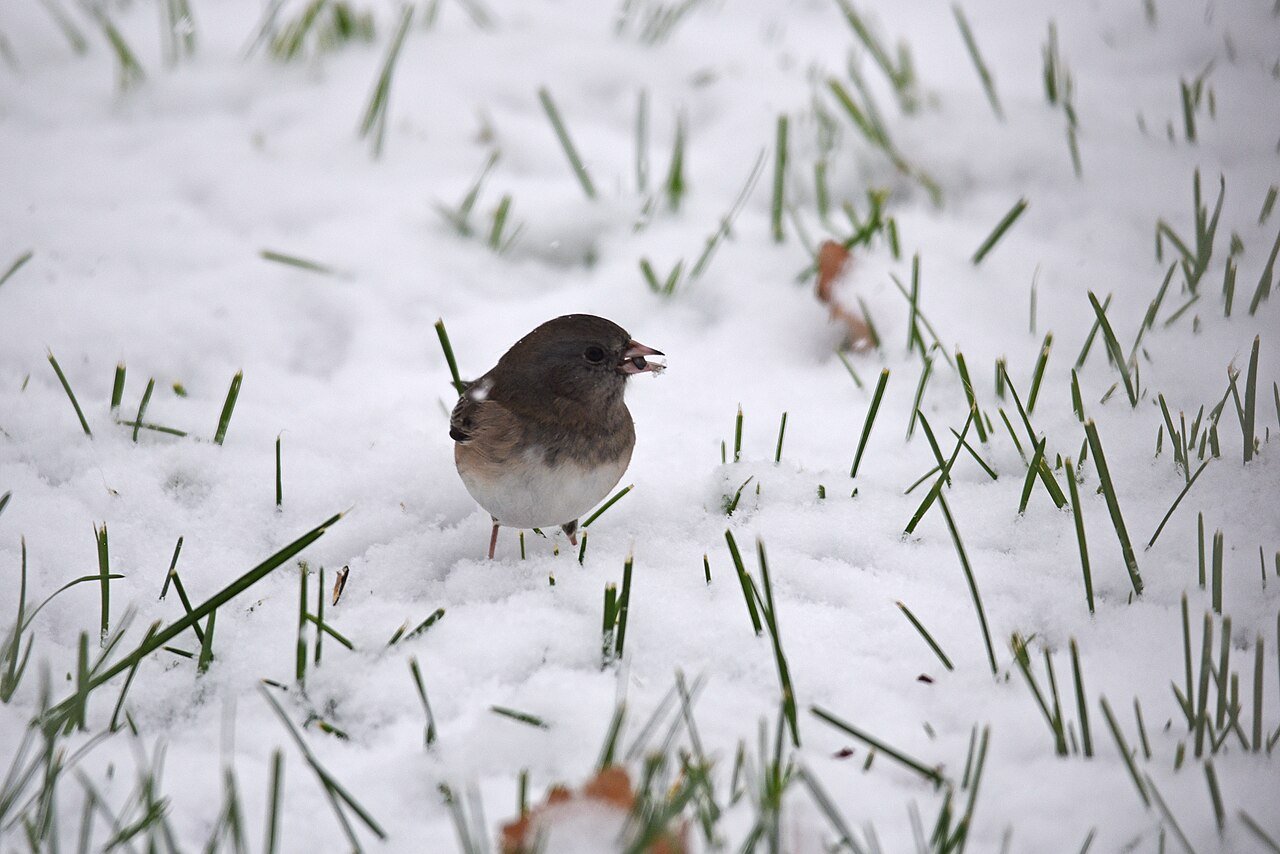
The winter-only addition is white proso millet, scattered on the ground or on a low platform. Dark-eyed juncos, tree sparrows, white-throated sparrows and mourning doves are ground feeders that mostly won’t use a hanging tube, and millet is what they want. Don’t put millet in the main feeder; sunflower-eaters will flick it out to get to the sunflower, which is the mess you see under a feeder filled with cheap mix. A cup on the ground each morning is enough.
In the South and Southwest, where the winter flock includes chipping sparrows, pine warblers and yellow-rumped warblers, suet does the heavy lifting, and a dish of mealworms will pull in the warblers and bluebirds that never touch seed. Our winter birds by region guide has the full species list for your part of the country.
Spring (March to May): migrants and nesting
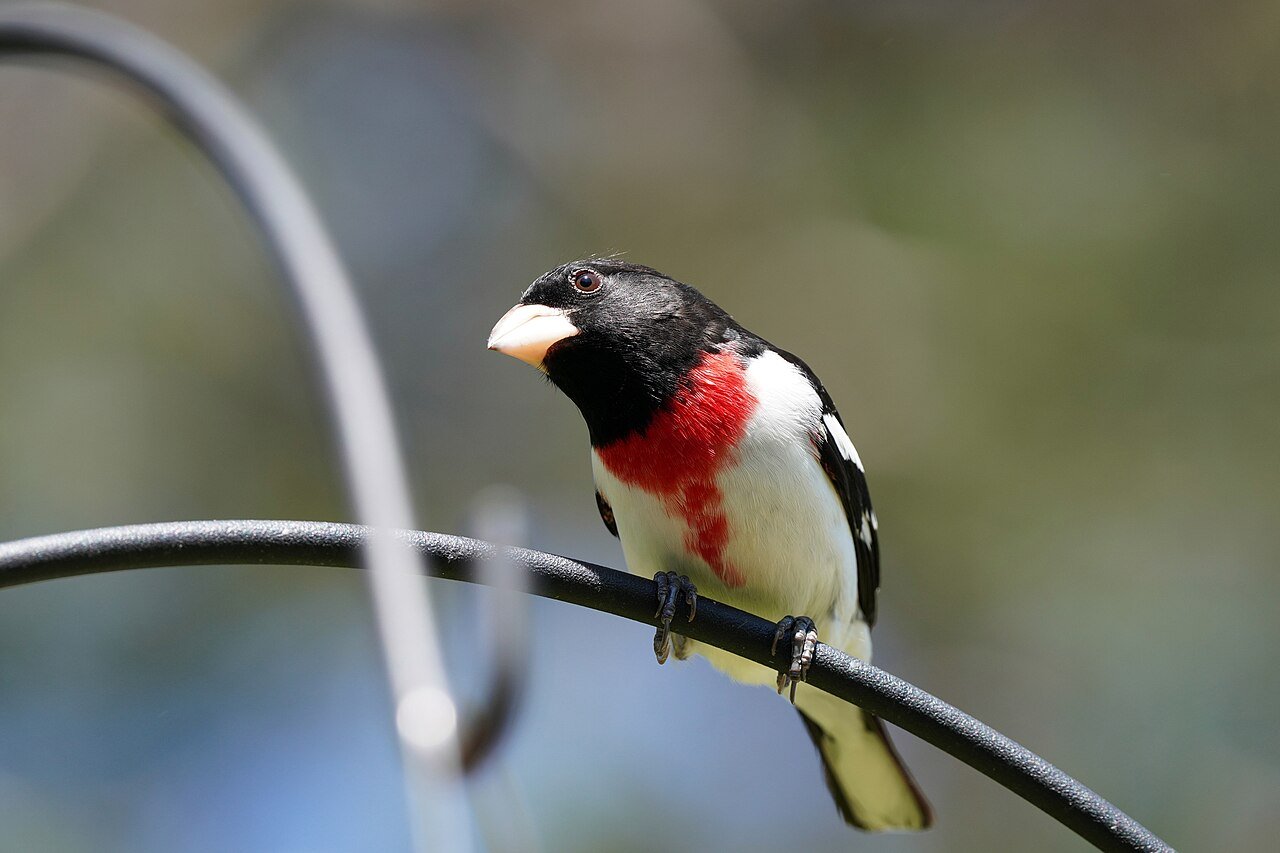
Spring feeding is about two things: the migrants passing through, and the residents starting to nest. Keep the sunflower feeder full through May for the migrants; grosbeaks, buntings and orioles hit sunflower feeders on the way north, and a yard that’s been feeding all winter is the one they find. Taper the suet as the weather warms, and pull it entirely once highs pass 80°F.
For the nesters, the food that changes things is dried mealworms. Bluebirds, Carolina wrens, chickadees and robins feed their young almost entirely on insects, and a small dish of mealworms near a nest box will have parents shuttling back and forth all day. Soak them in water for ten minutes first in dry weather so the nestlings get moisture too. Put out a tablespoon at a time, not a bowl, or the jays and starlings will clean it out before the bluebirds arrive. The bird charcuterie board idea works well in spring for exactly this reason.
Spring is also when orioles and hummingbirds return. They don’t eat seed; oranges, grape jelly and nectar bring them in, and our oriole feeder guide covers that setup.
Summer (June to August): finches, and less of everything else
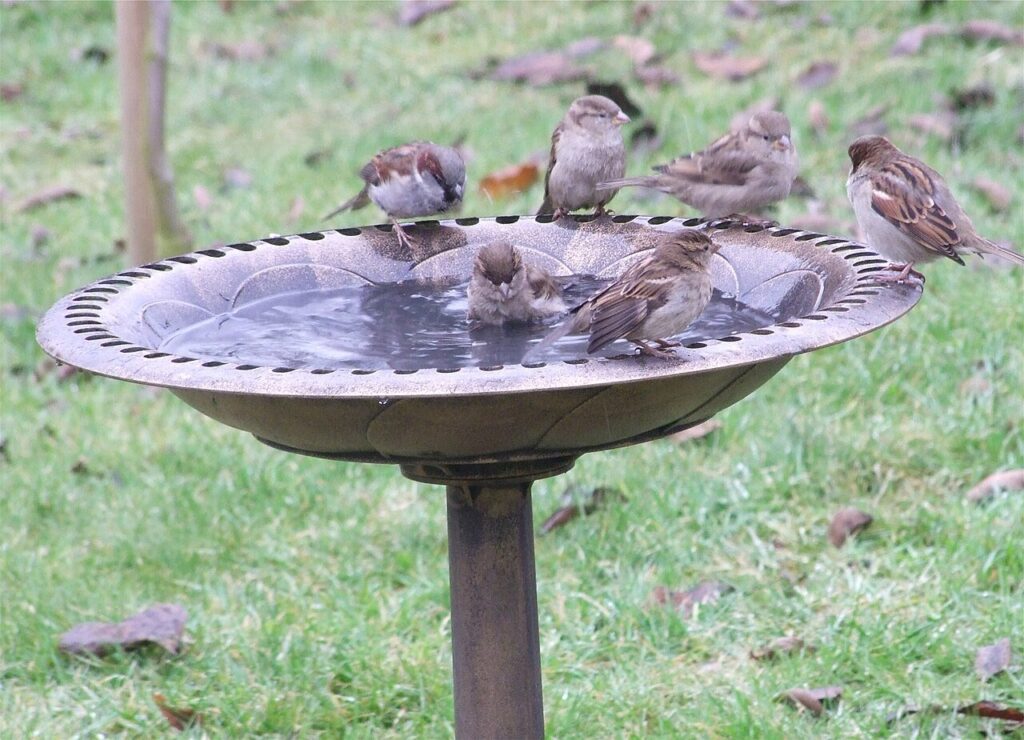
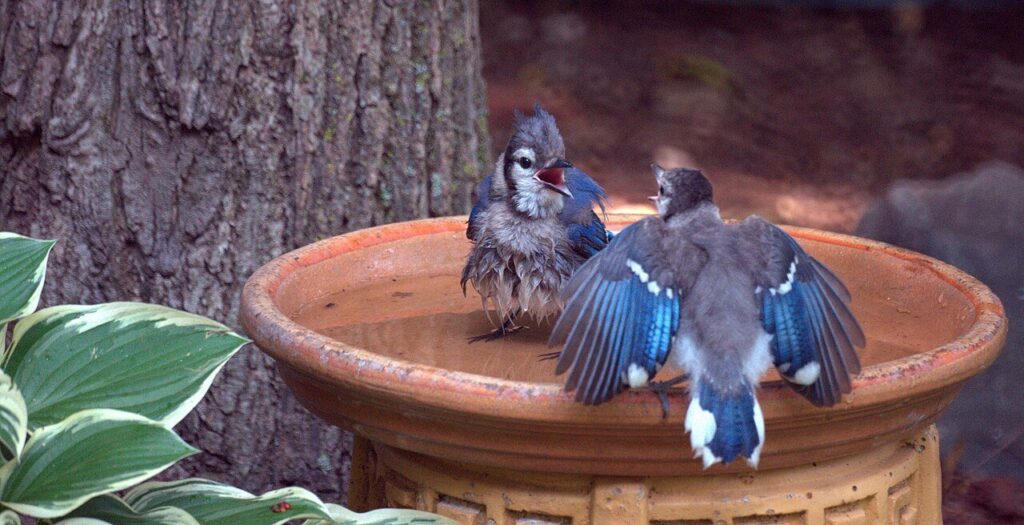
Summer is the one season where less is more. Natural food is everywhere, most birds are eating insects, and a feeder full of seed in 90-degree humidity is a place for mold and disease to spread. Cut the amount you put out by half, fill only what gets eaten in two or three days, and clean feeders weekly rather than every two weeks. No suet. A bird bath will outdraw any feeder in July.
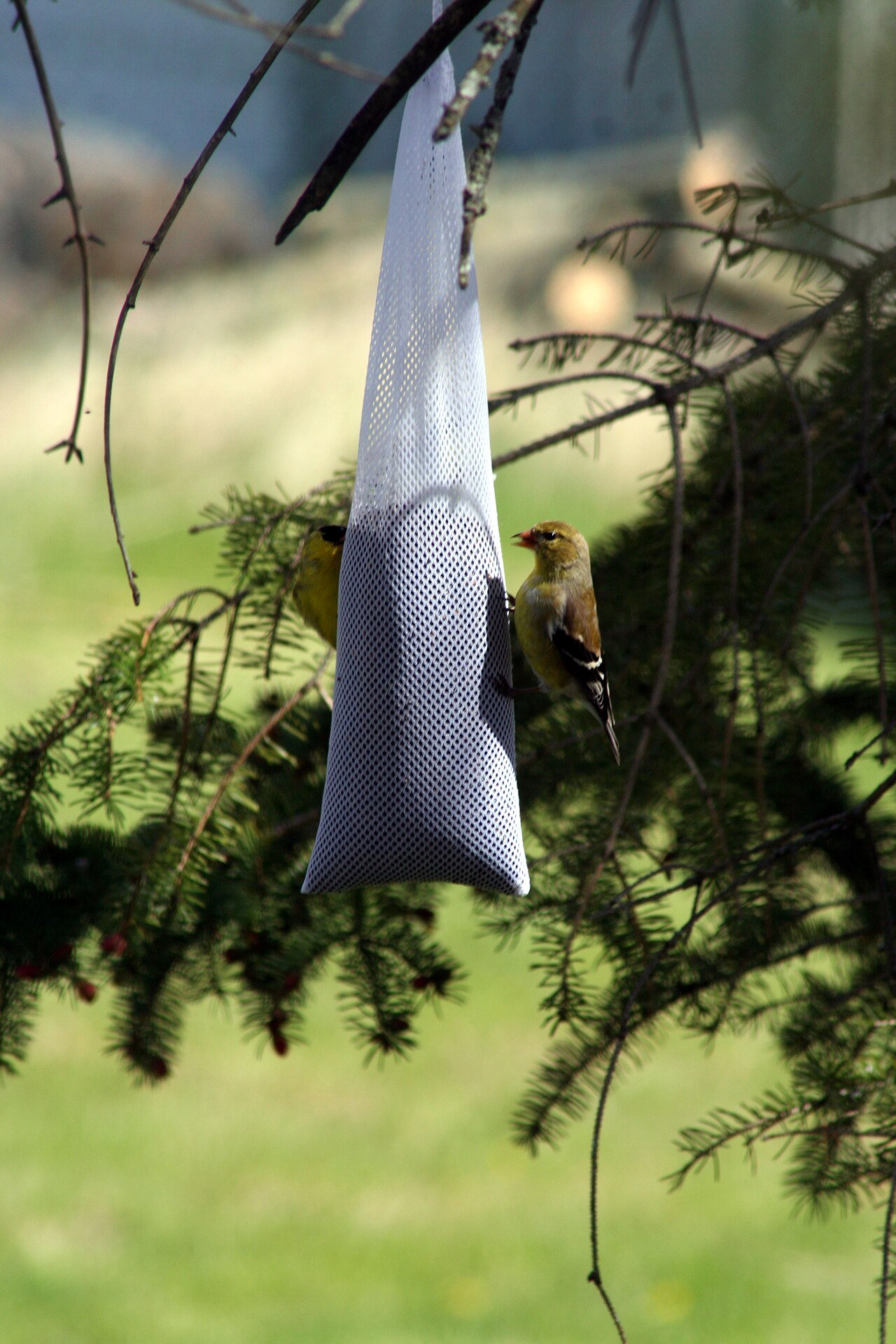
The exception is the finches. American goldfinches nest in July and August, later than almost any other songbird, timed to the thistle and sunflower crop, and this is when a nyjer feeder is busiest. Nyjer is expensive per pound and goes stale in about a month once opened, so buy the 3-pound bag rather than the 10 unless you’re going through it. Use a mesh sock or a tube with tiny ports; a regular feeder just dumps it on the ground. House finches, pine siskins and, in the West, lesser goldfinches will share it.
When the wrong birds take over: safflower
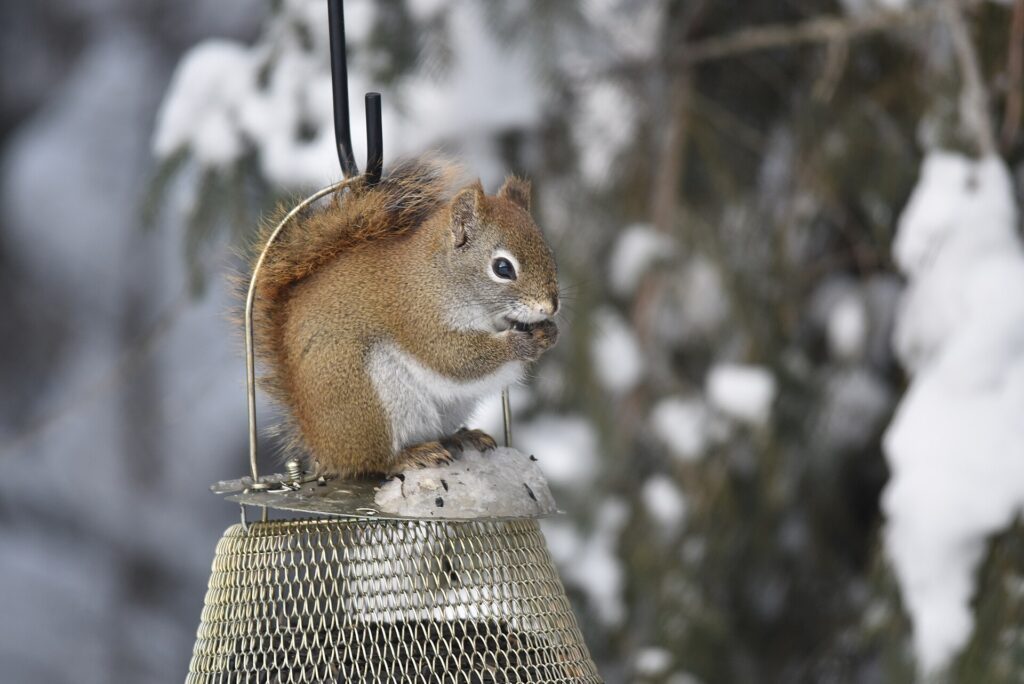
At some point in most yards, usually spring, the feeder gets mobbed by grackles, starlings, house sparrows or squirrels, and the cardinals and chickadees give up. The fix isn’t a different feeder; it’s safflower seed. Cardinals, chickadees, titmice, nuthatches, doves and house finches all eat it. Grackles and starlings mostly won’t, squirrels dislike it, and house sparrows take it reluctantly. Switch the main feeder to straight safflower for two or three weeks and the bullies move on; then you can mix sunflower back in. Full details are in our grackle guide.
The no-mess option
If the feeder hangs over a deck, a patio or a spot where you don’t want a carpet of hulls and sprouting sunflowers, buy a hulled blend. Kaytee Ultimate No Mess is hulled sunflower, peanuts and white millet with no shells and no filler; everything in the bag is edible, so a 10-pound bag lasts about as long as 15 pounds of shelled seed. It costs more per pound and it spoils faster in rain because there’s no hull to shed water, so use it in a covered feeder and fill it lighter.
What to skip
Any bag where the first ingredient is milo (sorghum), wheat, cracked corn or “grain products.” That’s the $8-for-20-pounds mix at the grocery store, and the birds you want will throw most of it on the ground, where it rots and draws rats. Cracked corn on its own is fine for doves, jays and, in the Great Plains, pheasants and quail, but it molds quickly and you don’t need it in the feeder. Bread, salted nuts and anything past its date are also out. And unless you’re specifically feeding cardinals in a hopper, skip striped sunflower; the shell is too thick for most small birds, and black-oil does the same job better.
Season by season
| Season | Core | Add | Pull | Who shows up |
|---|---|---|---|---|
| Fall (Sep–Nov) | Black-oil sunflower | Suet once highs are under 70°F; peanuts | Nectar after the last hummingbird | Chickadees, titmice, nuthatches, jays, fall migrants |
| Winter (Dec–Feb) | Sunflower, suet, peanuts | White millet on the ground; mealworms in the South | Nothing; keep it full | Juncos, sparrows, doves, woodpeckers, cardinals, finches |
| Spring (Mar–May) | Sunflower | Mealworms for nesters; safflower if grackles arrive; oranges, jelly, nectar | Suet once highs pass 80°F | Grosbeaks, buntings, orioles, bluebirds, hummingbirds |
| Summer (Jun–Aug) | Half the usual sunflower | Nyjer for goldfinches; a bird bath | Suet, peanuts, and any seed that sits more than 3 days | Goldfinches, house finches, siskins, hummingbirds |
Storing it
Seed goes stale, buggy and, in a damp garage, moldy. A bag you’ll use within a month is fine in its bag with the top rolled and clipped. Anything longer goes in a galvanized metal can with a tight lid: mice and squirrels chew through plastic bins and the original bags in a single night. Keep it cool and dry, and don’t buy more than two months’ worth of nyjer or hulled seed, which spoil fastest.
For a deeper look at the cold-weather menu, see what to feed birds in winter.
Bottom line
Buy black-oil sunflower and keep it full all year. Add suet and peanuts from October to March, millet on the ground in the coldest months, mealworms in April and May, and nyjer in July and August. Keep safflower on hand for the week the grackles show up. Six bags, rotated with the calendar, and the feeder is never empty of the birds you actually wanted.
Related: The best suet feeders · Winter backyard birds by region · Keeping squirrels off feeders · The best window bird feeders