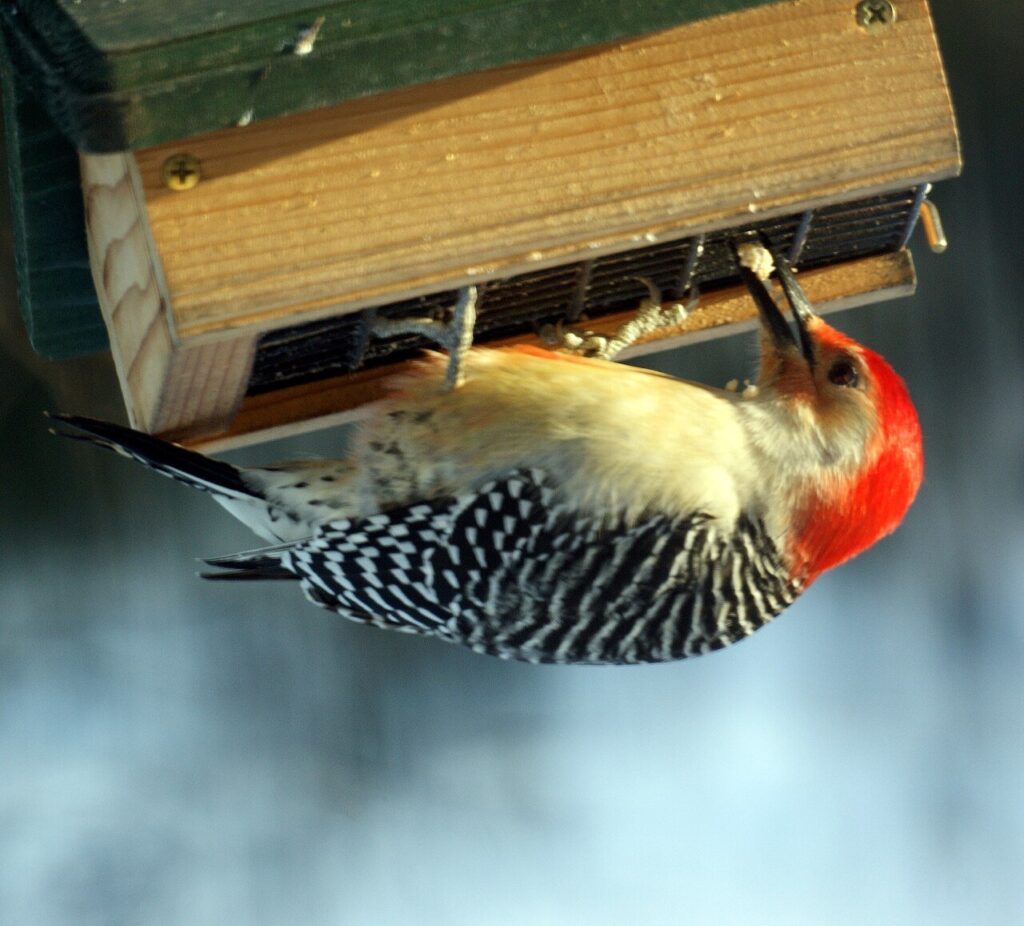
Suet is the cheapest, most reliable way to get woodpeckers into a yard, and from October to March it’s the food that matters most: rendered fat, sometimes with seed or peanuts pressed in, that a chickadee or a downy woodpecker can turn into body heat on a ten-degree night. The feeder is a wire cage. It is inexpensive, and the differences between them come down to three questions: who can reach it (starlings and squirrels, or just the birds you want), whether a big woodpecker can brace its tail on it, and whether it’ll rust through in a winter.
Below are the six suet feeders worth buying, the suet to put in them, and the two mistakes that turn a suet feeder into a starling feeder.
Spark Lark is reader-supported. As an Amazon Associate we earn from qualifying purchases made through links on this page, at no extra cost to you.
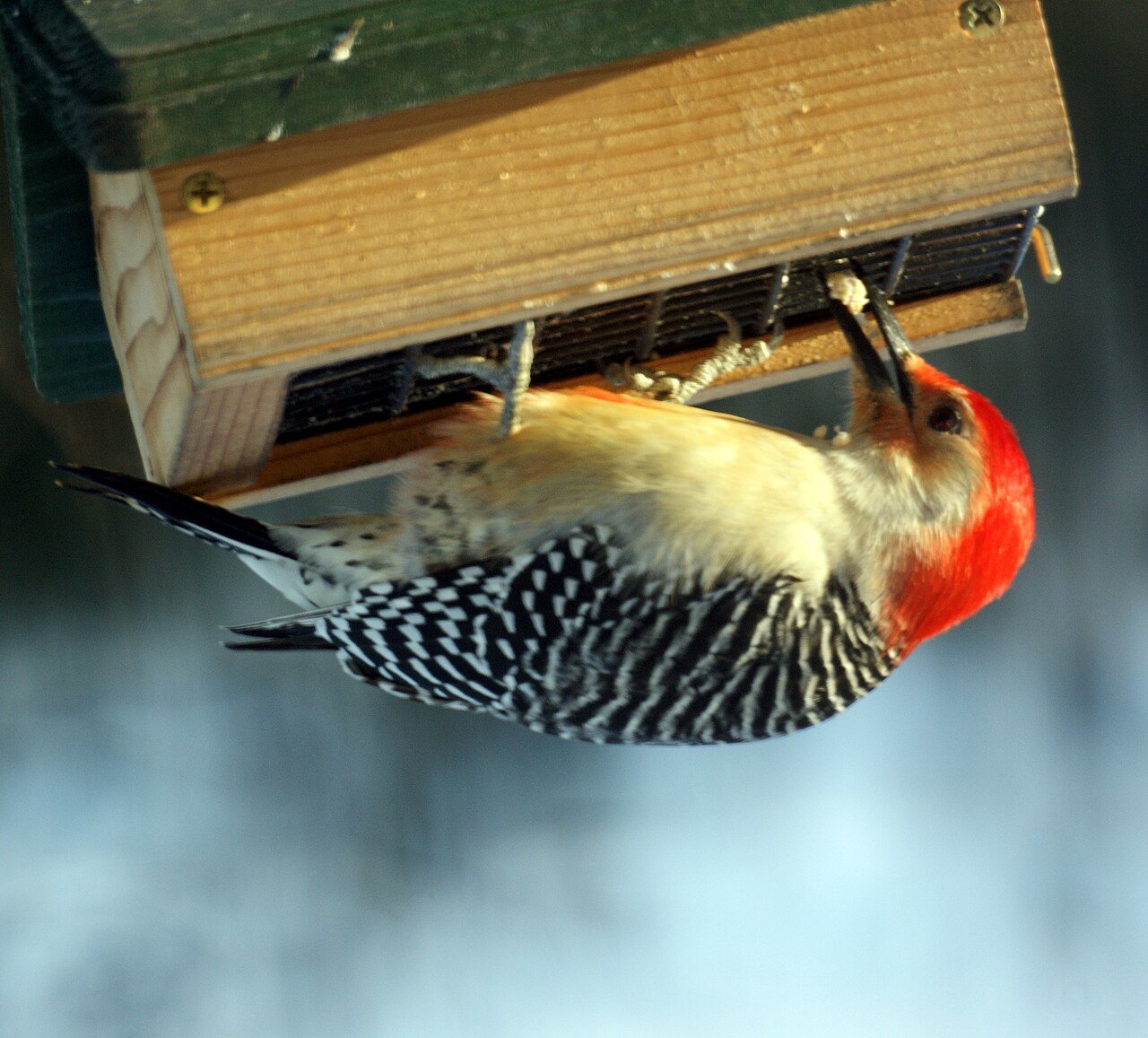
The short version
- Best overall: More Birds double suet feeder with weather guard. Two cakes, a roof, steel.
- Best for big woodpeckers: recycled-plastic tail-prop feeder. The tail board is what brings in red-bellied, hairy and pileated.
- If starlings take over: Nature’s Way upside-down suet feeder. Woodpeckers and chickadees feed hanging; starlings mostly can’t.
- If squirrels take over: Kingsyard caged double suet feeder. A cage inside a cage; small birds through, squirrels out.
- Best-built basic cage: Kingsyard all-metal double with perch. Heavier gauge than the More Birds double, with a perch cardinals will use.
- Suet to buy: Wildlife Sciences high-energy cakes, 10-pack. In summer or with squirrels, C&S Hot Pepper no-melt.
What a suet feeder is doing
Woodpeckers, nuthatches and chickadees feed by clinging to bark, not by perching, so a suet feeder is just a vertical surface with fat behind it. The wire cage holds a standard 4-3/4 inch square cake; the birds cling to the wire and peck through it. That’s the whole design, and a bare cage does it fine. The upgrades address specific problems: a roof keeps rain and sun off the cake so it doesn’t go rancid; a tail prop, a board extending below the cage, lets a woodpecker brace its tail the way it does on a trunk, and the big species won’t feed without one; an upside-down design defeats starlings; an outer cage defeats squirrels. Buy the upgrade for the problem you actually have.
The feeders
1. More Birds double suet feeder with weather guard — best overall
2 cakes · steel with roof
Two cakes side by side under a metal roof, so a downy on one side and a nuthatch on the other don’t have to fight, and rain doesn’t turn the suet to mush. Powder-coated steel, a top that flips open for reloading, and it hangs from anything. For a yard without a squirrel or starling problem this is the only suet feeder you’ll need, and it’s the one to buy first.
Downside: no tail prop, so the pileated and the red-bellied will visit but not linger, and the thin wire can bend when a raccoon gets to it.
2. Recycled-plastic tail-prop suet feeder — best for big woodpeckers
1 cake · recycled plastic, tail board
A cage mounted on a slab of recycled plastic lumber that extends eight inches below it. That board is the tail prop, and it’s the difference between watching a red-bellied woodpecker grab one bite and fly off, and watching it hang there for five minutes. Hairy woodpeckers, flickers and, if you have big trees, pileated woodpeckers need it. The plastic won’t rot, crack or weather like wooden feeders, and it wipes clean.
Downside: one cake, and starlings can use the board too. Pair it with hot pepper suet if they find it.
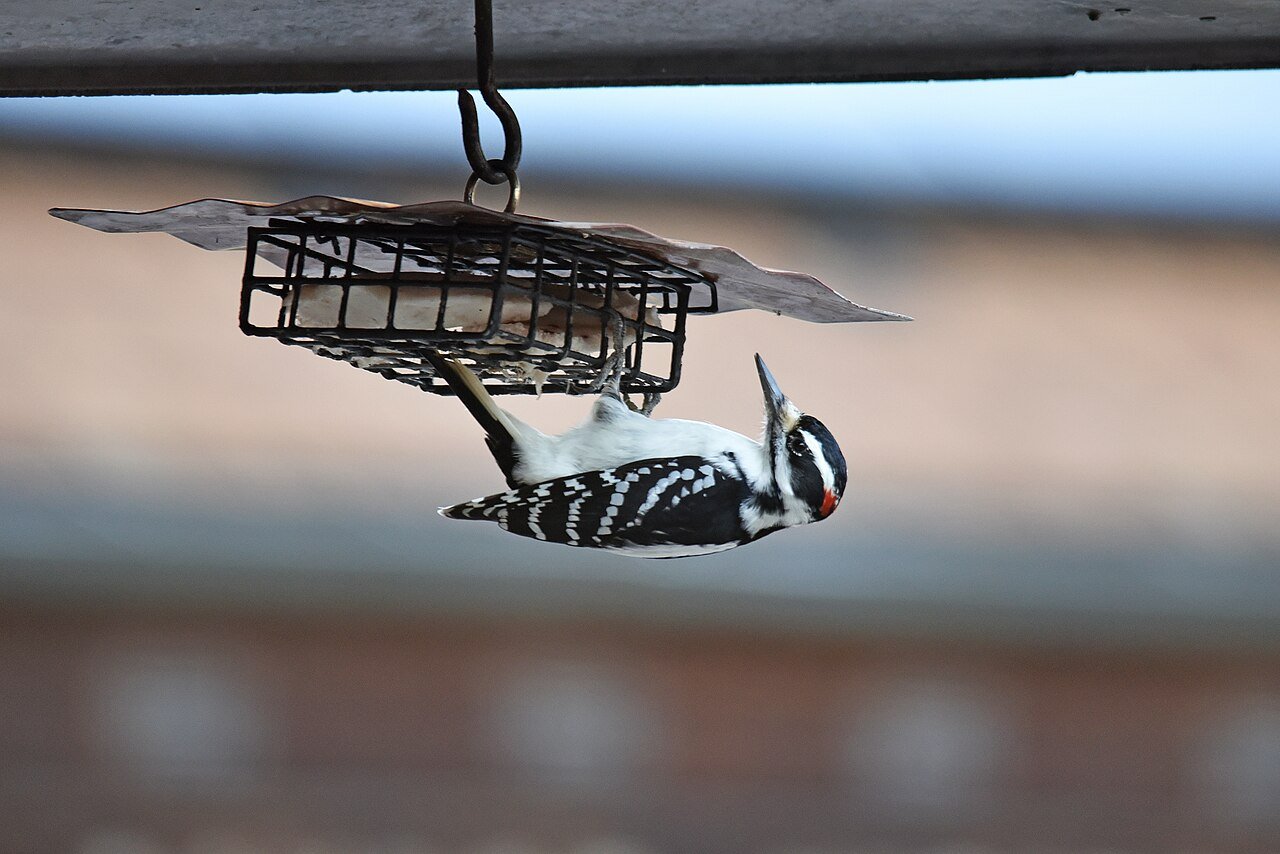
3. Nature’s Way upside-down suet feeder — the starling answer
1 cake, fed from below · bamboo
The cake sits in a cage under a roof and the birds feed from beneath it, hanging upside down. Woodpeckers, nuthatches, chickadees and titmice do that without a thought. Starlings, which are the number one reason people give up on suet, can’t hang, and grackles and jays mostly won’t. If a flock of starlings strips a cake in an hour, this fixes it the same day. Wood holds up for years if it’s under cover.
Downside: the roof lifts to reload and the cake can drop out if you’re careless; and the birds that don’t cling (cardinals, wrens) can’t use it either.
4. Kingsyard squirrel-proof caged suet feeder — the squirrel answer
2 cakes · steel cage within a cage
A double suet cage inside a larger wire cage with openings about an inch and a half wide. Chickadees, nuthatches, downy woodpeckers, titmice and wrens go straight through; squirrels, starlings, grackles and the bigger woodpeckers can’t. It’s the right feeder for a yard where squirrels have eaten every cake you’ve put out, and the only one on this list that stops both squirrels and starlings at once.
Downside: the same cage that keeps squirrels out keeps red-bellied and hairy woodpeckers out, and the 4.1 rating reflects a latch that some owners replace with a carabiner. If big woodpeckers are the goal, use a baffle on a pole instead; our squirrel guide covers that.
5. Kingsyard all-metal double suet feeder with perch — the sturdier basic
2 cakes · heavy-gauge steel, roof, perch
The same idea as the More Birds feeder in heavier wire, with a wider roof and a perch bar along the bottom. The perch is the useful part: cardinals, Carolina wrens and bluebirds, which don’t cling well, will sit on it to eat suet, and they otherwise mostly skip suet feeders. It’ll survive a raccoon.
Downside: the perch also helps starlings and squirrels, so it’s a feeder for a yard that doesn’t have either problem.
6. More Birds single suet cage — the cheap spare
Single cake · steel
The plain cage, no roof, no extras, that every hardware store sells. Buy one to hang a second cake on the other side of the yard so the downy pair stop chasing each other, or to hold an orange half for orioles in May. It won’t be the main feeder, but it’s the one that ends up everywhere.
Downside: no roof means the cake gets rained on and softens in sun; hang it under an eave or a branch.
The suet itself
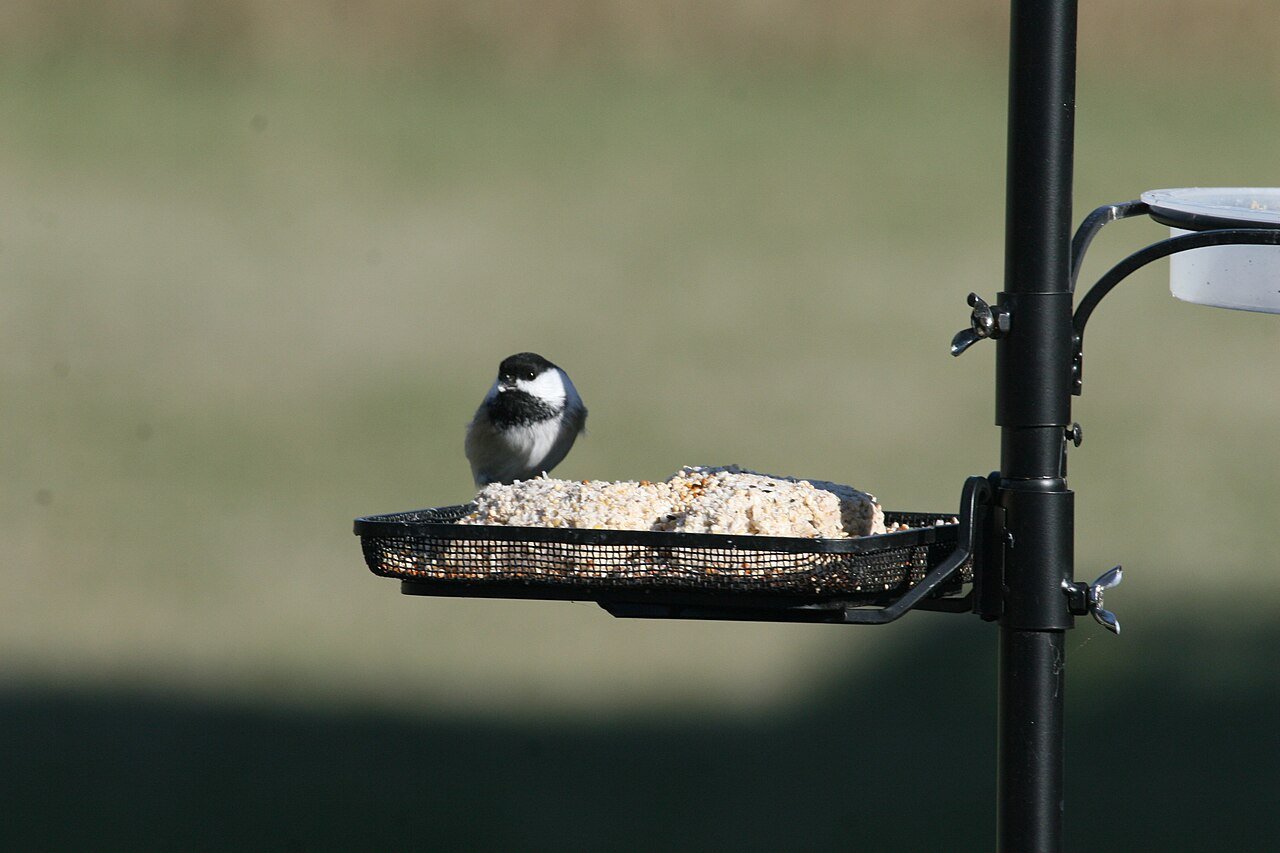
Cold weather: Wildlife Sciences high-energy cakes are rendered beef suet with corn, oats and peanut, the standard cake that fits every cage on this page. Heath’s all-season cakes are the other one everybody uses. Buy by the ten-pack; a busy yard goes through a cake every four or five days from December to February.
Warm weather, or squirrels: C&S Hot Pepper Delight no-melt dough is baked so it holds its shape into the 90s, and it’s laced with capsaicin. Birds have no receptors for it and eat it happily; squirrels and raccoons take one bite and don’t come back. It’s the fix for the yard where a squirrel eats the cake and the cage in one sitting, and the only suet to run in summer, when regular cakes go rancid in days.
For bluebirds and wrens: C&S peanut suet nuggets in a dish or a tray feeder. Nuggets bring the birds that can’t cling.
For a log feeder: Wildlife Sciences suet plugs fit the drilled-log feeders that mimic a tree trunk; the Pine Tree Farms Log Jammer plugs are the peanut version pileateds prefer.
Side by side
| Feeder | Cakes | Roof | Tail prop | Stops starlings | Stops squirrels |
|---|---|---|---|---|---|
| More Birds double | 2 | Yes | No | No | No |
| Tail-prop recycled plastic | 1 | No | Yes | No | No |
| Nature’s Way upside-down | 1 | Yes | No | Yes | No |
| Kingsyard caged | 2 | Yes | No | Yes | Yes |
| Kingsyard all-metal w/ perch | 2 | Yes | No | No | No |
| More Birds single | 1 | No | No | No | No |
The two mistakes
Running suet in summer. Above about 75°F a standard cake softens, coats feathers, and goes rancid in two or three days. Pull the regular cakes in late spring and either stop until fall or switch to a no-melt dough. Most yards do fine with no suet from June through September; the birds are eating insects.
Hanging it next to the seed feeder. Starlings and grackles find the seed feeder first and the suet second. A suet cage on the far side of the yard, on a tree trunk or a separate pole, gets found by woodpeckers, which hunt trunks, and missed by the flock birds for weeks. If the flock still finds it, the upside-down feeder or hot pepper suet ends the problem; our grackle guide has the rest.
Suet is the single most important winter food; what to feed birds in winter puts it in context with the other seven. If a woodpecker is hammering on your house instead of your suet, woodpecker drumming explained tells you why.
For timing, see when to put out suet, with a season-by-season calendar and the signs it’s time to take it down.
If starlings or grackles are the problem, our guide to the best starling-proof and grackle-proof bird feeders covers caged and upside-down suet feeders built for it.
Bottom line
Start with the More Birds double and a ten-pack of cakes in October. Add the tail-prop feeder if you have big trees and want the big woodpeckers. Switch to the upside-down if starlings show up, the caged feeder or hot pepper suet if squirrels do. For what to feed alongside it through the year, see our seed-by-season guide.
Related: The best squirrel-proof feeders · The best bird seed for each season · Winter backyard birds by region · Keeping squirrels off feeders