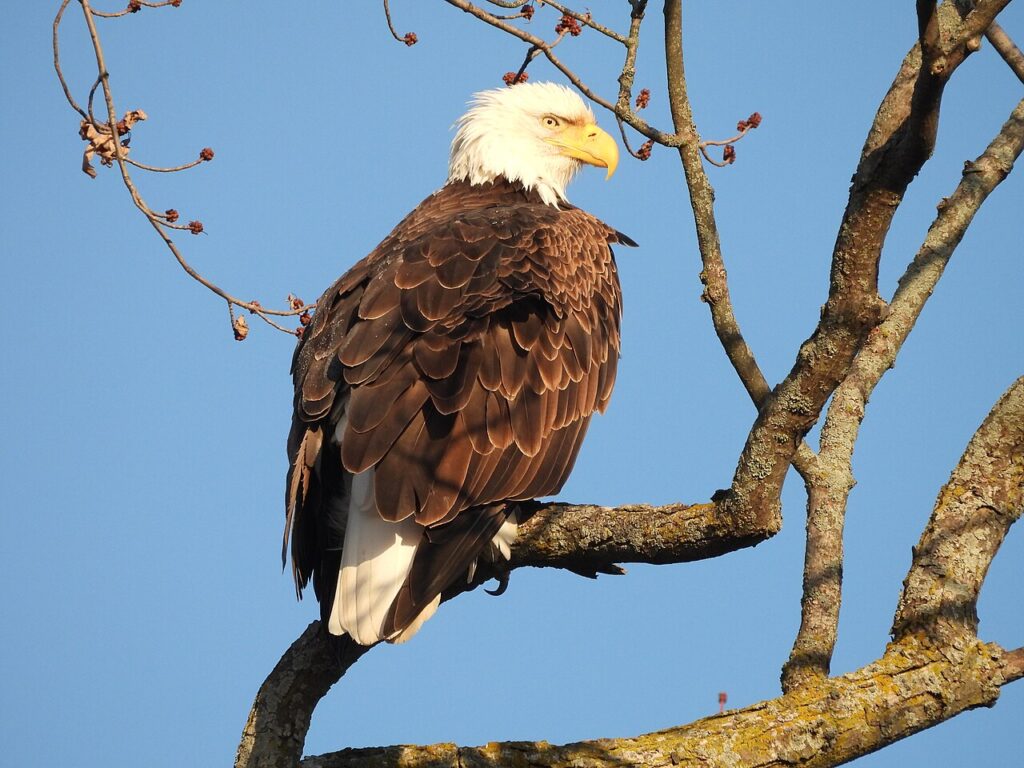
Jackie, the bald eagle whose Big Bear Lake nest camera drew fans across the country, died of bird flu. The California Department of Fish and Wildlife announced on October 14 that a necropsy found highly pathogenic avian influenza was the primary underlying cause of her decline, and that the virus did its damage in an unusual way, by causing a severe stomach ulcer that led to internal bleeding, anemia and a bacterial infection. She died on August 10 after more than three weeks of care at the Ojai Raptor Center. If you feed birds, the obvious next question is whether the same virus threatens the finches at your feeder. The short answer from the Cornell Lab of Ornithology is that it is unlikely, with a few sensible precautions. Here is what happened, how eagles catch bird flu, and what it means for backyard birds.
What happened to Jackie
Jackie hatched in spring 2012 in Big Bear Valley, in the San Bernardino Mountains east of Los Angeles, according to Smithsonian Magazine. The nonprofit Friends of Big Bear Valley installed a camera at the nest in 2015, and Jackie and her mate, Shadow, went on to raise chicks on a live stream watched far beyond California. ABC News reports the pair had five eaglets together; the most recent, per CBS Los Angeles, were Sandy and Luna.
The trouble began in July. CBS Los Angeles reports that Jackie, estimated to be about 14 years old, was found on the Big Bear Lake shoreline after a fight with two subadult eagles. A photo caption in the Associated Press story shows her being examined on July 18 at a Los Angeles County raptor rescue center. Smithsonian reports that a rescue official found no physical injuries but said she was very skinny and underweight. She was moved to the Ojai Raptor Center, where, per the AP, she was treated for various ailments including anemia. A blood transfusion helped briefly, weather.com reports, but she kept slipping back. She died on August 10, according to KESQ, which quoted the CDFW release.
| Date | What happened | Source |
|---|---|---|
| Spring 2012 | Jackie hatches in Big Bear Valley | Smithsonian |
| 2015 | Friends of Big Bear Valley installs the nest camera | weather.com, AP |
| July 2026 | Found on the lakeshore after a fight with two younger eagles; examined July 18 | CBS LA, AP |
| August 10, 2026 | Dies at the Ojai Raptor Center after more than three weeks of care | KESQ (CDFW release) |
| October 14, 2026 | CDFW announces the necropsy result: highly pathogenic avian influenza | KESQ, AP, CBS LA |
What the necropsy found
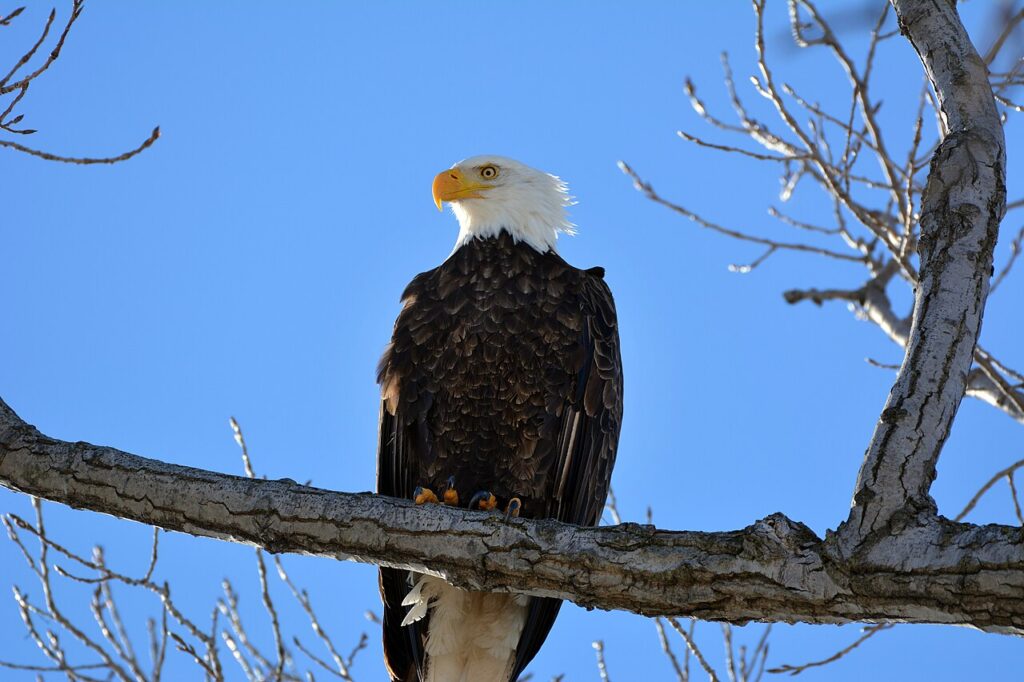
The necropsy was performed by veterinary pathologists at the San Diego Zoo Wildlife Alliance, with lab and toxicology testing on top. KESQ, quoting the state release, describes a “complex and unusual disease process.” Genetic material from the virus turned up in several tissues, including an ulcer in the ventriculus, the muscular part of a bird’s stomach. Steve Kubiski, the Alliance’s director of disease investigations, said in the release that in an uncommon presentation of the virus, “the infection caused a severe ulcer in her stomach.” The ulcer bled persistently, which caused severe anemia; the damaged tissue let bacteria in, which caused sepsis. Investigators also found inflammation and clotting in the heart and major blood vessels.
That chain of events helps explain why the diagnosis took so long. William Bowerman, a wildlife ecologist at the University of Maryland, told Smithsonian that her symptoms were not what anyone would expect from bird flu, adding: “Nobody knew this was even a probability.” Chris Eksteen, executive director of the Ojai Raptor Center, said the results “have helped connect many of the findings” from her hospital stay, per the AP. ABC News adds that toxicology also found environmental contaminants and the rat poison brodifacoum in her liver, though the state identified the virus, not the poison, as the primary cause. Her remains were cremated by the U.S. Fish and Wildlife Service’s National Eagle Repository under procedures meant to keep the virus from spreading, per KESQ.
How do eagles get bird flu?
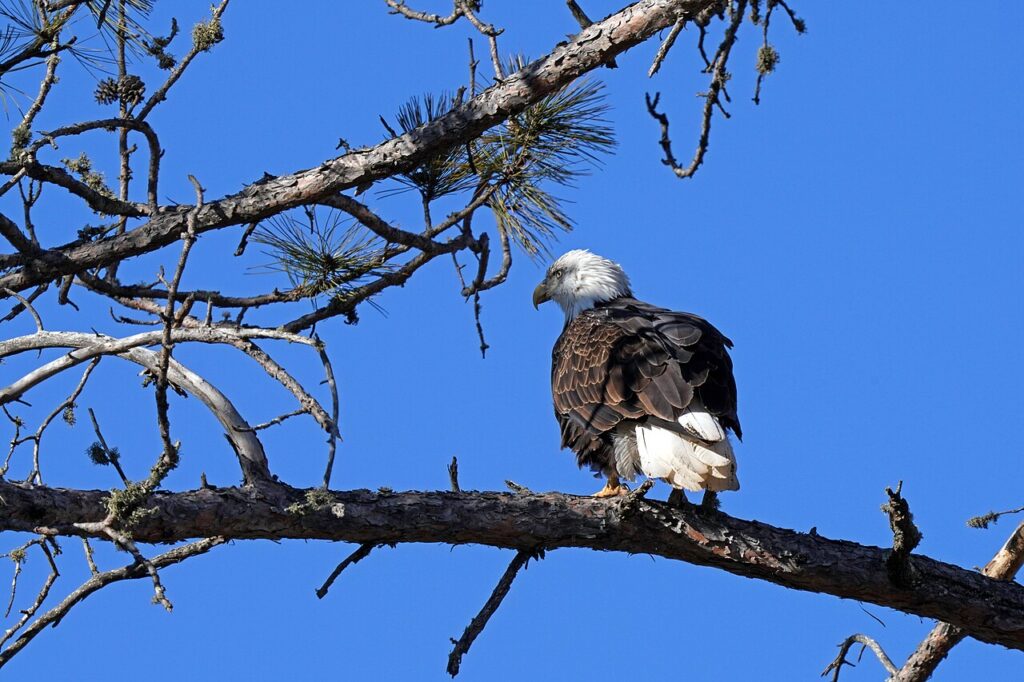
Mostly through what they eat. The AP explains that waterfowl and shorebirds are the natural hosts of avian influenza viruses, and that eagles and other raptors are exposed by contact with infected birds or by eating them. Audubon’s field guide lists bald eagles’ diet as mostly fish, with ducks, coots and other birds when fish are scarce, plus carrion whenever it is easy to get. That diet is the bridge between the birds that carry the virus and the birds it kills.
Raptors are also unusually vulnerable once infected. The Cornell Lab’s All About Birds says plainly that “raptors are much more sensitive to the disease” than the waterfowl that spread it. Smithsonian reports that more than 300 bald eagles tested positive during the 2022 wave, and that there is no current outbreak among bald eagles. Jackie’s case stands out because of how the virus presented, not because eagles catching it is new. (For what raptors are and are not a threat to, see our guide to whether hawks are dangerous to people.)
Which birds get bird flu, and which rarely do
The Cornell Lab keeps a running tally of confirmed detections in wild birds, drawn from USDA data. As of its January 21, 2026 update, the page listed 16,657 wild-bird detections, of which 472 were in passerines, the group that includes nearly every bird at a feeder. The rest were overwhelmingly waterfowl, gulls, shorebirds and raptors. Here is how the main groups compare, using the Cornell Lab page and the AP’s description of transmission.
On a phone, swipe the table sideways to see all four columns.
| Group | Risk | How they catch it | What it means for your yard |
|---|---|---|---|
| Ducks, geese, shorebirds | Natural hosts; often carry it, sometimes die from the current strain (Cornell Lab) | From each other, in crowded water | Keep pets away from sick or dead waterfowl at ponds and lakes |
| Eagles, hawks, owls, vultures | “Much more sensitive to the disease” (Cornell Lab) | Eating infected birds or carcasses (AP) | Cooper’s hawks, common feeder visitors, appear on Cornell’s list (42 detections) |
| Backyard chickens, ducks | “Extremely susceptible” and “spread the disease easily” (Cornell Lab) | Contact with wild birds, shared food and water | USDA advises poultry owners to take down wild-bird feeders |
| Songbirds (finches, sparrows, cardinals, chickadees) | “Much less likely than waterfowl” to contract it (Cornell Lab); 472 of 16,657 detections | Rare; most passerine detections are crows, ravens, starlings and house sparrows | Feeders are “unlikely” to contribute to an outbreak; keep them clean |
A pattern shows up inside Cornell’s songbird numbers. The passerines with the most detections are house sparrows (127), American crows (118), common ravens (62) and European starlings (32). The classic feeder birds barely register: American robin 4, blue jay 4, dark-eyed junco 3, house finch 2, song sparrow 5. Among other yard visitors, Cornell lists rock pigeons (88), Cooper’s hawks (42) and wild turkeys (27). The figures are from the January 2026 update and will change.
Should you take down your bird feeder?
Not unless you also keep chickens or other poultry, according to the Cornell Lab. Its All About Birds page on the outbreak says there is “currently a low risk of an outbreak among wild songbirds,” that “it is unlikely that bird feeders will contribute to an outbreak among songbirds,” and that the USDA’s National Wildlife Disease Program has no official recommendation to remove feeders unless you also keep domestic poultry. The same page tells readers to follow their own state’s guidance even where it differs from the Lab’s.
What the Lab does ask of everyone is basic hygiene. Its advice is to “clean bird feeders and birdbaths regularly,” which keeps many bird diseases in check, not just this one. Our step-by-step guide to cleaning a bird feeder covers the soak-and-scrub routine, and the bird bath guide covers the water side. If you have backyard poultry, Cornell lists three steps: make poultry food and water inaccessible to wild birds, keep the flock indoors or separated from wild birds if you can, and change clothes and wash your hands before tending poultry or pet birds.
What to do if you find a sick or dead bird
Do not pick it up. The Cornell Lab’s instruction is short: “Avoid handling sick or dead birds. Instead, call your state wildlife health agency.” That agency can decide whether the bird should be tested. If you must move a dead bird, Cornell says to wear gloves and a face mask, double-bag it, and wash your hands with soap and warm water afterward. Keep pets, including pet birds, away from sick or dead wild birds.
As for people, the Lab notes that “transmission of avian influenza from birds to humans is rare” and that the CDC considers the public risk low. This article summarizes public guidance; it is not medical or veterinary advice.
What happens to Shadow and the Big Bear nest now
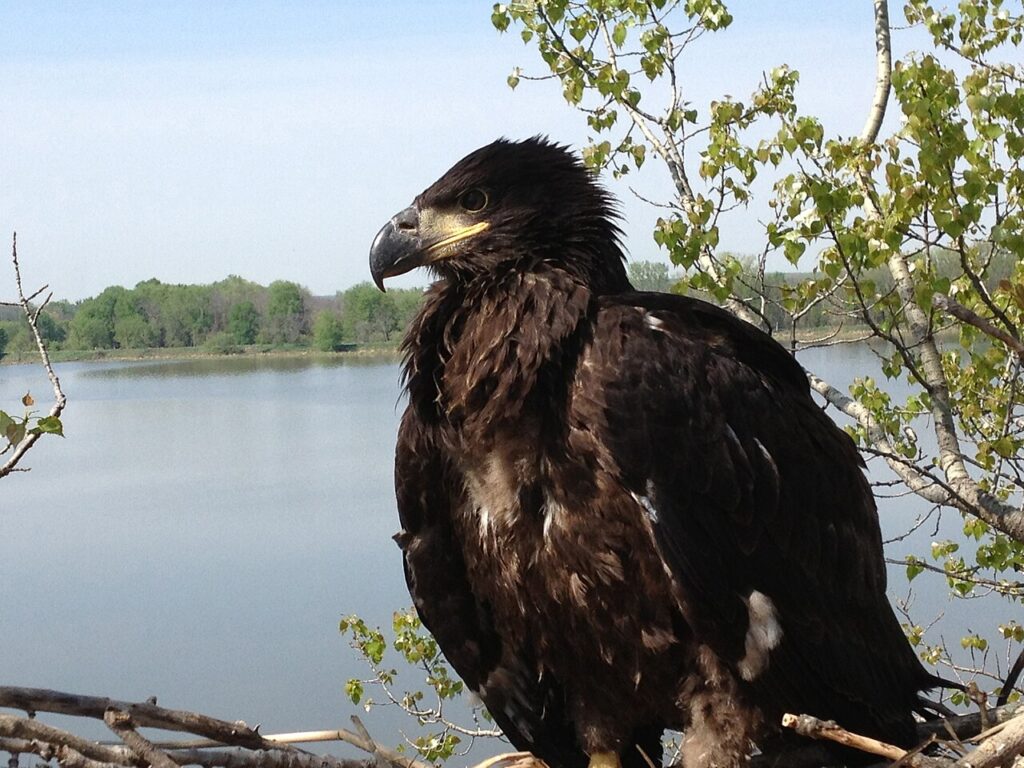
The state says there is no evidence Shadow is sick, and CBS Los Angeles reports that camera data gave officials no sign the eaglets were sick either. ABC News reports that Shadow continues to live in Big Bear Valley and, according to Friends of Big Bear Valley, has been joined by a new female known as Kaydee. Weather.com notes that because the two have never nested together, nobody knows yet whether they will raise young this season, which at 7,000 feet typically begins around December.
Jackie’s story is also a reminder of how far the species has come. Audubon’s field guide says hunting, DDT and habitat loss caused severe declines in the 1900s, that populations “recovered significantly” after protection and the DDT ban, and that the bird left the federal endangered list in 2007. Smithsonian puts the lower-48 population at roughly 316,700 as of 2020, about four times the 2009 figure. CDFW Director Meghan Hertel said in the release, per CBS, that Jackie’s story reflects “the powerful connection people feel to these iconic birds.” For a look at how long-term bird counts track that kind of recovery, see our state-by-state look at which backyard birds are declining in your state.
FAQ
How did Jackie the bald eagle die? Of complications from highly pathogenic avian influenza, according to the California Department of Fish and Wildlife. The virus caused a stomach ulcer that led to internal bleeding, anemia and sepsis. She died August 10, 2026, at the Ojai Raptor Center.
Did the fight with the other eagles kill her? Accounts differ on the fight: ABC News mentions an injury from it, while Smithsonian reports a rescue official found no physical injuries, only a very underweight bird. Either way, the state named the virus, not the fight, as the primary underlying cause.
Is Shadow sick? CDFW says there is no evidence of that, and CBS Los Angeles reports camera data showed no sign the eaglets were sick.
Can my backyard birds get bird flu? It is possible but uncommon. The Cornell Lab says songbirds are much less likely than waterfowl to contract it and that feeders are unlikely to contribute to an outbreak among songbirds. Keep feeders and baths clean and follow your state agency’s guidance.
Can I catch bird flu from feeder birds? The Cornell Lab says transmission from birds to humans is rare and that the CDC rates the public risk as low. Avoid handling sick or dead birds.
Bottom line
Jackie died of bird flu, delivered in a form her own caretakers did not expect: a stomach ulcer that bled, rather than symptoms that pointed to the virus. Eagles catch the virus from the waterfowl and carrion they eat, and they are far more sensitive to it than the ducks and geese that carry it. The birds at your feeder sit at the other end of that scale: the Cornell Lab says songbirds rarely contract it and that feeders are unlikely to spread it, so there is no need to take yours down unless you keep poultry or your state says otherwise. Clean your feeders and bath, leave sick or dead birds to your state wildlife agency, and watch the Big Bear camera this winter to see whether Shadow and Kaydee pick up where Jackie left off.