To attract woodpeckers, put out suet, add peanuts and black-oil sunflower seed, and leave dead trees or dead limbs standing where it’s safe. Those three things cover almost every woodpecker that visits American yards. Which species shows up depends on where you live and what’s around you: the little downy woodpecker comes to feeders in towns and city parks, while the crow-sized pileated woodpecker needs nearby woods with old, dead timber. Below is a chart of nine U.S. woodpeckers and what draws each one, then the foods, feeders, trees and nest boxes that work.
Chart: which woodpecker will visit your yard?
We built this chart from the Cornell Lab of Ornithology’s species pages on All About Birds. Each row shows the bird’s length to scale, how often it uses feeders, and which foods or yard features Cornell names for that species. Tap or click the chart to open the full-size version. It’s free to print and share.
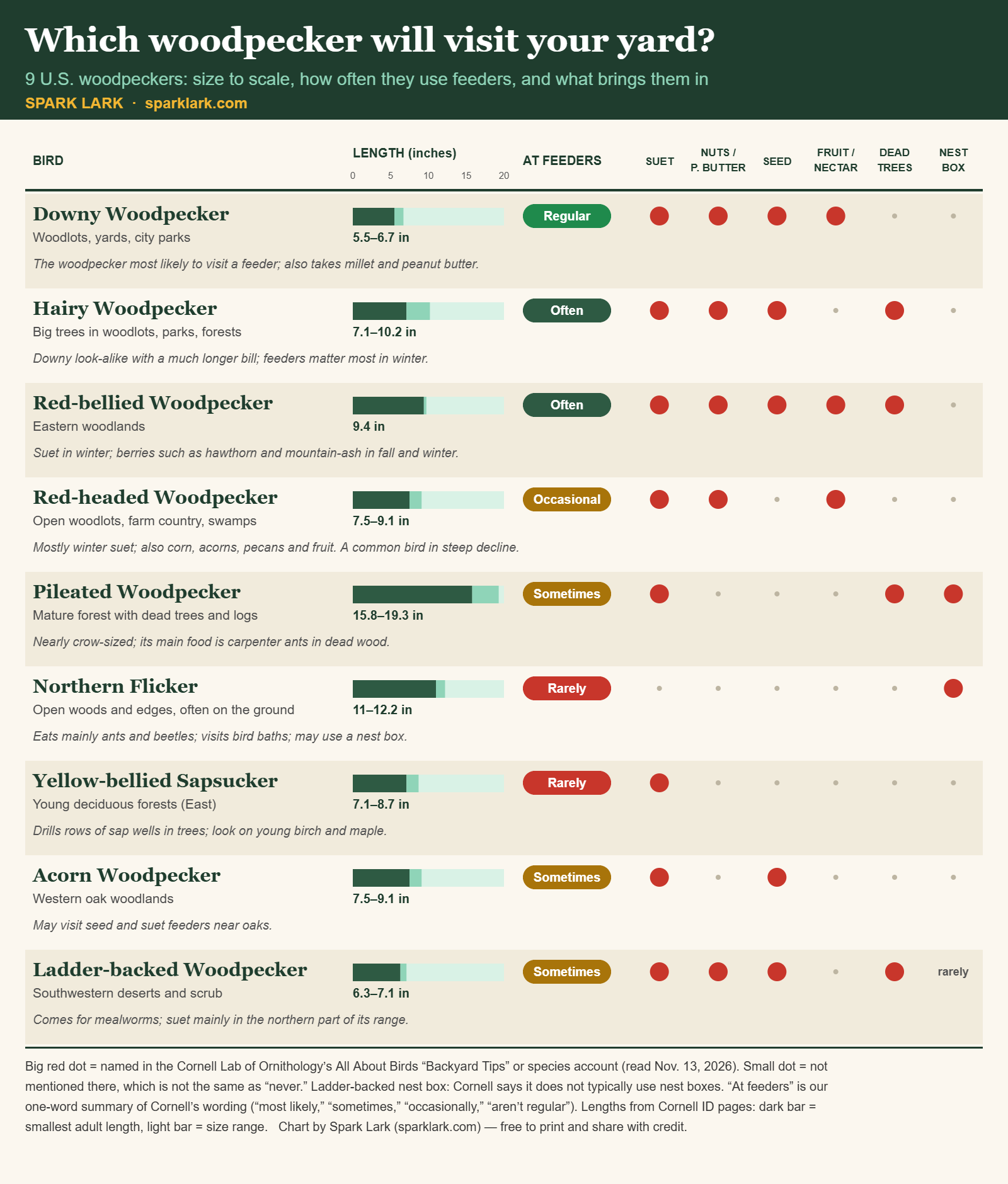
Source and method: lengths come from each species’ All About Birds ID page. A red dot means Cornell’s “Backyard Tips” or species account names that food or feature for the bird; a small dot means it isn’t mentioned there, not that the bird never uses it. “At feeders” is our one-word summary of Cornell’s wording. Read Nov. 13, 2026.
The short version
- Suet is the top food. Every woodpecker on our chart except the northern flicker has suet named on its Cornell page.
- Add peanuts and black-oil sunflower. Cornell lists both for downy, hairy and red-bellied woodpeckers.
- Feed hardest in winter. Cornell says feeders draw hairy woodpeckers “especially in the winter when food is scarce.”
- Leave dead wood. Dead trees and dead limbs feed woodpeckers and give them places to nest.
- Try a nest box for northern flickers and pileated woodpeckers, put up well before breeding season with a predator guard.
Which woodpeckers come to backyard feeders?
Here are the regulars, from most to least likely at a typical feeder, based on how Cornell describes each one.
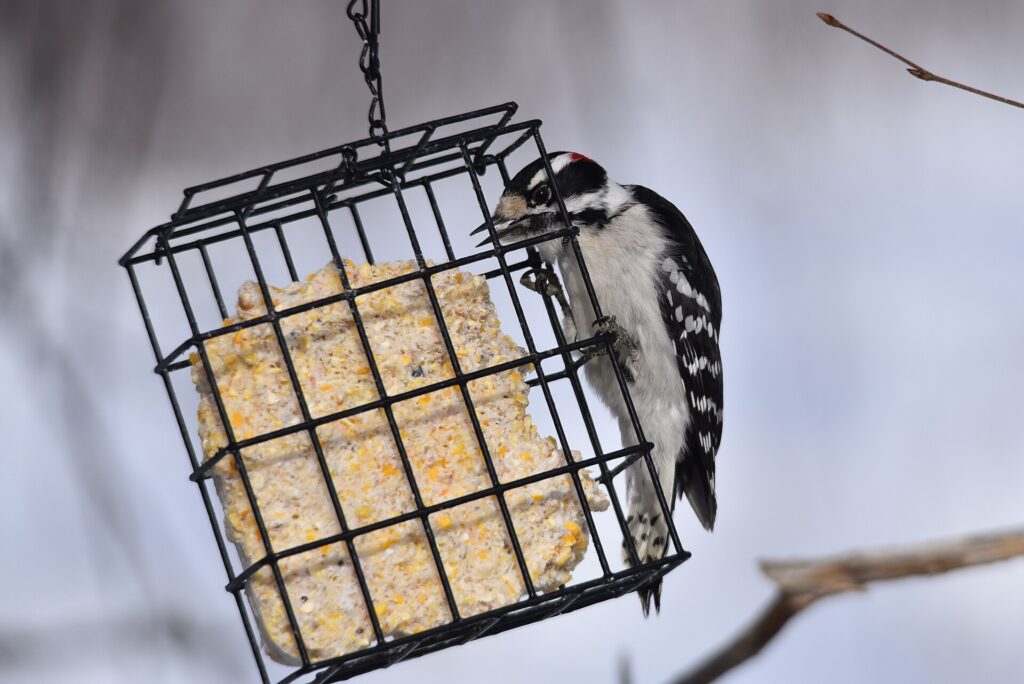
Downy woodpecker. Cornell calls it “the most likely woodpecker species to visit a backyard bird feeder” where it occurs. It prefers suet but also takes black-oil sunflower, millet, peanuts and chunky peanut butter, and it sometimes drinks from oriole and hummingbird feeders. At 5.5 to 6.7 inches long it is barely bigger than the chickadees and nuthatches it travels with in winter.
Hairy woodpecker. It looks like a larger downy, but its bill is much longer; the downy’s is short and almost thornlike. Cornell suggests suet, peanut and black-oil sunflower feeders for this bird, especially in winter. It forages on the trunks and main branches of large trees, so yards near mature trees have the best chance.
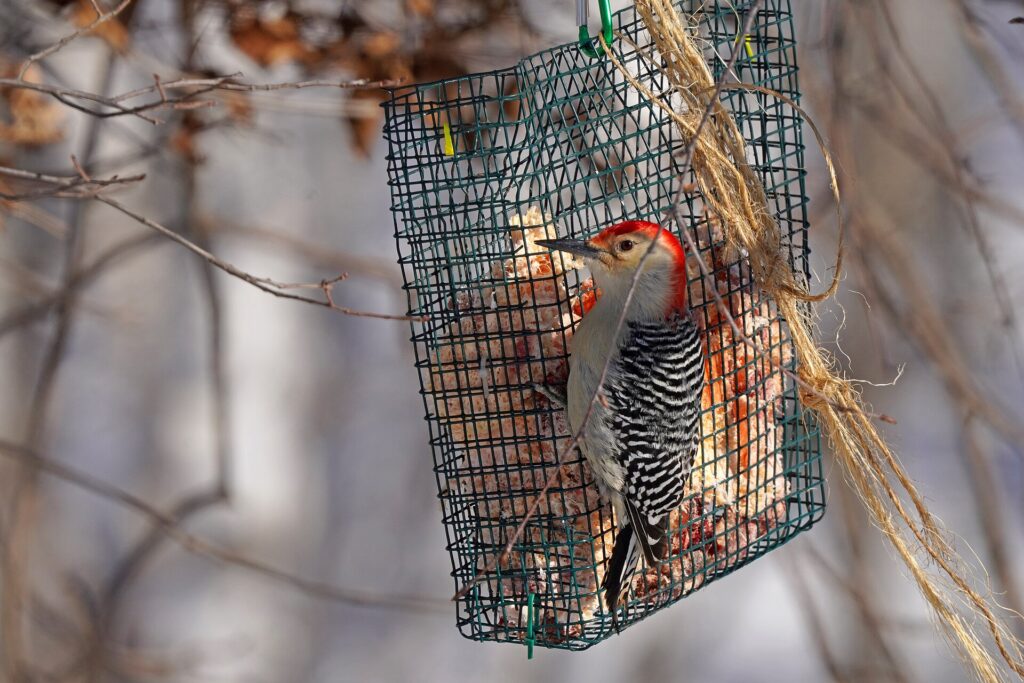
Red-bellied woodpecker. In the East this is often the most colorful bird at the suet. Cornell says it “bring[s] bright colors and entertaining action to bird feeders” and that suet (in winter), peanuts and sometimes sunflower seed attract it if you live near wooded patches. It has also been seen sipping from hummingbird feeders and eating berries from trees like hawthorn and mountain-ash in fall and winter. Look for the strikingly barred back and the gleaming red cap Cornell describes.
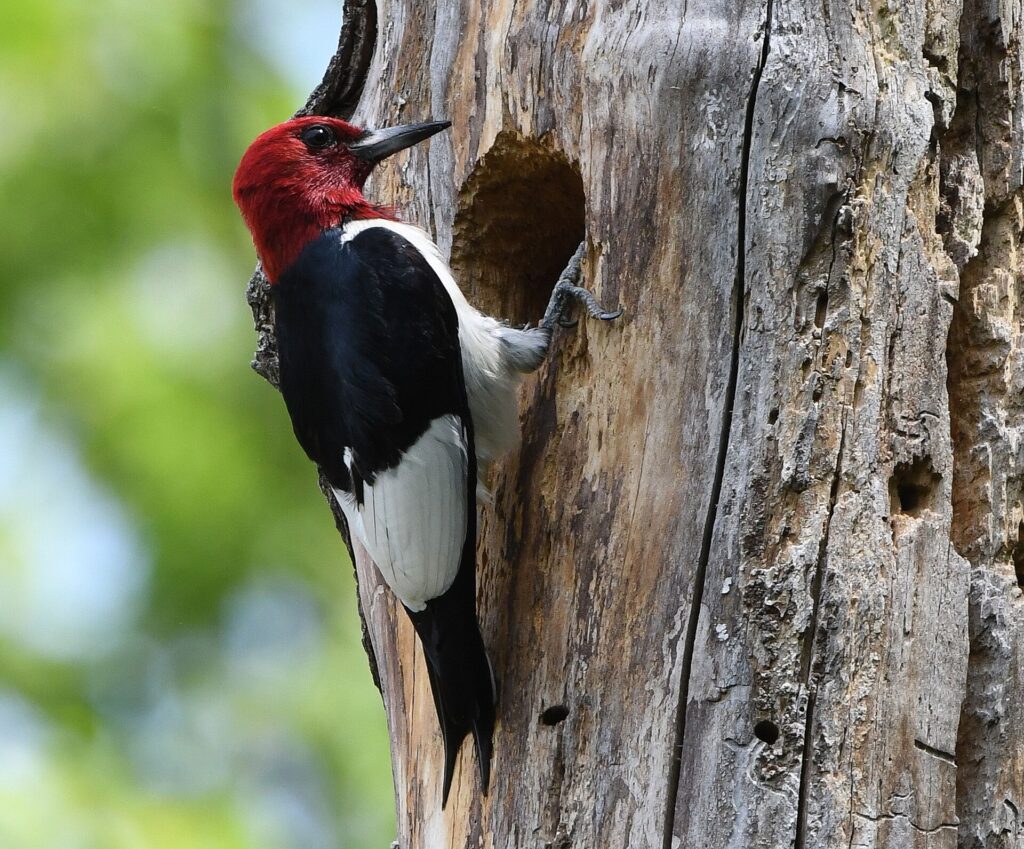
Red-headed woodpecker. This bird occasionally visits feeders in winter, especially for suet, and it eats seeds, corn, acorns, beechnuts, pecans and many fruits. Cornell lists it as a “Common Bird in Steep Decline”: numbers have dropped severely over the past half-century because of habitat loss and changes to its food supply. Open woodlots in farm country, dead timber in swamps and pine savannas are its places.
Pileated woodpecker. Nearly the size of a crow, it sometimes comes to feeders for suet. Its main food is carpenter ants, which it digs out of dead trees and fallen logs, leaving rectangular holes. Cornell says to look for it in mature forest with plenty of dead trees and downed logs, so yards near woods like that have the best chance.
Out West and in the Southwest. Acorn woodpeckers may visit seed and suet feeders near oak woodlands. Ladder-backed woodpeckers, birds of deserts and desert scrub, come for mealworms and have been seen eating peanut butter and black-oil sunflower; suet sometimes draws them in the northern part of their range.
What to feed woodpeckers
The table below pulls together what Cornell’s species pages say draws them.
| Food | Woodpeckers it draws (per Cornell) | Tip |
|---|---|---|
| Suet | Downy, hairy, red-bellied, red-headed, pileated, sapsucker, acorn, ladder-backed | Use a suet cage or a tail-prop suet feeder |
| Peanuts and peanut butter | Downy, hairy, red-bellied, ladder-backed | Shelled peanuts in a mesh feeder; Cornell says “chunky” peanut butter for downies |
| Black-oil sunflower seed | Downy, hairy, red-bellied (sometimes), ladder-backed; acorn at seed feeders | Works in the same hopper or tube feeders other birds use |
| Fruit and berries | Red-bellied (hawthorn, mountain-ash), red-headed (many fruits) | Hawthorn and mountain-ash are the berry trees Cornell names |
| Nectar | Downy, red-bellied (occasionally) | From hummingbird and oriole feeders |
| Mealworms | Ladder-backed | Watch for starlings, which like them too |
Suet is the backbone. If you’re deciding when to start and stop, our guide on when to put out suet covers the seasons, and what to feed birds in winter covers the rest of the menu. If starlings empty the suet before the woodpeckers get a turn, see how to keep starlings off suet and mealworm feeders.
Feeders that work for woodpeckers
Woodpeckers cling instead of perch, so they do best on feeders they can grab. A simple wire suet cage is enough for downy and hairy woodpeckers. Larger woodpeckers brace against the trunk with their tails, and tail-prop suet feeders are built to give them that support. We compare cages, tail-prop models and upside-down feeders in the best suet feeders.
- Hang it near trees. Woodpeckers move along trunks and branches. Cornell notes red-bellied woodpeckers are attracted when you live near wooded patches, and hairy woodpeckers favor large trees.
- Keep it clean. Swap out suet that turns rancid or moldy, and clean the cage when you refill it.
- Add a mesh peanut feeder next to the suet. It gives woodpeckers a second option and spreads out the crowd.
Leave dead trees standing (when it’s safe)
If you do one thing beyond feeding, make it this. Cornell’s tips for the hairy, red-bellied and pileated woodpeckers all say dead trees, or dead parts of living trees, can bring them in to feed and even nest. Later, an old hairy woodpecker hole can become a home for wrens, chickadees, nuthatches, bluebirds or flying squirrels, Cornell notes. Pileated nest holes give shelter to many other species too.
Safety comes first. A dead tree that could fall on a house, a driveway or a play area should come down. A dead limb high in a tree away from the house, or a trunk cut down to a tall stub, can often stay. If you aren’t sure, ask a certified arborist.
Plant for woodpeckers
Plants feed woodpeckers long after the feeders are empty. Fruit trees and shrubs, oaks and native trees all help:
- Berry trees. Red-bellied woodpeckers eat from hawthorn and mountain-ash in fall and winter, per Cornell.
- Oaks and nut trees. Red-headed woodpeckers eat acorns, beechnuts and pecans, and acorn woodpeckers store thousands of acorns a year in holes they drill.
- Young birch and maple. If you live in the yellow-bellied sapsucker’s range, these trees are where you may see one drilling rows of sap wells. Hummingbirds also feed at the sap that flows from those wells, Cornell notes.
- Native plants and goldenrod. Downy woodpeckers hammer into goldenrod galls to reach the fly larvae inside.
Our bird-friendly garden guide has more on choosing plants that feed birds all year.
Put up a nest box for flickers and pileated woodpeckers
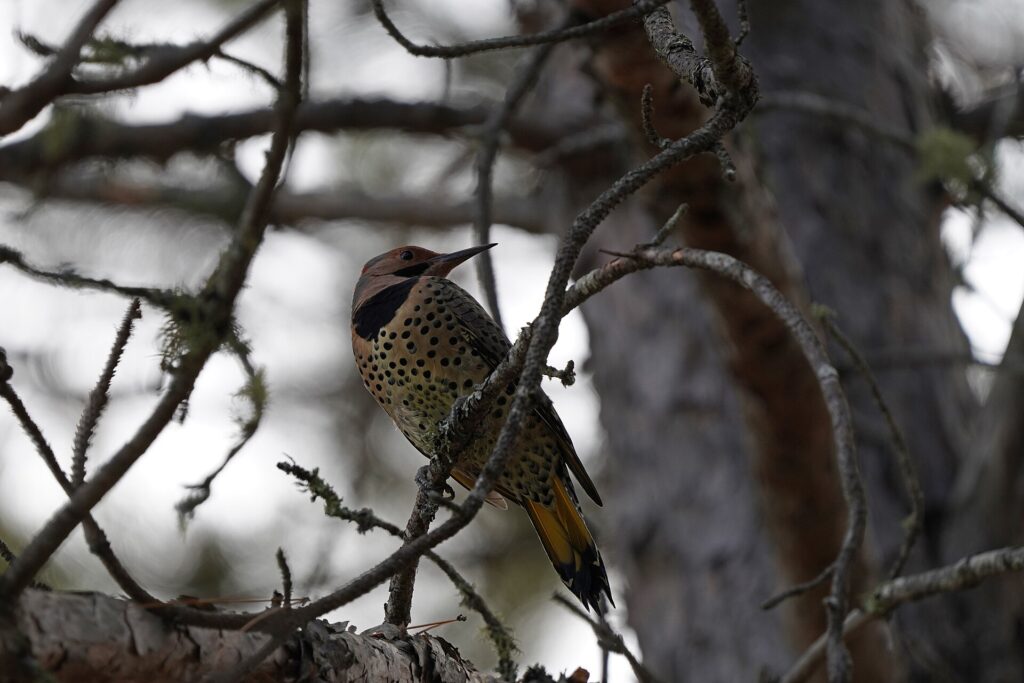
The northern flicker is the woodpecker least likely to use your feeder. Cornell says flickers don’t habitually visit feeders and mostly eat ants and beetles, digging for them on the ground with a slightly curved bill. You may still see one at a bird bath or along wooded edges, and Cornell suggests a nest box to attract a breeding pair. Cornell’s advice for both the flicker and the pileated woodpecker is the same: put the box up well before breeding season and add a guard so predators can’t reach the eggs and young. Cornell links to nest box plans for both species.
Not every woodpecker will take a box. Cornell says the ladder-backed woodpecker does not typically use nest boxes; for that bird, native plants and standing dead trees are the better bet. For general box advice, see our guide to birdhouses and winter roosting boxes.
Downy or hairy? A quick ID tip
These two look nearly identical, black and white with a white stripe down the back. Check the bill. Cornell describes the hairy’s bill as much longer than the downy’s “almost thornlike bill.” The hairy is also bigger: 7.1 to 10.2 inches long against the downy’s 5.5 to 6.7. For more help with backyard birds by color, print our free backyard bird ID chart (no signup).
You can also learn them by sound. Downies give a high-pitched pik and a descending whinny; hairy woodpeckers have an explosive peek. Our piece on woodpecker drumming explains what all that tapping means.
FAQ
What is the best food to attract woodpeckers?
Suet. Cornell names it for eight of the nine woodpeckers on our chart. Peanuts and black-oil sunflower seed are the next best for downy, hairy and red-bellied woodpeckers.
Do woodpeckers eat bird seed?
Some do. Downy woodpeckers eat black-oil sunflower and millet, hairy and red-bellied woodpeckers take sunflower, and acorn woodpeckers visit seed feeders near oaks. Northern flickers mostly eat ants and seldom come to feeders.
When are woodpeckers most likely to visit feeders?
Winter. Cornell points to winter for hairy woodpeckers (when food is scarce), red-bellied woodpeckers (suet) and red-headed woodpeckers (occasional winter feeder visits). Downies join mixed winter flocks with chickadees and nuthatches, Cornell notes.
Will attracting woodpeckers damage my house?
Some woodpeckers drill into wood siding. Cornell’s page on the acorn woodpecker says hanging shiny ribbon from the eaves or balloons in front of the siding has had some success, and the surest fix is switching to siding they can’t get through.
Do sapsuckers hurt trees?
Yellow-bellied sapsuckers drill neat rows of shallow holes to feed on sap and the insects caught in it. Cornell describes the wells and notes hummingbirds use them too. If a young tree you care about is being drilled heavily, a local extension office or arborist can advise you.
Bottom line
Woodpeckers come for fat and wood. Hang suet near trees, add peanuts and black-oil sunflower, feed through the winter, and leave dead wood standing where it’s safe. Downy, hairy and red-bellied woodpeckers are the likeliest visitors; a nest box gives you a shot at flickers, and old woods nearby give you a chance at a pileated. Print the chart above to see which ones to expect where you live.