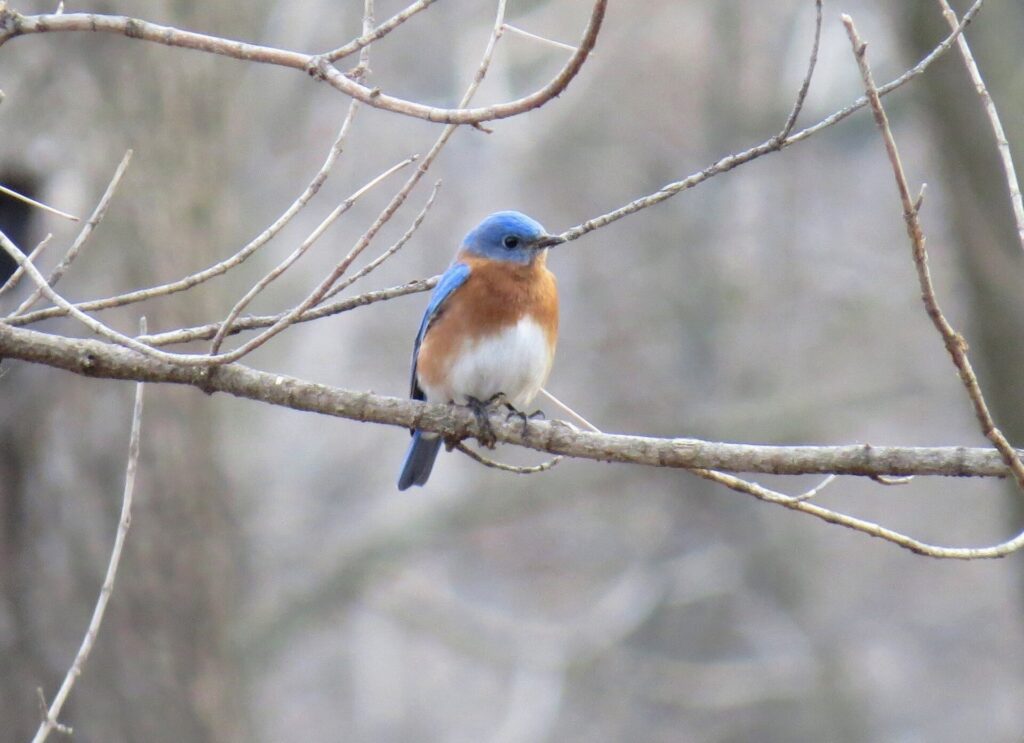
To attract bluebirds in winter, give them the three things they hunt for once insects run out: fruit, open water and a sheltered place to spend cold nights. Plant or keep berry-bearing shrubs, offer mealworms (bluebirds rarely touch seed feeders without them), keep a bird bath from freezing, and leave your nest boxes up. Bluebirds also like open ground with a few perches, so a yard with some lawn or meadow and scattered trees has a better chance than a dense, shady lot.
Below is how each of those works, which bluebird you’re likely to see where you live, and a chart we built from 59 years of federal survey data showing which bluebirds are doing well and which are not.
The short version
- Fruit is the main winter food. In fall and winter, Eastern Bluebirds eat “large amounts of fruit,” from sumac and dogwood to holly and juniper berries, per the Cornell Lab of Ornithology.
- Mealworms are the feeder food that works. Cornell says Eastern Bluebirds don’t often come to feeders “unless you have feeders that provide mealworms.”
- Suet, hulled sunflower and small dried fruit (raisins, currants) are worth a try as extras.
- Open water brings them in, and moving water more so.
- Leave nest boxes up. Bluebirds that stay for winter may huddle in cavities at night for warmth.
- Open space matters. Bluebirds hunt from wires, posts and low branches over short grass.
Are bluebirds increasing? What 59 years of survey data show
People often ask whether bluebirds are coming back. For the Eastern Bluebird, the answer in the data is yes. We pulled the U.S. Geological Survey’s newest North American Breeding Bird Survey results (1966–2025) and calculated how much each bluebird species has changed, plus the Eastern Bluebird’s trend state by state.
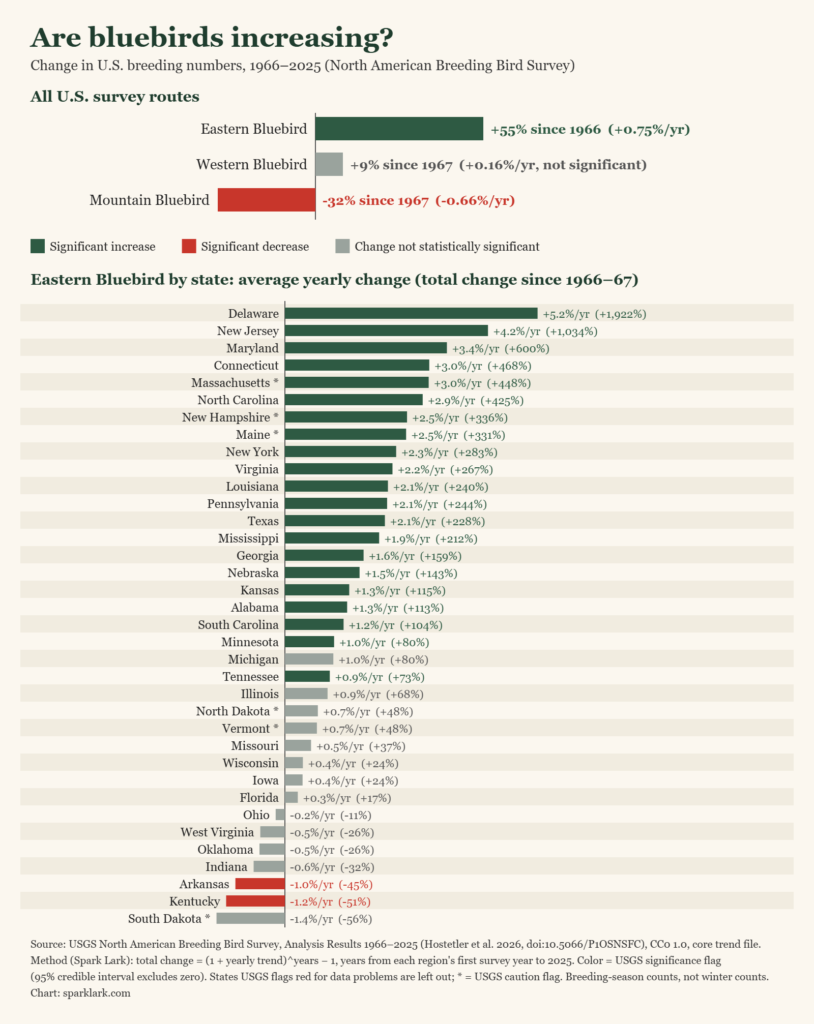
Source and method: USGS, The North American Breeding Bird Survey, Analysis Results 1966–2025 (Hostetler et al., 2026; CC0 1.0), core trend file. Total change = (1 + yearly trend)^years − 1, counted from each area’s first survey year to 2025. Colors follow the USGS significance flag; states the USGS flags red for data problems are left out, and * marks a USGS caution flag. These are breeding-season counts, not winter counts.
What the chart says:
- Eastern Bluebird: up about 55% across the U.S. since 1966 (+0.75% a year, a statistically significant increase). It rose significantly in 21 of the 36 states shown, with the biggest gains in the Mid-Atlantic and New England: Delaware, New Jersey, Maryland, Connecticut and Massachusetts all averaged about 3% a year or more.
- Two states went the other way: Arkansas (about −45%) and Kentucky (about −51%) show significant declines. Several states, including Ohio, Indiana and West Virginia, show small changes the survey can’t separate from zero.
- Western Bluebird: about +9% nationally, not a statistically significant change.
- Mountain Bluebird: down about 32% (−0.66% a year, significant), with the steepest drops in New Mexico (about −80%) and Arizona (about −71%).
The Cornell Lab ties the Eastern Bluebird’s comeback to people. Numbers fell in the early 1900s as introduced European Starlings and House Sparrows took over nest holes; bluebird trails and nest-box campaigns in the 1960s and 1970s, especially boxes built to keep starlings out, helped them recover (Cornell Lab of Ornithology). So the boxes, plants and food in your yard are part of a real success story.
Do bluebirds stay for the winter?
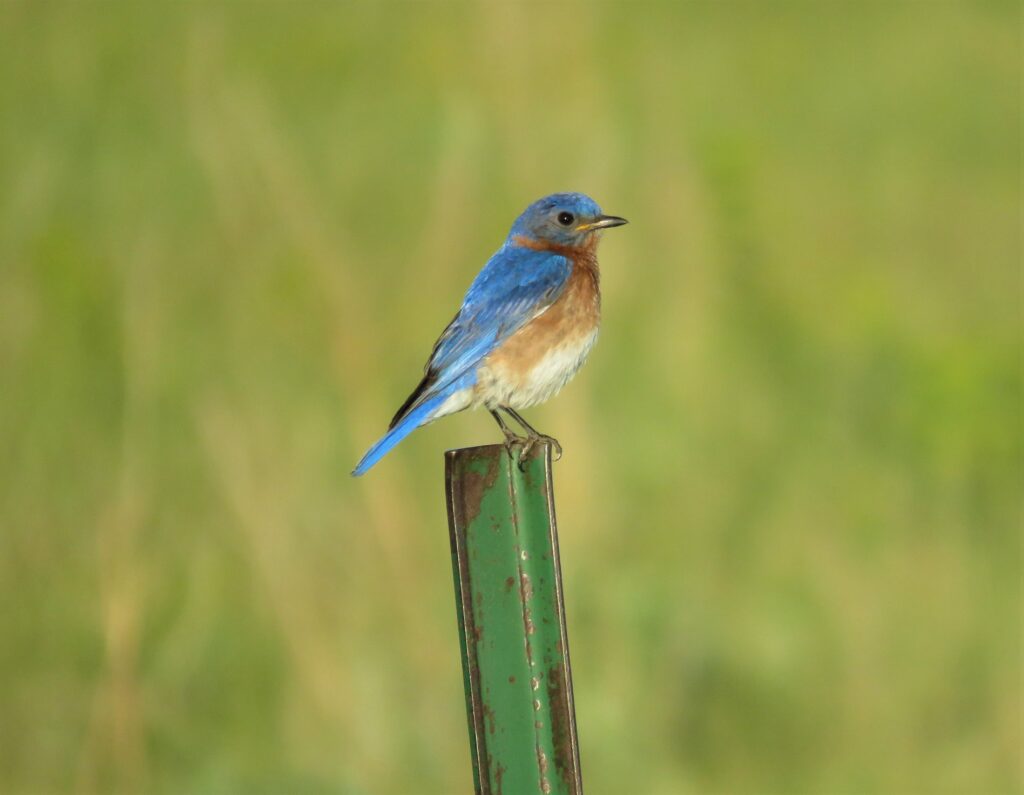
Many do. Eastern Bluebirds that breed in the North have historically wintered in the southeastern U.S. and Mexico, and many southern birds don’t migrate at all. In North Carolina, for example, most Eastern Bluebirds don’t migrate and migrants from the north join them in fall, according to the North Carolina Wildlife Resources Commission. The year-round range has also been creeping north into parts of New York, New Hampshire, Vermont and Maine, according to Northern Woodlands.
Families sometimes stick together, too. Cornell notes that young from later nests “frequently stay with their parents over the winter” (All About Birds). That’s why winter bluebirds usually show up in small groups rather than one at a time.
Winter is hard on them. The NCWRC says wintering bluebirds must eat almost constantly during the day to survive cold nights, and that severe snow and ice can kill them if they can’t move farther south. That’s where your yard can help. If a storm is coming, our snowstorm checklist covers what to do before, during and after.
What to feed bluebirds in winter
Bluebirds are thrushes, not seed-eaters, so a standard sunflower feeder usually won’t pull them in. These are the foods with a source behind them:
1. Mealworms (the best bet)
Mealworms are the one feeder food the Cornell Lab singles out for Eastern Bluebirds. Audubon suggests serving them in a hopper-style or cage-style feeder so bigger birds can’t empty it in minutes. Two cautions from the same article: freeze-dried mealworms lack the moisture nestlings need (live ones are better in nesting season), and mealworms alone don’t supply enough calcium, so put out regular feeder food as well. A dish-style bluebird feeder with entry holes is one way to keep mealworms for the bluebirds.
2. Suet
Bluebirds will eat suet in winter. Northern Woodlands lists suet among the feeder foods they take, and the Cornell Lab’s winter-survival article shows Eastern Bluebirds perched at a suet cake. If you need a feeder, see our suet feeder guide.
3. Fruit and hulled sunflower
Northern Woodlands, citing ornithologist Stephen W. Kress, says bluebirds may eat raisins and currants set out “on a conspicuous surface such as a flat rock or table feeder.” Audubon’s article also describes a bluebird host who offers hulled sunflower seeds, which bluebirds eat. Both are cheap to test. Put a small amount out where you can see it and add more only if it gets eaten.
4. Wild berries (what they actually live on)
No feeder replaces natural fruit in winter. The table below lists the winter fruits each species eats, according to the Cornell Lab’s life-history pages. The Eastern Bluebird list includes several shrubs you can plant, and Audubon recommends native hollies, dogwoods and serviceberries.
| Bluebird | Where it spends winter | Winter fruits it eats | Feeder foods to try |
|---|---|---|---|
| Eastern Bluebird | Open country with scattered trees: pastures, fields, suburban parks, backyards, golf courses | Mistletoe, sumac, black cherry, tupelo, wild holly, dogwood, hackberry, pokeweed, juniper, bay | Mealworms; suet; raisins or currants on a tray; hulled sunflower |
| Western Bluebird | Pinyon-juniper and oak woods, mesquite, streamside woods, coastal chaparral and desert | Elderberry, grapes, mistletoe, raspberries and blackberries, serviceberry, sumac, chokecherries, juniper | Mealworms; suet (same approach as for Eastern) |
| Mountain Bluebird | Lower elevations: meadows, hedgerows, prairies, grasslands with few trees, pinyon-juniper, farm country | Grapes, currants, elderberries, cedar berries; seeds of sumac, mistletoe and hackberry | Mealworms; suet (same approach as for Eastern) |
Source: Cornell Lab of Ornithology, All About Birds life-history pages for Eastern, Western and Mountain Bluebird (read Nov. 16, 2026). Feeder-food column: Cornell, Audubon and Northern Woodlands, as cited in this article; the sources describe these mainly for Eastern Bluebirds.
Keep water open
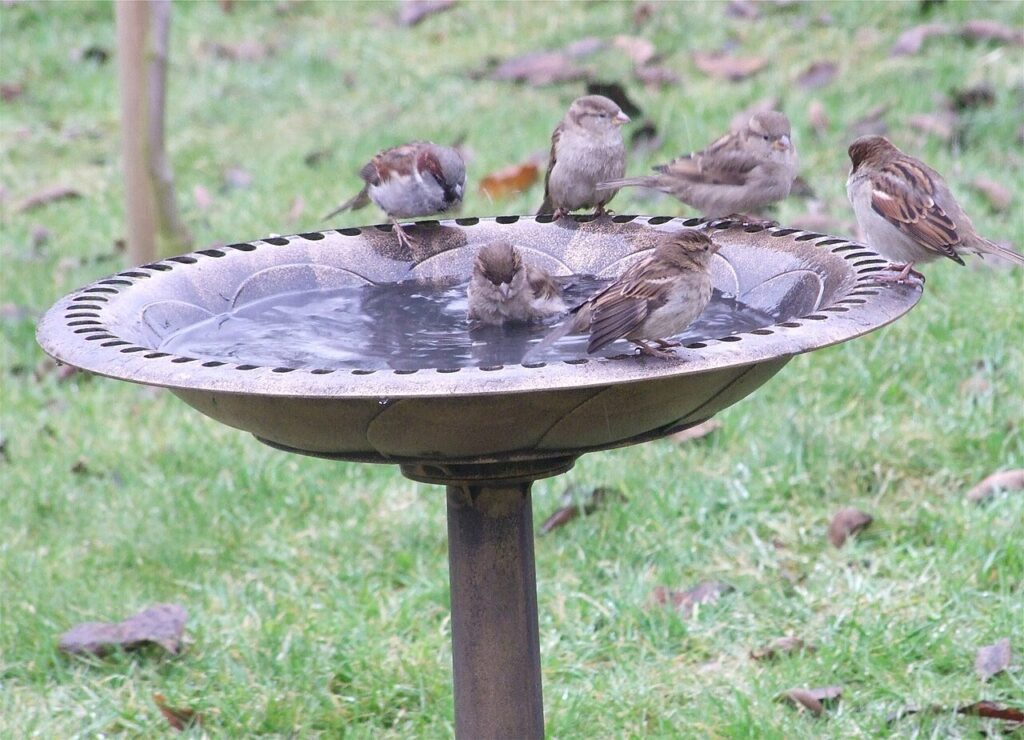
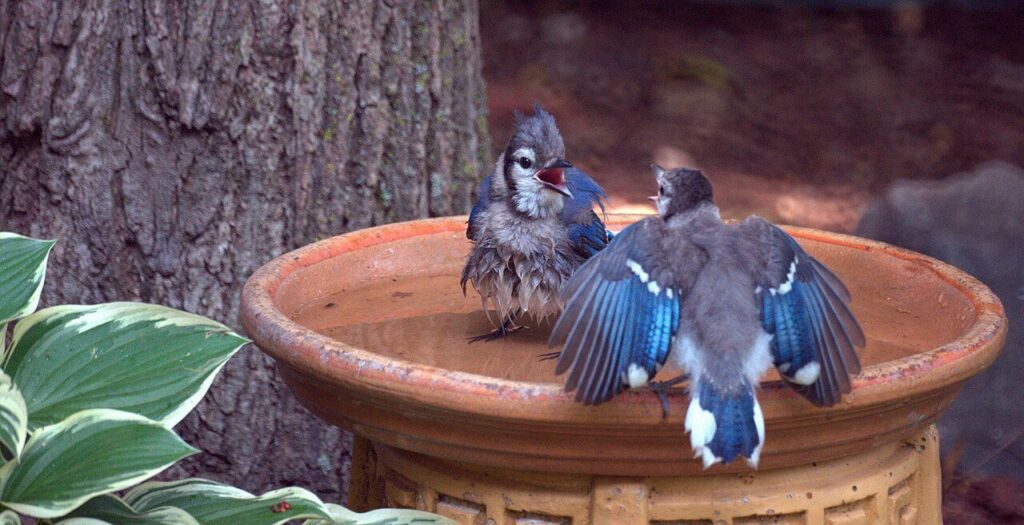
Audubon’s advice is simple: add a bird bath, and a dripper or fountain will attract bluebirds even more. In winter the problem is ice. A heated bath or a de-icer keeps water open on freezing days; our guides to heated bird baths and keeping a bird bath from freezing cover both routes. Put the bath near a perch and in view of a window so you can see who’s using it.
Leave nest boxes up for winter shelter
The NCWRC says wintering bluebirds roost in small flocks in woodlands or “huddle in nesting cavities for warmth.” A nest box left up over winter is exactly that kind of cavity. So don’t take your boxes down in fall. Clean out old nest material after the last brood (Cornell’s NestWatch advises doing that promptly after young fledge) and leave the box on its post.
If you don’t have a box yet, now is a good time. The Cornell Lab says to put one up “well before breeding season” and to attach a guard against predators. Audubon recommends mounting it 4 to 6 feet high, facing east, about 300 feet from any other bluebird box, with a baffle against raccoons and snakes and no perch under the entrance. Our birdhouse and roosting box guide covers bluebird-sized boxes, and a pole baffle works on a box post as well as a feeder pole.
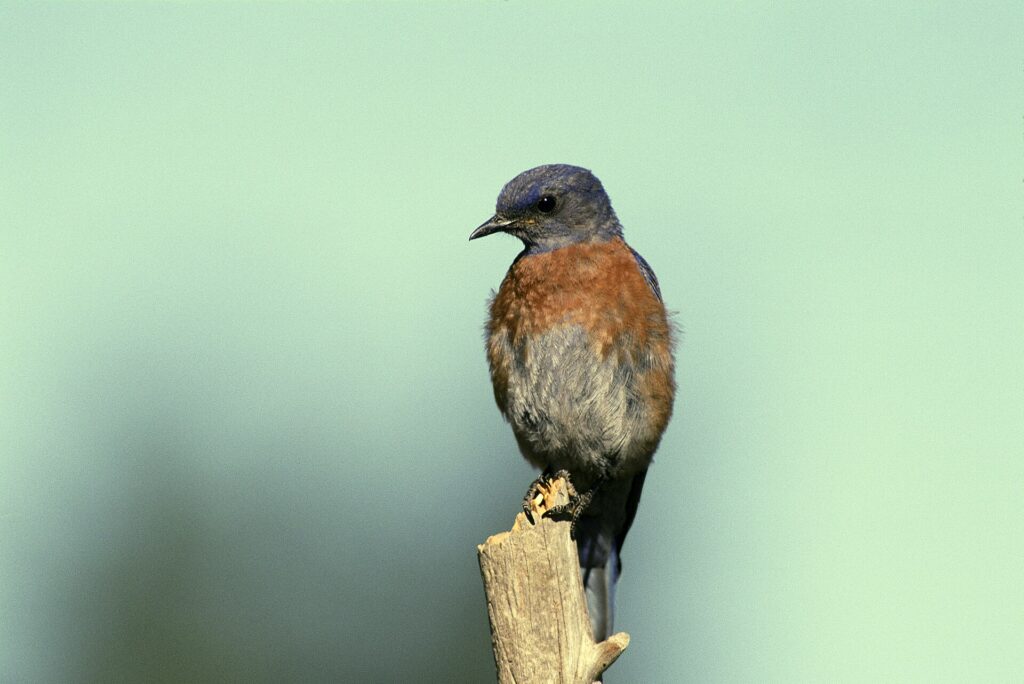
Western and Mountain Bluebirds in winter
If you live in the West, your winter bluebird may be one of these two, and they behave a little differently:
- Western Bluebirds switch to “mostly fruits and seeds” in winter and get social, forming flocks of up to about 100, sometimes with Mountain Bluebirds, American Robins and Yellow-rumped Warblers (Cornell Lab). A fruiting elderberry, juniper or serviceberry is your best draw.
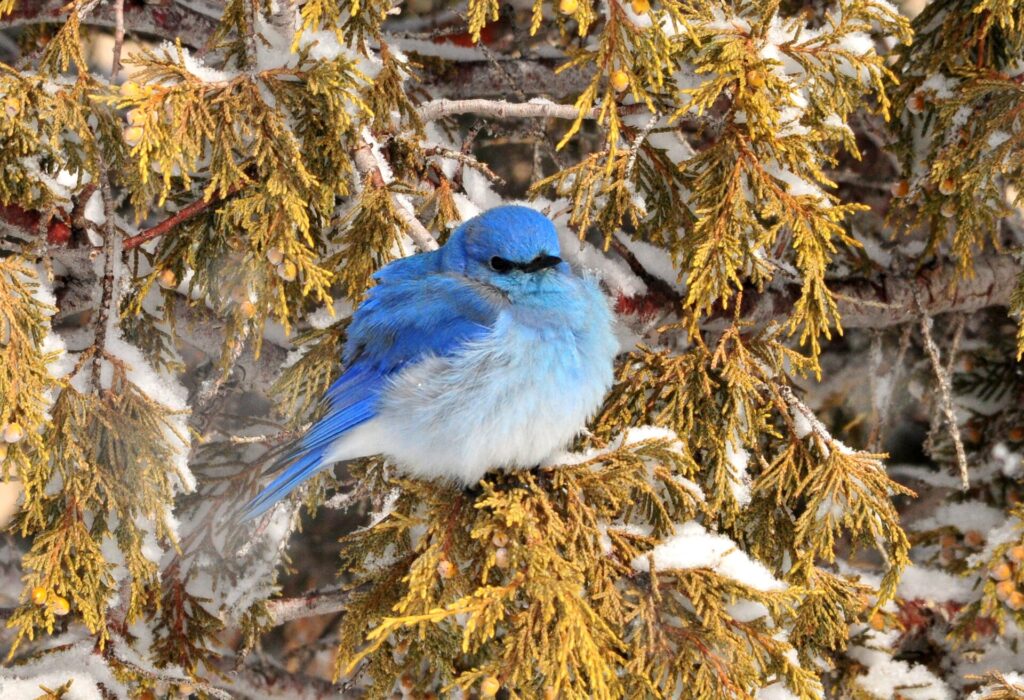
- Mountain Bluebirds come down from high country for winter, to meadows, prairies, hedgerows and farmland, and avoid the driest deserts (Cornell Lab). They need wide-open ground, so they’re more likely in rural and edge-of-town yards than in leafy suburbs.
Not sure which blue bird you’re seeing? Our free backyard bird ID chart by color (free printable, no signup) can help, and winter backyard birds by region shows who else to expect.
Mistakes that keep bluebirds away
- Relying on a seed feeder. Without mealworms, suet or fruit, most bluebirds will fly past.
- Spraying the lawn. Audubon warns that lawn pesticides can pass from insects to bluebirds. Bluebirds still catch insects whenever they can find them, even in winter.
- Cutting every berry shrub back in fall. Sumac, holly, dogwood and juniper berries are winter food. Trim after they’ve been eaten.
- Taking boxes down. An empty box is a winter roost.
- Putting food where bluebirds can’t see it. They hunt by sight from perches, so a tray in the open near a post or low branch works better than a feeder tucked against the house.
FAQ
Do bluebirds eat birdseed?
Mostly no. They’re insect and fruit eaters. Audubon’s article does describe bluebirds eating hulled sunflower seeds, but mealworms, suet and fruit are far more reliable.
Should I feed live or dried mealworms in winter?
Audubon’s warning that dried mealworms lack moisture is about nestlings; it doesn’t flag a problem for adults in winter. Switch to live mealworms if you keep feeding into nesting season. Because mealworms are low in calcium, offer other foods too.
Where do bluebirds sleep in winter?
In small flocks in sheltered woods, or huddled in nesting cavities for warmth, according to the NCWRC. A nest box left up is one of those cavities. More on how small birds get through cold nights is in how do birds survive the winter?
Are bluebirds rare?
No. Partners in Flight estimates about 23 million Eastern Bluebirds worldwide, and Cornell rates the species as low concern. As the chart above shows, the Eastern Bluebird has increased across the U.S. since 1966. The Mountain Bluebird is the one with a significant long-term decline in the survey data.
Bottom line
Bluebirds come to winter yards for fruit, water and shelter, not seed. Plant or keep berry shrubs, put out mealworms (plus suet or a little dried fruit) on an open tray, keep a bath thawed, and leave your boxes up. The Eastern Bluebird’s 55% rise since 1966 is partly the work of people doing exactly that. For a full winter menu for every species, see what to feed birds in winter.