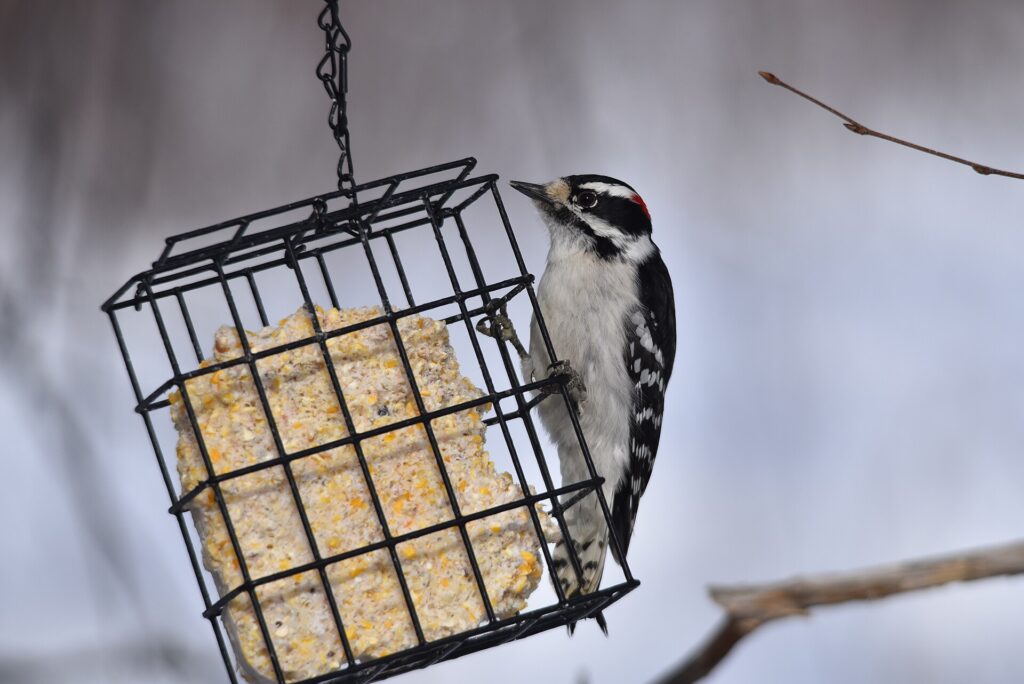
Put suet out when the weather turns cold and keep it up through winter. That is when birds need the extra fat most, and it is the only time raw suet is safe to leave hanging: the Cornell Lab of Ornithology warns that “raw suet grows rancid quickly when temperatures are above freezing.” Processed suet cakes stretch the season into cool fall and early spring days, but once afternoons run warm, the cakes soften, spoil and can coat a bird’s feathers. So the practical answer for most of the U.S. is late fall through early spring, adjusted for two things: how warm your days get and whether bears live near you.
The short version
- Best time: the cold months. Cornell calls suet a high-energy food “especially valuable in cold weather.”
- Raw suet from the meat counter: winter only, when temperatures stay at or below freezing.
- Store-bought or rendered cakes: fine in cool weather; check them every few days once it warms up. Audubon advises extra care once the thermometer passes 50 degrees.
- Summer: Cornell says it’s “a good idea to take down suet feeders in warm weather.” If you keep one up, use a no-melt product in the shade and watch it closely.
- Bear country: follow your state wildlife agency. Vermont’s advice is to feed birds from December to March only.
Why suet matters most in cold weather
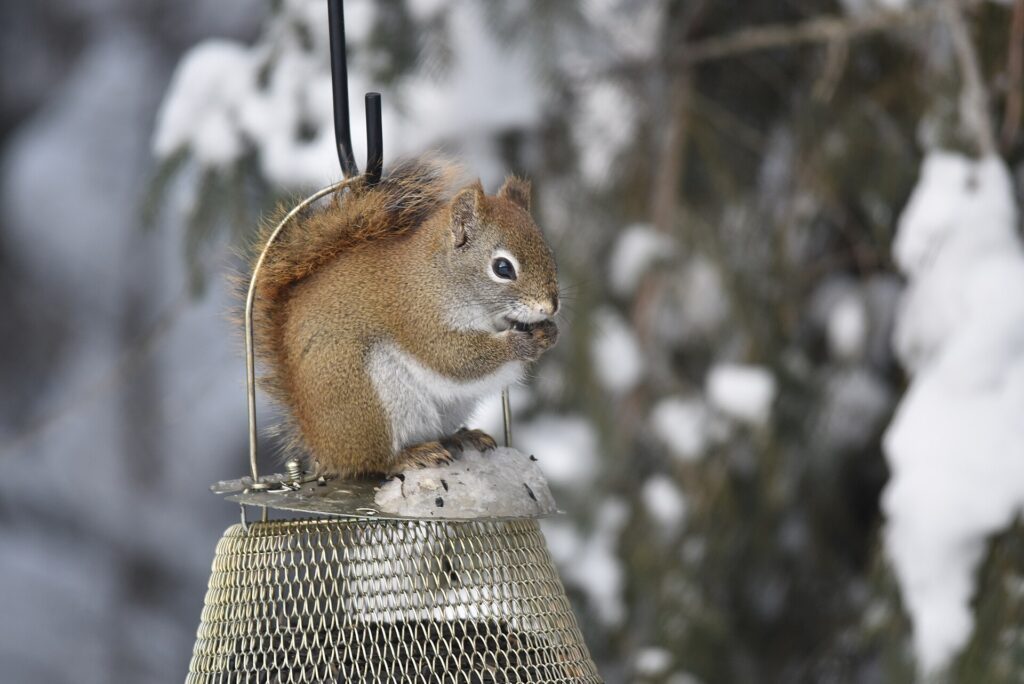
Suet is animal fat, usually beef. Project FeederWatch, the winter feeder survey run by the Cornell Lab and Birds Canada, describes most suet as beef kidney fat and calls it “a good choice for attracting insect-eating birds.” That last part is the key to the timing.
In spring and summer, most songbirds live on insects and spiders. By winter, Cornell’s winter feeding guide notes, most insects have died or gone dormant, and birds that stay put shift to seeds and fruit. Days are often windy and cold, and nights are long and colder still. The insect-eating birds that suet attracts lose much of their usual food just as the cold raises the energy they need, and Cornell notes that animal fat is easily digested and metabolized by many birds.
That is why the cold months are suet season. Project FeederWatch’s own count of winter feeder birds starts November 1 and runs through April.
A season-by-season suet calendar
Dates vary a lot across a country this size, so read this by weather, not by the calendar alone.
| Season | What to do | Why |
|---|---|---|
| Early fall (still warm in the afternoon) | Hold off on raw suet. A rendered or packaged cake is fine on cool days if you check it often. | Cornell: raw suet spoils quickly above freezing; rendered suet keeps better but still softens in warm weather. |
| Late fall to winter | Prime time. Raw, rendered and packaged suet all work once days stay cold. | High-energy food when insects are scarce. FeederWatch’s winter count starts November 1. |
| Early spring warm-up | Keep going on cold days, but check for softening. In bear country, take feeders down when your state says to. | Vermont: feed birds December to March only. New York (cited by Cornell): feeders down by April 1. |
| Late spring and summer | Take suet down, or switch to a no-melt product in full shade and check it daily. | Soft suet can coat belly feathers during nesting season. Even no-melt products can spoil in high heat. |
The temperature rule: raw, rendered and no-melt suet
The type of suet decides how warm it can get before you should pull it.
Raw suet is plain fat from a butcher or meat counter. FeederWatch notes it is inexpensive, but it spoils fastest. Cornell’s guidance is blunt: don’t offer it except in winter.
Rendered suet has been melted and strained to remove the bits of meat and other impurities. Cornell says rendering helps suet keep “much better,” but it can still get soft in warm weather. Suet cakes, in Cornell’s description, are blocks of suet or a thick substitute mixed with things like cornmeal, peanuts, fruit or even dried insects.
No-melt suet is a packaged product sold to hold up in heat. Cornell notes that some makers say their blocks hold up above 100 degrees, but these “might nevertheless go rancid in short order” if extreme heat lasts. Cornell’s summer feeding advice is to keep any suet in the shade or in a cool spot.
| Weather | Raw suet | Rendered or packaged cakes | No-melt dough |
|---|---|---|---|
| At or below freezing | Yes | Yes | Yes |
| Above freezing, below about 50°F | No (spoils quickly) | Yes; check every few days | Yes |
| Above about 50°F | No | Use with care; look for softening or a bad smell | Yes, in shade |
| Summer heat | No | Take down | Only in full shade; check daily, remove if soft |
The 50-degree mark comes from Audubon, which says that “once the thermometer passes fifty degrees you want to be careful” because fat goes rancid quickly. It is a guide, not a hard line. If you live where winter afternoons often climb past 50, packaged cakes in a shaded spot are a better bet than raw fat, even in January.
Why warm-weather suet is a real problem
Spoiled food is only part of it. When suet softens, Cornell explains, it can coat a bird’s belly feathers. That is most dangerous in spring and summer, when birds are sitting on eggs: grease carried from feathers to eggs can clog the tiny pores in the shell and keep the embryo from getting enough oxygen. Cornell gives the same warning about peanut butter mixtures that turn soft or oily.
There is some good news. Cornell also points out that birds tend to avoid spoiled food and simply go elsewhere. Still, a feeder that birds are ignoring is a sign to check what is in it, not a reason to leave it hanging.
Which birds you can expect
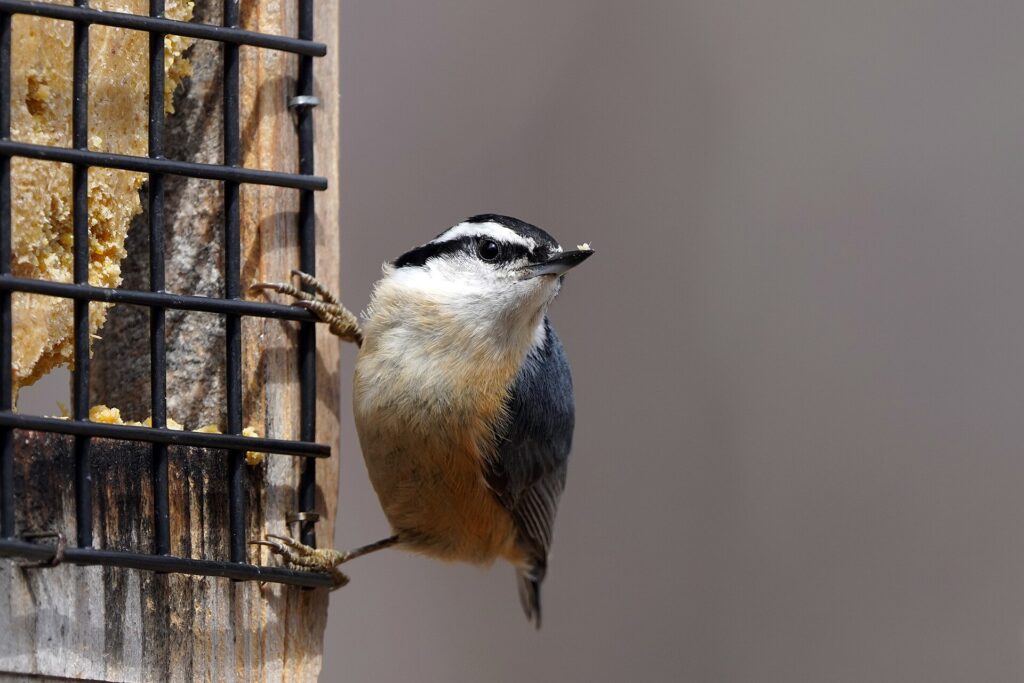
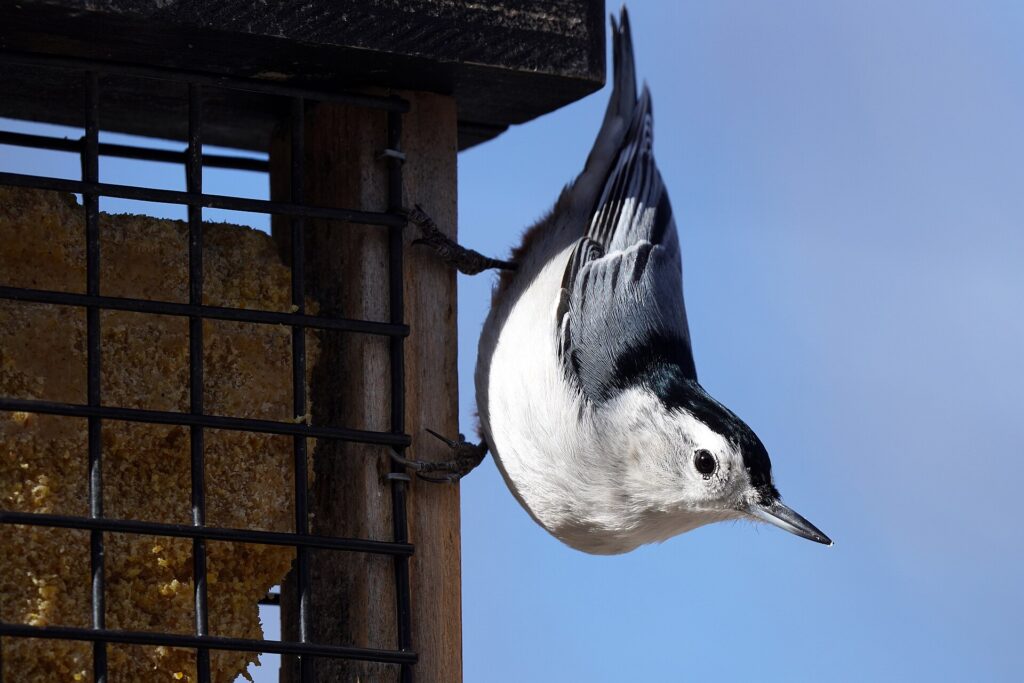
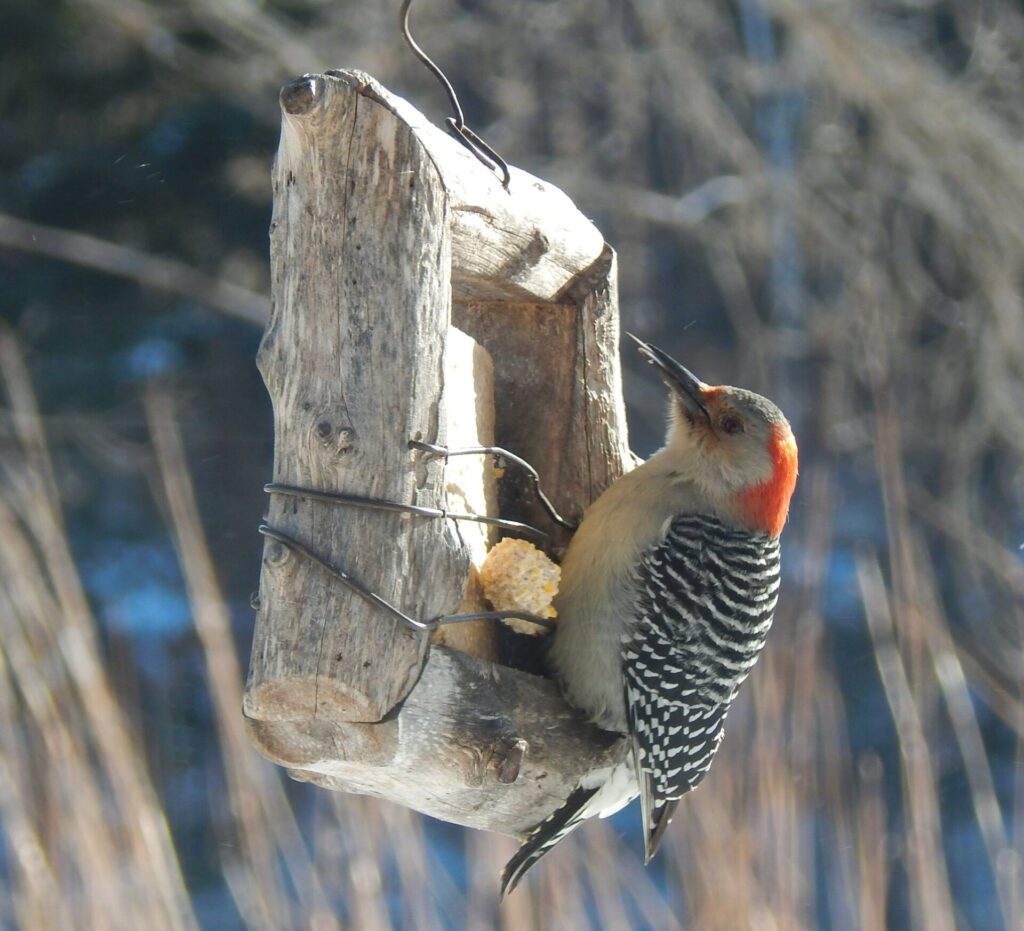
Cornell lists suet as especially attractive to woodpeckers, nuthatches, chickadees, jays and starlings, with wrens, creepers, kinglets, cardinals and some warblers dropping in now and then. A few that show up most often in winter:
- Downy woodpecker. Cornell says downies “prefer suet feeders,” though they also take sunflower seed and peanuts.
- Red-bellied woodpecker. Cornell lists suet (in winter), peanuts and sometimes sunflower seed as the way to attract them.
- White-breasted nuthatch. Comes for suet and large nuts like sunflower and peanuts.
- Carolina wren. Cornell notes they will visit suet feeders in winter. They are sensitive to cold, and northern populations drop after severe winters.
- Pine warbler. Cornell calls it the only warbler that regularly eats seeds, and it takes suet from elevated feeders in winter. It winters mainly in the Southeast.
Not sure who is at your cage? Our free printable bird ID chart by color covers the common feeder birds.
The one guest most people don’t want is the European starling, which Cornell says is “very fond of suet.” If you aren’t sure whether your crowd is starlings, grackles or blackbirds, see how to tell grackles, blackbirds and starlings apart, and for fixes, our guide on how to keep starlings off suet and mealworm feeders.
If you live in bear country
Bears are the one reason to wait longer in fall and quit earlier in spring, whatever the temperature. Vermont Fish and Wildlife lists bird feeders among the most common things that draw bears to homes, and its advice is short: “Feed birds from December to March only.” Cornell cites New York’s recommendation to take feeders down on April 1 to avoid nuisance bears.
Rules and dates differ by state and can shift in a warm year (Vermont asked residents to take feeders down early in the warm spring of 2022), so check your own state wildlife agency’s page on living with bears before you hang anything.
Getting your first suet feeder of the season ready
A few simple steps before you hang the first cake:
- Pick the right cage. A simple wire cage or a mesh bag works, and Audubon also suggests packing suet into the gaps of a big pine cone. If starlings are a problem, FeederWatch says cages that open only on the bottom let woodpeckers, nuthatches and chickadees feed upside down while keeping starlings out. Our suet feeder guide compares the common styles.
- Close the lid securely. FeederWatch warns that a loose lid can let an animal get trapped inside the cage.
- Buy from a source you trust, or make your own. Cornell notes that corn and peanuts in suet cakes can grow dangerous bacteria, and suggests keeping cakes made with corn, cornmeal or peanuts in the fridge until you use them. For an easy homemade seed treat that uses no suet, try our bird seed wreaths.
- Hang it where you can see it. Checking the cake every few days is the whole safety plan. Audubon’s advice is to inspect suet for any sign of decay and not to leave it unwatched for long.
- Plan the rest of the winter menu. Suet works best alongside seed. See what to feed birds in winter and our picks for the best bird feeders for winter.
Signs it’s time to take suet down
- The cake looks shiny, greasy or soft, or is dripping.
- It smells sour or off. Audubon describes rancid fat as a foul-smelling mess that isn’t good for birds.
- Birds that used it daily have stopped coming. Cornell notes birds tend to skip spoiled food.
- Afternoons are running well above 50 degrees for days at a time.
- Your state has told residents to take feeders down for bears.
- Nesting season has started and you aren’t using a no-melt product.
Common questions
Is October too early to put out suet? Not if your days are cool. A packaged or rendered cake is fine in cool fall weather as long as you check it. Save raw suet for when it stays below freezing, and in bear country, wait for your state’s go-ahead.
Can I leave suet out all year? Cornell keeps its own feeders filled year-round but advises taking suet feeders down in warm weather and never offering raw or homemade suet in summer. If you want to keep one up, use no-melt dough in full shade and check it daily.
Can I make my own suet? Yes. Audubon’s recipe starts with rendering: melt beef fat over moderate-low heat and strain it at least twice. Homemade suet belongs in the cold months only. Audubon also says turkey fat melts faster and goes rancid more quickly, so skip it.
What about bacon grease? Cornell does not recommend it. Bacon almost always contains nitrosamines, cancer-causing compounds formed from curing agents and high cooking heat.
Will suet bring starlings? It can. Cornell suggests an upside-down feeder, which woodpeckers, chickadees and nuthatches use easily and starlings can’t.
Bottom line
Suet is a cold-weather food. Put it out in late fall once your days turn cold, keep it going through winter, and pull it back as spring warms up. Raw suet is for freezing weather only; packaged cakes give you a little more room on cool days; no-melt dough in the shade is the only real option in summer, and even that needs daily checks. If bears live nearby, your state wildlife agency’s dates come first. Watch the cake, not the calendar: if it’s soft, greasy or smells off, take it down.