Spark Lark is reader-supported. As an Amazon Associate we earn from qualifying purchases, at no extra cost to you. How we choose products.
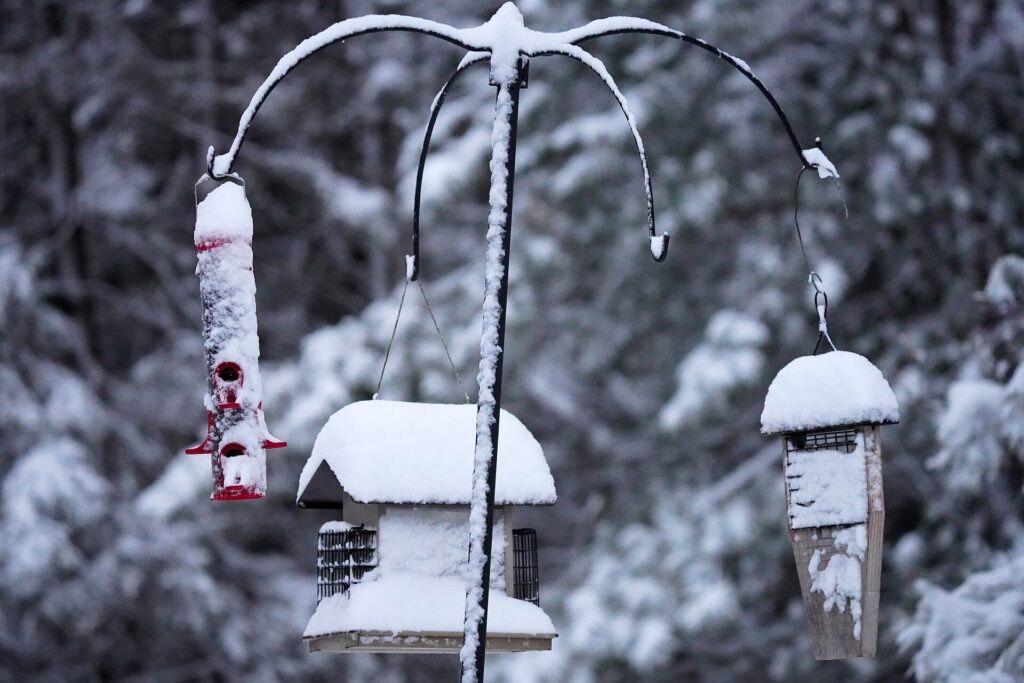
The best bird feeder for winter has three things a summer feeder can get away without: a roof or dome that keeps snow and rain off the seed, enough capacity to carry birds through a storm without a refill, and a build that won’t crack or rust after a few freeze-thaw cycles. Wet seed clumps, molds and spoils, and winter is when birds lean on feeders the most, so a feeder that keeps seed dry and full does more good in January than any other time of year.
The short answer: the Squirrel Buster Plus with its Weather Guard if you want one tube feeder that handles snow, squirrels and a crowd, and the Woodlink Absolute II if you want the most seed under one roof.
The short version
- Best overall: Squirrel Buster Plus with the Squirrel Buster Plus Weather Guard. Holds 5.1 pounds of seed, and the guard keeps seed and birds dry.
- Biggest capacity: Woodlink Absolute II. A steel hopper that holds 12 pounds under a solid roof.
- Built to last: DutchCrafters Poly Hanging Hopper. Recycled-plastic lumber, a lift-up roof and a drain-through aluminum mesh tray. Made in the USA.
- Most seed for the money: Nature’s Rhythm Metal Hopper. Two compartments, 10 pounds of seed, all metal.
- Budget pick: Metal feeder with a 12-inch weatherproof dome. A small feeder with a big clear roof.
- Keep the feeder you have: add an Aspects 18-inch Super Dome or a Birds Choice 10.5-inch dome over it.
How to choose a winter bird feeder
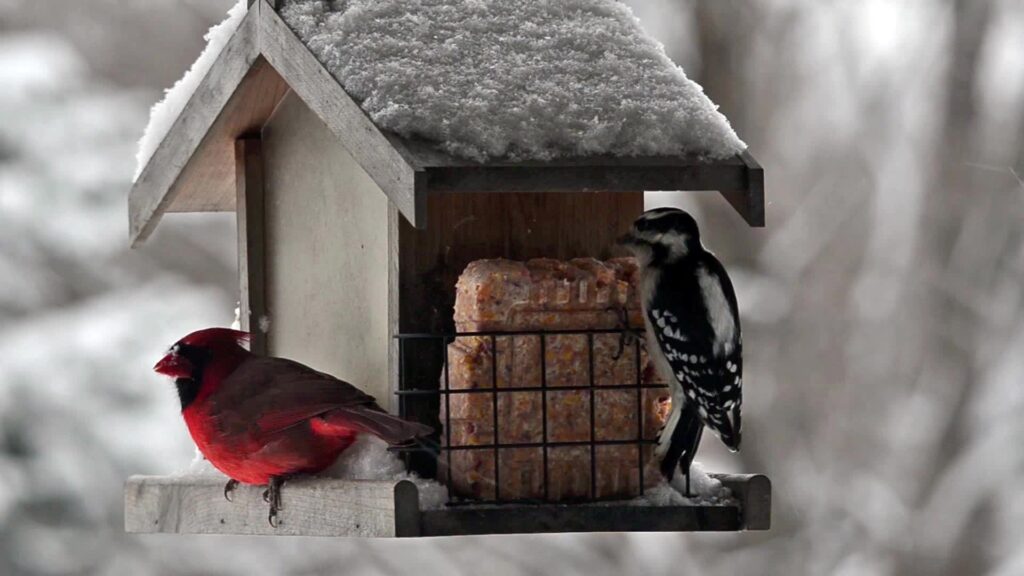
A roof comes first. Open trays are the worst winter choice. The Cornell Lab of Ornithology warns that a tray feeder “doesn’t protect against rain or snow,” so seed can get wet and sprout, mold or spoil. Hoppers and tubes do better: Project FeederWatch says a hopper “protects seed against the weather” and a tube keeps seed “fairly dry.” A dome or weather guard over any feeder adds more cover, and it keeps birds dry while they eat.
Drainage matters as much as the roof. Snow blows in sideways and melts, and FeederWatch recommends cleaning damp residue out of feeder bottoms and ports to prevent mold. Drainage holes or a mesh floor under the seed let meltwater run out instead of pooling, and FeederWatch says tray feeders need “plenty of drainage holes.”
Capacity decides how often you trudge outside. Cornell notes that a hopper can hold several days’ worth of seed. In a cold snap that’s the point: you fill it before the storm and the birds have food while you’re snowed in. Just don’t let a big feeder sit half-full of old seed for weeks. Empty and refill it on the same schedule you clean it.
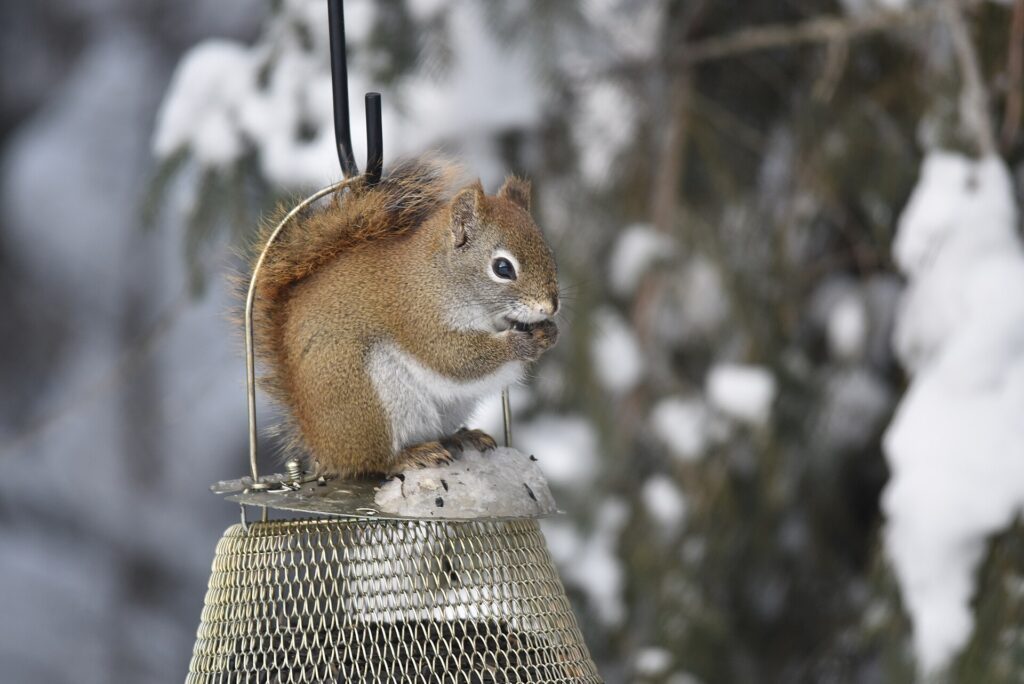
Material matters in freezing weather. Powder-coated steel, die-cast metal and recycled-plastic lumber hold up to ice and sun. Cornell also warns that squirrels can gnaw plastic feeder openings wider, so metal ports or a squirrel-proof design are worth paying for.
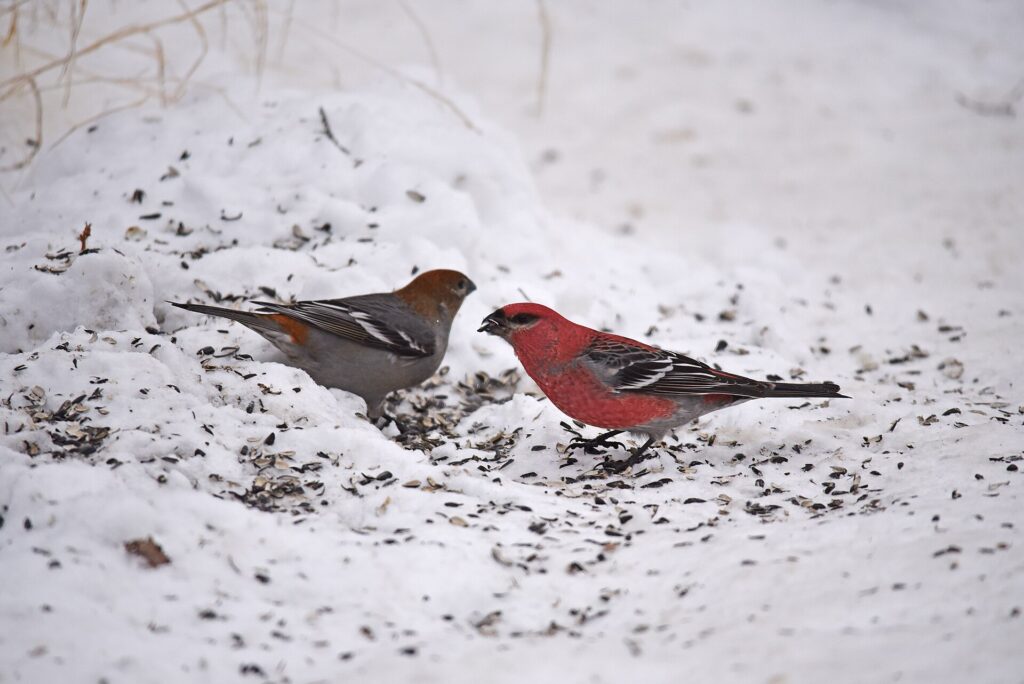
Fill it with the right seed. FeederWatch calls black-oil sunflower seed “high in energy” with thin shells, and says it’s the preferred food of many feeder birds. It works in every feeder below. Our winter feeding guide covers suet, peanuts and the rest of the winter menu.
The feeders
1. Squirrel Buster Plus + Weather Guard — best overall
5.1-lb capacity · 6 ports · Cardinal Ring · weight-activated shroud · 28 in tall · 13-in guard · lifetime limited warranty
The Squirrel Buster Plus is Brome’s largest feeder, and it has the most ratings of anything here by a wide margin. It holds 5.1 pounds of seed behind six ports. When a squirrel climbs on, its weight pulls the outer shroud down and closes the ports, and a Cardinal Ring perch gives cardinals a place to feed. Brome’s clear Weather Guard fits on top and, in Brome’s words, “keeps seeds and birds dry.” It comes apart by hand for cleaning, with no tools.
Downside: the Weather Guard is sold separately, so budget for both. The tube is plastic, and the feeder hangs 28 inches tall, so give it room on the hook or pole.
2. Woodlink Absolute II — biggest capacity
12-lb (2-gallon) capacity · steel with polycarbonate windows · ports on both sides · weight-adjustable closing perch · 16 x 13.5 x 11.25 in · 5-year limited warranty
If you want to fill a feeder once and walk away for a stretch of bad weather, this is the one. The Absolute II is a steel hopper with a solid roof and clear windows so you can see the seed level from the house. It feeds birds from both sides, and the perch closes the ports when something heavy lands on it. You set how much weight it takes, which is how it keeps squirrels out. FeederWatch says large hoppers attract most feeder species, including bigger birds like doves.
Downside: twelve pounds of seed is heavy, so it needs a strong hook or a sturdy pole, and it’s a lot of seed to go stale if your birds are slow. In a mild wet winter, fill it halfway. FeederWatch notes that large hoppers also attract grackles; if they take over, our guide to keeping blackbirds and grackles off feeders has the fixes.
3. DutchCrafters Poly Hanging Hopper — built to last
3.1-lb (10-cup) capacity · recycled HDPE poly lumber · lift-up roof · removable clear sides · aluminum mesh tray · stainless steel wire and hardware · 12 x 10 x 9.25 in · Made in USA
Wood feeders weather and can crack over years outdoors. This one is built by Amish craftsmen from poly lumber made from recycled plastic, so it has nothing to rot, and the hardware is stainless steel so it won’t rust. The roof lifts for filling, and the clear sides come off for cleaning. Seed drops into an aluminum mesh tray, which lets rain and snowmelt drain through instead of turning the seed at the bottom into mush.
Downside: it holds about a quarter of what the Woodlink holds, and it isn’t squirrel-proof. Hang it under a baffle, or on one of the setups in our feeder pole guide.
4. Nature’s Rhythm Metal Hopper — most seed for the money
10-lb capacity in 2 compartments · 10 feeding ports · all metal, powder-coated · screw-top lid · wrap-around tray · 9.4 x 9.4 x 18 in
Ten pounds of seed in a mid-priced feeder is the best capacity for the money here. The two separate chambers let you run two foods at once, say black-oil sunflower on one side and a no-mess blend on the other, and ten ports around a wrap-around tray feed a crowd. It’s all metal with a powder-coated finish, so there’s no plastic for squirrels to chew and nothing to crack in the cold.
Downside: it has the lowest rating of our picks, and the screw-top lid is the only cover over the seed, so the open tray can catch blowing snow. Hang a dome over it in a snowy climate. It isn’t squirrel-proof.
5. Metal feeder with 12-inch weatherproof dome — budget pick
2.2-lb capacity · 12-in clear polycarbonate dome · metal tray with drainage holes · 4 ports, 360° perch ring · tool-free disassembly
This is the cheapest way to get a feeder with a real roof. A clear 12-inch dome sits over a seed tube and a round metal tray, so snow and rain land on the dome, not the seed, and drainage holes in the tray let any water out. Birds can feed from all sides, and the whole thing comes apart without tools for cleaning. It’s a good second feeder for a window view or a small yard.
Downside: 2.2 pounds is small for winter, so plan on refilling it every day or two in a cold snap. It’s from a little-known brand with a short track record.
Add-on: a dome for the feeder you already own
Aspects 182 Super Dome · 18-in diameter · UV-stabilized polycarbonate · stainless steel hardware. Birds Choice dome · 10.5-in diameter · acrylic · hanger included
You don’t have to replace a good tube or small hopper to winterize it. A clear dome hung above it keeps most snow and rain off the seed and the perches. Aspects’ 18-inch Super Dome is wide enough to shelter a tube feeder’s perches, and Aspects says it also adds protection from squirrels. The Birds Choice dome is the budget version, sized for small tube, seed and nectar feeders.
Downside: a dome won’t stop sideways, wind-driven snow, and the 10.5-inch size is too small for a big feeder.
Side by side
| Feeder | Capacity | Weather cover | Squirrel-proof |
|---|---|---|---|
| Squirrel Buster Plus + Weather Guard | 5.1 lb | 13-in guard | Yes |
| Woodlink Absolute II | 12 lb | Steel roof | Yes |
| DutchCrafters Poly Hopper | 3.1 lb | Poly roof, mesh tray | No |
| Nature’s Rhythm Metal Hopper | 10 lb | Metal lid | No |
| Metal feeder with 12-in dome | 2.2 lb | 12-in dome | No |
Winter feeder tips
- Brush off snow after every storm, and clear the ports and tray so birds can reach the seed.
- Clean every week or two. That’s FeederWatch’s schedule for seed feeders, and more often in wet weather. Audubon suggests at least every other week. Our feeder cleaning guide walks through it.
- Throw out clumped or moldy seed. Don’t dump it on the ground. Audubon’s Sunny Kellner advises disposing of it “rather than dumping it on the ground.”
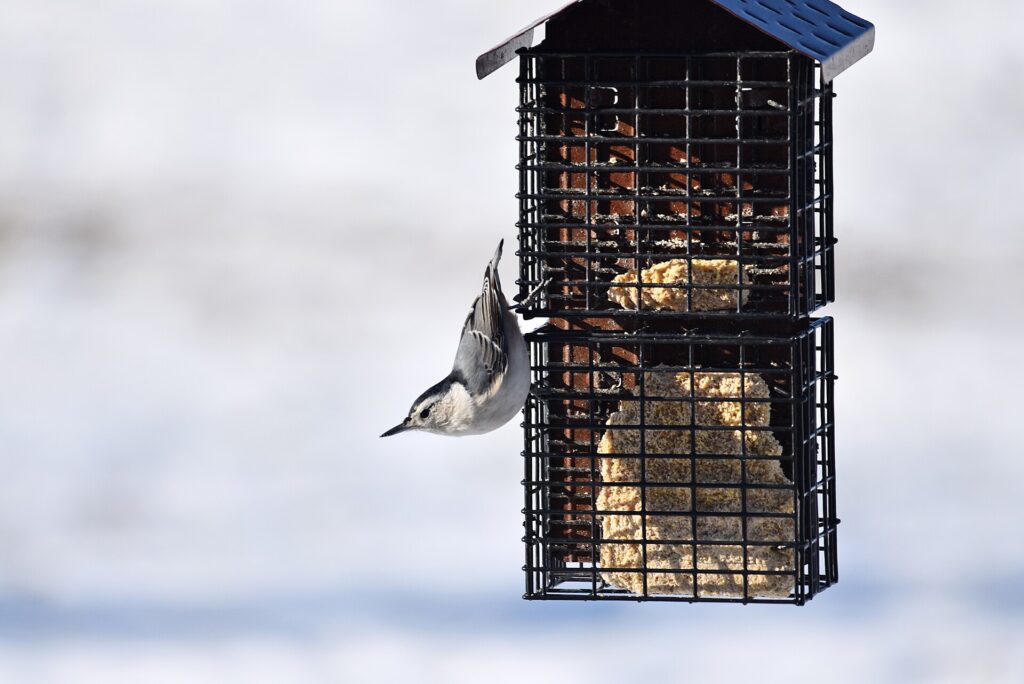
- Add suet. Winter is suet season. Cornell notes raw suet can go rancid above freezing, which makes cold weather the easiest time to offer it. See our suet feeder picks.
- Place it near cover but not too near. Birds want shrubs or trees to dash to, but FeederWatch suggests about 10 feet from jumping-off points so squirrels can’t leap onto the feeder. Near the house, Audubon says to keep feeders 30 or more feet from windows, or very close to them, to prevent collisions.
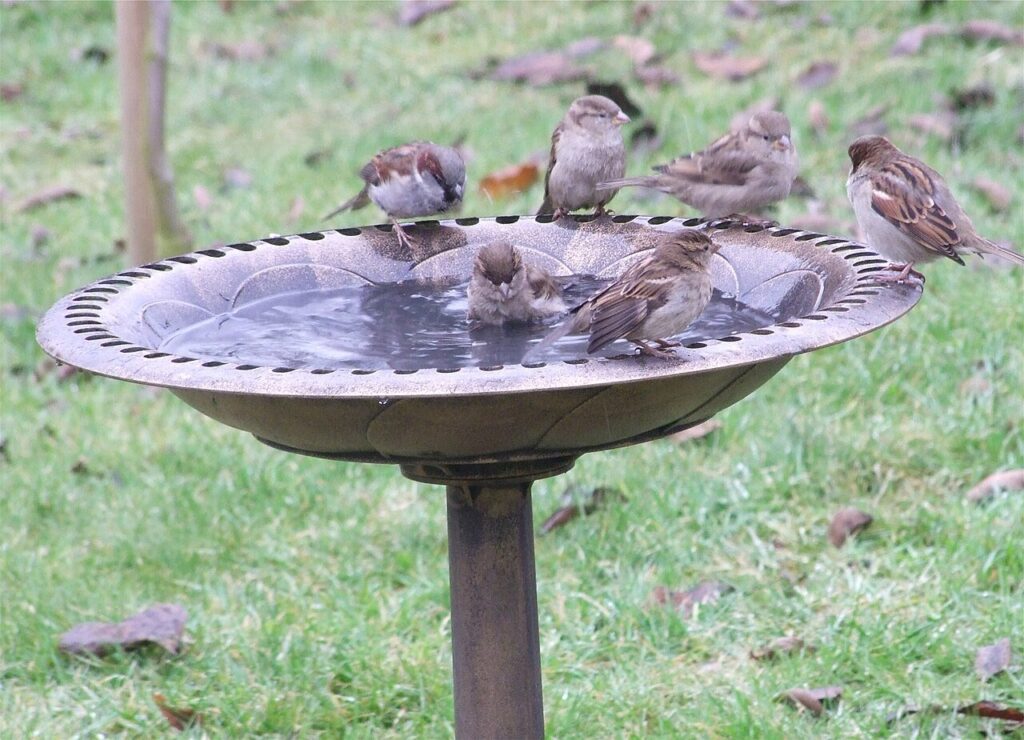
- Give them water too. Open water is hard to find in a freeze. A heated bird bath draws birds that never visit feeders.
FAQ
What type of bird feeder is best for winter? A covered hopper or a tube feeder with a dome. Both keep seed drier than an open tray, and a large hopper holds several days of food.
Can I use a platform feeder in winter? Yes, if it has a roof or a dome and a screen bottom for drainage, and you put out only what birds eat in a day. Our platform feeder guide includes a covered model.
Which birds will come to a winter feeder? It depends on where you live. Chickadees, titmice, nuthatches, cardinals, juncos, finches and woodpeckers are common winter regulars across much of the country.
Before the first freeze, run through our 9-step checklist for getting feeders ready for winter.
Bottom line
For one feeder that handles snow, squirrels and a crowd, get the Squirrel Buster Plus and add its Weather Guard. For the most seed under a roof, the Woodlink Absolute II holds 12 pounds. For a hopper with nothing to rot or rust, the DutchCrafters poly hopper. On a budget, the Nature’s Rhythm hopper holds 10 pounds without a premium price, and the domed metal feeder is the cheapest way to get a real roof. Already have a feeder you like? Hang a dome over it. Pair any of them with black-oil sunflower seed from our bird seed guide, and fill it before the storm, not after.