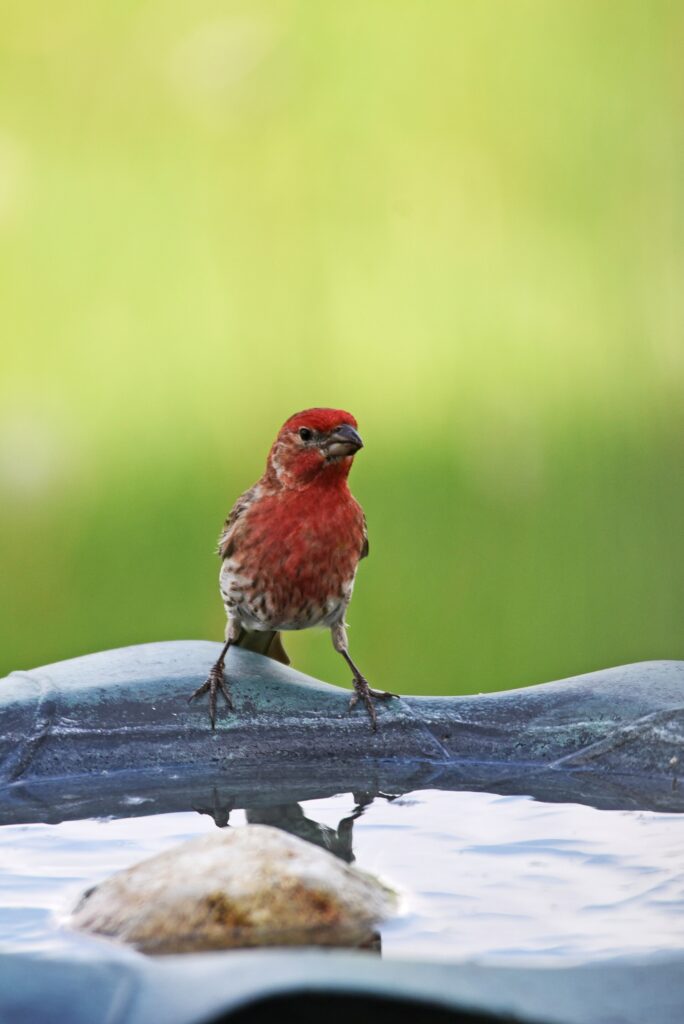
A grayish bird with a red head at your feeder is most often a male house finch, the most widespread red-headed songbird in the country. But depending on where the red is and how big the bird is, it could be a red-bellied woodpecker, a pyrrhuloxia in the desert Southwest, a common redpoll in winter, or even a sandhill crane in a field. Here are the gray birds with red on the head that Americans see most, and how to tell them apart.
The short version
- Sparrow-sized, streaky gray-brown body, red head and chest, at the feeder: male house finch.
- Same size but raspberry-washed all over, no streaks on the belly: male purple finch.
- Gray cardinal-shaped bird with a red face, crest and belly stripe, stubby yellow bill: pyrrhuloxia (Southwest).
- Warm gray-tan cardinal with a red crest and orange bill: female northern cardinal.
- Pale gray face and belly, red cap and nape, zebra back, on a tree trunk: red-bellied woodpecker.
- Small, streaky gray-brown, tiny red cap, black chin, winter flocks: common redpoll.
- Tall, all-gray, red forehead, in a field or marsh: sandhill crane.
Finches
House finch (male). The answer most of the time. Males have a red forehead, eyebrow, throat and chest, with a gray-brown back and a pale belly with blurry brown streaks. The red can range from orange to yellowish depending on diet. House finches live in every lower-48 state, in cities and suburbs, and they’re regulars at sunflower and nyjer feeders. Females are plain gray-brown and streaky with no red at all.
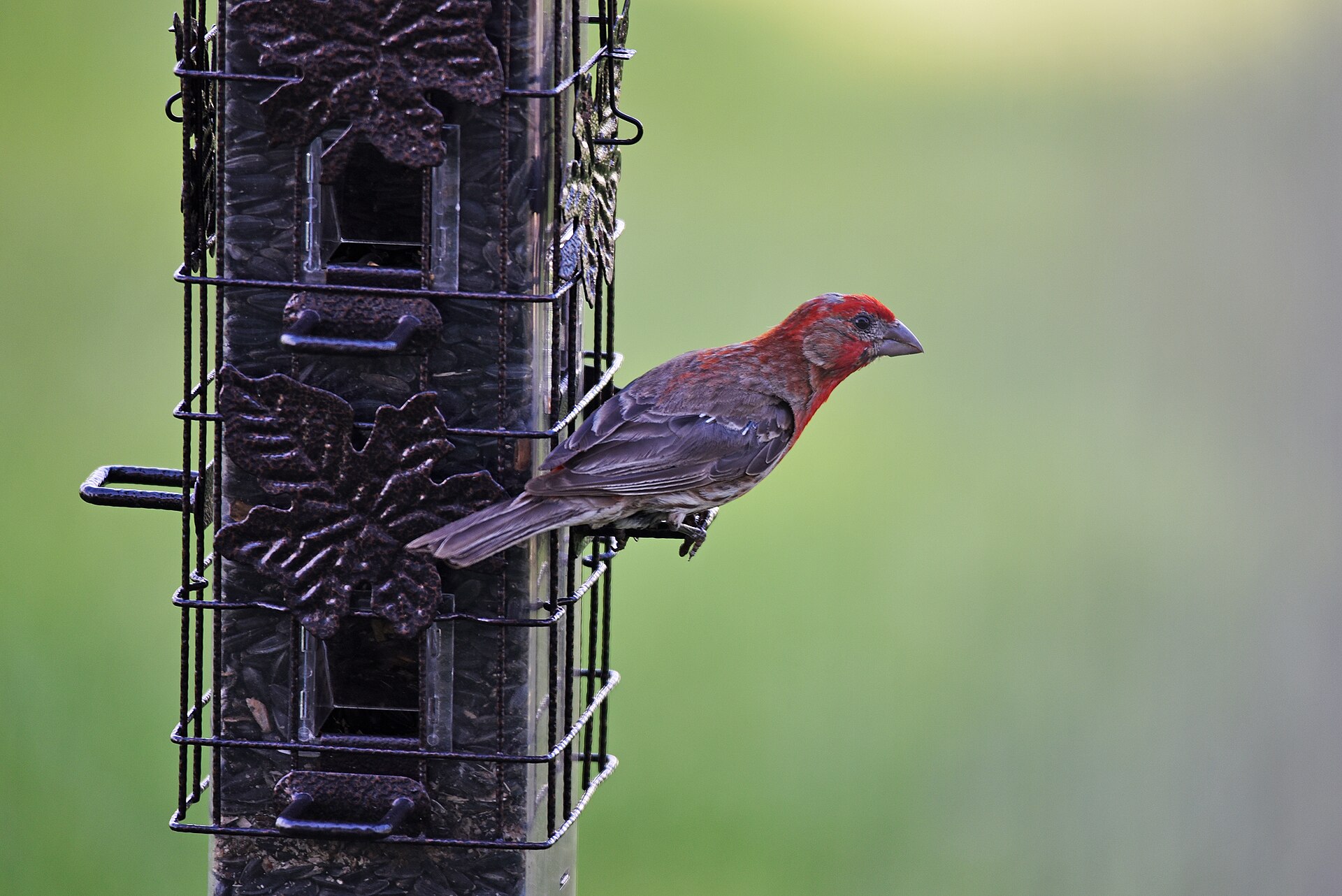
Purple finch (male). Often confused with the house finch. The purple finch looks like it was dipped in raspberry juice: the rosy color washes over the head, back and wings, and the belly is clean, not streaked. It’s a bird of northern and mountain forests that spreads south in winter. The very similar Cassin’s finch replaces it in the mountain West and has a brighter red cap.
Common redpoll. A small, streaky gray-brown finch with a tiny bright-red cap on the forehead and a black chin. Males have a pink wash on the chest. Redpolls come south from the Arctic in winter, in big numbers some years, and swarm nyjer feeders across the northern states.
Pine grosbeak. A big, plump finch of northern forests. Males are rosy red with gray on the belly and wings. Females and young birds are mostly gray with a russet or olive-yellow head, which fits “gray bird with a red head” well. They wander south into northern states in some winters.
Cardinals and relatives
Pyrrhuloxia. Nicknamed the “desert cardinal,” this is a gray cardinal with a red face, red crest tip, red down the center of the chest, and a short, curved, yellow bill that looks like a parrot’s. It lives in the deserts of Arizona, New Mexico and Texas and visits feeders there.
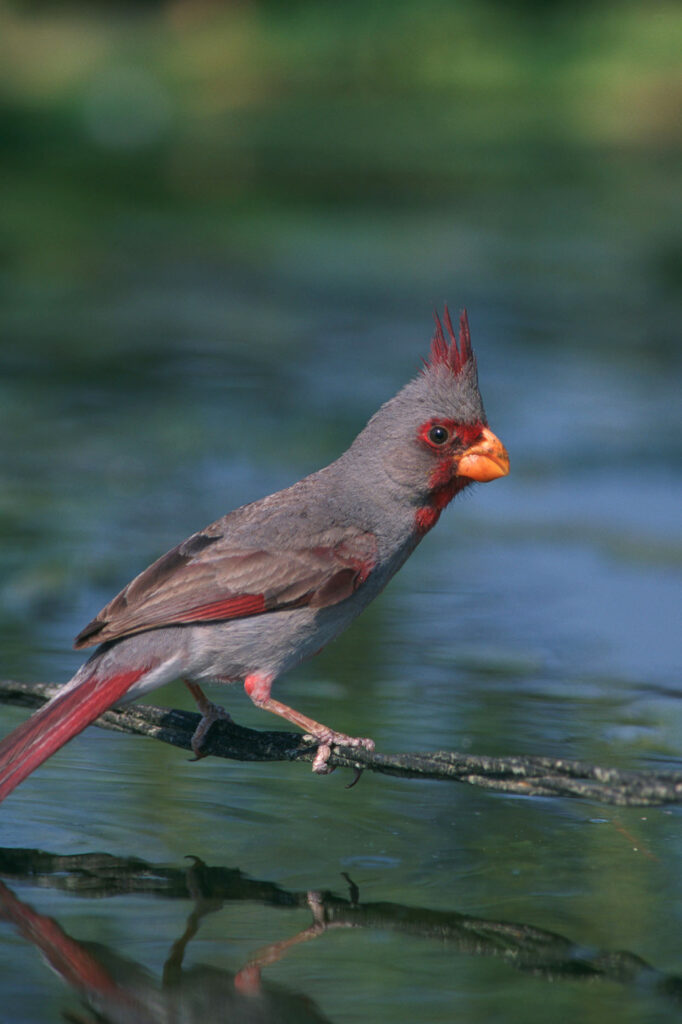
Northern cardinal (female). Warm grayish-tan with reddish tinges on the crest, wings and tail, and a bright orange-red bill. Her shape and crest give her away as a cardinal. Our guide to feeders cardinals will use covers how to attract both sexes.
Red-crested cardinal (Hawaii). If you’re in Hawaii, the gray-backed, white-bellied bird with a bright red head and crest is the red-crested cardinal, introduced from South America and now common around Honolulu and Maui.
Woodpeckers
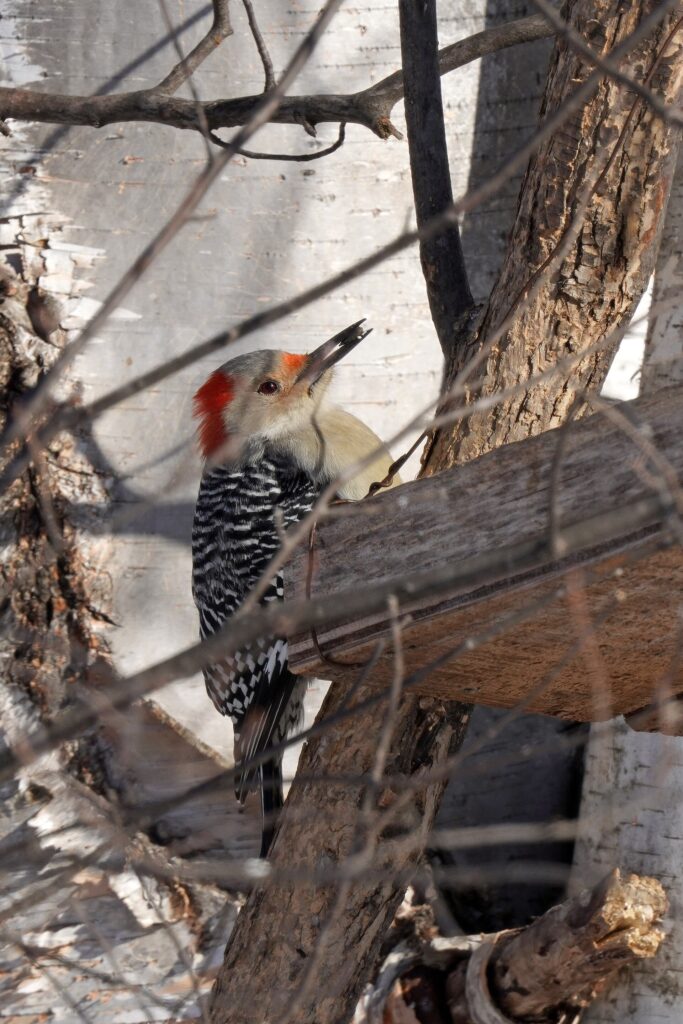
Red-bellied woodpecker. The most common “gray bird with a red head” that isn’t a finch. From the front it looks pale gray-buff, with a red cap and nape (males) or just a red nape (females), and a black-and-white zebra-barred back. The red belly the name refers to is only a faint blush and hard to see. It’s common across the East and Midwest at suet and peanut feeders.
Northern flicker. A big, brown-and-gray ground-feeding woodpecker with black spots, a black bib, and a white rump in flight. Eastern birds (yellow-shafted) have a gray crown and a red crescent on the nape. Western birds (red-shafted) have a gray face, and the males a red mustache stripe.
Big gray bird, red head
Sandhill crane. If the “bird” is nearly as tall as a person, all gray with a bare red patch on the forehead, it’s a sandhill crane. They gather in huge flocks in fields and wetlands during migration, stay year-round in Florida, and are increasingly common in suburban neighborhoods in the Southeast and Midwest. Their rolling, trumpeting calls carry a long way.
How to tell them apart quickly
- Size: sparrow-sized (finches, redpoll), robin-sized (cardinals, woodpeckers), pigeon-sized (flicker), or tall (crane)?
- Bill: short and conical (finch), thick and orange or yellow (cardinal, pyrrhuloxia), chisel-like (woodpecker), long and dagger-shaped (crane)?
- Where the red is: head and chest (house finch), everywhere (purple finch), tiny forehead cap (redpoll), cap and nape (red-bellied woodpecker), face and crest (pyrrhuloxia)?
- Behavior: eating seed at a feeder, climbing a trunk, or walking a field?
For more help with gray birds generally, see our guides to 18 common gray birds and the small gray bird with a crest.
For the pyrrhuloxia and the other cardinals, see our guide to types of cardinals.
Bottom line
At a feeder, a gray-brown bird with a red head and chest is almost always a male house finch. A woodpecker with a pale gray face and a red cap is a red-bellied woodpecker. In the desert Southwest, a gray cardinal with a red face is a pyrrhuloxia. And if it’s taller than your fence, it’s a sandhill crane.