Spark Lark is reader-supported. As an Amazon Associate we earn from qualifying purchases, at no extra cost to you. How we choose products.
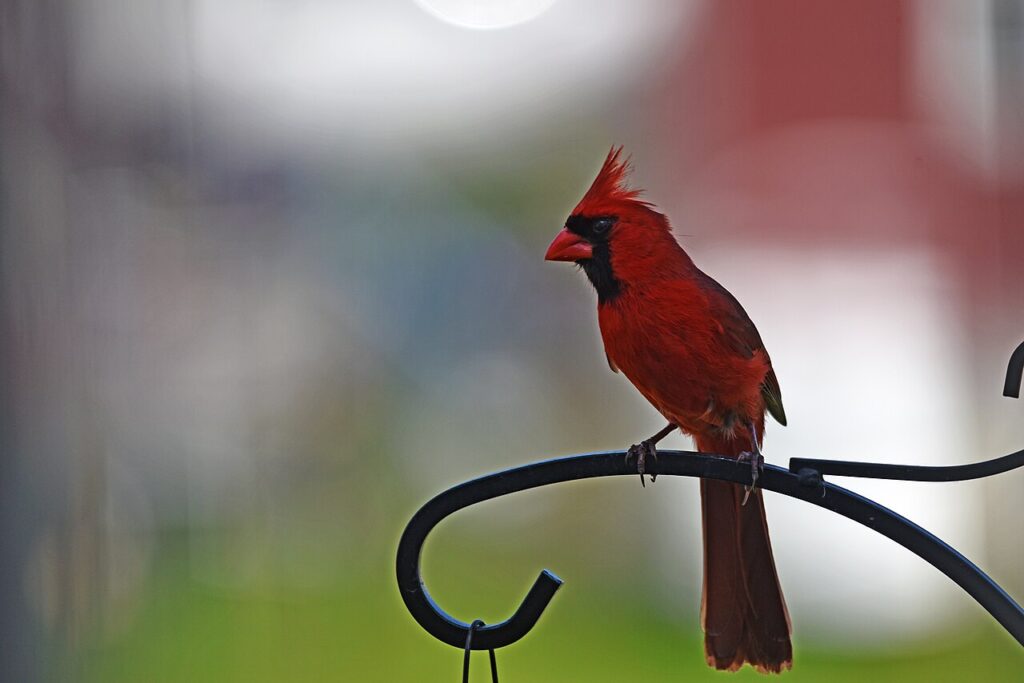
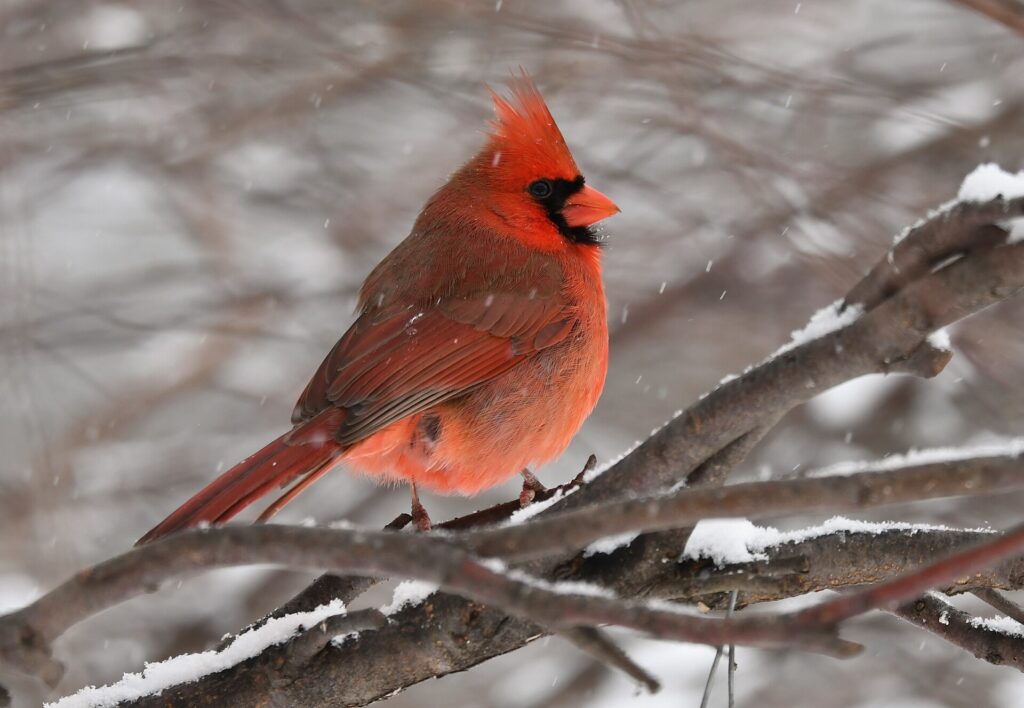
Cardinals skip most tube feeders for a simple reason: they’re big, heavy-billed birds that like to stand flat-footed while they eat, and a tube’s small perches make them work for every seed. Give them a wide, stable place to stand and the seed they like best, and they’ll come to it every morning and every evening.
That means three things: a platform or tray feeder, or a hopper with a wide ledge; black oil sunflower or safflower seed; and a spot within a few yards of a dense shrub. Below are the six feeders that get all three right, plus the seed to put in them.
The short version
- Best overall: Kingsyard hanging platform feeder. An open tray is the feeder cardinals use most readily.
- Best hopper: Perky-Pet Red Cardinal feeder. A wide 360° seed tray to stand on, 2.5 pounds of seed.
- Best if squirrels win: Woodlink Absolute II. A weight-activated hopper with a long perch cardinals can use.
- Best tube: Squirrel Buster Plus with cardinal ring. The one tube feeder built with a ring perch for cardinals.
- The seed: black oil sunflower, or safflower if squirrels or grackles are a problem.
What cardinals want from a feeder
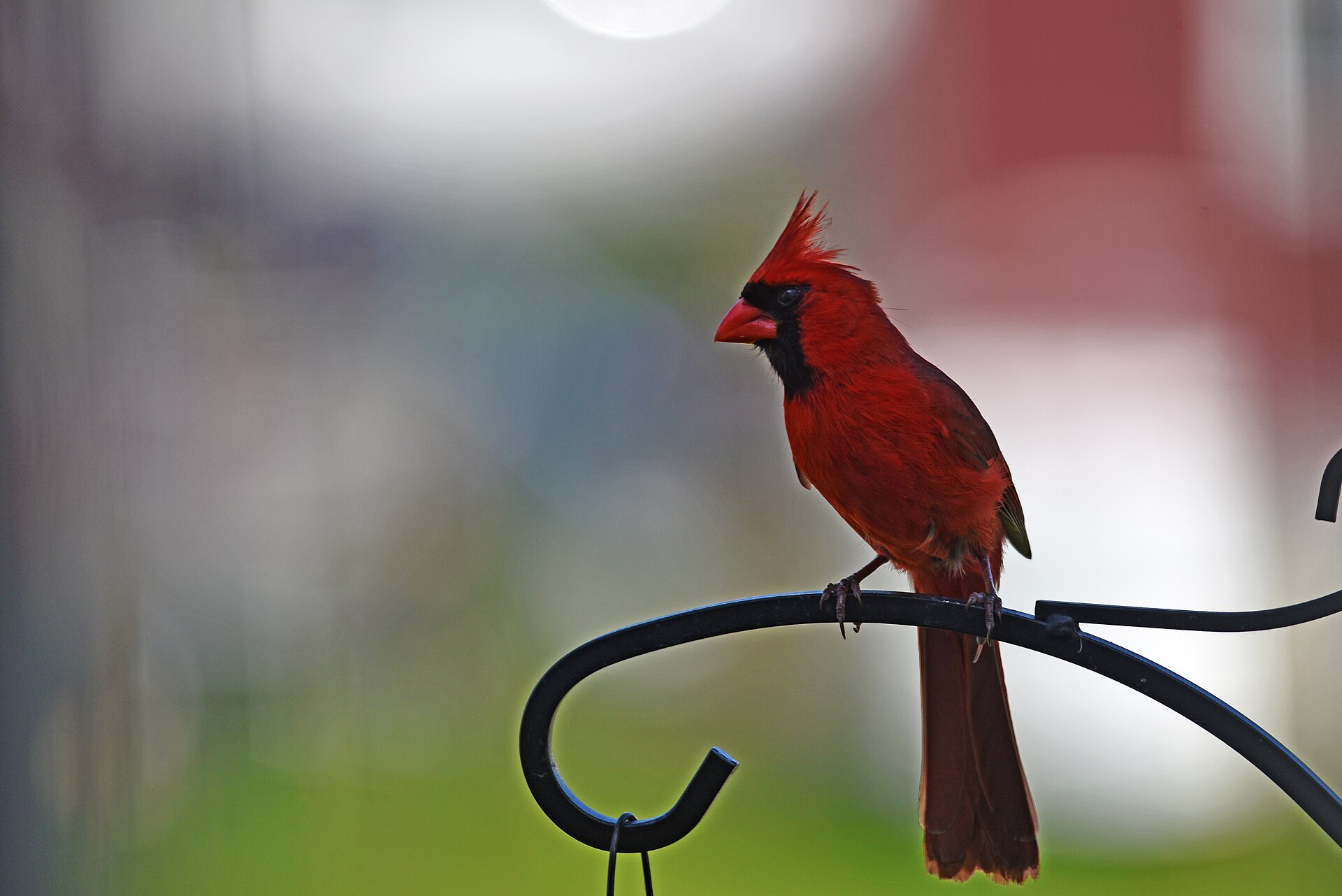
The Cornell Lab of Ornithology describes cardinals as birds that “hop through low branches and forage on or near the ground.” At a feeder, that translates into a few simple preferences:
- Room to stand. A tray, a platform or a hopper with a wide ledge. Short tube perches are the reason many yards with feeders never get cardinals.
- Stability. A feeder that swings or tips when a bird lands spooks them. Heavier feeders, or ones hung from a short chain, do better.
- Cover nearby. Cardinals rarely cross open lawn to eat. Put the feeder about 5 to 10 feet from a dense shrub or evergreen, close enough to dart back to and far enough that a cat can’t ambush from it.
- Low placement. Around 4 to 6 feet off the ground matches where they naturally feed.
- Timing. Cardinals are often the first birds at the feeder in the morning and the last at dusk, so keep the feeder full at the end of the day.
The feeders
1. Kingsyard hanging platform feeder — best overall
11 x 11 in · recycled poly-lumber frame, mesh floor · holds 3 lb
An open tray is the feeder cardinals take to fastest, because it’s exactly how they like to eat: standing flat on a surface, cracking seeds one at a time. This one has a recycled poly-lumber frame that won’t rot or warp, and a mesh floor that lets rain drain through so the seed doesn’t turn to mush. It hangs from a stable suspension that keeps it level when a bird lands, and it holds 3 pounds. It’s also one of the feeders we’ve bought to test in our own yard, and we’ll add our notes and photos here once it’s been up a few weeks; see how we choose products.
Downside: it’s open to everyone, including squirrels, grackles and rain. If those are problems in your yard, look at picks 3 and 4.
2. Perky-Pet Red Cardinal feeder — best hopper
holds 2.5 lb · all-metal, powder-coated · 360° seed tray
If you’d rather not refill a tray every day, a hopper holds more seed and keeps most of it dry. What makes this one work for cardinals is the circular seed tray around the base: it’s a continuous ledge they can stand on, and Perky-Pet rates it for up to 15 birds at once. It’s all metal with a rust-resistant finish, and it collapses flat for storage.
Downside: squirrels can reach it. Hang it on a baffled pole (see our squirrel-proof feeder guide) or fill it with safflower.
3. Woodlink Absolute II — best squirrel-proof
12 lb capacity · steel with polycarbonate windows · weight-activated
This is the fix for a yard where squirrels empty everything. It’s a large steel hopper with a perch bar on each side, and the closing mechanism is adjustable by weight: set it so a cardinal’s weight keeps the ports open and a squirrel’s weight shuts them. It holds 12 pounds, so you’re filling it about once a week instead of every day.
Downside: it’s big, heavy and one of the pricier picks. It works best on a sturdy pole rather than a thin branch.
4. Kingsyard platform feeder with adjustable dome — best covered tray
powder-coated metal tray · clear adjustable dome
A tray with a clear roof: you get the open platform cardinals like, with the seed kept out of the rain. The dome raises and lowers, so you can drop it far enough to keep grackles and pigeons out while leaving room for a cardinal, and it rotates when a squirrel tries to perch on it.
Downside: lower the dome too far and cardinals won’t fit. Leave about 3 inches of clearance.
5. Kingsyard elevated ground feeder — best ground feeder
13.3 x 10.2 in · recycled poly lumber, metal mesh floor · 4-in legs · holds 5 lb
Cardinals do most of their natural feeding on the ground, and a low tray under a shrub is often where they show up first. This one sits 4 inches up on folding legs, so the seed stays out of the mud, and the mesh floor drains. It also brings in juncos, doves and native sparrows.
Downside: at ground level it’s open to squirrels, chipmunks and anything else walking by. Put out only what the birds finish in a day.
6. Squirrel Buster Plus with cardinal ring — best tube feeder
5.1 lb capacity · weight-activated shroud · cardinal ring
If you want a tube, get the one designed with cardinals in mind. The Squirrel Buster Plus comes with a cardinal ring, a circular perch around the ports that gives a big bird a place to stand, and a weight-activated shroud that closes the ports when a squirrel climbs on. It’s one of the best-known squirrel-proof feeders.
Downside: it’s the most expensive pick here, and cardinals still take to it more slowly than to a tray.
Side by side
| Feeder | Type | Capacity | Squirrel-resistant | Rain cover |
|---|---|---|---|---|
| Kingsyard platform | Hanging tray | 3 lb | No | No, drains |
| Perky-Pet Red Cardinal | Hopper with tray | 2.5 lb | No | Yes |
| Woodlink Absolute II | Hopper | 12 lb | Yes (weight) | Yes |
| Kingsyard dome | Covered tray | — | Partly | Yes |
| Kingsyard ground | Ground tray | 5 lb | No | No, drains |
| Squirrel Buster Plus | Tube with ring | 5.1 lb | Yes (weight) | Yes |
What to put in it
Cornell names black oil sunflower as the cardinal’s favorite feeder food, and it’s the seed to start with: the Wagner’s 25-pound bag is our pick in the bird seed guide.
If squirrels, grackles or starlings are taking over, switch to safflower. Cardinals eat it readily, and most of the pests don’t like its bitter taste. The CountryMax 20-pound bag is the best value; try the Wagner’s 5-pound bag first if you’re not sure. Give birds a week or two to switch over, and mix it with sunflower at first. Our grackle guide covers the rest of that fight.
Getting cardinals to stay
- Plant for them. Cardinals nest 1 to 15 feet up in dense shrubs, vine tangles and small trees, and eat dogwood berries, wild grapes and hackberries. Our bird-friendly garden guide lists the plants by region.
- Add water. A shallow bird bath near cover draws cardinals year-round; see our bird bath guide.
- Keep it clean. Trays collect droppings fast. Brush them off at every refill and wash the feeder weekly; our feeder cleaning guide has the routine.
- Be patient. A new feeder can take a week or two before cardinals trust it, and they’ll find it faster if some seed is scattered on the ground beneath it at first.
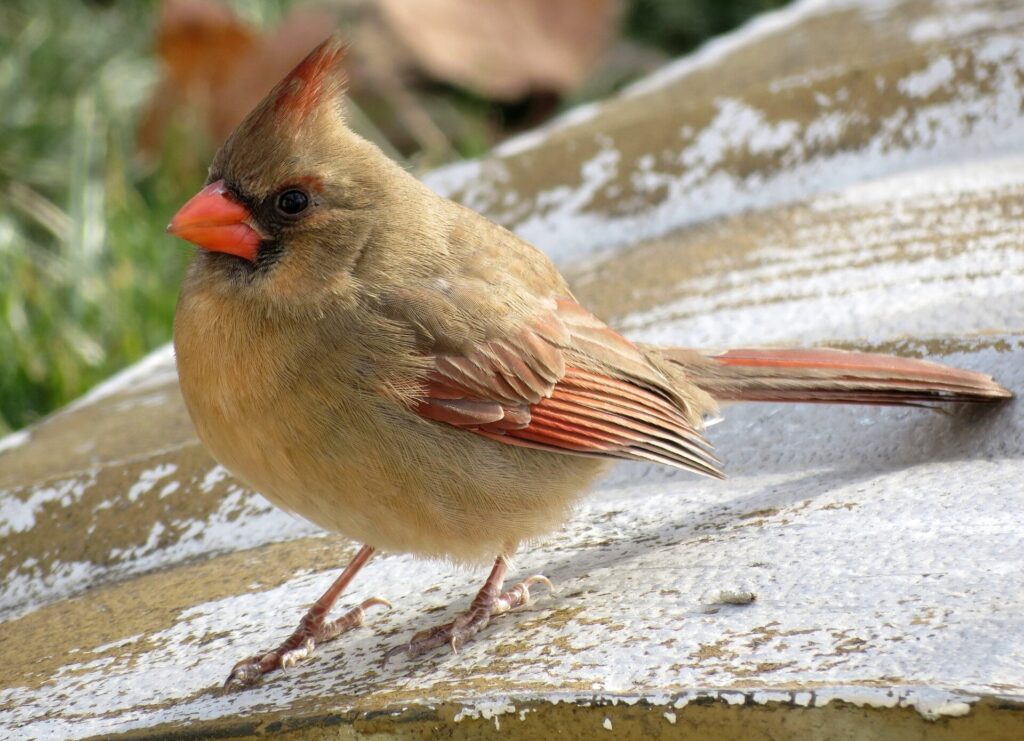
Not sure the red bird at your feeder is a northern cardinal? See types of cardinals and their look-alikes.
Bottom line
Give cardinals somewhere flat to stand, sunflower or safflower to eat, and a shrub to retreat to. For most yards that’s the Kingsyard platform feeder filled with black oil sunflower, hung 5 to 10 feet from cover. If squirrels are the problem, step up to the Woodlink Absolute II and switch to safflower.
Follow @sparklarkbirding for daily backyard birding tips →