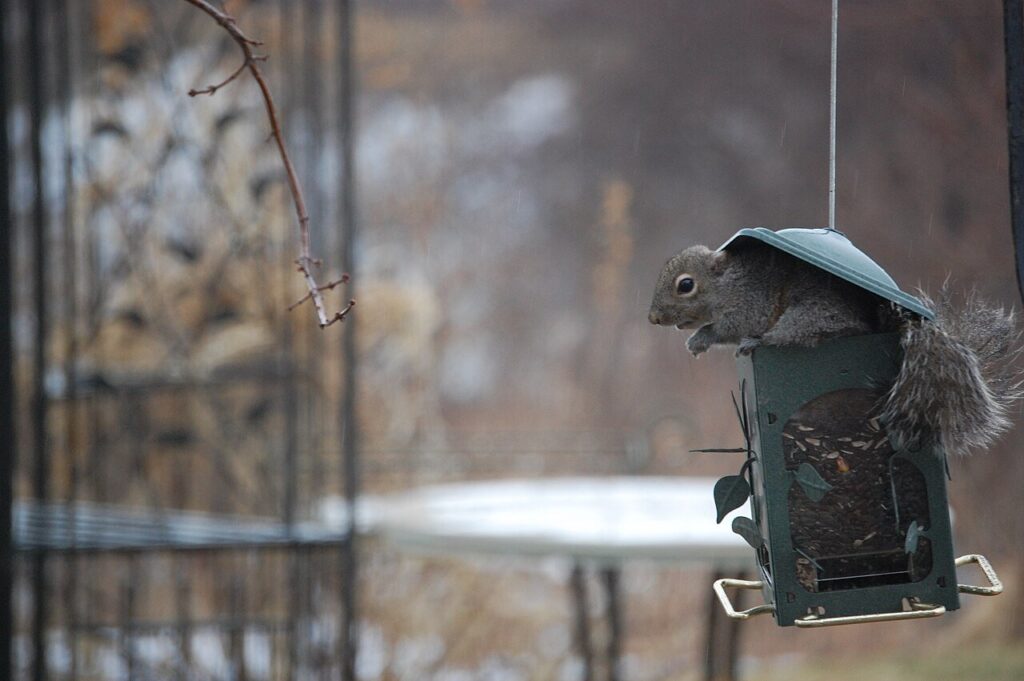
“Squirrel-proof” is a claim, not a category, and most feeders that make it aren’t. There are exactly three mechanisms that stop a gray squirrel: a weight-activated shroud that closes the ports when anything heavier than a cardinal lands, a cage with openings too small for a squirrel to pass through, and a baffle that keeps it from reaching the feeder in the first place. Everything else, hot pepper, motorized spinners, slippery poles, “squirrel-resistant” hoppers, is somewhere between a deterrent and a show. The feeders below use one of the three, and the list ends with the inexpensive combination that makes any feeder squirrel-proof.
Spark Lark is reader-supported. As an Amazon Associate we earn from qualifying purchases made through links on this page, at no extra cost to you.
The short version
- Best overall: Brome Squirrel Buster Plus. Weight-activated, 5 pounds of seed, cardinal ring, lifetime warranty.
- Best value: Brome Squirrel Buster Standard. The same mechanism in a smaller tube.
- Best mid-size: Brome Squirrel Buster Legacy. 2.6 pounds, metal perches.
- Best hopper: Woodlink Absolute II. A 12-pound steel hopper with a weight-closing perch; for cardinals, jays and a yard you don’t want to refill.
- Most entertaining: Droll Yankees Yankee Flipper. The motorized perch that spins squirrels off. It works, and it’s on YouTube for a reason.
- Best caged: Audubon caged screen feeder. Small birds only; squirrels, grackles and starlings out.
- Makes any feeder squirrel-proof: pole with baffle or a 19-inch pole baffle on the pole you have.
How squirrels beat feeders, and what actually stops them
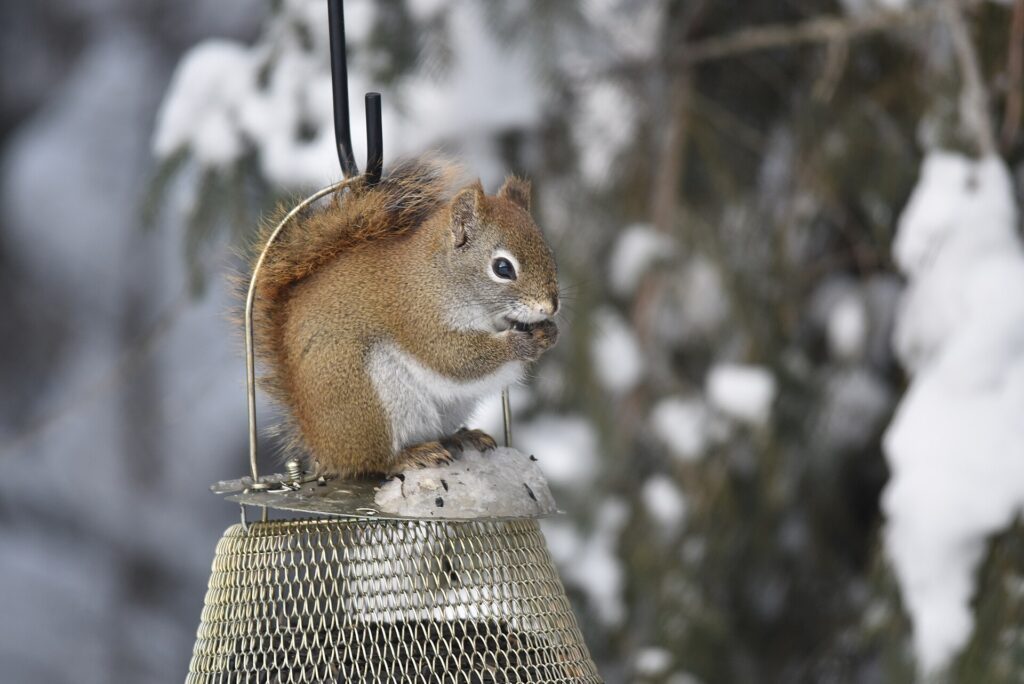
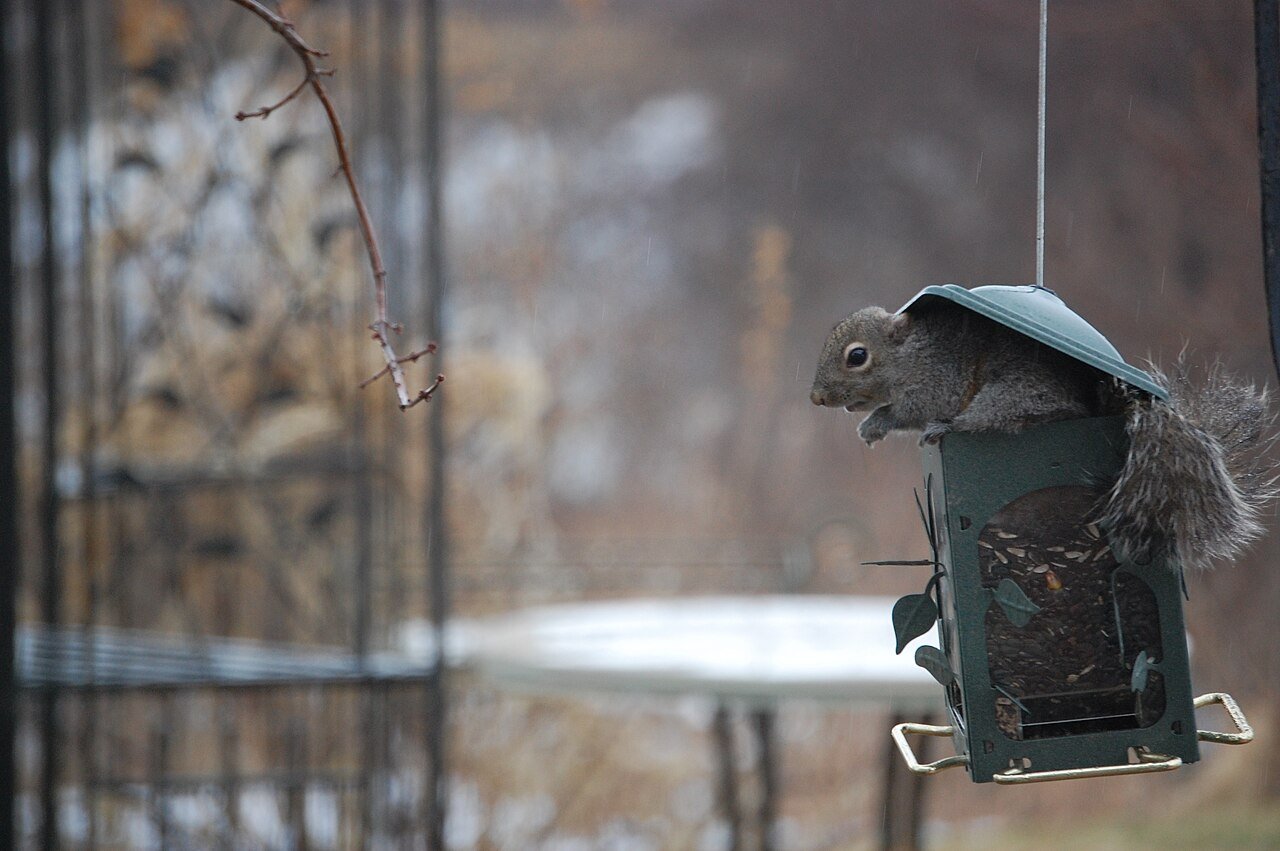
A gray squirrel can jump about five feet straight up and ten feet sideways, climb any pole it can grip, hang by its back feet from a wire, and chew through plastic in a night. So the “squirrel-resistant” feeder that just has a metal roof or a slippery tube loses within a week. What works is physics: weight (a squirrel weighs a pound or more; a cardinal weighs an ounce and a half, so a perch that closes the ports under a few ounces separates them perfectly), geometry (a wire cage with 1.5-inch gaps passes chickadees, finches and titmice and stops everything bigger), and distance (a feeder five feet up a pole with a baffle below it and nothing within ten feet horizontally is simply unreachable). The first two are built into the feeders below. The third is inexpensive and works with any feeder you already own.
The feeders
1. Brome Squirrel Buster Plus — best overall
weight-activated · 5.1 lb seed · 6 ports + cardinal ring · lifetime warranty
The feeder that made “squirrel-proof” mean something. An outer shroud hangs on a spring; a squirrel’s weight pulls it down and closes every port, and it opens again the instant the squirrel gives up. It is a squirrel feeder, not a grackle feeder: Brome’s own page says it “will NOT deter Grackles, Starlings.” For those, see our starling-proof and grackle-proof feeder picks. Five pounds of seed lasts a week in a busy yard, the cardinal ring gives cardinals somewhere to sit, the whole thing comes apart without tools for cleaning, and Brome guarantees it for life, including against squirrel damage. It’s the feeder people buy after the third cheaper one fails, and the one to buy first if you have squirrels.
Downside: it is one of the pricier feeders. It also needs 18 inches of clearance on all sides; a squirrel that can reach it from a branch will hang off the side and eat what’s spilled. Hang it in the open.
2. Brome Squirrel Buster Standard — best value
weight-activated · 1.3 lb seed · 4 metal perches · lifetime warranty
The same mechanism in a tube a third the size, at less than half the price. It holds up: same shroud, same spring, same warranty. The trade-off is refilling every two or three days. For a small yard, a second station, or a first try at the category, it’s the right buy. The Legacy is the middle size, with 2.6 pounds of seed and a weather guard.
Downside: small. In a yard with a flock of house finches it empties fast, and the fixed tension isn’t adjustable like the Plus.
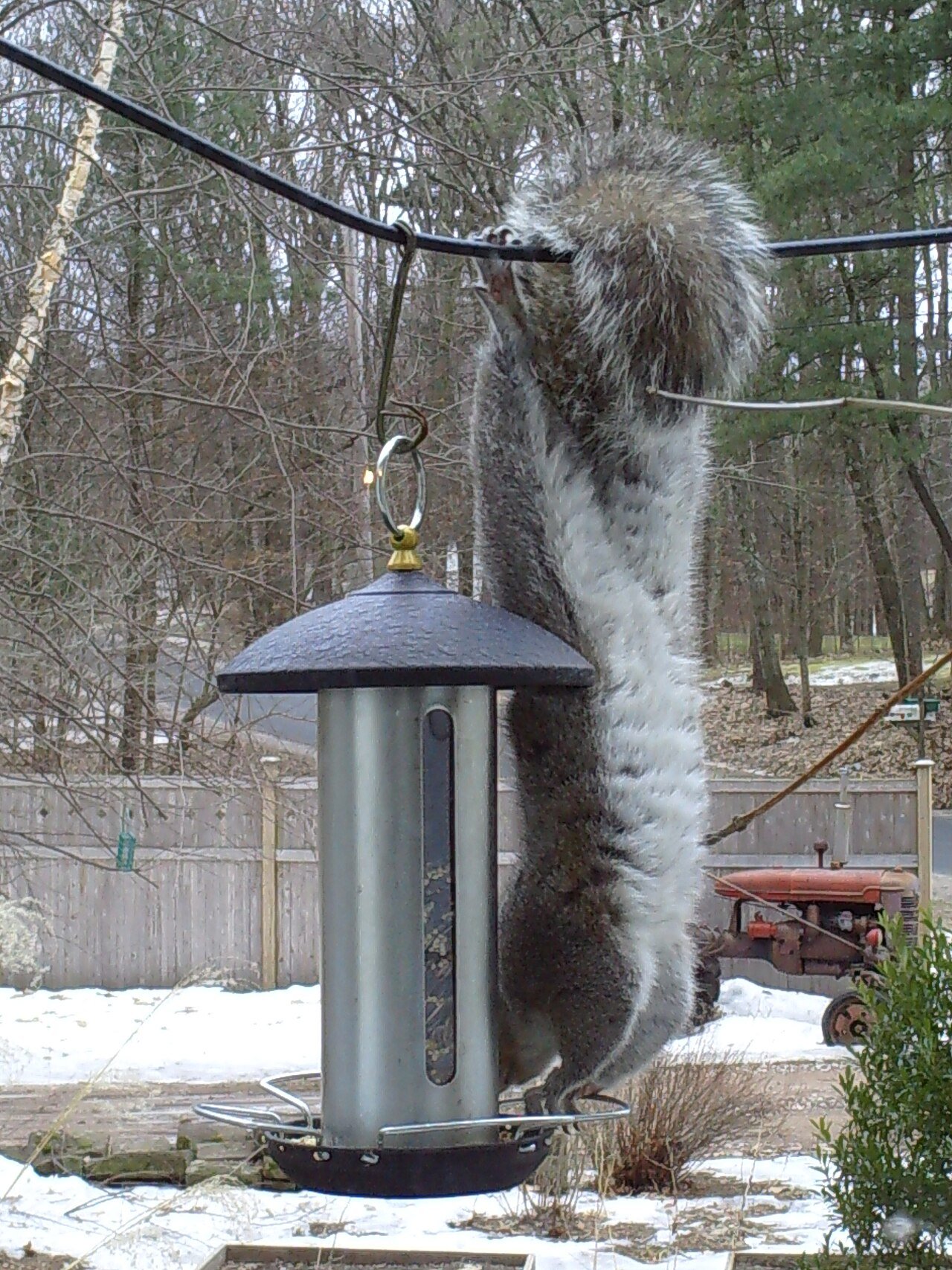
3. Woodlink Absolute II — best hopper
weight-activated perch · 12 lb seed · steel
A big steel hopper feeder with a perch bar that drops under a squirrel’s weight and slides a metal door over the seed. Twelve pounds of sunflower means you fill it twice a month. The wide perch and tray are what cardinals, grosbeaks and jays want, which tubes don’t offer, and the steel body is raccoon- and chew-proof. It pole-mounts or hangs. This is the feeder for a yard that wants the big birds and hates refilling.
Downside: heavy and a little industrial-looking. The two perches adjust to three positions, which Woodlink says allow “light, medium or heavy birds on the perch,” so it can be set against grackles too.
4. Droll Yankees Yankee Flipper — the spinner
motorized perch, rechargeable battery · 5 lb seed
When a squirrel lands on the perch ring, a motor spins it and the squirrel is flung off. Birds are too light to trigger it. It works, it’s been working since the 1990s, and there is no other feeder that people film. The tube holds five pounds, the metal ports are chew-proof, and the battery recharges from a wall charger a few times a season.
Downside: it’s a battery-powered motor outdoors, so it will eventually need service (Droll Yankees does repair them), and a squirrel that learns to hang from the top and reach down can still get a little. The Squirrel Buster is the more reliable mechanism; the Flipper is the more fun one.
5. Audubon caged screen feeder — best caged
steel cage, 1.5-in gaps · screen tube
A mesh seed tube inside a steel cage. Chickadees, titmice, nuthatches, finches, wrens and downy woodpeckers pass through the bars; squirrels, grackles, starlings, jays and cardinals don’t. That last one is the point to think about: a caged feeder is a small-bird feeder. It’s the right choice for a yard where grackles and starlings are as much the problem as squirrels, and it’s the cheapest true squirrel-proof design. The Woodlink caged screen tube is the same idea a size up.
Downside: no cardinals, and a squirrel can still reach through the bars for the seed at the edges; keep the tube less than full.
6. Pole with baffle — makes any feeder squirrel-proof
80-in pole, 2 hooks, baffle included
The cheapest answer and the most reliable one. A feeder on a pole with a cone or cylinder baffle below it, mounted so the bottom of the baffle is four to five feet off the ground, cannot be climbed. Place the pole ten feet from any tree, fence, deck rail or roof edge a squirrel could jump from, and it cannot be reached. That’s it; the feeder on top can be a cheap tube. The 19-inch pole baffle fits the pole you already have, and the More Birds wrap-around baffle hangs above a feeder on a branch or wire to block the drop from above.
Downside: it needs the ten feet of clearance. In a small yard with a fence on every side, there may be no such spot, and that’s when you buy the Squirrel Buster.
Side by side
| Feeder | Mechanism | Seed | Cardinals? | Also stops |
|---|---|---|---|---|
| Squirrel Buster Plus | Weight shroud | 5.1 lb | Yes (ring) | Nothing else |
| Squirrel Buster Standard | Weight shroud | 1.3 lb | Perch only | Nothing else |
| Squirrel Buster Legacy | Weight shroud | 2.6 lb | Perch only | Nothing else |
| Woodlink Absolute II | Weight perch | 12 lb | Yes | Raccoons |
| Yankee Flipper | Motorized spin | 5 lb | Yes | Nothing else |
| Audubon caged | Cage | ~2 lb | No | Grackles, starlings, jays |
| Pole + baffle | Distance | Any feeder | Any feeder | Raccoons, chipmunks |
What doesn’t work, or only partly
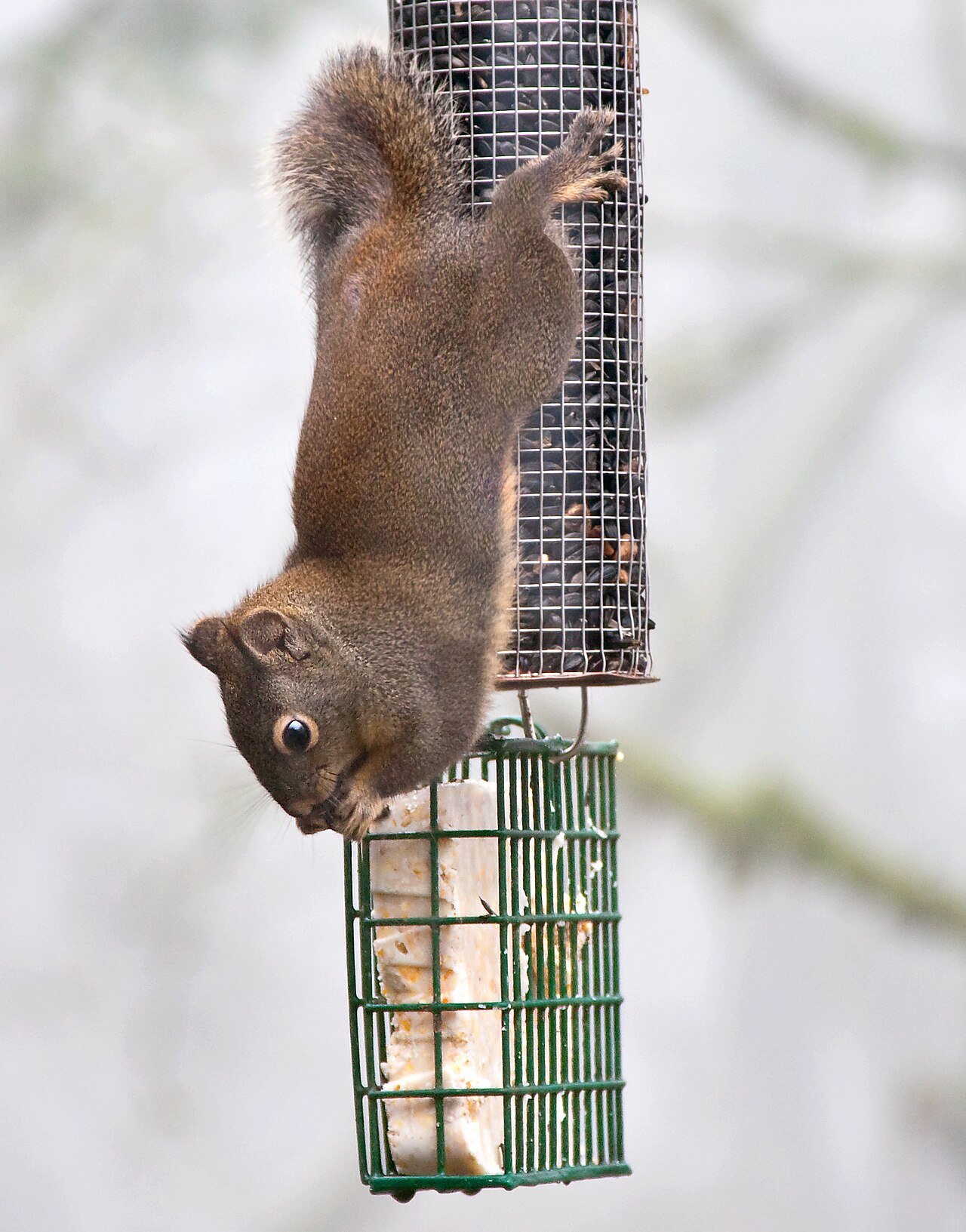
Hot pepper seed and suet. Capsaicin genuinely deters squirrels and birds can’t taste it. It’s the best fix for a suet cage (see our suet feeder guide) and a reasonable one for a tray. But treated seed costs twice as much, and a hungry squirrel in February will eat it anyway. Safflower. Squirrels dislike it and cardinals love it; switching the feeder to straight safflower cuts squirrel pressure by more than half. Cheap and worth doing (our seed guide covers it), but “dislike” isn’t “won’t.” Slinky on the pole, greased poles, ultrasonic devices, plastic owls: a week, at best. “Squirrel-resistant” hoppers with a metal roof: the roof keeps the squirrel dry while it eats.
For a full comparison of poles and baffles, from a simple hook-and-baffle setup to a four-arm feeding station, see our bird feeder pole guide.
A pole-mounted feeder also needs a baffle under it. Our guide to the best squirrel baffles covers which type fits a pole, a post or a hanging feeder.
Bottom line
If you can put a pole ten feet from anything, buy the pole and baffle and hang whatever feeder you like on it; that’s the cheapest and the most certain. If you can’t, buy a Squirrel Buster Plus and hang it in the open, or the Standard for a small yard. Either way, switch the seed to safflower for a few weeks when the squirrels are worst, and move the suet cage to a pole too. The full playbook, including feeding the squirrels away from the feeder, is in our squirrel guide.
Related: How to keep squirrels off bird feeders · The best suet feeders · Stopping grackles and blackbirds
Follow @sparklarkbirding for daily backyard birding tips →