Spark Lark is reader-supported. As an Amazon Associate we earn from qualifying purchases, at no extra cost to you. How we choose products.
A starling-proof or grackle-proof bird feeder works one of three ways: it shuts when a heavy bird lands, it hides the food inside a cage that only small birds fit through, or it serves suet from underneath so only birds that can hang upside down can eat. No feeder is perfect, but the right one keeps a flock from emptying the feeder and leaves room for chickadees, finches and woodpeckers.
The short answer: the Woodlink Absolute II for seed, because its perches can be set to close under heavier birds; the Birds Choice caged double suet feeder for suet; and an upside-down suet feeder if starlings are the main problem.
The short version
- Best overall for seed: Woodlink Absolute II. A big steel hopper whose perches can be set for light, medium or heavy birds.
- Best caged seed feeder: Audubon (Woodlink) Caged Screen Feeder. A metal grid cage built to keep squirrels and larger birds out.
- Best caged suet feeder: Birds Choice double suet feeder with 13-inch cage. Two cakes inside a cage with openings under 1.5 inches.
- Best upside-down suet feeder: JCs Wildlife upside-down double suet feeder. Holds four cakes, all fed from below.
- Lower-cost upside-down suet feeder: Birds Choice upside-down suet feeder. One cake, with a tail prop for woodpeckers.
- Best for mealworms and bluebirds: Erva BBF1 barrier-guard bluebird feeder. A glass mealworm cup inside a wire guard sold to keep starlings out.
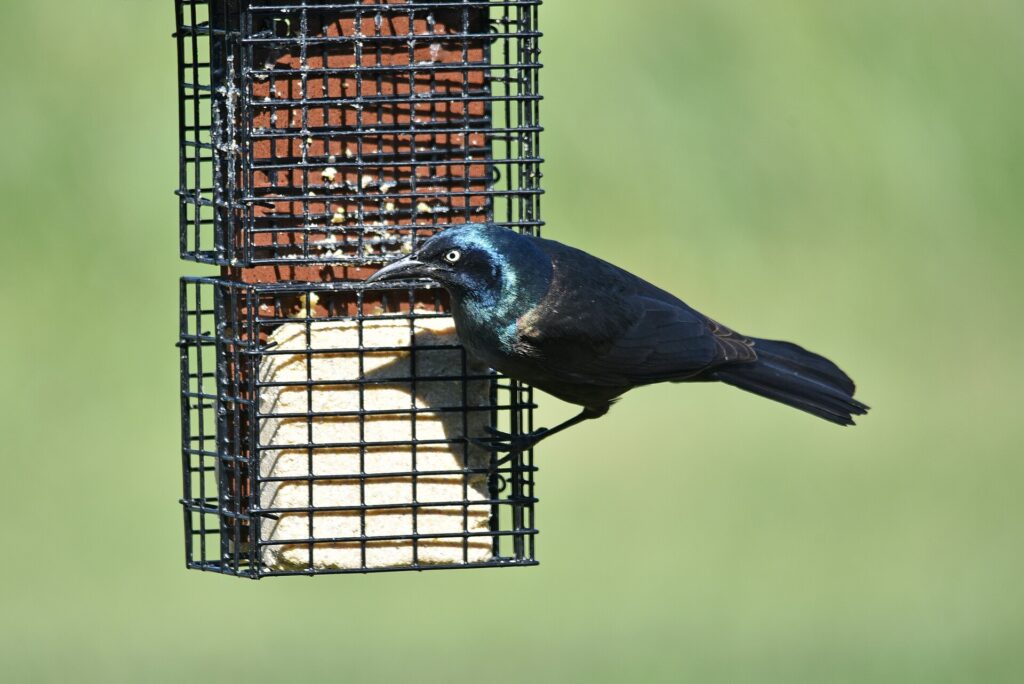
How to choose a starling-proof or grackle-proof feeder
The Cornell Lab of Ornithology describes three design tricks manufacturers use to sort birds by size: ports that close under weight, mesh cages, and perches too small for big birds. As Cornell puts it, “Some feeder ports automatically shut when a heavy bird or squirrel alights.” Project FeederWatch adds two things to look for: tube feeders with short perches and no seed tray underneath, and suet feeders that only let birds reach the cake from below.
Know your bird. Starlings and grackles behave alike at a feeder but they are different birds. If you’re not sure which one you have, our guide to telling grackles, blackbirds and starlings apart sorts them out. The fix is a little different for each, as the weight table below shows.
Match the feeder to the food. A flock usually goes after two things: cheap seed and suet. Weight-activated hoppers and caged tubes protect seed. Caged and upside-down feeders protect suet. Mealworms need their own setup, like the barrier-guard feeder below.
Skip the open trays for now. FeederWatch advises against platform feeders and scattering food on the ground when large birds are taking over.
Check what else you’ll lock out. Most feeders that stop a starling will also stop some birds you may want, like blue jays and larger woodpeckers. That’s the trade-off, and it’s worth deciding before you buy.
Why weight alone doesn’t stop every blackbird
Weight-activated feeders work because a grackle is much heavier than a chickadee. But the gap isn’t the same for every bird. Here are the weight ranges the Cornell Lab lists for common feeder visitors:
On a phone, swipe the table sideways to see all three columns.
| Bird | Weight (Cornell Lab) | What it means at a weight-set feeder |
|---|---|---|
| Black-capped chickadee | 0.3–0.5 oz | Feeds at any setting |
| Downy woodpecker | 0.7–1.0 oz | Feeds at any setting |
| Northern cardinal | 1.5–1.7 oz | Lighter than any starling or grackle |
| Red-winged blackbird | 1.1–2.7 oz | Overlaps cardinals, so weight won’t stop all of them |
| European starling | 2.1–3.4 oz | Heavier than a cardinal, so a light setting can shut it out |
| Blue jay | 2.5–3.5 oz | About the same as a starling, so it gets shut out too |
| Common grackle | 2.6–5.0 oz | The heaviest here, so the easiest to stop by weight |
So a weight-set feeder is the best tool for grackles, a good one for starlings, and only a partial answer for red-winged blackbirds. For red-wings, a cage does more. Our guide on keeping grackles and blackbirds off your feeders covers the seed switch step by step.
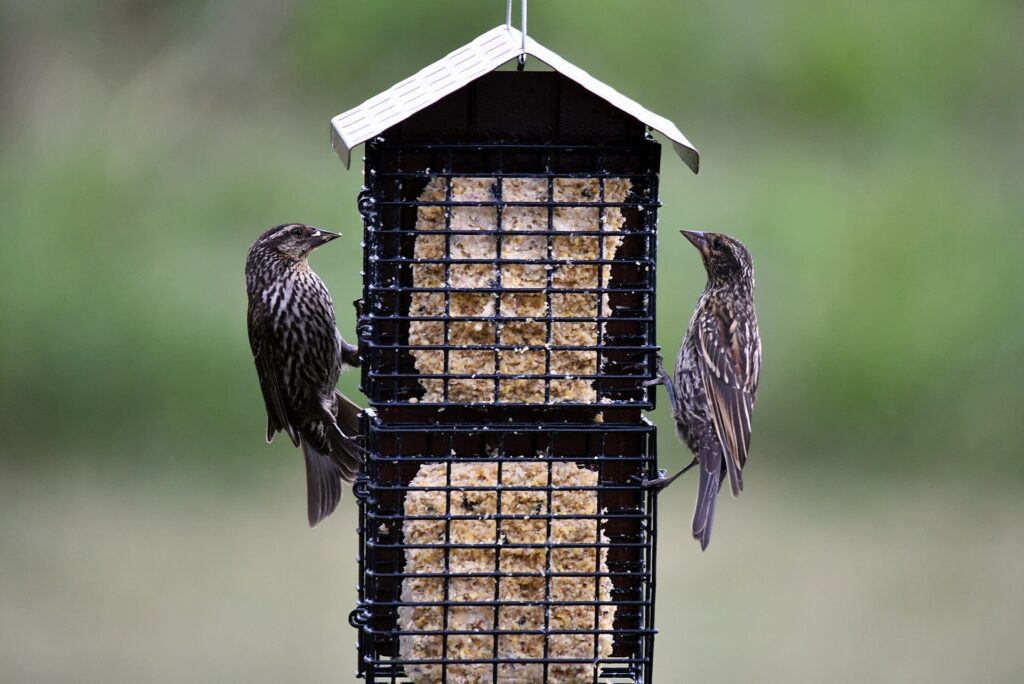
The best starling-proof and grackle-proof feeders
1. Woodlink Absolute II — best overall for seed
Hopper · up to 12 lb of seed · feeds from both sides · two counterbalance perches with 3 weight settings · steel body, locking lid · hanger and 5-ft pole kit included
Woodlink says outright that the weight setting is for birds as well as squirrels: its weight-adjustable perches “let you keep out unwanted birds or animals.” The two counterbalance perches adjust to three positions, for light, medium or heavy birds, and the maker says the wrong bird or squirrel closes access to the seed. The listing doesn’t publish the exact weight for each setting, so start on light and watch which birds still feed. It holds up to 12 pounds of seed, so you refill it less often.
Downside: it’s a large, premium feeder, and 12 pounds of seed makes it heavy when full, so use a sturdy hook or the included pole. A light setting will also shut out blue jays, which weigh about the same as starlings.
2. Audubon Caged Screen Feeder (Woodlink NACAGE) — best caged seed feeder
Caged screen feeder · holds 1.25 lb of mixed seed, peanuts or black-oil sunflower · metal grid cage · overhanging roof · fully assembled
A cage is the simplest way to keep big birds off seed, and it works without any setting to get right. Woodlink says this feeder’s metal grid cage keeps adult squirrels and larger birds out, and the roof keeps the seed dry. It takes mixed seed, peanuts or black-oil sunflower.
Downside: 1.25 pounds is a small capacity, so expect to refill it more often than a hopper. Like any cage, it keeps out larger birds you might want, too, such as cardinals and jays.
3. Birds Choice Double Suet Feeder With 13-inch Cage — best caged suet feeder
Double suet feeder in a 13-in wire cage · holds 2 suet cakes · cage openings 1.38 x 1.38 in · recycled poly lumber, stainless steel screws · made in the USA · 12 x 12 x 13.5 in
FeederWatch singles out suet as the food to protect from starlings, and a cage is one way to do it. Birds Choice says the cage is designed to protect suet from squirrels, grackles, starlings and other larger birds while smaller birds get in through openings of about 1.4 inches. It holds two cakes, the roof lifts for refilling, and the body is recycled plastic lumber the maker says won’t crack, split or fade.
Downside: a cage sized to stop a starling may also keep out bigger woodpeckers, such as red-bellied woodpeckers. It also costs more than a plain suet cage.
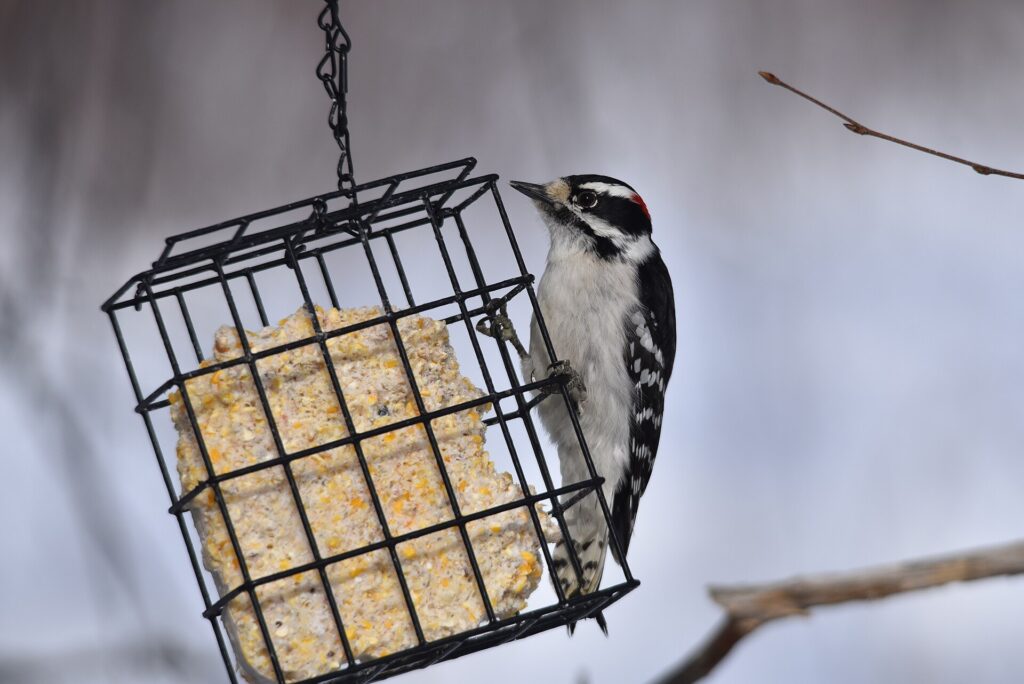
4. JCs Wildlife Upside-Down Double Suet Feeder — best upside-down suet feeder
Upside-down suet feeder · holds 4 suet cakes · recycled poly lumber with stainless steel screws · made in the USA
FeederWatch’s advice for suet is to use starling-proof feeders that let birds reach the suet only from the bottom. This one holds four cakes, so you refill it less often, and JCs Wildlife markets it as a grackle- and starling-resistant feeder for clinging birds. The maker says the recycled poly lumber won’t fade, peel, rot, crack, chip or warp.
Downside: it’s a mid-range price for a suet feeder, and the listing doesn’t give exact dimensions, so check that your usual suet cakes fit. Birds that don’t cling, like cardinals, won’t use it.
5. Birds Choice Upside-Down Suet Feeder — lower-cost upside-down pick
Upside-down suet feeder · holds 1 suet cake · tail prop · vinyl-coated grid · recycled poly lumber · 7 x 6.25 x 4.25 in · 12-in hanging cable
If you want to try the upside-down approach before committing to a big feeder, this single-cake model is the budget way in. Birds Choice sells it as a starling-proof suet feeder and says woodpeckers, nuthatches and chickadees feed comfortably from below; a tail prop gives them something to brace against. It’s made from the same recycled plastic lumber as the Birds Choice cage feeder above.
Downside: one cake doesn’t last long in a busy yard. Pair it with a second feeder, or step up to the four-cake JCs model if you go through suet fast.
6. Erva BBF1 Barrier-Guard Bluebird Feeder — best for mealworms
Bluebird mealworm feeder · glass mealworm cup (dishwasher safe) · vinyl-coated wire mesh barrier guard · hang or pole mount · powder-coated finish · made in the USA
If you put out mealworms for bluebirds, starlings can be a problem there too. Erva says this feeder’s vinyl-coated wire mesh keeps out unwanted visitors such as squirrels and starlings. The glass cup is dishwasher safe, which makes cleaning easy. For more mealworm feeders, see our bluebird feeder guide.
Downside: it’s a premium price for a single mealworm cup, and it’s built for bluebirds and other small birds, not as an all-purpose feeder.
Side by side
On a phone, swipe the table sideways to see all four columns.
| Feeder | How it keeps big birds out | Food | Capacity |
|---|---|---|---|
| Woodlink Absolute II | Weight-set perches (light, medium, heavy) | Seed | Up to 12 lb |
| Audubon Caged Screen Feeder | Metal grid cage | Seed, peanuts | 1.25 lb |
| Birds Choice caged double suet | Wire cage, 1.38-in openings | Suet | 2 cakes |
| JCs Wildlife upside-down double | Feeds from below | Suet | 4 cakes |
| Birds Choice upside-down | Feeds from below | Suet | 1 cake |
| Erva BBF1 | Wire mesh barrier guard | Mealworms | 1 glass cup |
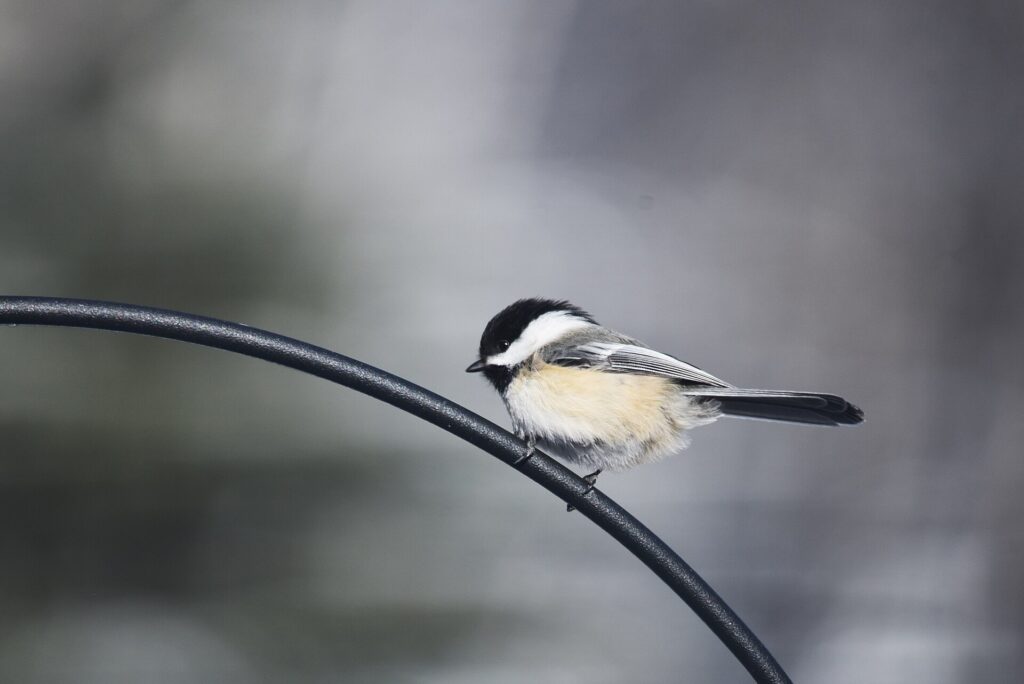
Tips to make any feeder work better
- Change the seed too. A better feeder works best with a less tempting menu. Our guide to what grackles eat explains which foods draw them in.
- Give the flock somewhere else to eat. Cornell’s tip for common grackles is that if they feed on the ground, they may let smaller birds keep using the feeders. Scatter only what they’ll eat at once, since Cornell warns extra grain can attract rodents.
- Protect suet first. FeederWatch singles out suet for starling-proof feeders. Our guide on keeping starlings off suet and mealworm feeders walks through it, and our suet feeder guide has more options.
- Expect flocks in fall and winter. Cornell notes that common grackles forage and roost in large flocks in winter, often with other blackbirds. See why grackles flock in fall.
FAQ
What is the best bird feeder to keep grackles away? A feeder that closes under their weight or keeps them out with a cage. Common grackles weigh 2.6 to 5.0 ounces, according to the Cornell Lab, which is far more than the chickadees and finches you’re trying to feed. The Woodlink Absolute II on its light setting and a caged feeder both use that gap.
Is the Squirrel Buster starling-proof? Not according to its maker. Brome’s own page for the Squirrel Buster Plus says, “This feeder will NOT deter Grackles, Starlings.” It’s a strong squirrel feeder, but for starlings and grackles, pick a feeder built for them.
Do upside-down suet feeders really stop starlings? They’re the fix Project FeederWatch recommends for suet: feeders that let birds reach it only from the bottom. Clinging birds like woodpeckers, nuthatches and chickadees can still feed.
Why are starlings such a problem at feeders? The Cornell Lab calls the European starling “aggressive at feeders, keeping smaller birds away.” They aren’t native: the population that spread across North America started with birds released in New York City’s Central Park in 1877, 1890 and 1891, and Cornell now estimates about 93 million of them.
Bottom line
Pick the feeder that matches what the flock is eating. For seed, the Woodlink Absolute II on its light setting is the most flexible fix, and the Audubon caged feeder is the simplest. For suet, go caged with the Birds Choice double feeder or upside-down with the JCs Wildlife four-cake model, or the single Birds Choice if you want to try it first. For mealworms, the Erva barrier-guard feeder keeps starlings off the bluebirds’ food. Then change the seed, too. Not sure who’s at the feeder? Our free, printable backyard bird ID chart can help.