Gray is the most common color in the North American bird world and the hardest to describe, which is why “a gray bird” is where most beginners get stuck. This list covers the 18 gray birds you’re most likely to see in a U.S. backyard, park, or parking lot, grouped by size so you can narrow it down fast, with the one mark that separates each from its lookalikes. Big gray birds in fields and shallow water, like herons and cranes, get their own section further down. If yours is small with a white belly, our eight-bird guide goes deeper on that group.
If your gray bird has a pointed crest on its head, skip straight to our guide to small gray birds with a crest; it is almost always a titmouse.
Quick ID table
| Bird | Size | The mark that settles it | Where or when |
|---|---|---|---|
| Tufted titmouse | Tiny | Pointed crest, white belly | East, at feeders |
| Chickadees | Tiny | Black cap and bib, white cheeks | Everywhere |
| Blue-gray gnatcatcher | Tiny | White eye ring, long tail flicked | Treetops, spring and summer |
| Bushtit | Tiny | Plain, in flocks of twenty | West |
| Juniper and oak titmouse | Tiny | Crest, no white belly contrast | West |
| Dark-eyed junco | Sparrow | Gray hood, pink bill, white tail edges | Under feeders in winter |
| White-breasted nuthatch | Sparrow | Walks headfirst down trunks | Sunflower and suet feeders |
| Eastern and Say’s phoebe | Sparrow | Sits upright, pumps tail | Insect eaters, not at seed feeders |
| Gray kingbird | Sparrow | Heavy bill, black mask, on wires | Florida and Gulf coast, summer |
| Pine and yellow-rumped warbler | Sparrow | Dull gray-olive, yellow rump | Fall and winter |
| Northern mockingbird | Robin | White wing bars, white flashes in flight | Sits in the open |
| Gray catbird | Robin | Black cap, rusty under the tail | Hides in shrubs |
| Loggerhead shrike | Robin | Black mask, hooked bill | Open country, South and West |
| Clark’s nutcracker | Robin | Black wings and tail | Mountain West |
| Canada jay | Robin | Fluffy, white face, fearless | Northern and mountain forests |
| Mourning dove | Dove | Long pointed tail, whistling wings | Ground under feeders |
| Rock pigeon | Dove | Two dark wing bars, shiny neck | Cities |
| Cooper’s and sharp-shinned hawk | Dove and up | Rusty barred chest, long banded tail | Around feeders |
Tiny (smaller than a sparrow)
1. Tufted titmouse
Gray with a white belly and a pointed crest. Found in the East, and at every feeder there.
2. Black-capped and Carolina chickadee
Gray back, black cap and bib, white cheeks. Found almost everywhere, and they take seeds one at a time. If yours has a dark cap, our guide to small gray birds with a black cap narrows it to five.
3. Blue-gray gnatcatcher
Pale blue-gray with a white eye ring and a long tail it flicks constantly. Look in the treetops in spring and summer.
4. Bushtit
Plain gray-brown and tiny, moving through shrubs in flocks of twenty. West only.
5. Juniper and oak titmouse
The West’s plain gray titmice, crest and all, without the white belly contrast of the tufted titmouse.
Sparrow-sized
6. Dark-eyed junco
Gray hood, white belly, pink bill, and white outer tail feathers. Look on the ground under the feeder in winter. Full profile: dark-eyed juncos, the winter snowbird.
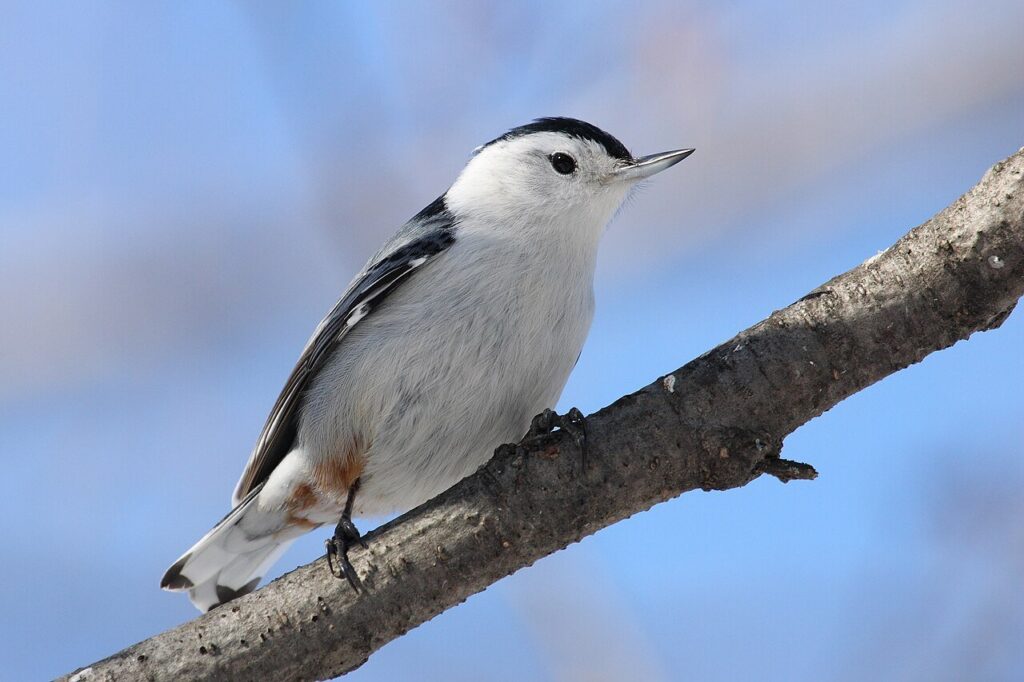
7. White-breasted nuthatch
Blue-gray back, white face, black cap. It walks down the trunk headfirst.
8. Eastern and Say’s phoebe
Gray-brown flycatchers that sit upright and pump the tail. The eastern phoebe says its name.
9. Gray kingbird
Gray above, white below, with a heavy bill and a black mask, usually on a wire. Only along the Florida and Gulf coasts in summer.
10. Pine warbler and yellow-rumped warbler in winter
Dull gray-olive in fall and winter, and easy to call “a gray bird” until the yellow rump flashes.
Robin-sized
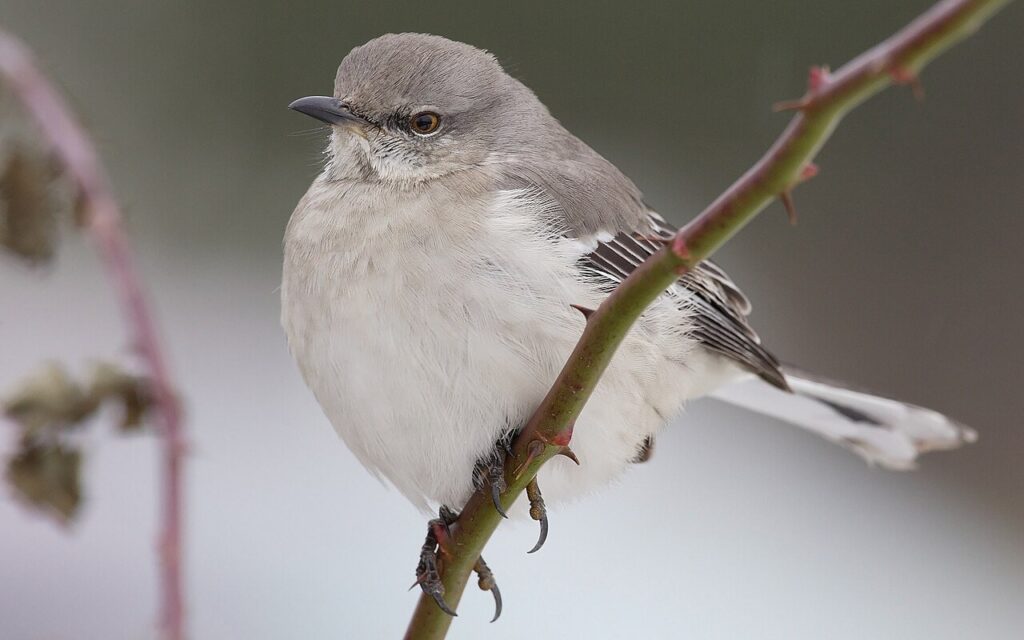
11. Northern mockingbird
Slim and gray, with two white wing bars and white flashes in flight. It sits on top of things and sings everything.
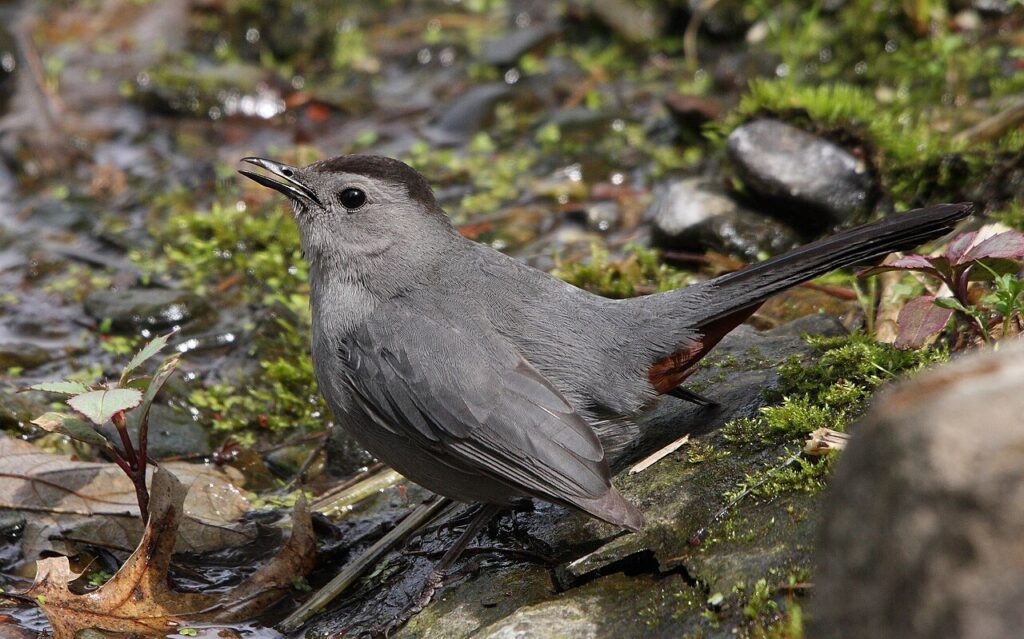
12. Gray catbird
Uniform slate gray with a black cap and a rusty patch under the tail. It skulks in shrubs and mews.
13. Loggerhead shrike
Gray with a black mask and a hooked bill. It hunts from wires in open country, mostly in the South and West.
14. Clark’s nutcracker
Pale gray with black wings and tail. A bird of the mountain West, loud and bold at picnic areas.
15. Canada jay
The “camp robber” of northern and mountain forests: fluffy gray, white face, fearless.
If your bird is black rather than gray, with white flashes in the wings, see our guide to black birds with white wings.
Dove-sized and larger
16. Mourning dove
Soft gray-brown with a small head, a long pointed tail, and wings that whistle on takeoff. On the ground under feeders all over the country.
17. Rock pigeon
The city pigeon: blue-gray with two dark wing bars and an iridescent neck, though feral flocks come in every color. The Eurasian collared-dove is its paler cousin, with a black neck ring, and it is spreading everywhere.
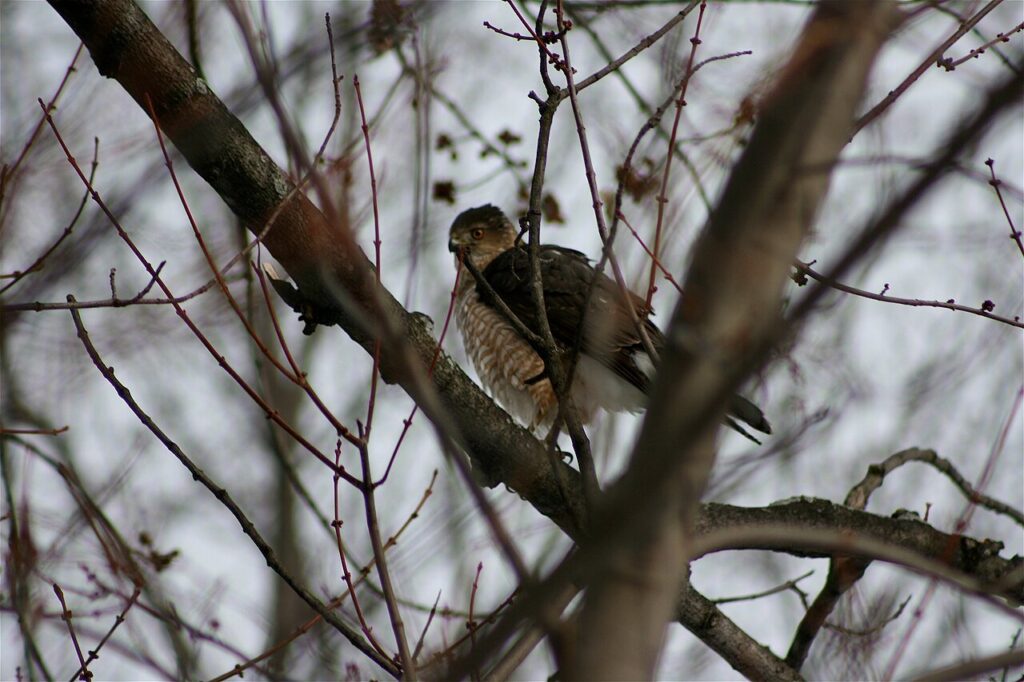
18. Cooper’s and sharp-shinned hawk
The gray hawks that ambush feeders: blue-gray back, rusty barred chest, long banded tail. If the feeder birds vanish in a flash, one of these is sitting in the tree.
Gray bird with red on its head? See our guide to gray birds with red heads. It’s usually a house finch, but not always.
Big gray birds: herons, cranes and harriers
If the gray bird you saw was standing in a pond, walking a field, or gliding low over a marsh, it probably isn’t a backyard bird at all. Check these three first. Sizes and field marks below are from the Cornell Lab of Ornithology’s All About Birds guide.
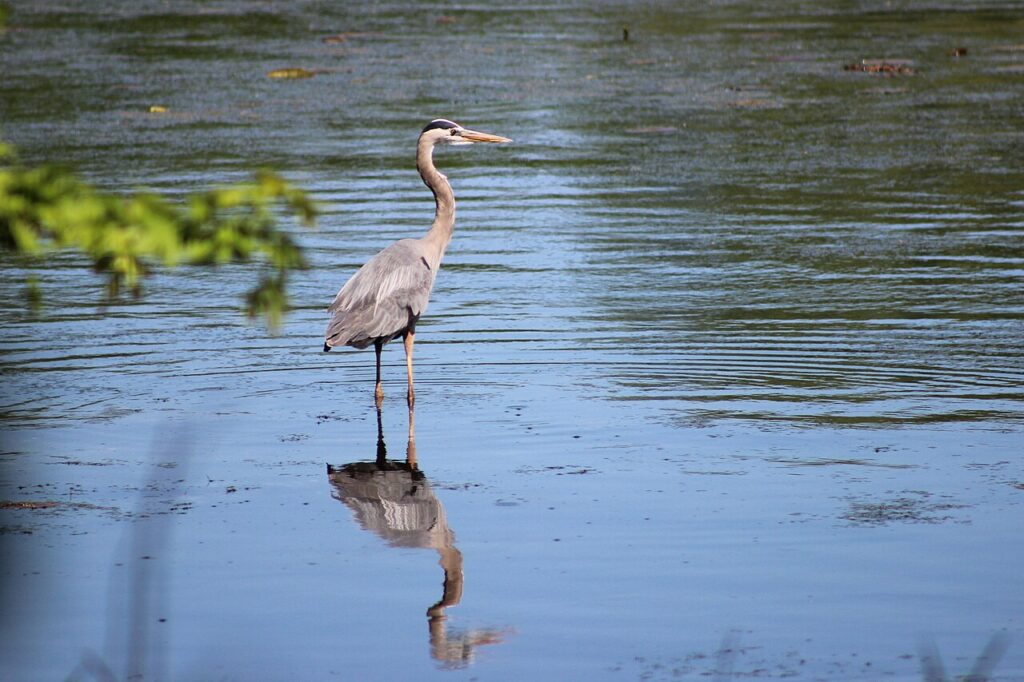
Great blue heron
About 38 to 54 inches long, with a wingspan of up to about 79 inches. From a distance it looks blue-gray, with a wide black stripe over the eye. It wades slowly or stands perfectly still in shallow water or open fields, waiting for fish and other prey (Cornell Lab). In October 2026 a rare look-alike from Europe, the gray heron, turned up in Maine; here is how to tell a gray heron from a great blue.
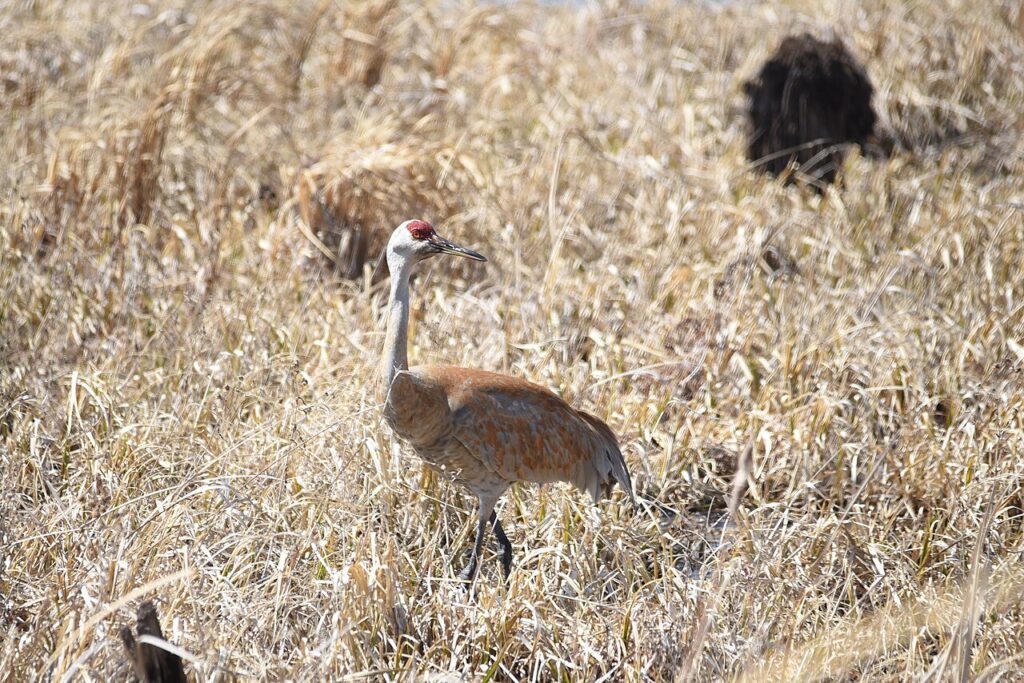
Sandhill crane
About 47 inches long. Slate gray, often with a rusty wash on the back and wings. Adults have a pale cheek and red skin on the crown, and black legs. Look in open prairies, grasslands and wetlands; in migration and winter they gather in flocks that can number in the tens of thousands (Cornell Lab).
Northern harrier (male)
About 18 to 20 inches long. Males are gray above and whitish below, with black wingtips, a dark trailing edge to the wing and a black-banded tail. Females and young birds are brown, so a gray one is a male. It flies low over grasslands, marshes and fields (Cornell Lab).
Separating the lookalikes
- Mockingbird vs. catbird vs. shrike: the mockingbird has white wing bars and sits in the open; the catbird has none and hides; the shrike has a black mask and a hooked bill.
- Titmouse vs. chickadee: crest vs. black bib.
- Junco vs. sparrow: the junco is smooth gray, not streaked, with a pink bill.
- Cooper’s vs. sharp-shinned hawk: Cooper’s is crow-sized with a rounded tail tip and a big head; the sharpie is jay-sized with a squared tail.
- Phoebe vs. pewee: the phoebe pumps its tail and has no wing bars; the wood-pewee has wing bars and stays higher in the trees.
- Heron vs. crane: the heron has a black stripe over the eye and hunts in water; the crane has a red crown and is usually in fields or wetlands. Cornell describes the heron as smaller and much less bulky than a sandhill crane.
Attracting the gray ones
Titmice, chickadees, nuthatches, and juncos come to black-oil sunflower and suet. Catbirds and mockingbirds want fruit and mealworms on a tray. Phoebes and gnatcatchers eat only insects; a pesticide-free yard and a bird bath are what bring them. The hawks come on their own.
Tools that make gray birds easy
The Merlin Bird ID app (free) identifies a bird from a photo or a recording. For a book, the National Geographic Backyard Guide or a regional Sibley. And a window feeder, which puts half the birds on this list eighteen inches from your face.
FAQ
What is the big gray bird standing in the water?
Almost always a great blue heron. Look for the black stripe over the eye and a bird standing still in shallow water. If it has a red crown and is walking a field or wetland, it’s a sandhill crane.
What gray bird has a long tail?
In the yard, the mourning dove (long pointed tail) and the blue-gray gnatcatcher (tiny, flicks its long tail nonstop). If the long tail is banded and the bird is hunting your feeder, it’s a Cooper’s or sharp-shinned hawk.
What small gray bird has a white belly?
Usually a tufted titmouse, dark-eyed junco, white-breasted nuthatch or chickadee. Our guide to the small grey bird with a white belly narrows it down with three questions.
Related: Winter backyard birds by region · Identify birds by their songs