“Small grey bird with a white belly” is the most common description a beginning birder gives, and it fits about eight birds that show up in U.S. backyards. They’re separated by size, by what’s on the head, by how they move, and by what they’re doing when you see them. This guide walks through the eight in the order you’re most likely to meet them, with the one field mark that settles each.
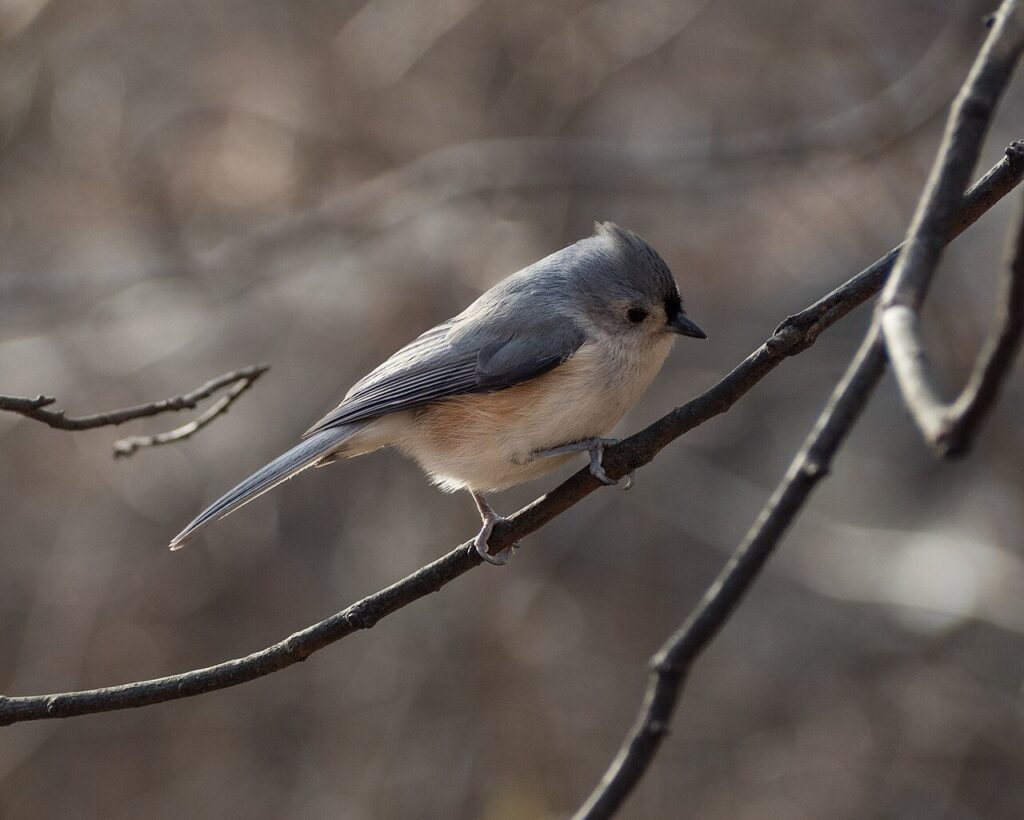
Crest on the head? That narrows it fast: see our guide to small gray birds with a crest.
Start with three questions
How big? Smaller than a sparrow (chickadee, titmouse, gnatcatcher), sparrow-sized (junco, nuthatch, phoebe), or robin-sized (catbird, mockingbird). What’s on the head? A crest, a black cap, a black eye stripe, or nothing. What’s it doing? Hanging on a feeder, walking down a trunk, hopping on the ground, or sitting on a fence wagging its tail. Those three answers identify the bird almost every time.
The eight candidates
1. Tufted titmouse
Smaller than a sparrow, soft gray above, white below, with a pointed gray crest and big black eyes. A peach wash on the flanks if you’re close. Eastern half of the country, year-round, at every sunflower feeder. The crest is the tell; no other small gray feeder bird has one. Call is a whistled “peter-peter-peter.”
2. Dark-eyed junco
Sparrow-sized, slate gray above and on the chest, with a crisp white belly like it’s wearing a gray hood over a white shirt, and a pink bill. White outer tail feathers flash when it flies. On the ground under the feeder, never on it, October through April in most of the country (year-round in the mountains and north). Western birds have a black hood and brown back. Photo and range in our winter birds guide.
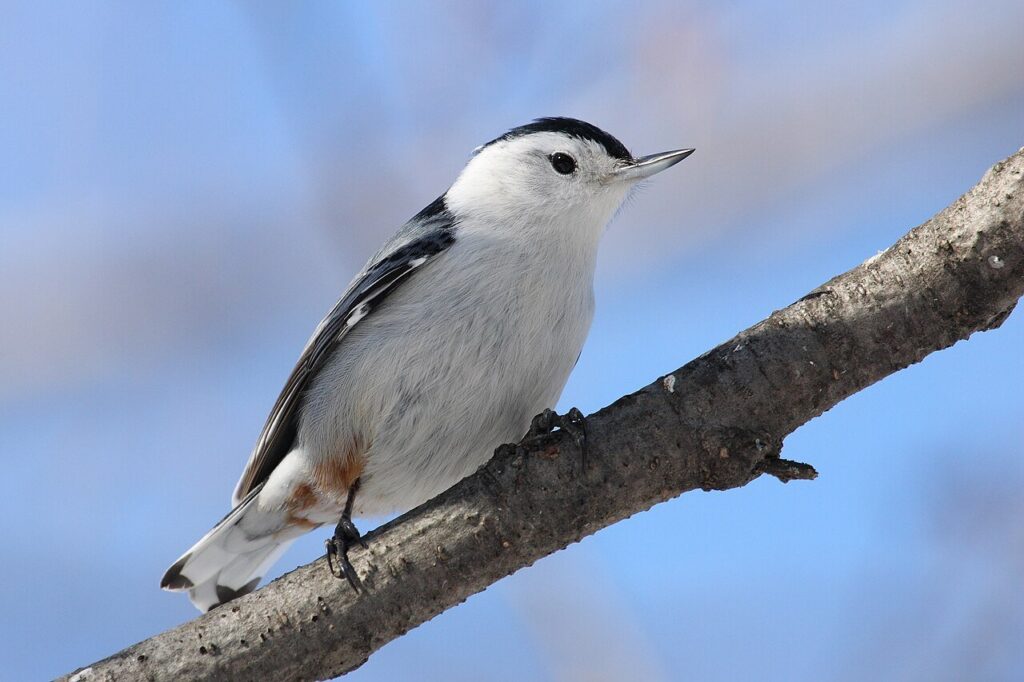
3. White-breasted nuthatch
Sparrow-sized, blue-gray above, white face and belly, black cap that runs down the back of the neck, and a long straight bill. It walks headfirst down tree trunks, which nothing else on this list does. Nasal “yank-yank” call. Year-round across most of the U.S., a regular at suet and sunflower.
4. Carolina or black-capped chickadee
Smaller than a sparrow, gray back, pale belly, and a black cap and black bib framing white cheeks. The bib is the mark; if the throat is black, it’s a chickadee. Carolina in the Southeast, black-capped in the North and West, nearly identical. Grabs one seed and leaves.
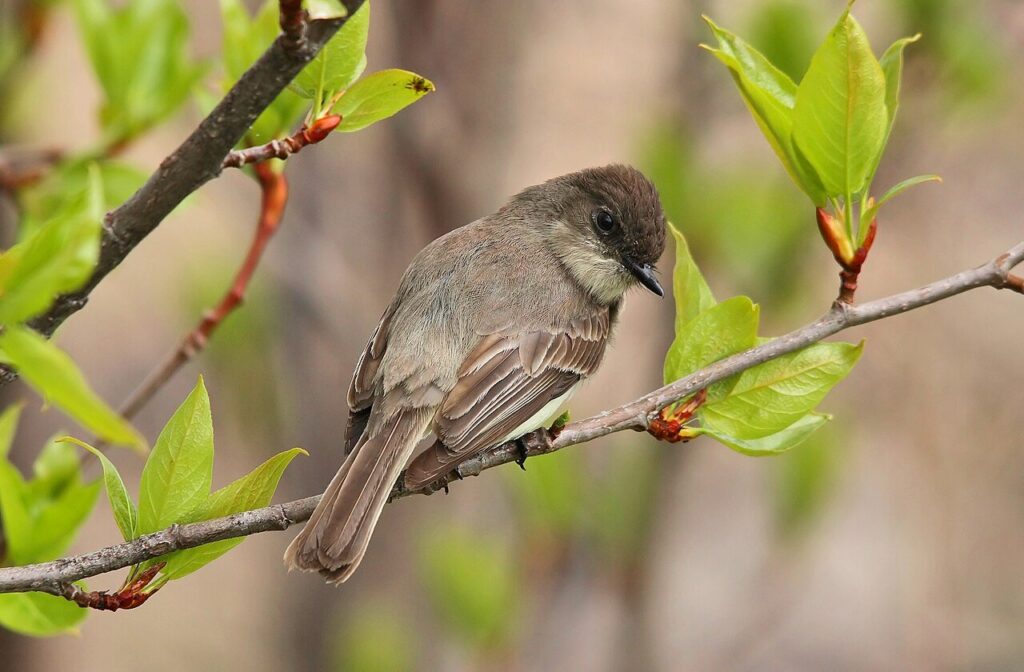
5. Eastern phoebe
Sparrow-sized, gray-brown above with a darker head, dingy white below, no wing bars and no eye ring. Sits upright on a fence, low branch, or porch rail and wags its tail down and up constantly, then darts out to catch an insect and returns to the same perch. Says its name: “fee-bee.” Nests under eaves and bridges. Never at a seed feeder. Eastern two-thirds of the country; Say’s phoebe replaces it in the West (grayer, with a peach belly).
6. Blue-gray gnatcatcher
Tiny, smaller than a chickadee, pale blue-gray above and white below with a thin white eye ring and a long black tail it flicks side to side. Constantly moving through the outer branches of trees in spring and summer, never still and never at a feeder. If the gray bird is too small and too hyperactive to be anything else, it’s this.
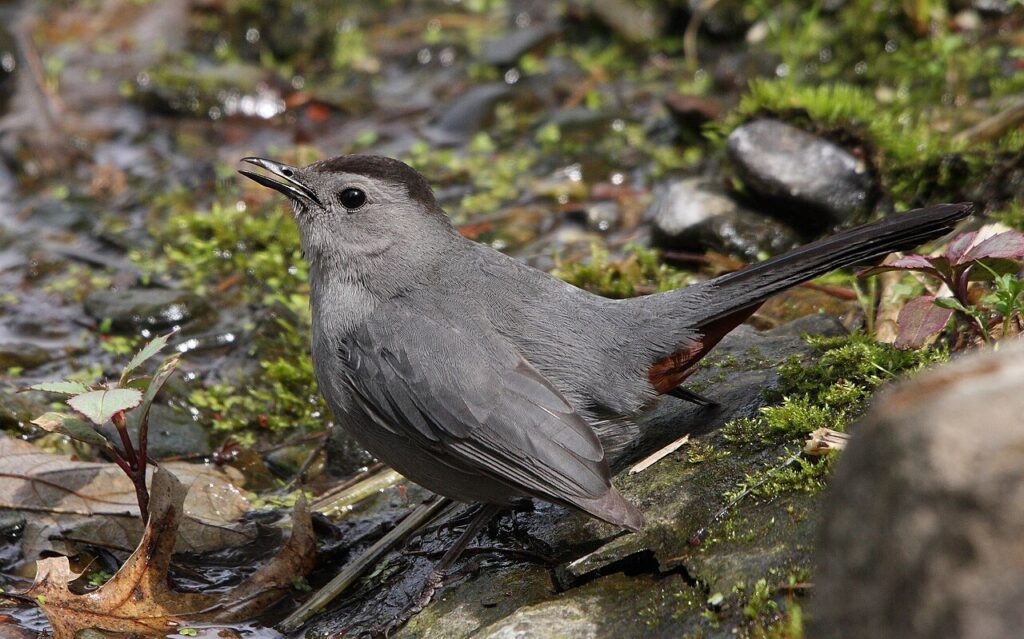
7. Gray catbird
Robin-sized and long, uniform slate gray all over (the belly is gray, not white, but people describe it as pale), with a neat black cap and a rusty patch under the tail. Skulks in dense shrubs, mews like a cat, and sings long jumbled songs from cover. Comes to fruit and mealworms, not seed. Summer across the East and North, winter in Florida and the Gulf.
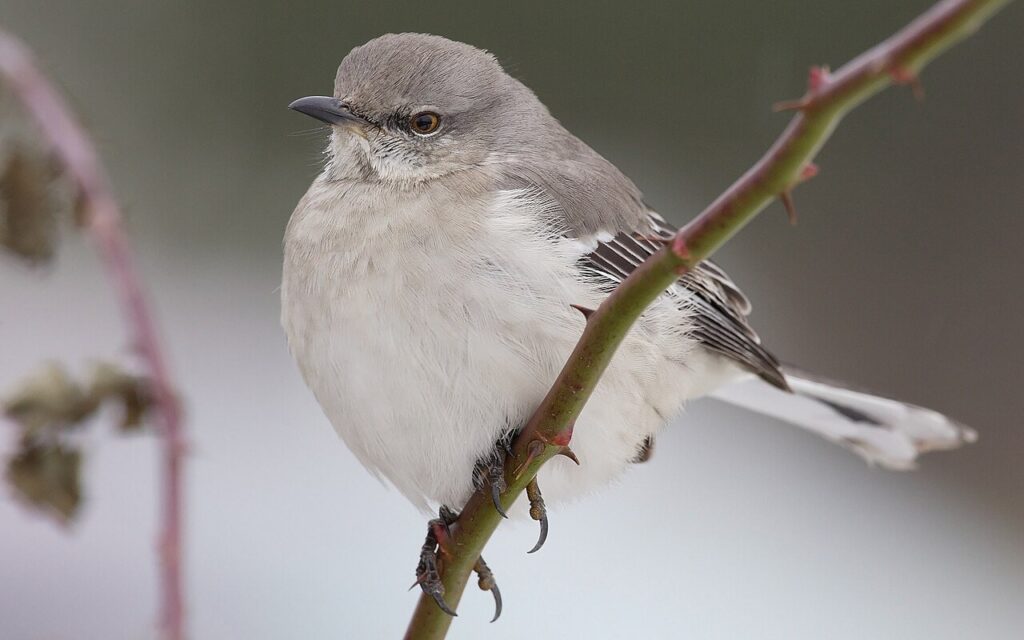
8. Northern mockingbird
Robin-sized, slim, gray above and whitish below, with two white wing bars and big white patches in the wings and tail that flash when it flies. Sits on top of things: a chimney, a streetlight, the tallest shrub. Sings every song in the neighborhood, including car alarms, often at night in spring. Year-round across the South and most of the country. Guards fruit and suet aggressively.
Quick reference
| Bird | Size | Head mark | Behavior that settles it |
|---|---|---|---|
| Tufted titmouse | Smaller than sparrow | Gray crest | At the feeder, flies off with one seed |
| Dark-eyed junco | Sparrow | Gray hood, pink bill | On the ground under the feeder, white tail edges |
| White-breasted nuthatch | Sparrow | Black cap, white face | Walks headfirst down the trunk |
| Chickadee | Smaller than sparrow | Black cap and black bib | One seed at a time |
| Eastern phoebe | Sparrow | Dark head, no marks | Perches upright, pumps tail, catches insects |
| Blue-gray gnatcatcher | Tiny | White eye ring | Never stops moving, flicks long tail |
| Gray catbird | Robin | Black cap | Skulks in shrubs, mews |
| Northern mockingbird | Robin | None, white wing bars | Sits on top of things, flashes white in flight |
A dark cap on top? See small gray birds with a black cap for the five likeliest birds.
Still not sure?
Take a photo, even a bad one, and let the free Merlin Bird ID app from the Cornell Lab identify it; it handles gray birds better than most humans. For learning the rest, the National Geographic Backyard Guide covers the 150 birds a yard gets with big photos, and Sibley Birds East or West is the one to grow into. Then hang a window feeder and study the gray birds from eighteen inches away.
Related: 18 common gray birds · Winter backyard birds by region · Identifying birds by song