By August, most hummingbird feeders in the country have a second set of customers: honeybees, yellowjackets and paper wasps, all of them after the same sugar water. A few bees are harmless. A feeder ringed with yellowjackets is one the hummingbirds stop using, and it’s the reason a lot of people take their feeders down in late summer, right when the birds need them most for migration. The fix doesn’t involve chemicals. It’s four changes, in order, and the first one solves it in most yards.
Spark Lark is reader-supported. As an Amazon Associate we earn from qualifying purchases made through links on this page, at no extra cost to you.
Why they come, and why it gets worse in late summer
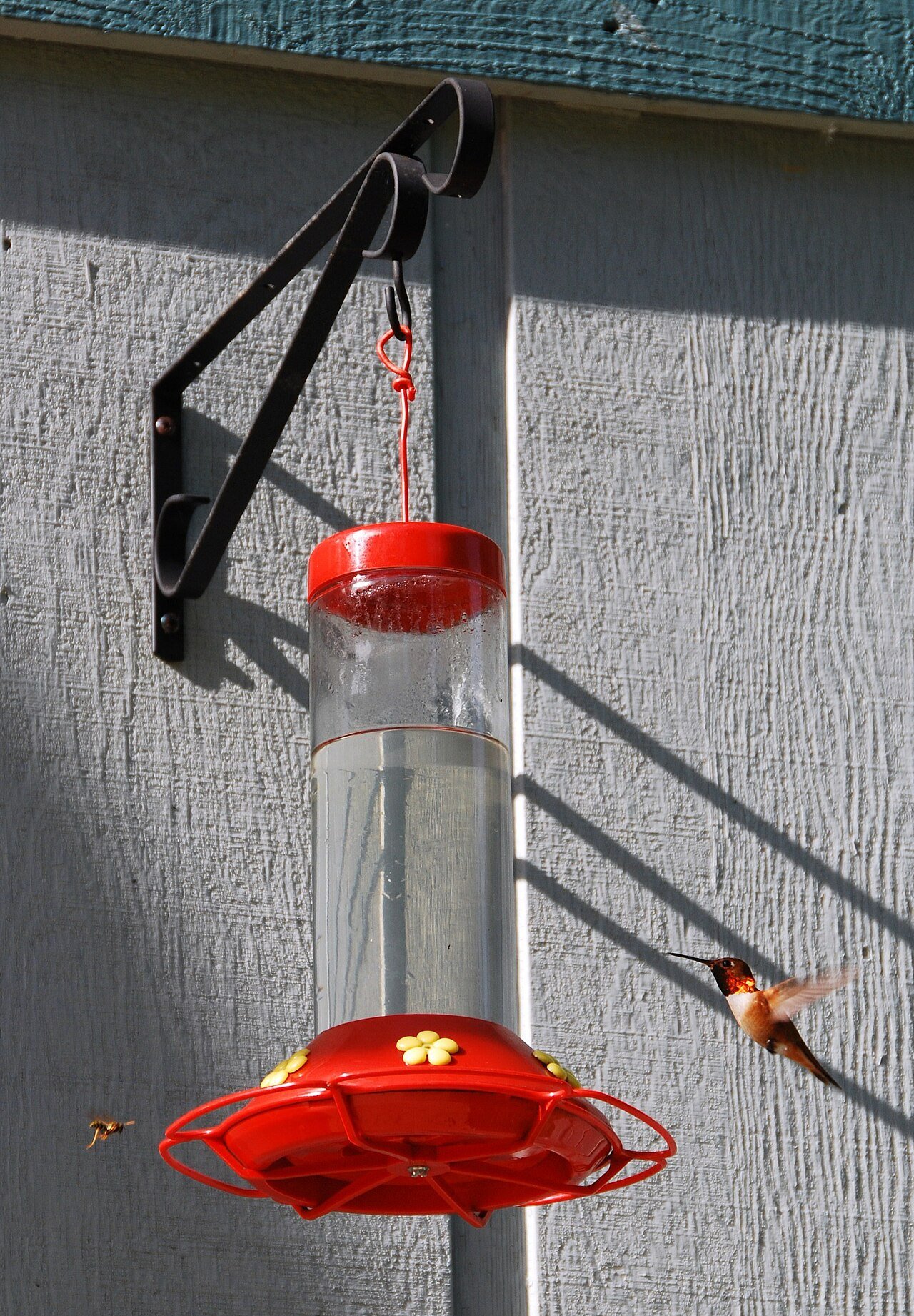
Bees and wasps find a feeder the same way hummingbirds do, by sight and then by smell, and the two things that draw them are exposed nectar and the color yellow. Bottle-style feeders with drip-prone ports and yellow plastic “flowers” are the classic problem: the nectar wicks out to the tip where an insect can reach it, and the yellow reads as a flower to a bee. Late summer makes it worse because natural nectar dries up, wasp colonies hit peak size, and yellowjackets switch from hunting insects to hunting sugar. From August through the first frost, every feeder is under pressure.
1. Switch to a saucer feeder
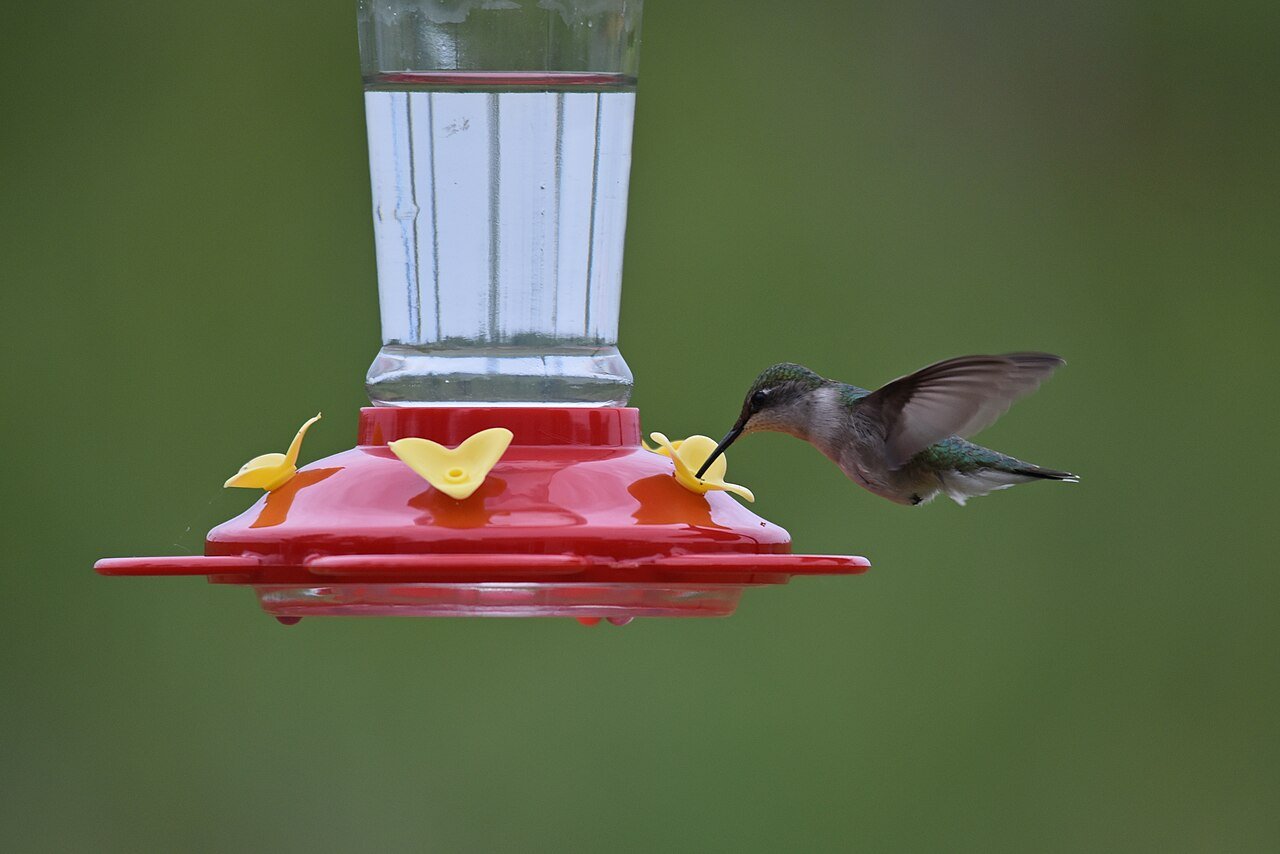
This is the change that matters. In a saucer (dish) feeder the nectar sits in a basin below the feeding ports rather than in a bottle above them, so it never wicks up to the surface. A hummingbird’s tongue extends well over an inch and reaches it easily; a bee’s is a few millimeters and can’t. There’s nothing to drip, nothing for a wasp to land on and lap. Switch a yard from bottle feeders to saucers and the bee problem usually drops by 90 percent in a day.
The saucer feeder with replacement flowers is the standard: red top, clear basin, built-in ant moat, and it comes apart flat so you can actually scrub it. The 16-ounce two-pack is the value option if you want to run two feeders, which you should anyway; hummingbirds are territorial, and a second feeder out of sight of the first doubles the number of birds you’ll hold.
2. Drop the yellow
If you’re keeping a bottle feeder, pull the yellow flower inserts. Bees see yellow; hummingbirds don’t care about it and come to red. Most bottle feeders sell replacement bee guards: small red or clear cages that snap over each port and hold the nectar surface a few millimeters back from the opening. They work on the same principle as the saucer, just less well, because a bottle feeder still drips when the air inside warms and expands. Hang bottle feeders in shade to cut the dripping, or better, retire them.
3. Add an ant moat, and keep it filled
Ants are the other late-summer invader, and a line of ants in the nectar attracts wasps that hunt them. An ant moat is a small cup that hangs between the hook and the feeder; fill it with plain water and ants can’t cross. Most saucer feeders have one built into the hanger; bottle feeders need the add-on. Refill it every couple of days in hot weather, and don’t put oil or anything else in it, since birds drink from moats too.
4. Move it, and change the recipe
Insects hunt by memory. Moving a feeder even ten or fifteen feet, ideally into shade, loses the bees for a few days while the hummingbirds, which patrol the whole yard, find it within an hour. Do this the same day you swap the feeder and the bees have to start over on both counts.
The recipe also matters. Four parts water to one part plain white sugar is the standard and matches the sugar content of the flowers hummingbirds use. Some people go to five to one in peak wasp season, which the birds tolerate and the wasps care about less. Never go stronger than four to one; it doesn’t help the birds and it makes the feeder more attractive to insects. No honey (it ferments and grows a fungus that kills hummingbirds), no brown sugar, no red dye. If you’d rather not mix it, the Perky-Pet instant nectar powder is just sugar with a measuring scoop.
What not to do
- No petroleum jelly, cooking oil or insect spray on or near the feeder. Anything greasy gets on feathers, and a hummingbird with oiled feathers can’t fly or stay warm.
- Don’t kill the honeybees. They’re not the problem in the numbers a feeder draws, and they’re pollinating your garden. Yellowjackets are the aggressive ones, and a saucer feeder handles them without a trap.
- Don’t take the feeder down in August. That’s exactly when migrating hummingbirds are fattening up to cross the Gulf. Fix the feeder instead.
If wasps are still a problem
A yellowjacket nest within fifty feet of the feeder will keep sending scouts no matter what you do. Look for a steady line of wasps flying to a spot in the ground, a wall void or an eave in the early morning; that’s the nest. Have it removed, or move the feeder to the far side of the house for the rest of the season. A decoy dish of sugar water set out twenty feet from the feeder in full sun also pulls wasps off the feeder for a few weeks, though it’s a stopgap. Clean the feeder every two to three days in hot weather regardless, since fermenting nectar is what smells strongest to insects, and it’s bad for the birds.
Once the season winds down, see when to take down hummingbird feeders.
Bottom line
Replace bottle feeders with saucer feeders, hang them in shade with the ant moat filled, mix four to one with plain sugar, and move the feeder the day you switch. That handles bees and wasps in nearly every yard, without spraying anything, and it keeps the hummingbirds coming through the fall migration. For what to plant so the birds have flowers as well as feeders, see our drought-tolerant hummingbird plants guide.
Related: The best hummingbird feeders · Hummingbird plants by region · The best oriole feeders