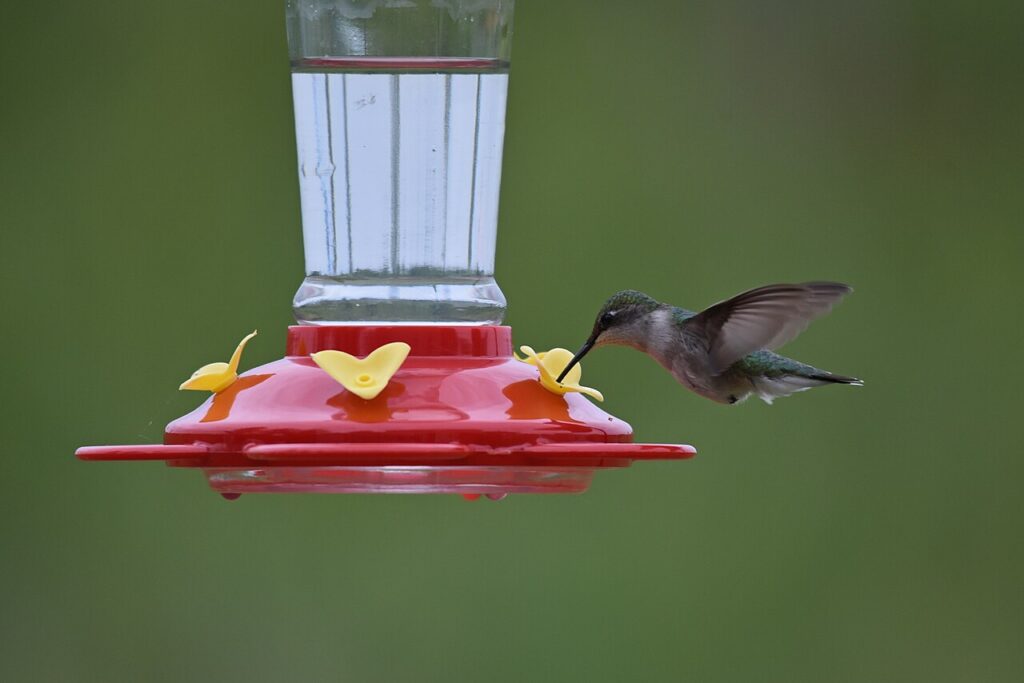
Take your hummingbird feeder down about two weeks after you see the last hummingbird of the season. Where that falls on the calendar depends on where you live: late September across the northern states, mid-October through the middle of the country, late October to November in the upper South, and never, in much of the Gulf Coast, the Southwest and the Pacific Coast, where some hummingbirds spend the winter.
That two-week rule is the one Texas Parks and Wildlife gives, and it is the standard advice from bird groups across the country. The reason for the gap is the birds you don’t see: late migrants from farther north are still passing through after your summer regulars have left, and a full feeder can be the fuel stop that gets one of them to the Gulf.
No, your feeder won’t stop them from migrating
This is the myth that makes people pull feeders on Labor Day, and it is wrong. Hummingbirds start migrating because the days get shorter and their hormones change, not because the food runs out. A healthy hummingbird leaves on schedule with a full feeder hanging right in front of it. Texas Parks and Wildlife puts it plainly: leaving feeders up will not keep hummingbirds from migrating, and it may help stragglers slowed by illness or a late nest.
So the risk runs one way. Take the feeder down too early and a late bird loses a meal it needed. Leave it up two weeks too long and you have washed and refilled a feeder nobody used.
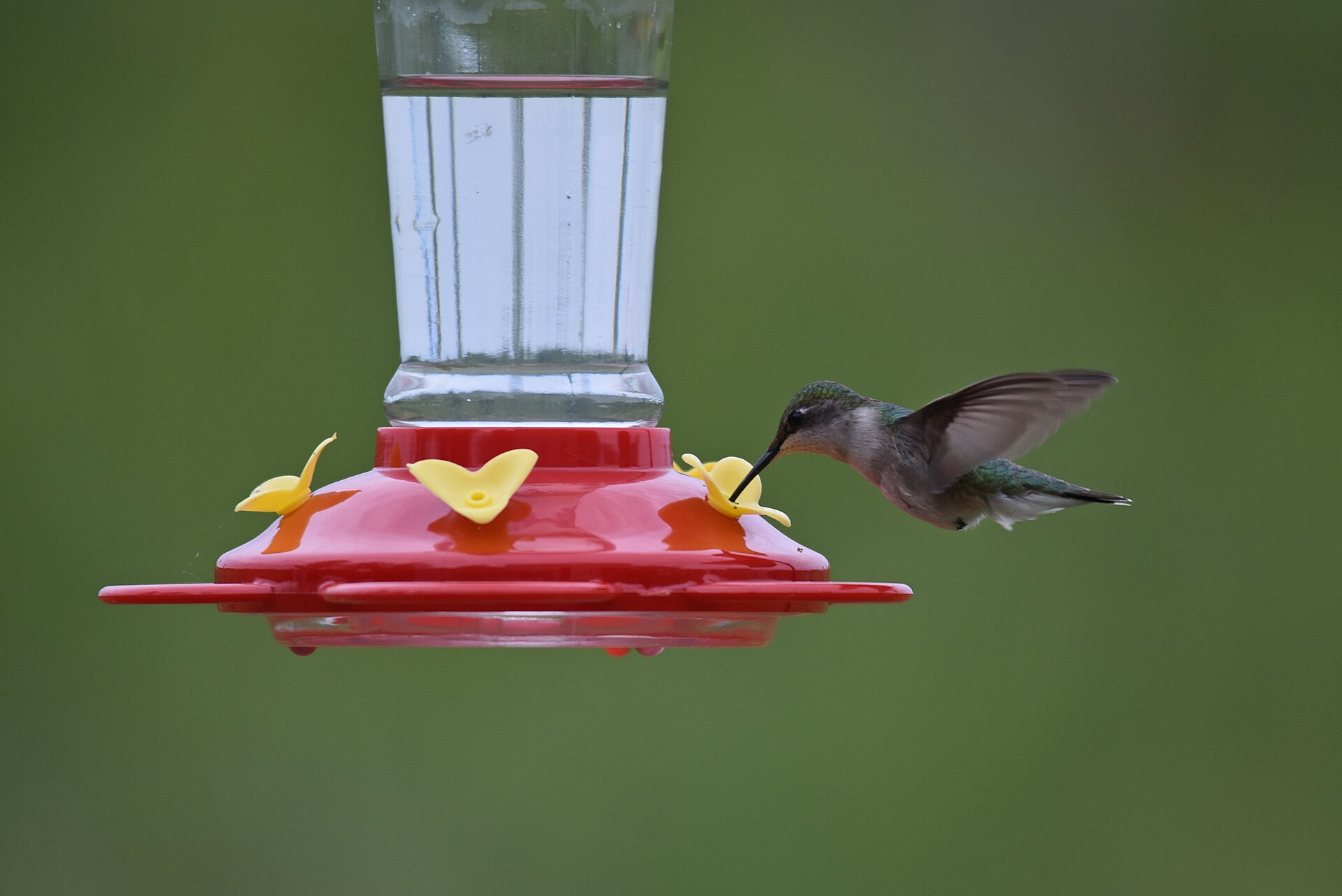
When to take it down, by region
Want your state’s exact dates? See our state-by-state guide to when hummingbirds leave, with last-sighting and feeder-down dates for all 50 states.
These are typical windows, not deadlines. A warm fall pushes them later, and a hard early frost pulls them earlier. Go by your own last sighting, then add two weeks.
| Region | Last hummingbirds usually seen | Take the feeder down |
|---|---|---|
| Northern states and New England (MN, WI, MI, northern NY, VT, NH, ME, the Dakotas) | Mid to late September | Early October |
| Midwest, Mid-Atlantic, lower New England (IA, IL, IN, OH, PA, NJ, MA, CT) | Late September to early October | Mid-October |
| Upper South (VA, NC, TN, KY, MO, AR) | Early to mid-October | Late October |
| Deep South and Gulf Coast (GA, AL, MS, LA, FL, coastal TX) | Ruby-throats pass through into late October | Consider leaving one up all winter (see below) |
| Mountain West and Plains (CO, UT, MT, WY, NE, KS) | Late August to late September | Early to mid-October |
| Desert Southwest (AZ, NM, southern NV, inland southern CA) | Some species stay year-round | Leave it up |
| Pacific Coast (CA, OR, WA) | Anna’s hummingbirds stay all year | Leave it up |
Why some people leave a feeder up all winter
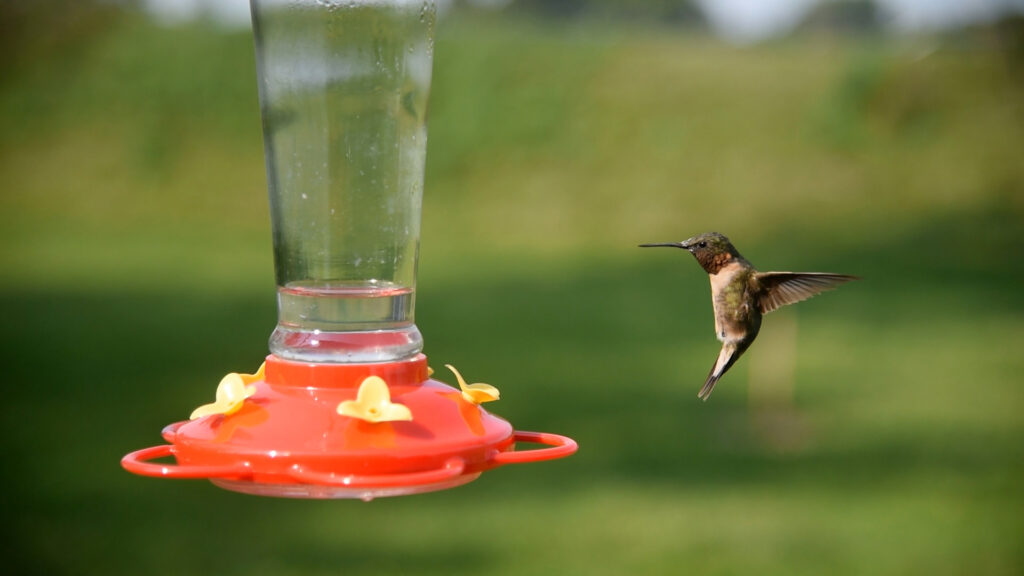
In the East, the summer hummingbird is almost always the ruby-throated, and nearly all of them leave the country for the winter. But every year a scattering of western hummingbirds, mostly rufous, turn up at feeders across the Southeast from October on, and many of them spend the whole winter. Texas Parks and Wildlife notes that rufous hummingbirds regularly winter in the state, and the same is true along the Gulf Coast and into Florida and the Carolinas.
If you live anywhere from the Carolinas south, leaving one feeder up through the winter is how people get these birds. You don’t need more than one, and you don’t need it full: a few ounces of fresh nectar, changed every week in cool weather, is plenty.
On the West Coast it is simpler. Anna’s hummingbirds live along the Pacific Coast year-round, and in much of the desert Southwest several species do too. If you have hummingbirds in December, keep feeding them.
Keep the nectar fresh in fall
Fall is when feeders go stale, because visits drop off and the same nectar sits for days. Old nectar ferments and grows mold, and a hummingbird that drinks it can get sick at exactly the moment it needs to fatten up for the trip.
- The recipe doesn’t change with the season: 1 part white table sugar to 4 parts water. No red dye, no honey, no brown sugar, no artificial sweetener.
- Change it on a schedule: every 2 to 3 days when it’s warm, about once a week when highs stay below 60°F. Cloudy nectar or black specks mean it’s overdue.
- Fill it less: once visits slow down, put in only what the birds will drink before the next change. A quarter-full feeder is fine.
- Wash it every time you refill: hot water and a bottle brush, with a vinegar soak if you see mold. Our hummingbird feeder guide covers which designs come apart for cleaning and which don’t.
If you’re feeding through a freeze
Sugar water at 1 to 4 freezes a few degrees below plain water, so a feeder left out on a hard-freeze night will be slush by morning. People who feed wintering hummingbirds handle it three ways: bring the feeder in at night and hang it back at first light, when the birds feed hardest; keep two feeders and swap a thawed one out in the morning; or hang it close to the house under an eave, where it stays a few degrees warmer. Do not make the nectar stronger to keep it from freezing. The 1-to-4 ratio is the safe one.
When to put it back up in spring
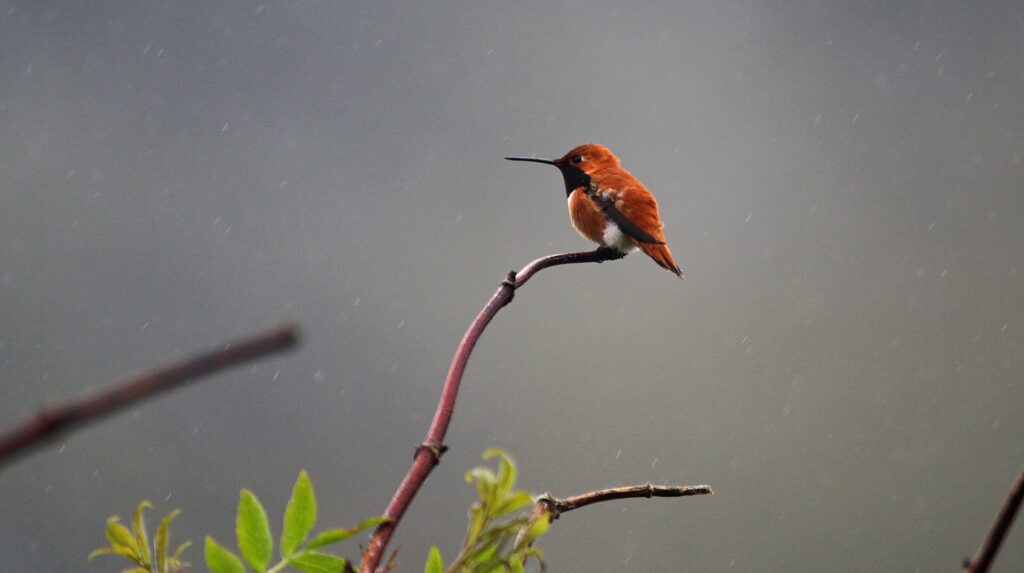
Hang feeders about two weeks before hummingbirds usually arrive in your area, so the first scouts find food on day one. As a rough guide: late February to March along the Gulf Coast, late March to mid-April through the middle of the country, and late April to early May across the northern states. Our hummingbird plant guide covers the flowers that keep them in the yard once they’re back.
Before you put the feeder away
Take it completely apart, scrub every port with a small brush, soak it in a solution of 1 part white vinegar to 4 parts water for an hour, rinse well and let it dry fully before it goes in a bag. A feeder stored damp comes out in April with mold in the ports. If yours is cracked, faded or the ports won’t come clean, spring is the time to replace it; the Aspects HummZinger HighView is the saucer feeder we recommend because the whole thing comes apart for cleaning, and a set of small feeder brushes makes the ports a two-minute job.
Bottom line
Leave the feeder up until two weeks after your last sighting, keep the nectar fresh while you wait, and don’t worry that you’re keeping anyone from leaving. If you live in the Southeast, on the Pacific Coast or in the desert Southwest, think about keeping one up all winter. The rufous hummingbird that shows up in your yard in December is one of the best birds a backyard can get.