A black bird with white on its wings is one of the most common “what is this?” questions in American backyards, and the answer depends a lot on where you live and where the white is. In the East and Midwest it’s often an eastern towhee, a red-headed woodpecker or a male rose-breasted grosbeak. Out West, think black-billed magpie, spotted towhee, lark bunting or phainopepla. And if an ordinary crow, grackle or blackbird has random white feathers, you’re probably looking at leucism, a genetic quirk that blocks pigment in some feathers. Here’s how to sort them out.
The short version
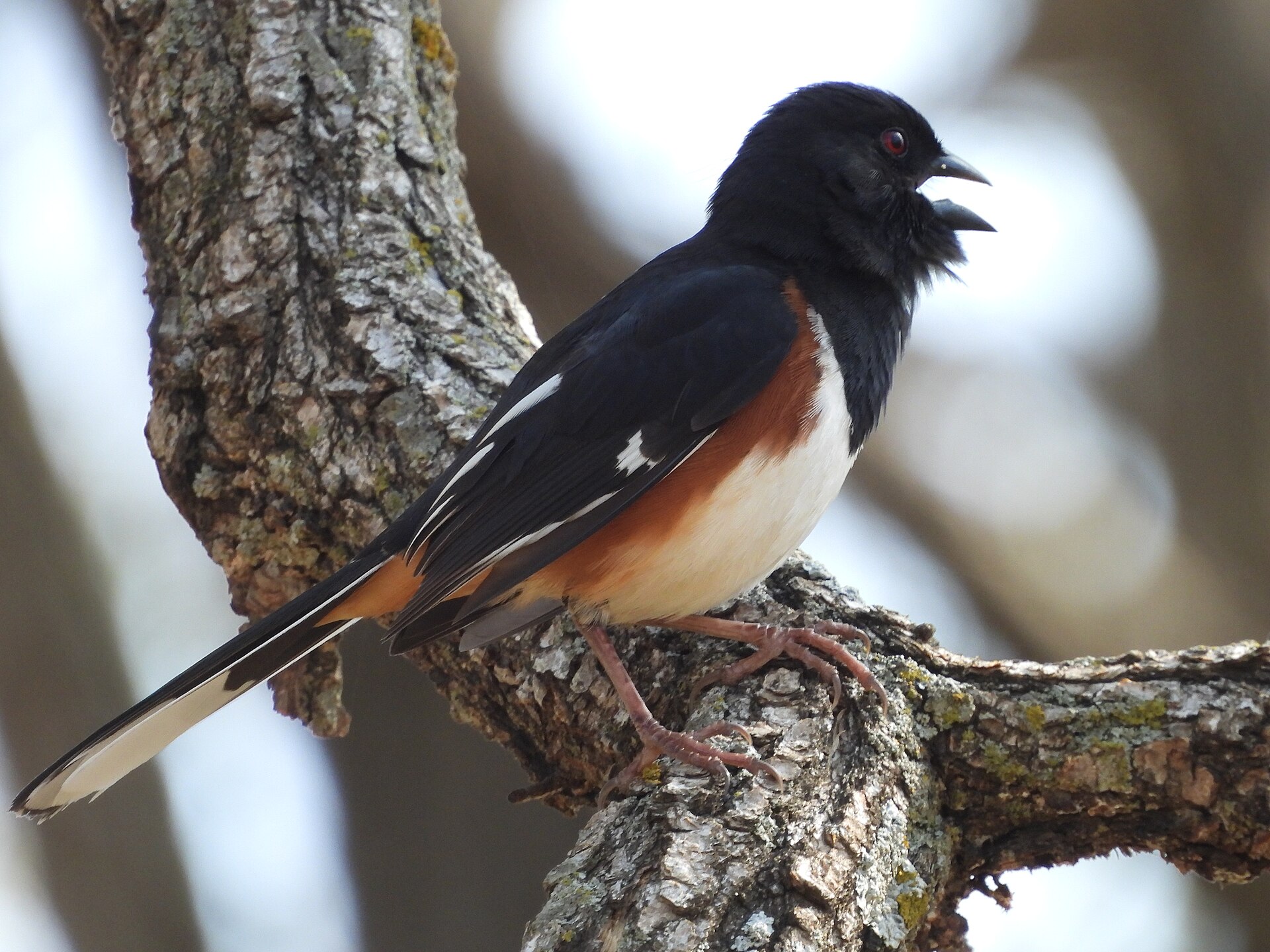
- Black hood, white belly, rusty sides, white flash in the wing, scratching under shrubs: eastern towhee (East) or spotted towhee (West, white spots on the back).
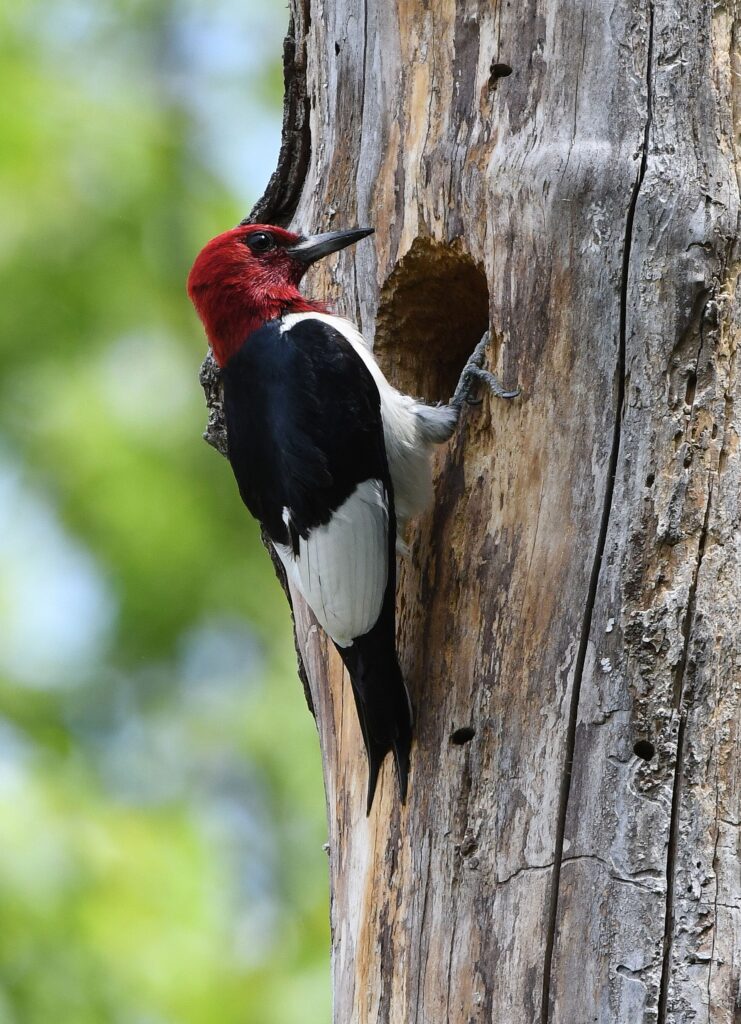
- Solid red head, black back, big white wing patches: red-headed woodpecker.
- Black and white with a rose-red triangle on the chest: male rose-breasted grosbeak.
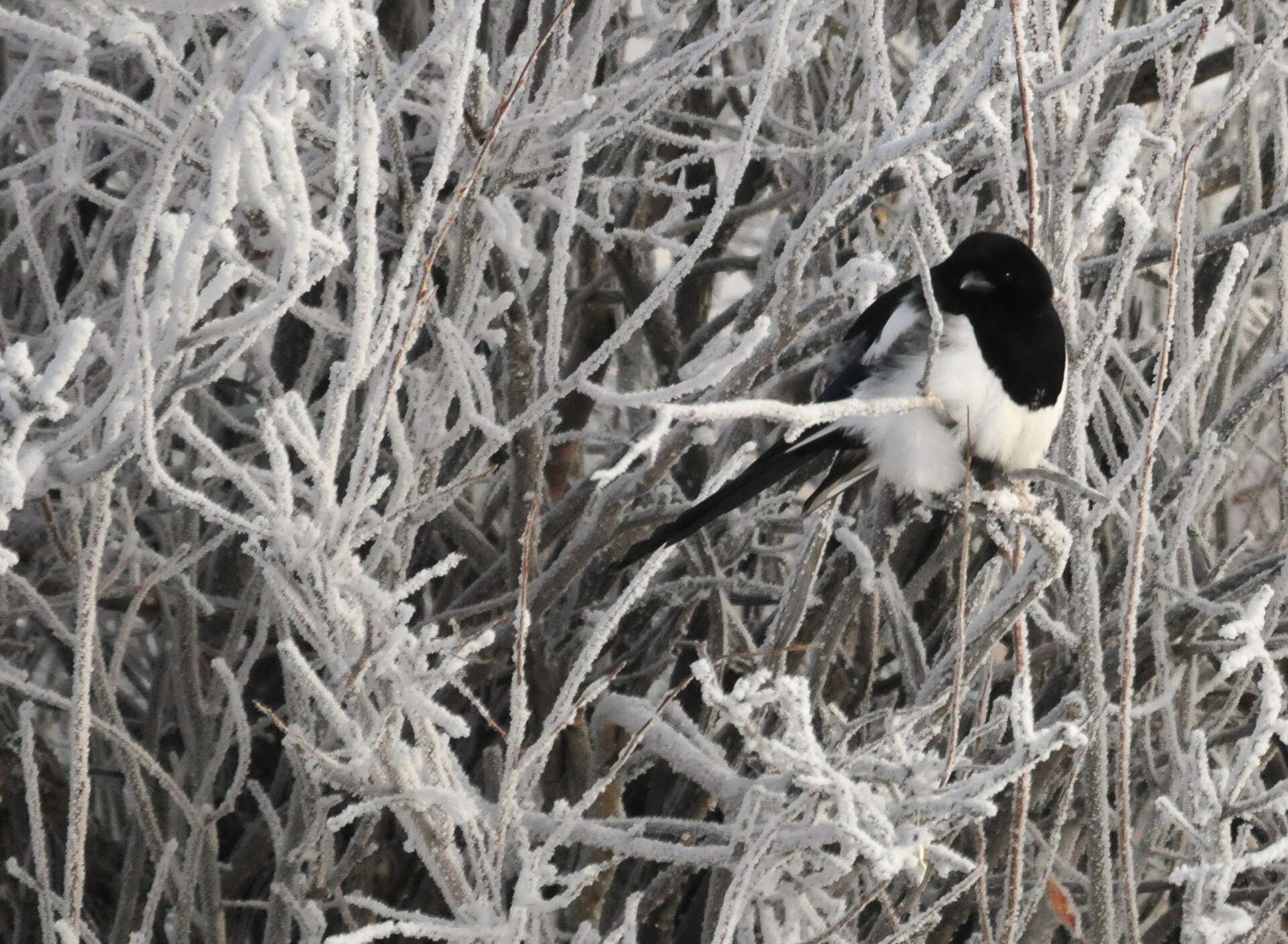
- Big, long-tailed, black and white, noisy: black-billed magpie (West).
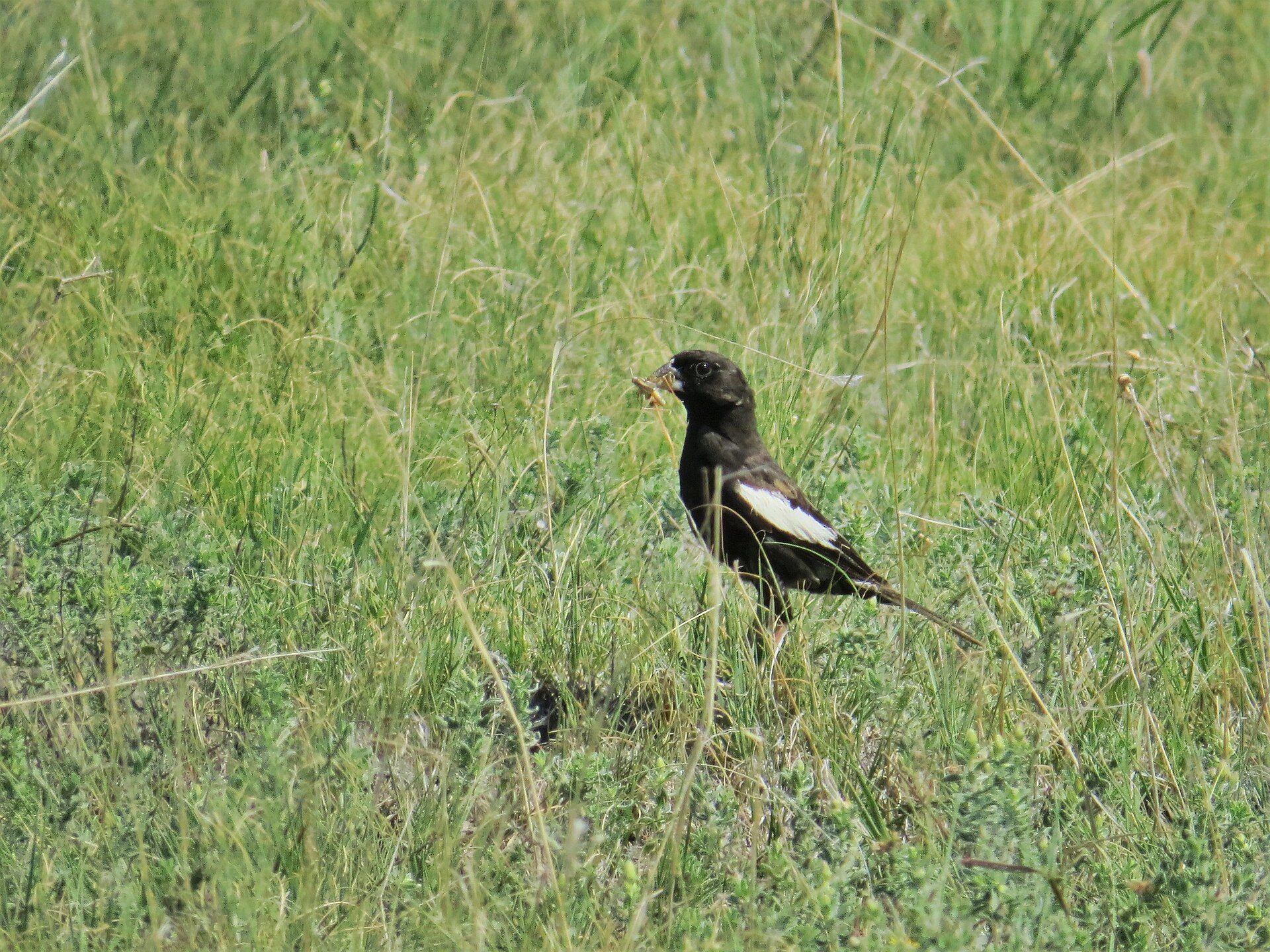
- Sparrow-sized, all black with big white wing patches, open plains: male lark bunting.
- Glossy black, crested, red eye, white patches that flash in flight: male phainopepla (Southwest deserts).
- Crow, grackle or blackbird with random white feathers: leucism.
Backyard birds (East and Midwest)
Eastern towhee. A large, long-tailed sparrow. The male has a black head, back and tail, rusty-orange sides, a white belly, and a white patch at the base of the wing that flashes when it flies. It also has white corners on the tail. Towhees feed on the ground under shrubs, scratching backward with both feet at once, and the male sings “drink-your-teeeea.” Females are the same pattern in warm brown instead of black.
Red-headed woodpecker. One of the most striking birds in North America: an all-red head, a jet-black back, a white belly, and huge white patches on the wings that make the lower back look solid white when it’s perched. Look in open woods, savannas, golf courses and parks with dead trees. Don’t confuse it with the far more common red-bellied woodpecker, which has only a red cap and a zebra-striped back.
Rose-breasted grosbeak (male). Black head and back, white belly, bold white wing patches, and a bright rose-red triangle on the chest. It’s a spring and summer bird across the East and Midwest and comes readily to sunflower feeders.
Downy and hairy woodpeckers. Small black-and-white woodpeckers with white spots in rows across black wings and a white stripe down the back. Males have a small red patch on the back of the head. Both are year-round feeder regulars that love suet.
Bobolink (male in breeding plumage). A blackbird relative of hayfields and meadows, black below with white on the back and wings and a straw-yellow patch on the back of the head. People say it looks like it’s wearing a tuxedo backward. It’s a summer bird of the northern states.
Western birds
Black-billed magpie. Big, bold and unmistakable: black head and chest, white belly, white shoulder patches, flashes of white in the wings, and a very long, iridescent green-black tail. Magpies are common in open country and towns across the interior West. California’s Central Valley has the yellow-billed magpie, which is the same bird with a yellow bill.
Spotted towhee. The western version of the eastern towhee: black hood and back, rusty sides, white belly, and rows of white spots across the back and wings. Same double-footed scratching under shrubs.
Lark bunting (male). A sparrow-sized bird that turns completely black in spring and summer with big, bright white wing patches. It nests in the grasslands of the Great Plains and is Colorado’s state bird. In winter the male turns streaky brown and only the white wing patch gives him away.
Phainopepla (male). A slim, glossy black bird with a shaggy crest, a red eye, and white wing patches that are hidden when it perches but flash brightly in flight. It lives in the deserts of the Southwest, often near mistletoe, whose berries it eats.
Acorn woodpecker. A clown-faced, mostly black woodpecker with a white forehead and throat, a red cap, and white patches in the wings and rump that show in flight. It lives in oak woodlands of the West and Southwest and stores acorns in “granary” trees drilled with holes.
Seen in flight overhead
Common nighthawk. A dark, long-winged bird flying erratically at dusk, with a bold white bar across each wing near the tip. It hunts insects on the wing over towns and fields in summer and gives a nasal “peent” call. Despite the name, it isn’t a hawk.
A normal black bird with odd white feathers: leucism
If the bird is clearly an American crow, common grackle, red-winged blackbird, European starling or Brewer’s blackbird, but with white feathers scattered in its wings or tail, it’s almost certainly leucistic. Leucism is a genetic condition that stops pigment from being deposited in some or all feathers, leaving white patches in otherwise normal plumage. Unlike albinism, leucistic birds have normal dark eyes. The white feathers can be symmetrical or random, and the bird is otherwise normal. Poor nutrition can also cause pale, washed-out feathers. Leucistic grackles and blackbirds turn up at feeders every year and often cause a flurry of ID questions. (More on sorting out the common black birds in grackles vs. blackbirds vs. starlings.)
How to narrow it down fast
- Size: sparrow-sized (towhee, lark bunting, grosbeak, phainopepla), robin-sized (red-headed woodpecker, bobolink), or crow-sized with a long tail (magpie)?
- Where the white is: a patch on the folded wing, spots in rows, a bar seen only in flight, or random feathers?
- Other colors: red head, rose chest, rusty sides, red eye or a yellow nape narrow it to one species.
- Behavior: scratching under shrubs (towhee), climbing trunks (woodpecker), or swooping at dusk (nighthawk)?
- Use Merlin: Cornell’s free Merlin app will suggest a match from a photo, your location and the date.
Bottom line
In an eastern yard, a black bird with white wing flashes is usually an eastern towhee, a red-headed woodpecker or a rose-breasted grosbeak. In the West, think magpie, spotted towhee, lark bunting or phainopepla. And a crow or grackle with patchy white feathers is a leucistic bird, not a new species. Want more of these birds at your feeders? See our guides to the best bird seed and suet feeders for woodpeckers.