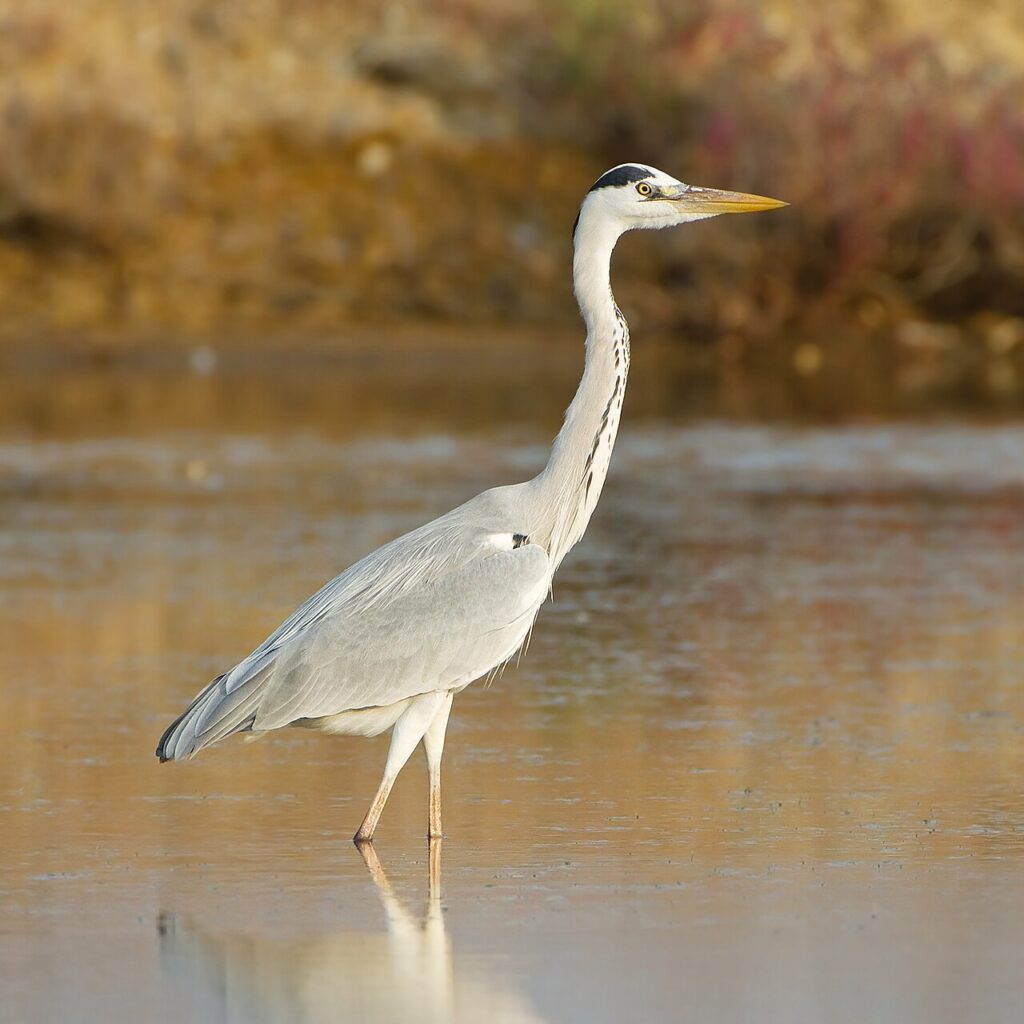
A gray heron is a large Old World heron from Europe, Asia and Africa that almost never reaches North America, and the one found in a Cape Elizabeth, Maine, farm field on October 18, 2026, is the first ever documented in the state. It looks a lot like the great blue heron most Americans already know, which is why birders have been driving in to see it and comparing photos to make sure. Here is what the bird is, how rare it really is, and the field marks that tell the two herons apart.
What happened in Maine
Birder Peter Griffin found the heron on Sunday, October 18, in the fields of Jordan Farm in Cape Elizabeth, just south of Portland, according to a Maine Audubon rare bird alert written by naturalist Doug Hitchcox. Maine Audubon calls it the state’s first documented gray heron.
By Tuesday afternoon, birders had logged “scores of sightings” on eBird, Maine Public reported. Hitchcox told Maine Public the bird is young and may have flown the wrong way. It has been feeding in the farm’s open fields. “This bird is mostly hunting grasshoppers and rodents in the fields,” he said.
The story spread from Maine Public to NHPR, WBUR and other New England public radio stations, then to Maine TV stations including WGME and, nationally, to FOX Weather.
Maine birders were half expecting it. In January 2026, the Maine Birding Field Notes blog ranked gray heron No. 7 on its list of the next 25 species likely to be found in Maine.
What is a gray heron?
The gray heron (Ardea cinerea, spelled “grey heron” in Britain) is native to Europe, Asia and Africa. A 2020 report from CAI’s Weekly Bird Report described it as the Old World version of the great blue heron.
In the United Kingdom it is a common sight. The British Trust for Ornithology’s BirdFacts page counts about 11,000 breeding pairs and 46,000 wintering birds there. It nests in treetop colonies called heronries. Britain’s Wildlife Trusts say it eats mostly fish, occasionally moles, and will raid garden ponds. That habit sounds familiar to anyone who keeps fish.
Just how rare is it here? Every North American record
Very rare. Maine Audubon lists the known records, citing the reference book Rare Birds of North America plus later reports. Maine Audubon notes that “none of those records were seen by anyone beyond the original finders.” That makes the Maine bird the first one a crowd could actually go and see.
| When | Where | Notes |
|---|---|---|
| Dates not given | Far western Alaska | Two records listed in Rare Birds of North America |
| Oct. 11, 1996 | Newfoundland | Listed in Rare Birds of North America |
| Sept. 28 – Oct. 2, 2002 | Newfoundland | Listed in Rare Birds of North America |
| After 2002 | Newfoundland and the Canadian Maritimes | A handful more in Newfoundland and at least four in the Maritimes |
| Summer 2020 | Nova Scotia | A bird stayed from late June through late August (CAI) |
| Sept. 5–6, 2020 | Tuckernuck and Muskeget islands, Massachusetts | First record for the lower 48. Matched to the Nova Scotia bird by its wing feathers in photos (CAI) |
| Oct. 31 and Nov. 9, 2020 | Chincoteague NWR and Beverly, Virginia | Almost certainly the same bird, per Maine Audubon |
| Oct. 18, 2026 | Cape Elizabeth, Maine | First Maine record, found by Peter Griffin |
Sources: Maine Audubon (Oct. 19, 2026) and CAI (Sept. 9, 2020). On a phone, swipe the table sideways.
Gray heron vs. great blue heron: how to tell them apart
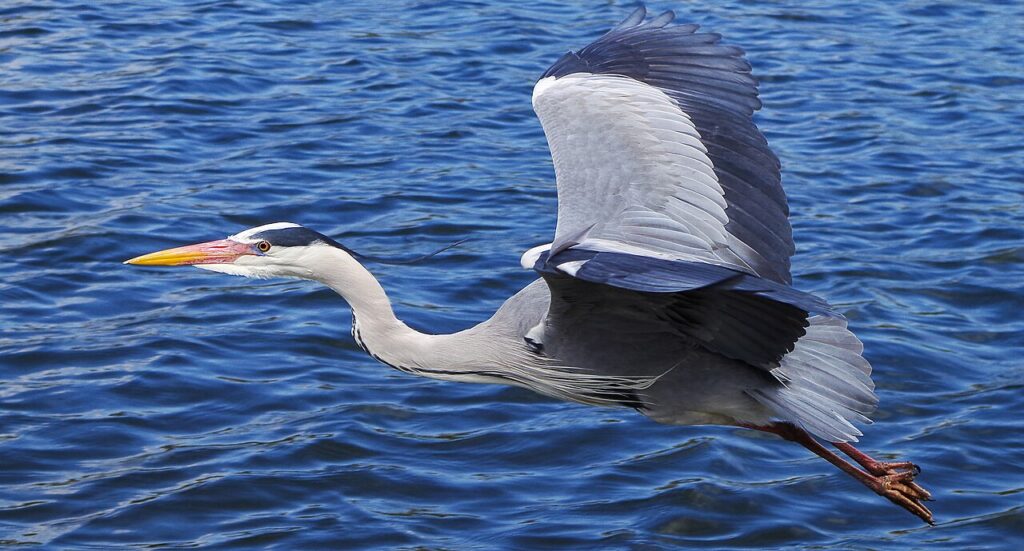
At a glance, the two look alike: tall, gray, long-necked, with a dagger bill and a black stripe over the eye. Maine Audubon’s alert and CAI’s 2020 report point to a few marks that separate them.
| Field mark | Gray heron | Great blue heron |
|---|---|---|
| Wrist (bend of the wing) | Clean white. In flight, it shows like bright headlights | Rufous (rusty), though it can look dull |
| Thighs | White | Rufous |
| Overall tone | Paler, with no reddish tones on the neck | Blue-gray, with reddish tones on the neck and thighs |
| Neck (young birds) | More contrast | Less contrast. Juveniles show “dark streaking on the neck” (Cornell) |
| Legs in flight | Shorter. Feet barely reach past the tail | More leg shows past the tail |
| Bill | Smaller, less heavy | Long, orangish-yellow on adults |
| Length | About 37 in (94 cm) | 38.2–53.9 in |
| Wingspan | About 71 in (1.8 m) | 65.8–79.1 in |
| Weight | About 3.3 lb (1.5 kg) | 74.1–88.2 oz (about 4.6–5.5 lb) |
| Where it lives | Europe, Asia, Africa | Much of the U.S. |
Sources: field marks from Maine Audubon and CAI. Gray heron size from The Wildlife Trusts’ Wildlife Watch. Great blue heron size and marks from Cornell Lab’s All About Birds. Inches and pounds for the gray heron are our conversions. On a phone, swipe the table sideways.
The size numbers overlap, so don’t rely on them in the field. A big gray heron and a small great blue can be close. The white wrist is the mark Maine Audubon says stands out, and it is easiest to see when the bird flies.
How did a gray heron get to Maine?
No one knows its exact route. Hitchcox told Maine Public the young bird may have flown the wrong way. In 2020, birders matched the Massachusetts heron to one that had spent the summer in Nova Scotia by comparing its wing feathers in photos, CAI reported. That bird turned up about three weeks later and roughly 400 miles away. Whether the Maine bird came through Atlantic Canada too has not been reported.
How long will it stay?
Hitchcox told Maine Public the heron could stay as long as it finds food. He added, “perhaps the first heavy frost or snow will be a motivator to move.” A birder who flew in from Michigan saw it on Wednesday, October 21, and birders were still gathering on Wells Road on October 22, the Portland Press Herald reported. We could not confirm a sighting after October 21. For current reports, Maine Audubon points birders to its Maine Rare Bird Alert group chat, which the Press Herald says has more than 4,000 members.
If you go: how to be a good guest
Jordan Farm is a working farm, and Maine Audubon has asked visitors to follow a few rules:
- Most sightings have been in the field on the north side of the east end of Wells Road, near Spurwink Avenue. The bird has also been seen at Spurwink Marsh from the observation deck along Route 77.
- Do not park in the farmstand lot. Use only the small area near the intersection, and never park where you would block the view of oncoming traffic on Spurwink Avenue.
- Stand off the pavement. Maine Audubon says Cape Elizabeth police came by several times to stress this.
- Maine Audubon suggests buying something at the farmstand to thank the farm for access.
The heron you’re far more likely to see: the great blue
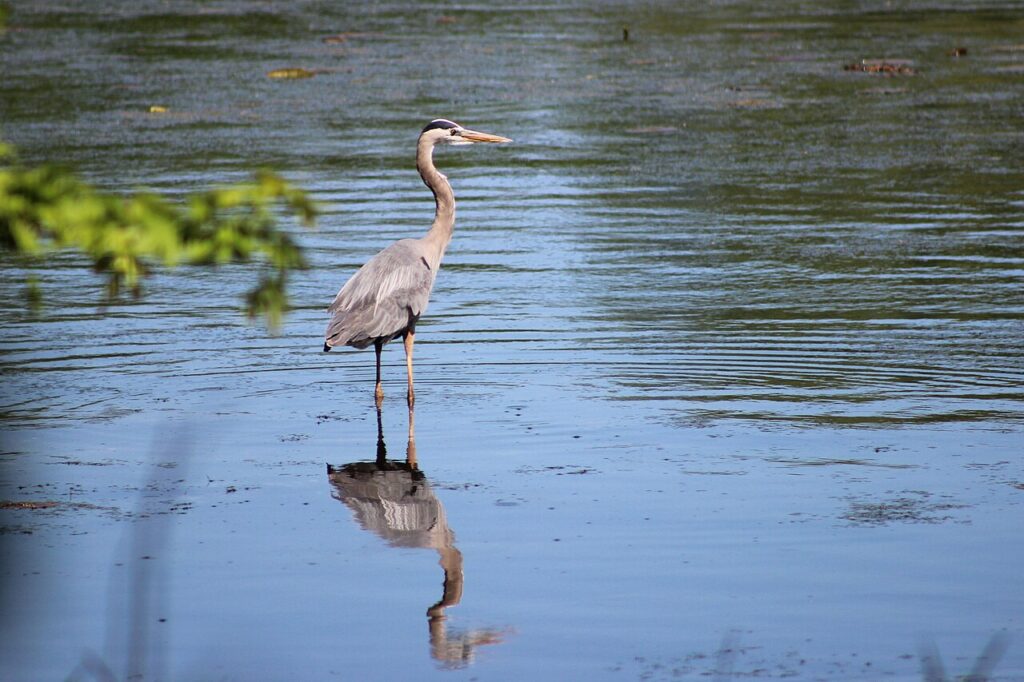
For nearly everyone else, a big gray heron standing in a field or at a pond edge will be a great blue heron. Cornell Lab’s All About Birds says to look along shorelines, riverbanks and the edges of marshes and ponds “across much of the U.S.” Great blues also feed in meadows and farm fields. The heron often “stands motionless as it scans for prey,” then strikes fast. In flight, look for the tucked-in neck and long trailing legs. For the other big gray birds you might see, including the sandhill crane, see our guide to common gray birds.
Great blue herons don’t come to feeders, but they are “sometimes unwelcome visitors to yards that include fish ponds,” Cornell notes. Its suggested fix is simple: put a length of drain pipe in the pond so fish have somewhere to hide. If you’re planning a pond or water feature, our bird-friendly garden guide covers what draws birds in. For the smaller birds at your feeders, the backyard bird ID chart by color is the fastest place to start.
The BTO says gray herons are largely silent away from their colonies, though a harsh “kraank” call sometimes comes in flight. If you want to learn calls in your own yard, see how to identify birds by their songs and calls.
FAQ
Is the gray heron the same as a great blue heron?
No. They are different species that look alike. The gray heron lives in Europe, Asia and Africa, and the great blue heron lives in North America. White wrists and thighs and a smaller build mark the gray heron.
Has a gray heron been seen in the U.S. before?
Yes, but rarely. Two records are listed for far western Alaska. The lower 48’s first was in Massachusetts in September 2020, and the same bird was almost certainly seen later that fall in Virginia, per Maine Audubon.
Where exactly is the gray heron in Maine?
Most sightings have been in fields near Jordan Farm in Cape Elizabeth, on the north side of the east end of Wells Road near Spurwink Avenue. Check the Maine Rare Bird Alert for the latest before you drive.
What does the gray heron eat?
In its home range, mostly fish, according to Britain’s Wildlife Trusts. The Maine bird has been hunting grasshoppers and rodents in farm fields, Maine Audubon’s Doug Hitchcox told Maine Public.
How do I keep a heron out of my fish pond?
Cornell Lab suggests placing a length of drain pipe in the pond so fish can hide from herons.
Bottom line
The gray heron in Cape Elizabeth is Maine’s first and one of only a handful ever reported in North America. It is also the first one the public has been able to see. It looks like the great blue heron in nearly every backyard state, so the clean white wrist is the mark to look for. Whether it stays depends on the weather and its food. Check the Maine Rare Bird Alert before you go, and follow the farm’s parking rules when you get there.