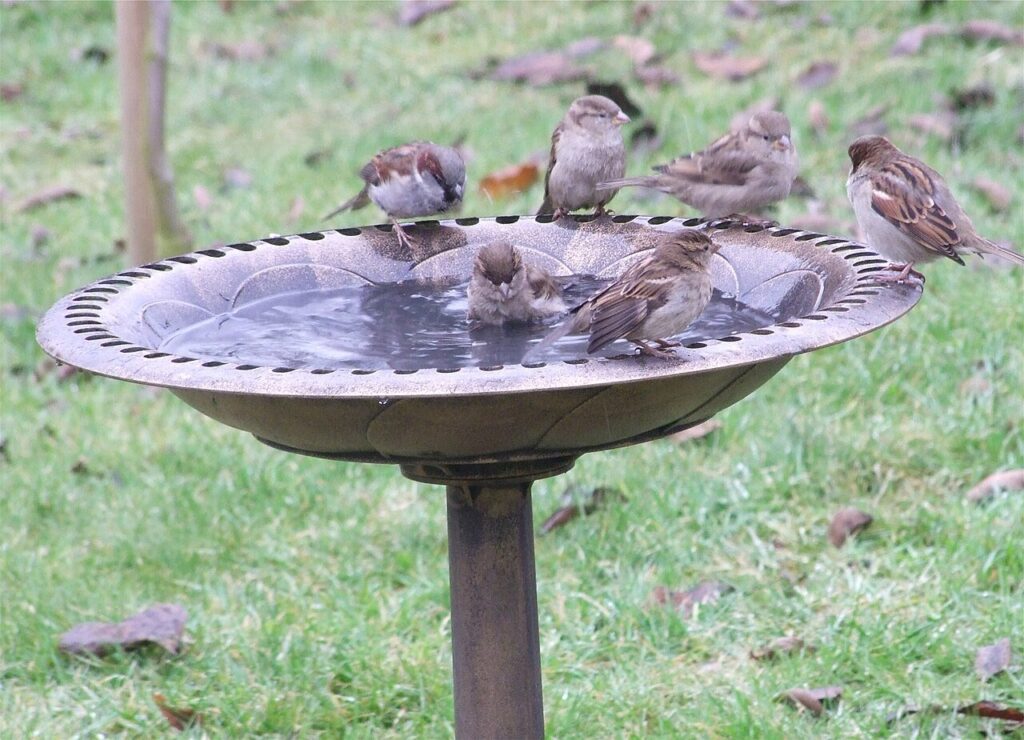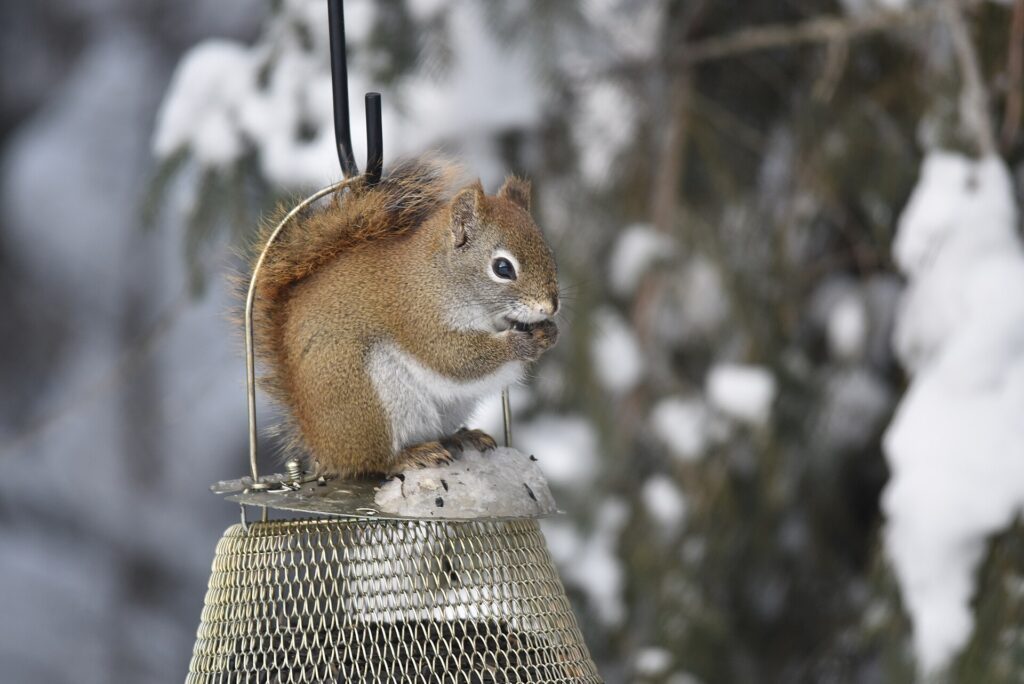
Most of what happens at a feeder has an explanation, and the explanations are better than the myths. Here are ten things you’ll see in an American backyard, from a chickadee that remembers a thousand hiding places to a jay that lies, with what’s actually going on.
1. Chickadees remember thousands of hiding places
Every fall a chickadee hides seeds one at a time, in bark crevices, under lichen, in dead leaves, and finds them weeks later. The part of the brain that stores spatial memory, the hippocampus, grows measurably in autumn and shrinks again in spring. The bird taking one seed at a time from your feeder in October is building a map with a few thousand entries, and it’s the reason a full feeder in fall gets you a flock in January.
2. Blue jays lie
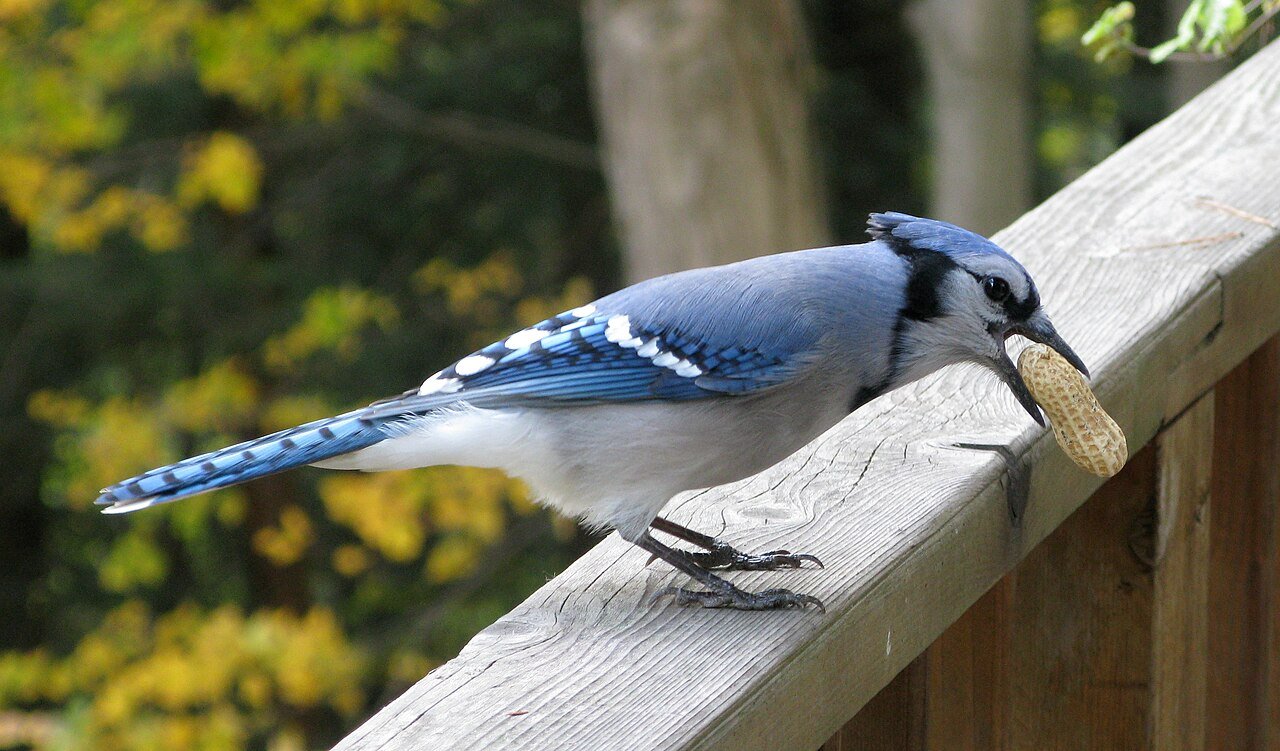
A jay’s imitation of a red-tailed hawk’s scream is good enough to fool people, and it’s good enough to fool the feeder. Jays give it when a hawk is around, and they sometimes give it when one isn’t, and the feeder empties either way, leaving the jay alone with the peanuts. Nobody has proven intent, but the timing is suspicious often enough that ornithologists have written it up.
3. Crows and jays recognize your face
Researchers at the University of Washington wore a mask while trapping crows, and for years afterward crows on campus scolded anyone wearing that mask, including crows that hadn’t been alive for the trapping. They’d learned it from their parents. Jays, magpies and chickadees show similar recognition. The practical version: the birds in your yard know which person fills the feeder, and it’s not the dog walker.
4. The killdeer fakes a broken wing
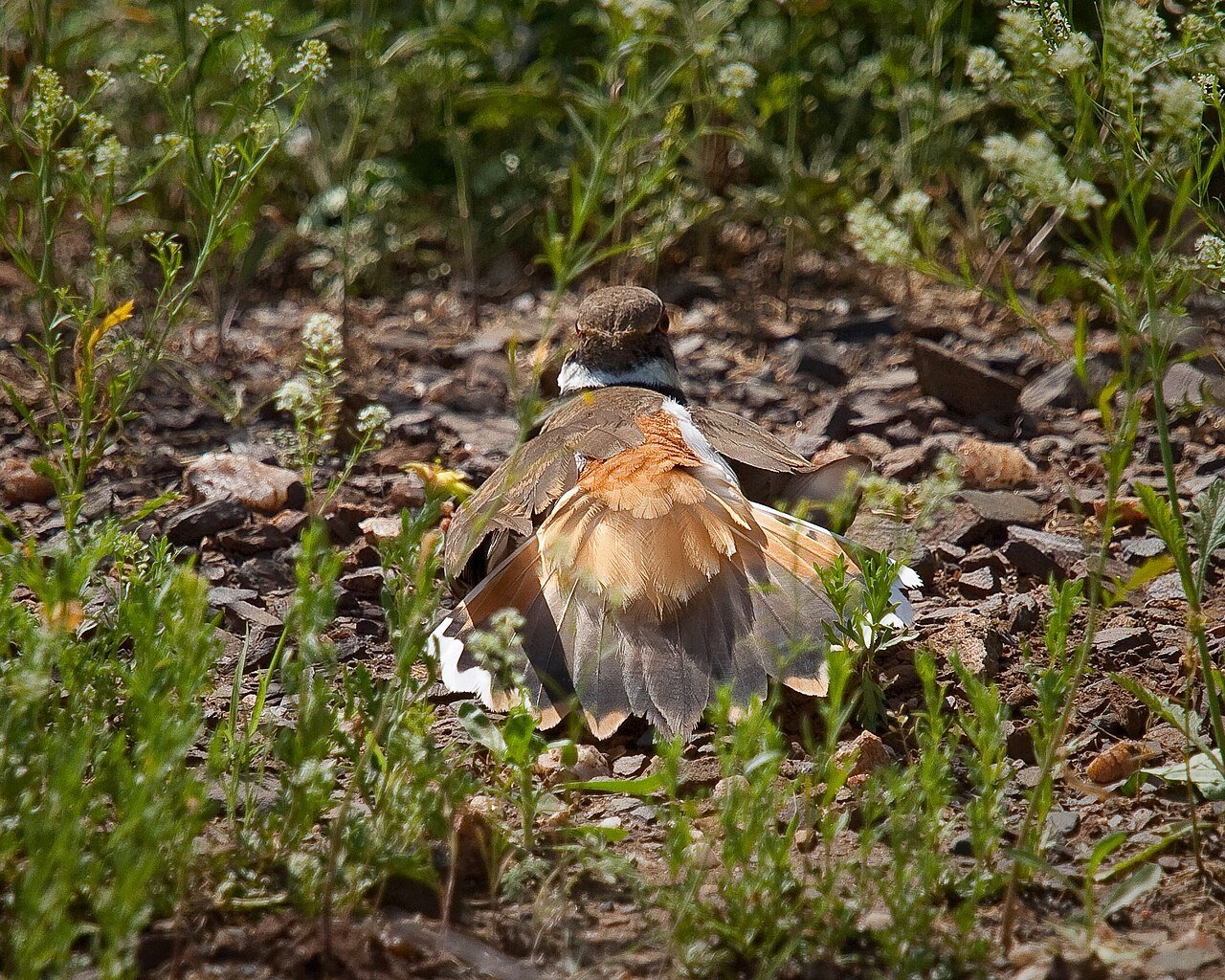
A killdeer nests on open gravel, a driveway, a flat roof, where the eggs have no cover. When a predator (or a person) gets close, the parent drags one wing, cries, and staggers away from the nest, and when the threat has followed far enough, flies off perfectly well. Plovers, some sparrows and a few ducks do versions of it. Our predators guide covers what the rest of the yard does instead.
5. Birds see a color you can’t, and probably the magnetic field
Most songbirds have a fourth color receptor tuned to ultraviolet, so a “plain” bird like a female cardinal or a chickadee has UV patterns you’ll never see, and the birds use them to tell each other apart. Separately, migrating birds appear to sense the Earth’s magnetic field through a light-sensitive protein in the eye, which may let them see it as a pattern overlaid on the sky. That’s the leading explanation for how a hummingbird finds the same feeder every April after a trip to Central America.
6. Mockingbirds learn 200 songs, and sing at 2 a.m.
A male northern mockingbird keeps adding songs its whole life, from other birds, car alarms, frogs and squeaky gates, and repeats each one three to six times before switching. Unmated males sing at night in spring, often under a streetlight, which is why the complaint calls come in May. Females prefer the males with the biggest repertoire, so the noise is the point. Our songs guide has how to tell a mockingbird from the birds it’s copying.
7. Anting, sunning, and other things that look like distress
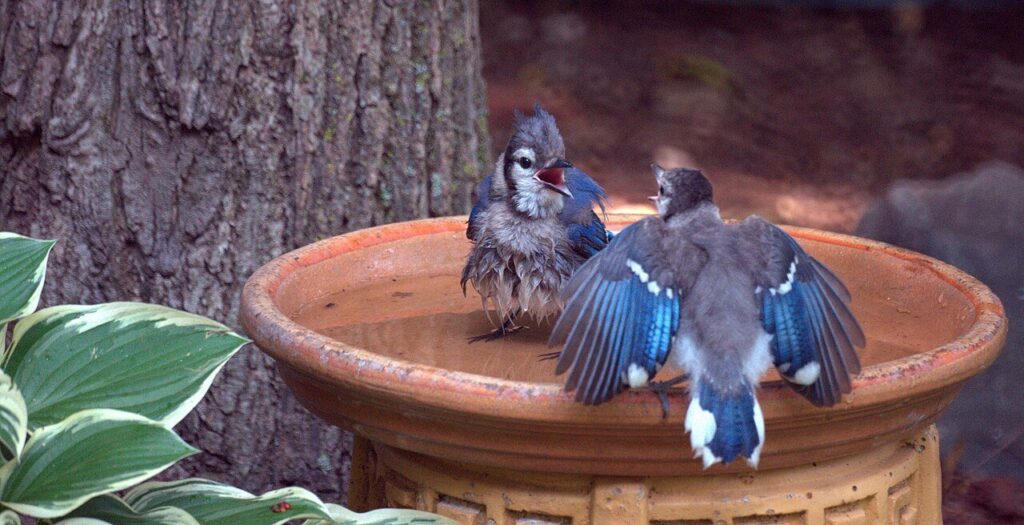
A blue jay flat on the lawn with its wings spread and its mouth open isn’t dying; it’s sunning, probably to drive parasites out of its feathers. A bird crouched on an anthill letting ants crawl through its plumage is “anting,” and the formic acid seems to do the same job. A robin lying on its side on the driveway with one wing up is doing the same. Leave them; they’ll get up in a minute.
8. Winter birds shiver all night on purpose
A chickadee weighs a third of an ounce and survives a 20-below night by fluffing to twice its size, tucking into a cavity, dropping its body temperature 15 degrees into a controlled hypothermia, and shivering continuously to generate heat. It burns most of its fat reserve by dawn and has to replace it every day, which is why the feeder is busiest at first light and last light in January. See our winter birds guide for who’s doing it in your region.
9. Hummingbirds visit a thousand flowers a day and remember which ones are empty
A ruby-throated hummingbird feeds every ten to fifteen minutes, from dawn to dusk, and keeps track of which flowers it has drained and how long each takes to refill. Experiments with artificial flowers show they return on schedule, not at random. That memory is why a hummingbird will hover at the spot where the feeder was last year, before you’ve hung it.
10. The birds at your feeder mostly aren’t eating there
Studies with marked birds find that feeder seed makes up somewhere around a fifth to a quarter of a chickadee’s winter diet even in yards with full feeders; the rest is wild seed, insects and cached food. A feeder is a supplement and a convenience, not a dependency, which is why the birds don’t starve when you go on vacation and why the flock you see is a fraction of the birds passing through. A camera on the feeder, if you want to count them, is covered in our bird cameras guide.
Related: How backyard birds avoid predators · Identifying birds by song · 5 common birds through the year
For one more example of backyard bird behavior, see what happens when a blue jay loses its mate.