Goldfinches are the last songbird in North America to nest, and house finches are among the first, and knowing that explains most of what you’ll see at the feeder between April and September. This is what the two common backyard finches actually do to raise a family: when, where, how long, and the few things a yard can do to help.
Spark Lark is reader-supported. As an Amazon Associate we earn from qualifying purchases made through links on this page, at no extra cost to you.
House finch: early, anywhere, several times
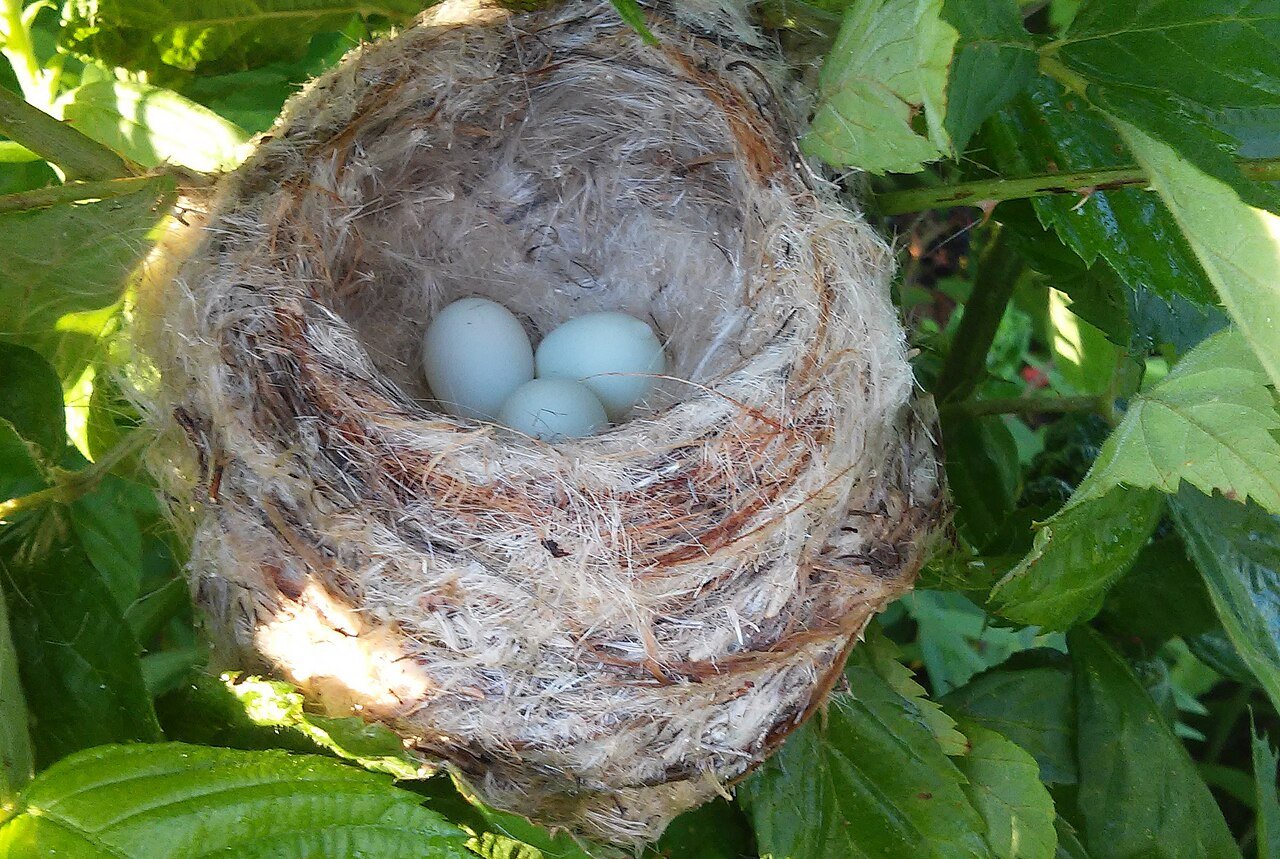
House finches start in March in the South and April in the North, and they’ll nest almost anywhere with a ledge: a hanging planter, a porch light, a wreath on the door, a gutter, an old robin nest, occasionally a conifer. The female builds a shallow cup of grass and stems in a few days and lays four or five pale blue eggs with fine dark speckles, one a day. She incubates for about 13 to 14 days while the male feeds her; the young fledge 12 to 15 days after hatching. Then, most years, she starts again, and a pair can raise two or three broods by August. That’s why the house finch is in every town in the country: it can breed on a fire escape.
The young are fed regurgitated seed, not insects, which is unusual among songbirds and is why house finches don’t depend on a caterpillar crop. A yard with a sunflower feeder is a yard where house finches can raise young in a drought.
Goldfinch: late, hidden, once
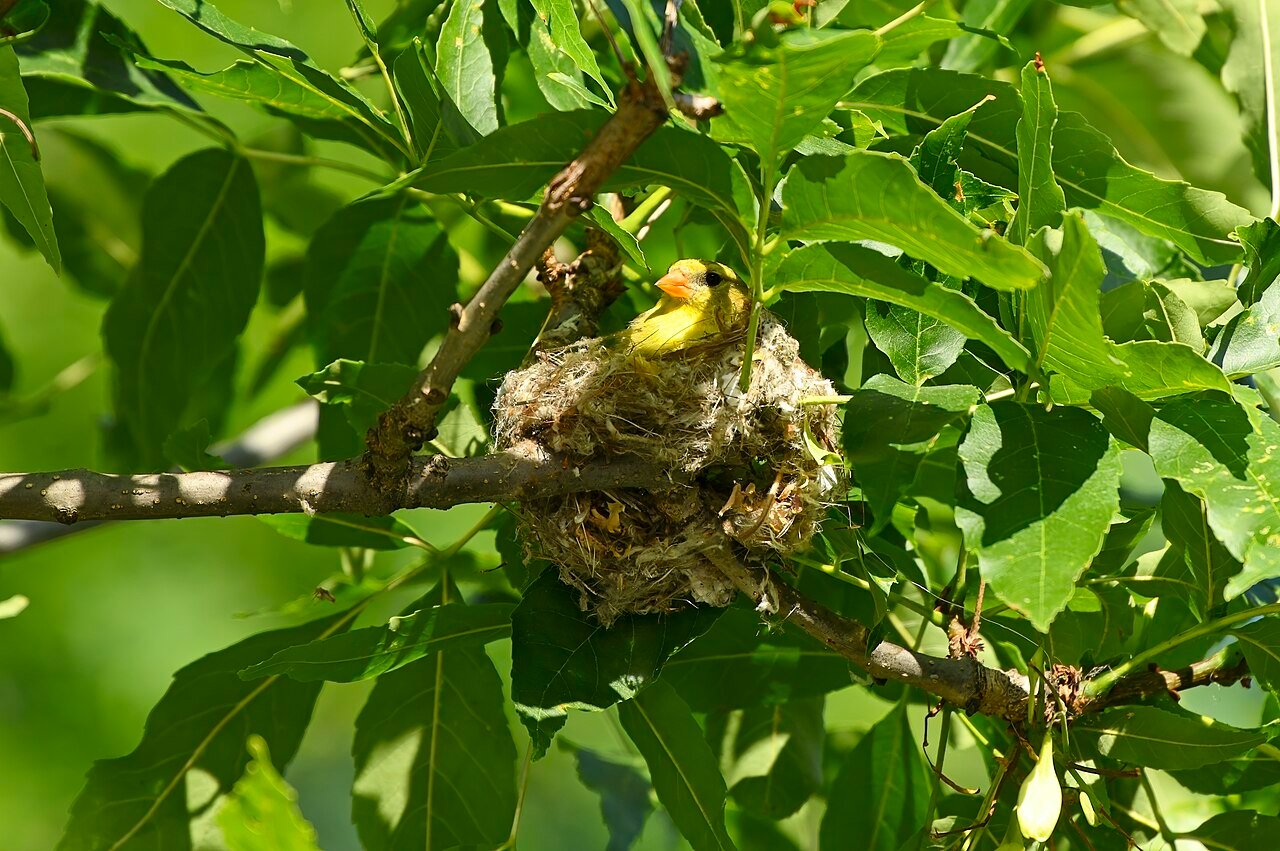
Goldfinches wait. Pairs form in spring, but nesting doesn’t start until late June in the South and often mid-July to August in the North, timed to the thistle and milkweed going to seed, because the female lines the nest with thistle down and the young are fed almost entirely on seed. The nest is a tight cup in the fork of a shrub or small tree, usually four to ten feet up, in an open spot with a view; it’s woven with spider silk and so dense that it holds rain, which drowns a few broods every wet August. Four to six pale blue eggs, incubated by the female for 12 to 14 days while the male brings her food, and the young leave the nest 11 to 17 days after hatching. One brood in most of the country, sometimes two in the South.
The seed diet has a side effect: brown-headed cowbirds, which lay their eggs in other birds’ nests, sometimes lay in goldfinch nests, and the cowbird chick starves on the all-seed diet. The goldfinch is one of the few hosts that beats the parasite by accident.
What you’ll see at the feeder
In May and June, when everything else is nesting, goldfinches are still in flocks at the nyjer feeder, the males in full yellow. In July they thin out as the females go to nests. In August and September the feeder is suddenly busy with streaky brown juveniles begging from adults, and that’s the sign the nesting worked. Our finch feeding guide has the setup; the short version is keep the nyjer fresh through October, because this is when they need it.
House finches show up with young from May on, and the juveniles are the streaky ones without red. A male house finch’s red comes from pigments in its food, so a male fed mostly on feeder seed can come out orange or even yellow; it’s the same bird.
Helping, and what not to do
- Plant thistle-family and composite flowers and leave them standing: coneflower, black-eyed Susan, sunflowers, native thistles, milkweed. Nest lining and food in one.
- Leave a shrubby edge with small trees and open shrubs; goldfinches won’t nest in a mowed yard.
- Don’t put up a nest box. Neither finch uses cavities. A house finch may use an open-fronted shelf; goldfinches build their own.
- Don’t touch a nest or a fledgling. A fledgling on the ground with a short tail is normal; the parents are nearby. Keep the cat in for a week.
- Clean the feeders every two weeks in summer; finch eye disease spreads at crowded feeders, and this is the season of crowds.
Related: How to attract goldfinches and house finches · Do sock feeders work? · The best bird seed for each season