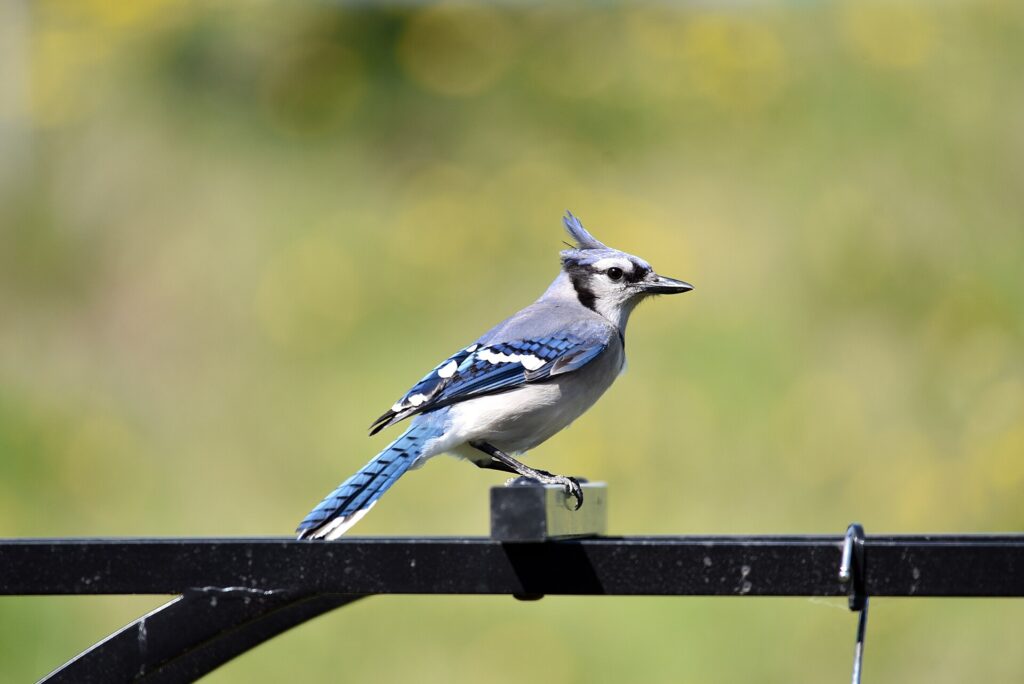
When a blue jay loses its mate, the surviving bird usually keeps living in the same area, keeps feeding, and eventually pairs again, most often during the next late-winter or spring courtship season. Blue jays form long-term pair bonds that typically last until one bird dies, so the loss is real in the sense that a stable partnership ends. Whether the survivor “grieves” the way a person does is something science can’t confirm, and the famous “bird funeral” research was done on a different jay species. Here’s what’s actually known.
Do blue jays mate for life?
Mostly, yes. The Cornell Lab of Ornithology says blue jays often mate for life and stay with their social mate through the whole year, not just the nesting season. Animal Diversity Web describes the pair bond the same way: long-lasting and monogamous, normally ending only when one bird dies.
That year-round togetherness is why a lone jay stands out. If two jays used to arrive at the feeder together and now only one shows up, you’re probably seeing a broken pair.
“Mate for life” needs one caveat. It means the bond is meant to last, not that a widowed bird stays single. Courtship starts fresh every year, so a survivor has a normal path back to a new partner.
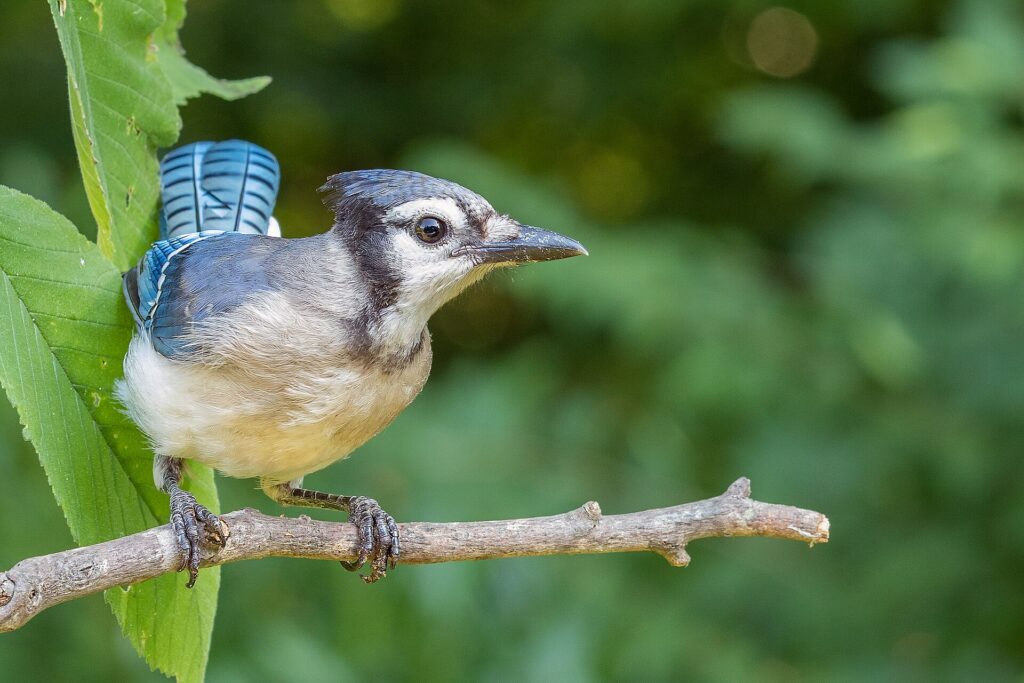
What does the surviving blue jay do?
There’s no published study that tracks widowed blue jays specifically, so the honest answer is built from what’s known about jay behavior in general.
- It stays put. Fewer than 20 percent of blue jays migrate in any given year, according to Cornell, and residents hold to a home area. A survivor has no reason to leave a territory with good oaks and a reliable feeder.
- It calls. Jays are loud birds, and a dead or missing jay is exactly the kind of event that triggers alarm calling. If you saw a bird die, expect noisy jays in the area for a while (more on the research below).
- It falls in with other jays. Blue jays keep what Cornell calls complex social systems with tight family bonds. Outside the nesting season, residents may form loose flocks, and fall flocks can number over 100 birds. A single jay is rarely truly alone for long.
- It keeps eating. Acorns, nuts, seeds, and insects make up almost all of a jay’s diet. A healthy survivor will keep caching acorns and visiting feeders. If a jay stops eating for days, that points to illness or injury, not sadness.
If the pair was in the middle of nesting, the outcome depends on timing. Only the female incubates, and her mate brings all her food during those 17 to 18 days. A female who loses her mate on the nest is in a tough spot. A male who loses his mate loses the clutch. Once young have hatched, both parents feed them, and one determined adult can sometimes raise at least part of a brood.
Do blue jays hold funerals?
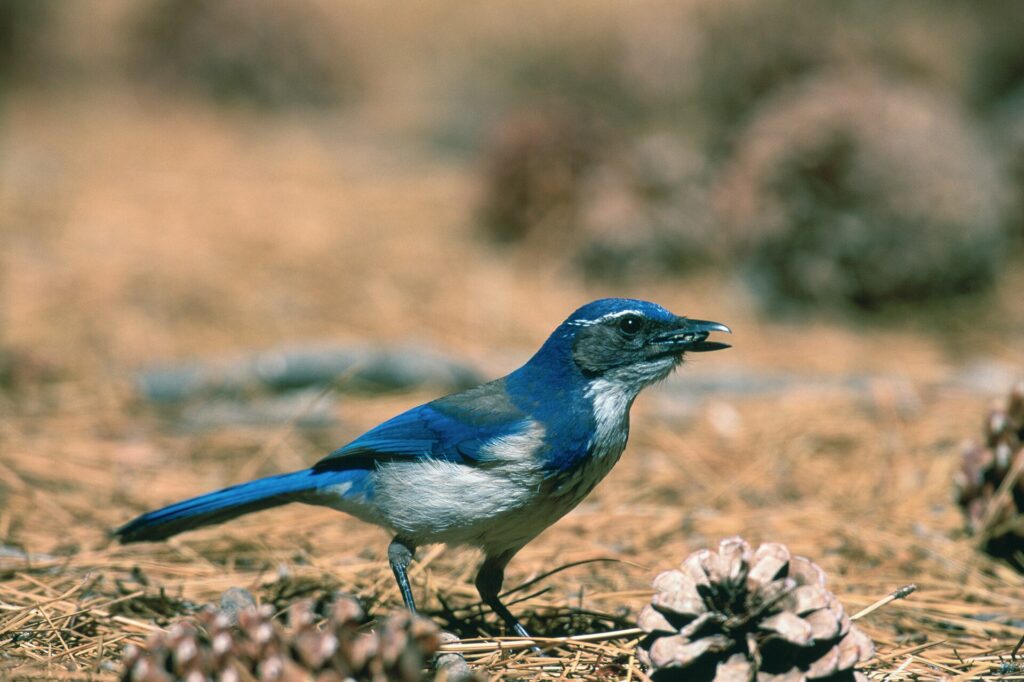
This question comes from a real study, but it’s usually retold wrong. In 2012, Teresa Iglesias, Richard McElreath, and Gail Patricelli at UC Davis published a paper in the journal Animal Behaviour on western scrub-jays (now split into California and Woodhouse’s scrub-jays). Those are western birds. The study did not involve blue jays.
The researchers placed a dead jay near feeders that scrub-jays used. When a jay found it, the bird flew up, gave loud screeching calls, and other jays came in and joined the noise. The team called these events “cacophonous aggregations.” They lasted anywhere from a few seconds to about 30 minutes. Jays also reduced their feeding near the spot, an effect still measurable a day later. Feeding was back to normal after 48 hours.
Two details matter. The jays reacted to a mounted owl in much the same way they reacted to a dead jay, and they ignored painted wood of a similar size. That pattern suggests the gathering is about danger, not mourning. A dead jay means something killed a jay here, and the birds treat that as public information about risk.
Iglesias herself was careful about the word “funeral.” As she told UC Davis, “We simply don’t know enough about the emotional life of animals.” The term in the paper’s title simply meant an animal paying attention to a dead animal of its own kind, with no claim about feelings. So when someone says blue jays hold funerals, the accurate version is: a related species gathers and alarm-calls around a dead jay for up to half an hour, likely as a warning system, and blue jays probably behave in a similar way, though that hasn’t been formally tested.
Do birds grieve, or is that us projecting?
Scientists are split, and the split is mostly about what counts as evidence. Audubon’s look at this question laid out both sides. John Marzluff, a University of Washington biologist who has studied corvids for decades, argues that without brain data you can’t prove grief. Watching a bird stand near a dead flockmate looks like mourning to us, but it could also be confusion or vigilance. Kenn Kaufman made the same point about flocks circling a fallen bird: it would be easy to call it grief, but confusion is the more likely explanation.
On the other side, birds share many of the brain structures, hormones, and neurotransmitters tied to emotion in mammals, and corvids in particular are intelligent, long-lived, and socially bonded. There are well-documented cases of geese, swans, and parrots changing behavior for weeks after losing a partner. Anthropologist Barbara King, who has written a book on animal grief, puts it in plain terms: “Grief results from love lost.” Her position is that strong bonds make grief possible, even if we can’t measure it.
For a blue jay in your yard, the fair summary is this. The bird has lost a partner it spent every day with, and it may act differently for a while. Calling it grief goes past what anyone can demonstrate; calling it nothing ignores the bond.
How long until a blue jay finds a new mate?
Nobody has published a timeline for blue jays, so treat any specific number you read online with suspicion. What’s documented is the breeding calendar, which tells you when the next opportunity arrives.
Courtship begins in late winter in the southern states; the Tennessee Wildlife Resources Agency notes jays start courting in late winter with peak egg-laying in late April. Farther north it runs a little later. Audubon describes courtship as aerial chases with the male feeding the female. Animal Diversity Web puts the breeding season from March through July, with one brood a year in the north and sometimes two in the south.
So a jay that loses its mate in fall will spend the winter in a flock or on its own territory and can pair up when courtship resumes. A jay that loses its mate in May may or may not re-pair that same season. Blue jays live around seven years on average in the wild, and Cornell’s banding record is a jay at least 26 years and 11 months old, so a survivor generally has time.
Blue jay pair facts
| Fact | What the sources say |
|---|---|
| Pair bond | Long-term, often for life; pairs stay together year-round (Cornell Lab) |
| Courtship | Late winter into spring; aerial chases, male feeds female (Audubon, TWRA) |
| Breeding season | March through July; peak egg-laying late April in Tennessee |
| Nest | Both sexes build; male gathers more, female builds more; 8 to 30 feet up |
| Clutch | 2 to 7 eggs, usually 4 or 5 |
| Incubation | 17 to 18 days; female only, fed by the male (Cornell Lab) |
| Nestling period | 17 to 21 days; both parents feed the young |
| Family time | Young stay with parents at least a month, sometimes two |
| Age at first breeding | One year |
| Lifespan | About 7 years average in the wild; oldest banded wild jay at least 26 years, 11 months |
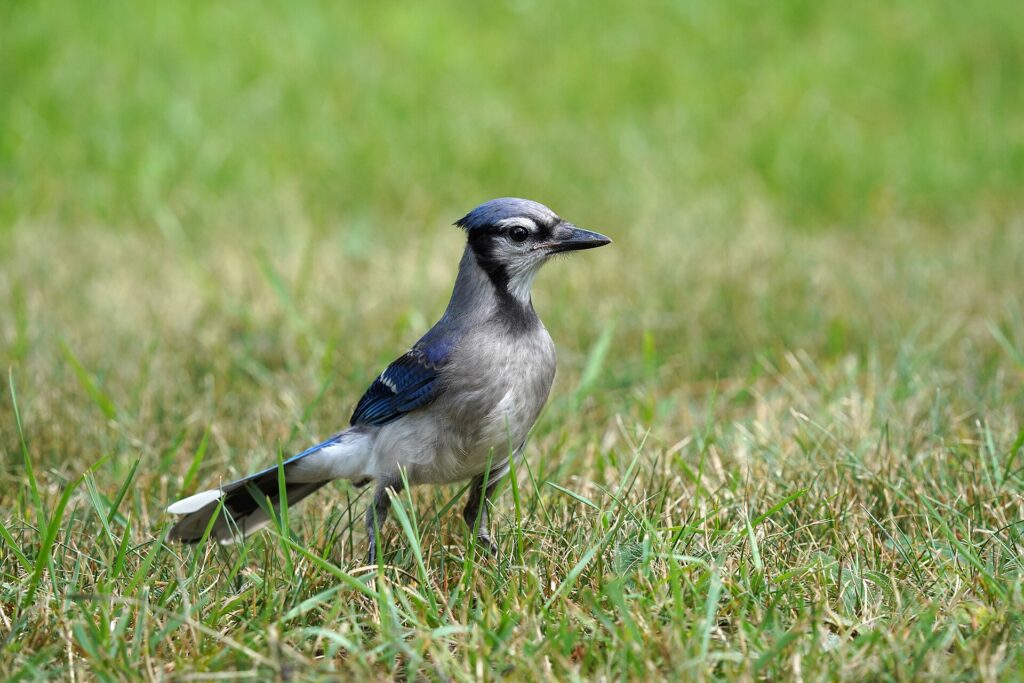
What should you do for a blue jay that lost its mate?
Nothing dramatic. A healthy adult jay doesn’t need rescue, and catching or handling a wild bird is stressful for the bird and illegal without a permit. What helps is simply keeping the yard a good place to be a jay.
- Keep feeding. Jays go for peanuts, sunflower seed, and corn. A platform feeder suits their size better than a small tube. Our bird seed guide covers what mixes jays actually eat.
- Keep things clean. If a bird died near your feeders and you don’t know why, clean the feeders and the bird bath. Disease spreads fastest at crowded feeding spots.
- Dispose of the dead bird safely. Wear gloves or use an inverted bag, double-bag it, and put it in the trash. Wash your hands afterward. If you find several dead birds, call your state wildlife agency.
- Leave the survivor alone. Don’t try to “comfort” it or bring it inside. Give it space and it will sort out its own social life, which is what jays are good at.
- Get help only for an injured bird. A jay that can’t fly, sits fluffed on the ground for hours, or lets you walk right up to it needs a licensed wildlife rehabilitator, not a shoebox in the garage.
Frequently asked questions
Will the surviving blue jay stay in my yard?
Very likely. Most blue jays don’t migrate, and a resident bird has no reason to abandon a territory with food and cover. It may spend more time with a flock through the winter, which is normal jay behavior in the off-season.
Why are the jays screaming after one died?
Loud group calling around a dead jay is the same behavior UC Davis documented in scrub-jays. It signals danger and pulls in other jays. It usually ends within half an hour, though the birds may avoid that spot for a day or two. Jays also mimic Red-shouldered Hawk calls, so some of what you hear may be that. Our guide to bird calls can help you sort them out.
Can a blue jay die of a broken heart?
There’s no evidence of that in blue jays. Stories of widowed birds dying soon after a mate usually involve captive birds, swans, or geese, and even those cases can’t separate emotion from illness, age, or stress. A wild jay that stops eating almost always has a physical problem.
Bottom line
Blue jays form pair bonds that usually last until one bird dies, so losing a mate ends a real partnership. The survivor typically stays in its territory, keeps feeding, joins other jays, and pairs again when courtship starts in late winter or spring. The “jay funeral” research involved scrub-jays and points to a danger warning, not mourning. Keep the feeders full and clean, leave the healthy bird alone, and watch for a new pair next spring.