Five birds show up in nearly every American yard east of the Rockies, and most yards west of them: the robin, the cardinal, the chickadee, the goldfinch and the blue jay. They’re the ones a beginner learns first, and they’re also the ones that change the most over a year, which is why the same yard looks different in January and June. Here’s what each of the five is doing in each season, and what it means for the feeder.
Spark Lark is reader-supported. As an Amazon Associate we earn from qualifying purchases made through links on this page, at no extra cost to you.
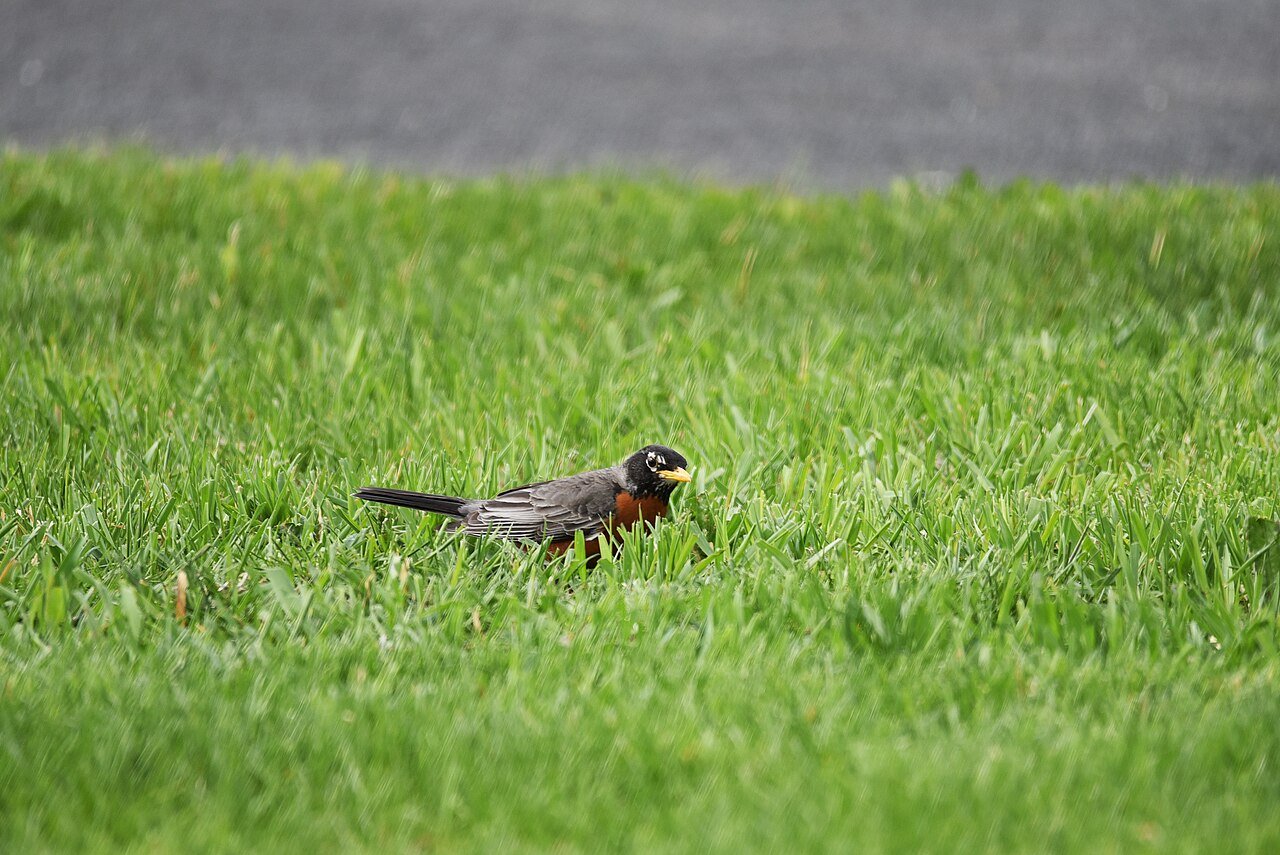
American robin
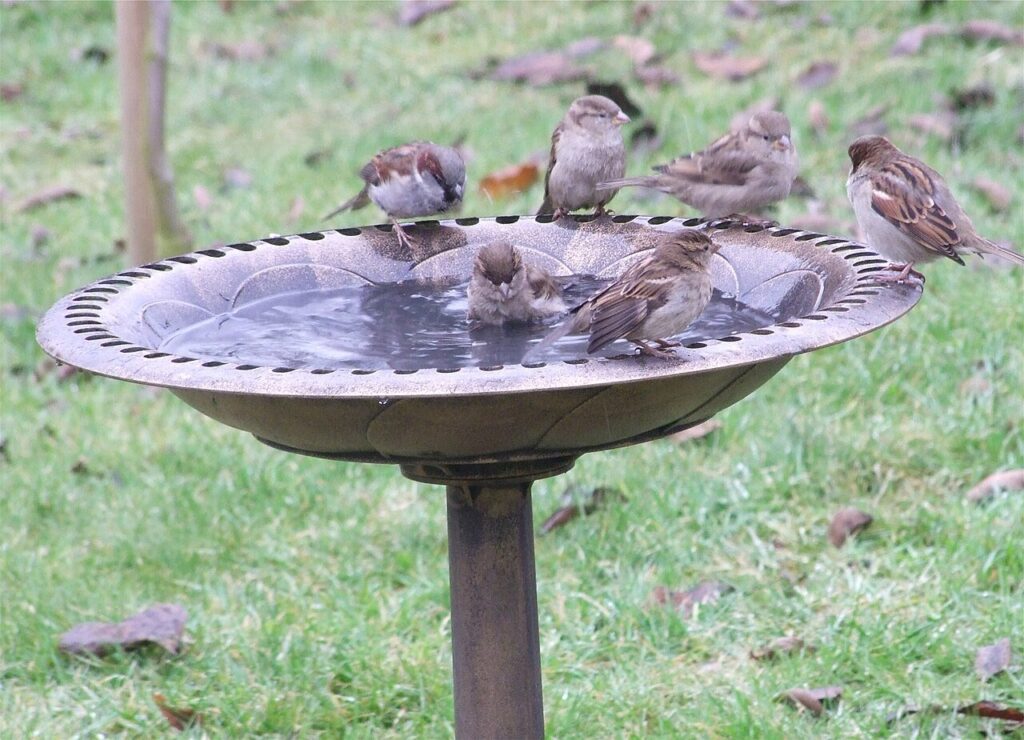
Spring: the famous “first robin” is often a bird that spent the winter a mile away in a berry thicket. Males arrive on lawns in March, singing before dawn, and pairs build mud-and-grass nests on ledges, in crotches, and on porch lights by April. Summer: two or three broods, worms and caterpillars for the young, and a lawn covered in spotted-breasted juveniles by July. Fall: they leave the lawn, switch to fruit, and gather in flocks that can number in the hundreds. Winter: most stay in the U.S., in loose flocks in holly, crabapple and juniper. They ignore seed feeders all year; a bird bath and a fruiting tree are what bring them.
Northern cardinal
Spring: the male sings from February, the female sings too (rare among songbirds), and the pair nests low in dense shrubs from March, three or four broods a year in the South. Summer: the male feeds the fledglings while the female starts the next nest; the young are brown with dark bills. Fall: molt, then flocks of a dozen or more at feeders at dusk. Winter: the same pair at the feeder every dawn and dusk, all winter, as they’ve been for years; cardinals don’t migrate and mated pairs often stay together for life. Sunflower and safflower, on a tray or hopper rather than a tube. Not present in the Northwest or most of the mountain West.
Chickadee
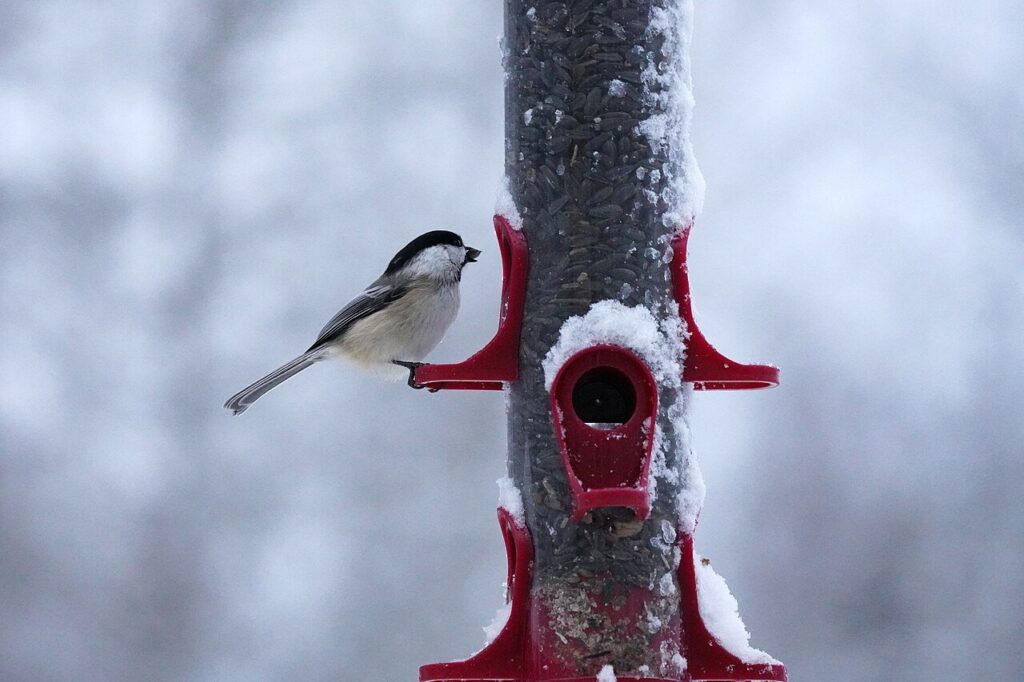
Black-capped in the North and West, Carolina in the Southeast; the same behavior. Spring: the winter flock breaks up into pairs that excavate a nest in rotten wood or take a nest box with a 1-1/8 inch hole. Summer: one brood of six to eight, fed thousands of caterpillars; the parents mostly ignore the feeder. Fall: chickadees cache food, hiding one seed at a time in bark and remembering each spot; their hippocampus actually grows in autumn to hold the map. Winter: the flock re-forms, leads the mixed flock of titmice, nuthatches and kinglets through the woods, and is the first bird at any new feeder. Sunflower and suet.
American goldfinch
Spring: the males molt from olive-brown to bright yellow in April, one of the few songbirds that changes color twice a year. Still in flocks. Summer: the late nester; see our finch nesting guide. Nyjer feeders are busiest in July and August. Fall: streaky juveniles at the feeder, then the molt back to brown, and people think the goldfinches left. Winter: still here, in the same flocks, brown, at the nyjer feeder. Northern birds shift south a few hundred miles; Southern yards get more in winter than summer.
Blue jay
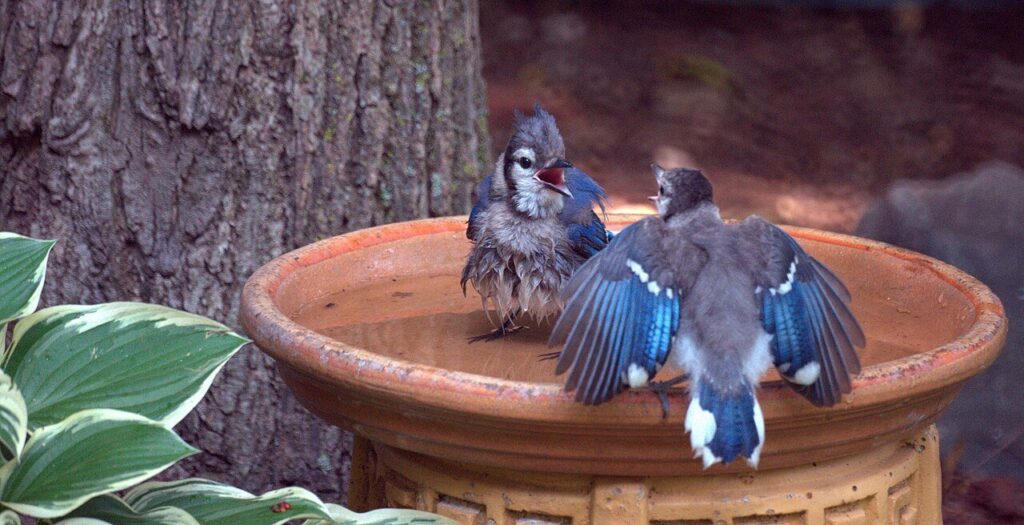
Spring: quiet, secretive nesting in April and May, so quiet you’d think they’d left. Summer: family groups of screaming juveniles, and the jays’ real job: they plant oaks, carrying acorns a mile and burying more than they recover. Fall: the loud season. Jays gather peanuts and acorns by the hundred, and some (not all, and nobody knows why) migrate in loose flocks along the coasts and lakeshores. Winter: the alarm system of the yard; the jay’s hawk scream sends every other bird for cover, and the jay sometimes fakes it to clear the feeder. Peanuts in the shell and sunflower on a tray. West of the Plains, the Steller’s and scrub-jays fill the same role.
The year at a glance
| Spring | Summer | Fall | Winter | |
|---|---|---|---|---|
| Robin | Lawn, dawn song, first nest | 2–3 broods, spotted young | Fruit, flocks | Berry thickets; bath, not feeder |
| Cardinal | Both sexes sing; low nest | Serial broods | Flocks at dusk | Same pair, every dawn |
| Chickadee | Pairs, nest box | One big brood, caterpillars | Caching seed | Leads the winter flock |
| Goldfinch | Turns yellow | Nests late; nyjer peak | Turns brown | Still here, brown |
| Blue jay | Silent nesting | Family groups; plants oaks | Loud; some migrate | Alarm system |
Seasonal routines are only part of the picture. Our guide to 10 backyard bird behaviors explains more of what you will see in the yard, including the broken-wing act.
What it means for the feeder
Sunflower all year, suet and peanuts from October to March, nyjer from March to October, and a bird bath always. Fill less in summer, more in winter, and don’t take the feeder down in May because “the birds left”; the chickadees and cardinals are nesting fifty feet away and will be back with the kids in June. The full schedule is in our seed-by-season guide, and the winter birds by region guide has the rest of the winter cast for your part of the country.
Related: The best bird seed for each season · Winter backyard birds by region · Identifying birds by song
For the odder things these birds do, see 10 backyard bird behaviors explained.