A smart bird feeder is a regular feeder with a camera in it. The camera wakes up when a bird lands, records a short clip, and sends it to your phone with the app’s best guess at the species. That is the whole product. Everything else, the solar roofs, the AI accuracy, the subscription fees, the squirrel problem, is what separates a feeder you’ll still be using in March from one that ends up in the garage.
We compared the seven feeders below on the things that actually matter after the first week: how sharp the clips are, whether the species ID is right often enough to trust, what the company charges after you’ve bought the hardware, and how long the battery lasts once the sun goes low in November.
Spark Lark is reader-supported. As an Amazon Associate we earn from qualifying purchases made through links on this page, at no extra cost to you.
The short version
- Best overall: Bird Buddy Pro Solar. The best app, the best-looking clips, and the free tier is generous.
- Best value: Netvue Birdfy Feeder AI. Lifetime AI identification included, wider perch, three-month battery.
- Best for serious watchers: Birdfy Feeder 2 Duo. Two cameras, three views, no subscription for AI.
- Best under $100: Harymor Smart Feeder. Three solar panels, 2K video, the biggest owner community on Amazon.
- Cheapest that works: Soliom BF08. 2K, solar, metal housing.
- Sharpest video: Kiwibit 4K Solar Feeder. 4K HDR video and 8MP stills, solar roof; species ID is a paid subscription after the free trial.
- If you already own a Wyze, Blink or Ring cam: Wasserstein Feeder Case. No AI, but you’re not buying a second camera.
What to look at before you buy
The subscription. This is the number the box doesn’t print. Every one of these feeders works without a monthly plan, but what “works” means varies. Birdfy’s Feeder AI and Feeder 2 include species identification for life. Bird Buddy gives you photos, video, live stream and manual AI on the free tier, and puts automatic identification, 2K “Ultra” clips and the returning-visitor tracking behind a Premium plan (check the app for the current price; it has changed twice since launch). The budget brands mostly charge for cloud storage rather than for ID. Decide before you buy whether you’ll pay monthly, because the feeder that’s cheapest on day one isn’t always cheapest in year two.
Solar or not. A feeder camera fires dozens of times a day in a busy yard. Without solar you’re pulling the battery every one to three weeks and charging it indoors, which in January means a feeder that’s dark for a day. Every pick below except the Wasserstein case has solar built in or included; the Bird Buddy’s solar roof is what the “Pro Solar” bundle adds.
AI accuracy. None of them are perfect. All of them nail cardinals, blue jays and chickadees. The cheap ones fall apart on the lookalikes: house finch versus purple finch, downy versus hairy woodpecker, the sparrows. Bird Buddy and Birdfy are the two that get the hard ones right often enough that you stop checking. If a feeder suggests a bird that doesn’t live in your state, that’s the AI, not a rarity.
Squirrels. A smart feeder is an expensive plastic box full of sunflower seed, hung where a squirrel can reach it. Mount it on a pole with a baffle from the start, the same way you’d protect any feeder. Our guide to keeping squirrels off feeders covers the setup; the short version is a pole, a baffle below it, and ten feet of clearance from anything a squirrel can jump from.
Wi-Fi. They all need 2.4 GHz Wi-Fi and they all need it at the feeder, not at the router. If your phone drops to one bar in the spot you’re planning to hang it, buy a range extender first or pick a spot closer to the house. Wi-Fi is the most common complaint about every product on this page.
The seven, in detail
1. Bird Buddy Pro Solar — best overall
2K video, 5MP photos · solar roof
Bird Buddy is the feeder that made this category, and the Pro version fixed the original’s two complaints: the camera is now 2K with HDR and a bigger sensor, so dawn clips aren’t mud, and the focus range is wider so birds on the edge of the perch stay sharp. The app is the best of the group by a wide margin: clips arrive as “postcards,” the species page tells you what the bird eats and where it winters, and the community feed is a rabbit hole. The free tier covers photos, video, the live stream and manual identification; Premium adds automatic AI, the 2K Ultra setting and “Name That Bird,” which tracks individual returning visitors.
Downside: the perch is narrow, so a bird that hops into the tray or onto the side is out of frame, and you’ll notice that the Birdfy catches more group scenes. It’s also the only feeder here where the best features cost extra every month.
2. Netvue Birdfy Feeder AI — best value
1080p (2K switchable) · solar panel included
The Birdfy is the one we’d hand to most people. The perch is wide enough for two birds at once, the 5,200 mAh battery runs about three months between charges even before you plug in the included solar panel, it stores clips on a microSD card as well as in the cloud, and the AI identification (6,000 species) is included for life. The mounting kit covers a pole, a strap around a tree, and a wall bracket, and it ships with a baffle. Picture quality is a half-step behind the Bird Buddy Pro, with some color fringing at the edges, but it’s plenty for a phone screen.
Downside: the Wi-Fi antenna is a thin stalk that owners break during setup, and the AI confuses the finches. Cloud storage beyond the free clip length is a small monthly fee.
3. Birdfy Feeder 2 Duo — best for serious watchers
2K + 1080p, three views · solar + 9,000 mAh
The Feeder 2 Duo is what you buy when a single fixed camera stops being enough. A second side camera gives a profile view and a wide shot, the main camera tracks the bird across the perch, and the app stitches them into one clip. The battery is nearly twice the size of the Feeder AI’s, the solar panel is built into the roof, and the AI is again free forever. It won a CES Innovation Award in 2025 and it earns it; the behavior clips, birds squabbling, feeding fledglings, caching seed, are the best on this list.
Downside: it’s the most expensive feeder here, and it has a short track record, so long-term durability is an open question. For a first smart feeder, buy the Feeder AI and upgrade if you get hooked.
4. Harymor Smart Bird Feeder — best under $100
2K · three solar panels + 5,200 mAh
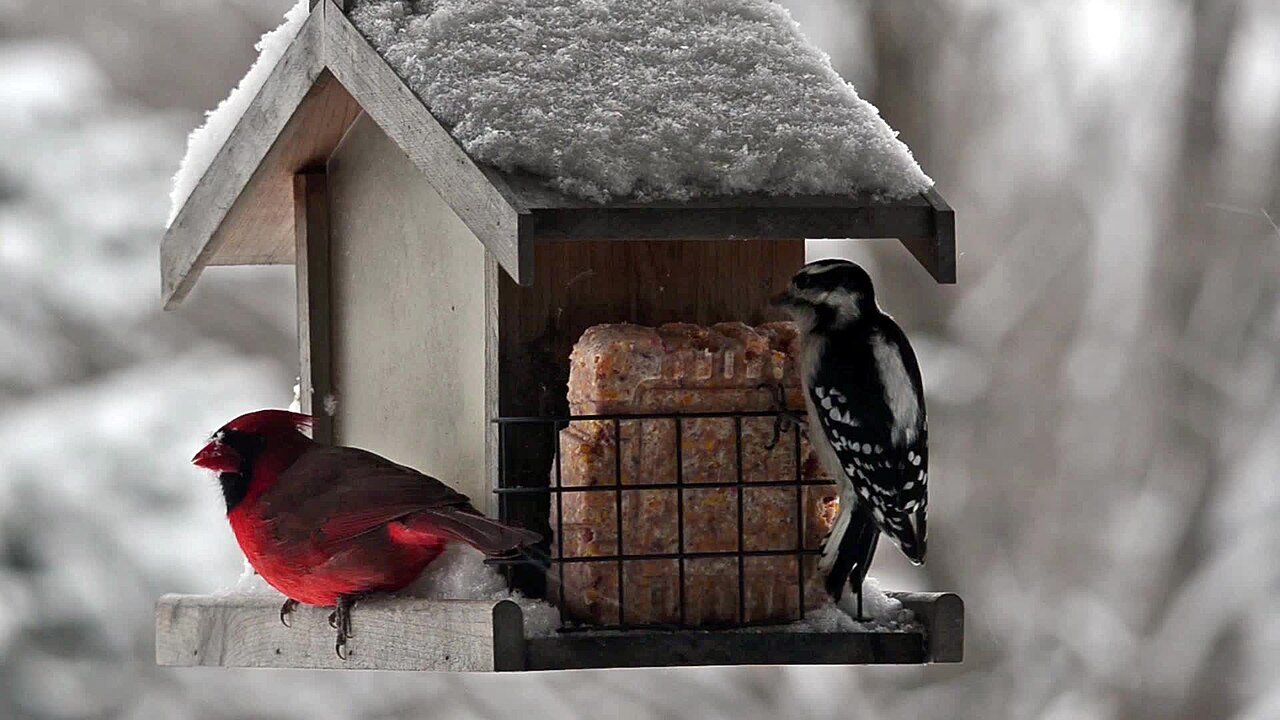
The Harymor shows how much a budget smart feeder can do now. Three small solar panels on the roof keep the battery topped up in anything short of a Seattle winter, the 2-liter hopper holds a week of sunflower, and the 2K clips are crisp in daylight. It’s the feeder to buy for a kid, a grandparent, or a first try at the category.
Downside: the AI (10,000 species, it claims) is the weakest of the group and will suggest birds from other continents; treat it as a hint and confirm with a field guide. It’s pole-mount only, and the app sends false “person detected” alerts.
5. Soliom BF08 — cheapest that works
2K · solar panel
The Soliom costs less than a good pair of the plain tube feeders it replaces. The housing is metal, which is rare at any price and matters when a squirrel gets to it, the 2.7-liter hopper is the largest here, and the picture is clear in low light. It’s a gift-set product, complete with the solar panel and mounting hardware in the box.
Downside: the app is basic, the mounting instructions are poor, and cloud storage and species recognition are extras. You get exactly what you pay for, but it costs little.
6. Kiwibit 4K Solar Feeder — sharpest video
4K · solar roof
This is the highest-resolution camera on the list: 4K HDR video and 8MP stills through a 132° wide-angle lens, enough to crop a clip and still see feather detail. It has a solar roof, infrared night vision and two-way audio, and a perch extender for larger birds.
Downside: species ID needs a Kiwibit Premium subscription once the 30-day free trial ends, so budget for that on top of the hardware. It is also one of the pricier feeders here.
7. Wasserstein Bird Feeder Camera Case — for Wyze, Blink and Ring owners
uses your own camera
If there’s already a Wyze, Blink or Ring camera in a drawer, this is an inexpensive feeder housing that holds it a few inches from the perch. You get the clips through the app you already use, no new subscription, no new battery to manage. There’s no bird-specific AI, but the free Merlin app from Cornell will identify a screenshot in a few seconds.
Downside: the plastic is thinner than the dedicated feeders, raccoons and squirrels chew it, and a security camera’s motion detection isn’t tuned for a chickadee. It’s the right answer only if the camera is already paid for.
Side by side
| Feeder | Video | Power | AI species ID |
|---|---|---|---|
| Bird Buddy Pro Solar | 2K HDR, 5MP photos | Solar roof | Manual free; auto with Premium |
| Birdfy Feeder AI | 1080p / 2K | Solar panel + 5,200 mAh | Free for life |
| Birdfy Feeder 2 Duo | 2K + 1080p, 3 views | Solar roof + 9,000 mAh | Free for life |
| Harymor | 2K | 3 solar panels + 5,200 mAh | Included, weak |
| Soliom BF08 | 2K | Solar panel | Extra |
| Kiwibit 4K | 4K | Solar roof | Subscription after 30-day trial |
| Wasserstein case | Your camera | Your camera | None (use Merlin) |
Setting it up so birds actually come
A camera doesn’t attract birds; seed and placement do. Give a new feeder two to three weeks before judging it, and put it where birds already are, near a shrub or tree they can retreat to, rather than in the middle of the lawn where the view is best. Fill it with black-oil sunflower, not a bargain mix. If nothing shows up in a month, the problem is the yard, not the feeder, and our basics guide is the place to start.
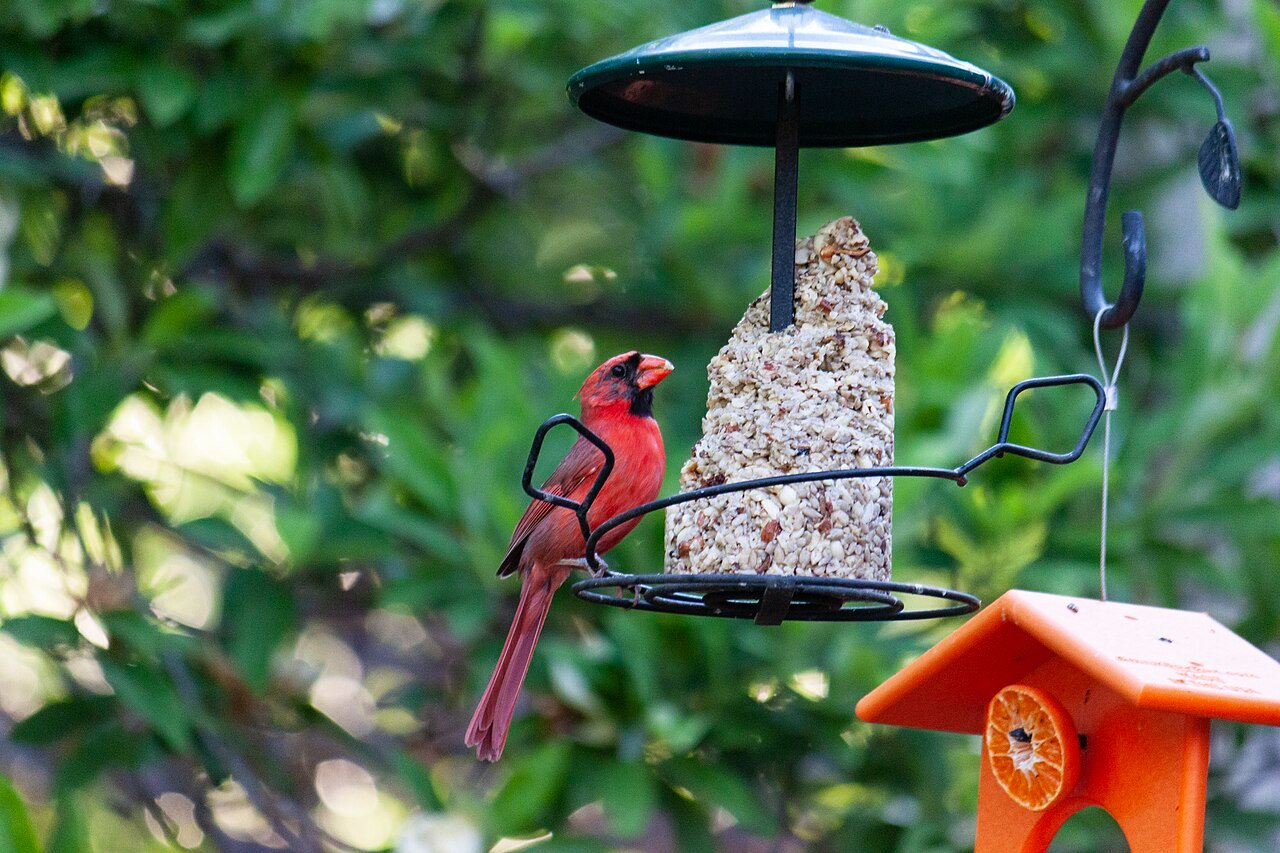
Clean the camera lens when you refill; seed dust and pollen fog it within a couple of weeks. Scrub the whole feeder every two weeks in warm weather, the same as any feeder, because a camera feeder concentrates birds at one spot and disease with them. And turn notifications down on day two. Every owner of every feeder on this list says the same thing: the first day is magic, and by the third day your phone is buzzing forty times before lunch.
A smart feeder is the top of our gifts for bird lovers list; that guide has options at every budget.
Bottom line
Most people should buy the Birdfy Feeder AI: it does everything the category promises with nothing to pay afterward. If the app experience and the sharpest clips matter more than the money, the Bird Buddy Pro Solar is the nicer object to live with. Under $100, the Harymor is the safe choice. And if you’re not sure the household will stay interested, the budget Soliom answers that question cheaply.
Related: The best bird cameras · The best window bird feeders · Winter backyard birds by region · Getting kids into birdwatching