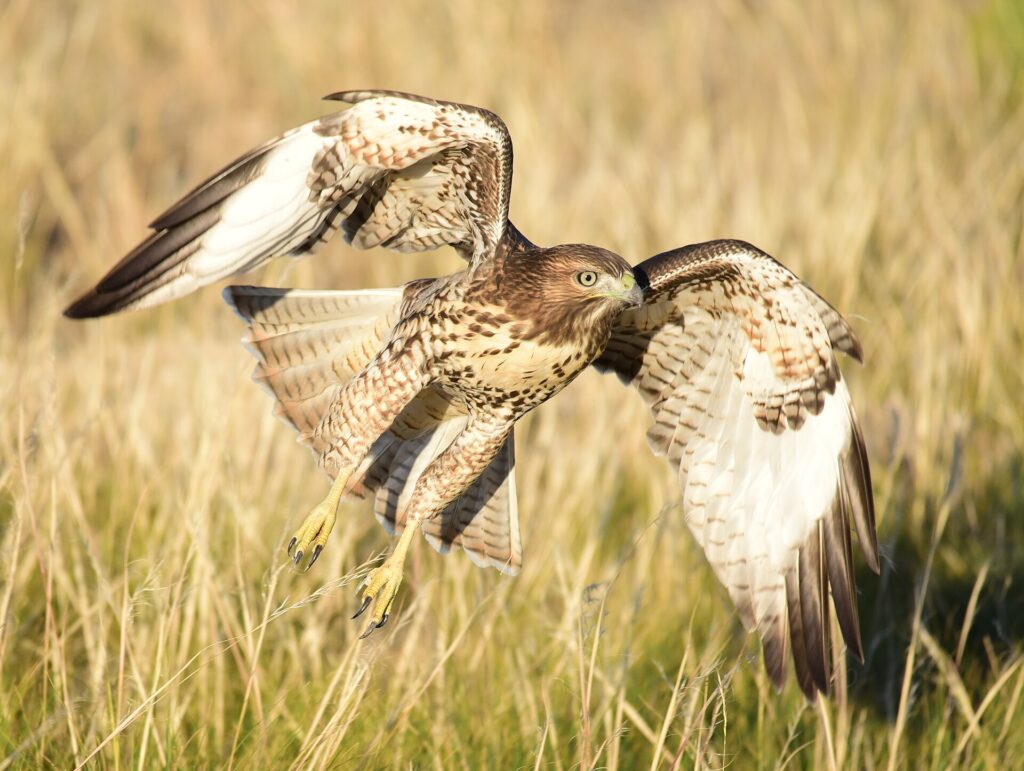
Hawks are not dangerous to people in any meaningful way. They don’t hunt humans, they avoid us almost all the time, and the rare hawk “attack” is a parent bird swooping at someone who got too close to its nest in spring. At worst that means a scare and a scratch on the scalp. Small pets and backyard chickens are a different story: a hawk can and sometimes will take a chicken, a rabbit or a very small unattended pet. Here’s what’s actually risky, what isn’t, and how to keep people, pets and hawks safe.
The short version
- To adults and kids: very low risk. Hawks don’t see people as prey.
- The one exception: nest defense in spring and early summer, when some hawks dive at people who walk under the nest tree. Injuries, when they happen at all, are minor.
- To pets: a real but limited risk for very small animals left outside alone. Most hawks can’t carry off anything close to their own weight.
- To chickens: the biggest real risk. Cooper’s and red-tailed hawks do take poultry.
- The law: all native hawks are federally protected. You can’t harm them or move their nests without a permit.
Do hawks attack people?
Almost never, and when they do it’s defense, not hunting. Hawks are built to catch rodents, rabbits, snakes and birds, and even the biggest common hawk, the red-tailed, weighs only about two to three and a half pounds. A person is far too large to register as food.
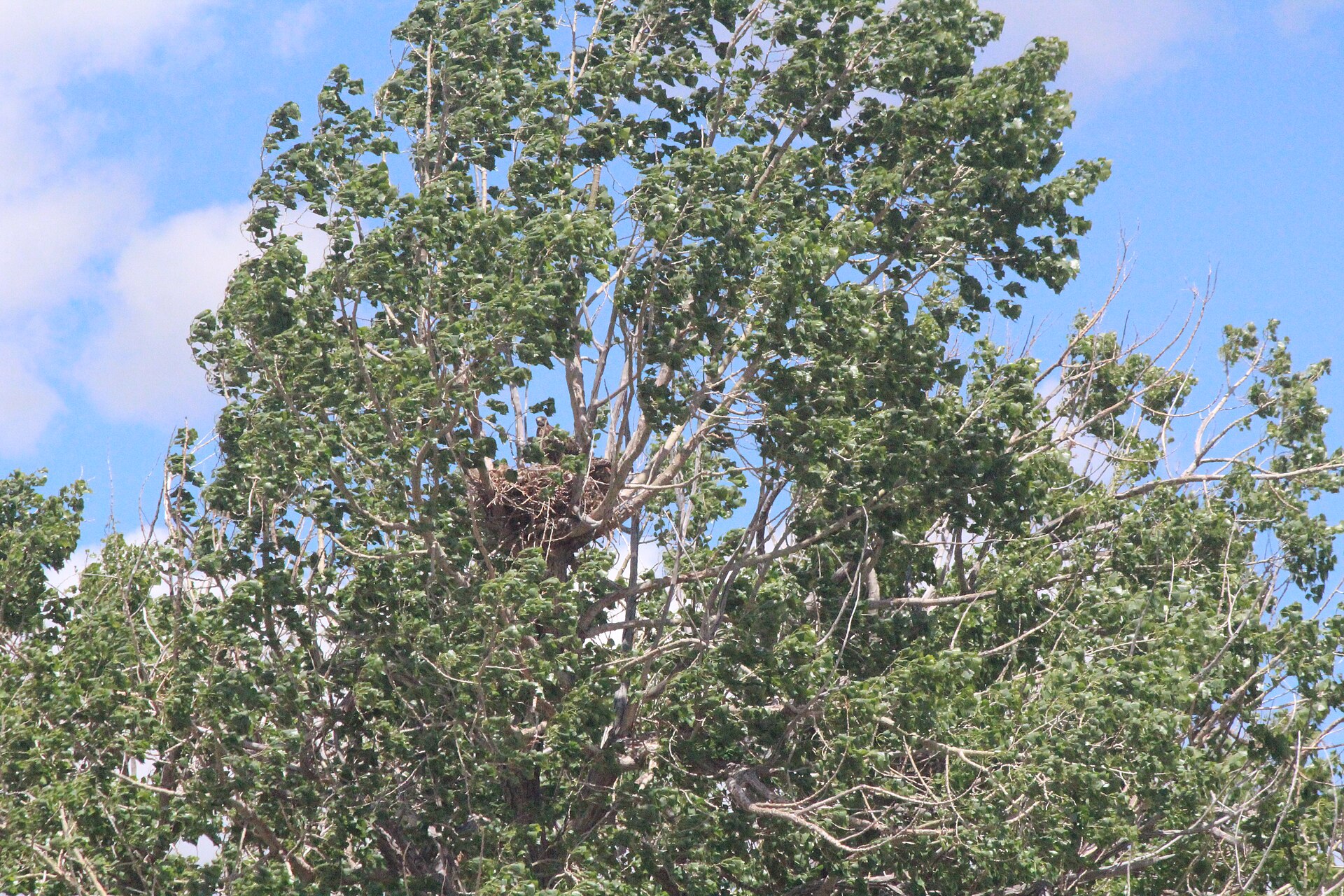
The encounters that make the local news follow a pattern. It’s spring or early summer, a pair of hawks is raising young in a tree over a sidewalk, park path, school yard or backyard, and one of the parents starts diving at people who walk underneath. Most dives are bluffs that pull up short. Occasionally a hawk makes contact with its feet, usually striking the back of the head, which can knock off a hat or leave a scratch. Red-tailed, red-shouldered, Cooper’s and Harris’s hawks all do this, and the northern goshawk of northern and mountain forests is famous for especially fierce nest defense.
The behavior ends as soon as the young leave the nest, usually within a few weeks. The same hawk that dove at you in May will ignore you in August.
How to stay safe near a hawk nest
- Take a different route for a few weeks. This is the simplest and most effective fix.
- If you must pass by, wear a hat or carry an open umbrella, and don’t linger under the tree.
- Face the hawk. Hawks usually dive from behind, so walking while watching the bird tends to discourage it.
- Don’t throw things at it or climb toward the nest. It only makes the parent more defensive, and harassing a nest is illegal.
- If you get scratched, clean it with soap and water like any other scratch, and see a doctor if it looks infected.
- Tell others. Schools, parks and HOAs often post a temporary sign or rope off the area until the young fledge.
Are hawks dangerous to dogs and cats?
For most pets, no. The weight math is on your side: a hawk generally can’t lift and carry off prey anywhere near its own two-to-three-pound weight, so a healthy adult cat or a medium or large dog is not realistic prey. The risk is to very small animals, like toy-breed puppies, tiny dogs, kittens and small caged pets, left alone outside in the open. A hawk may attack an animal it can’t carry and try to eat it on the ground, which is why small pets shouldn’t be left unsupervised in an open yard.
Keep it in proportion: coyotes, cars and, at night, great horned owls are all bigger threats to small pets than daytime hawks. Simple precautions cover most of the risk: stay outside with very small dogs, use a covered pen for rabbits and guinea pigs, and keep cats indoors, which also protects songbirds.
Are hawks dangerous to chickens?
Yes. This is where hawks cause real losses. Red-tailed hawks take free-ranging hens, and Cooper’s hawks, which specialize in bird prey, will take smaller birds and young chickens. The fix is physical: a run covered on top with wire or netting, shrubs or a covered shelter the flock can dash under, and keeping small birds in when a hawk has been hanging around. A rooster that sounds the alarm helps too.
Can I get rid of a hawk?
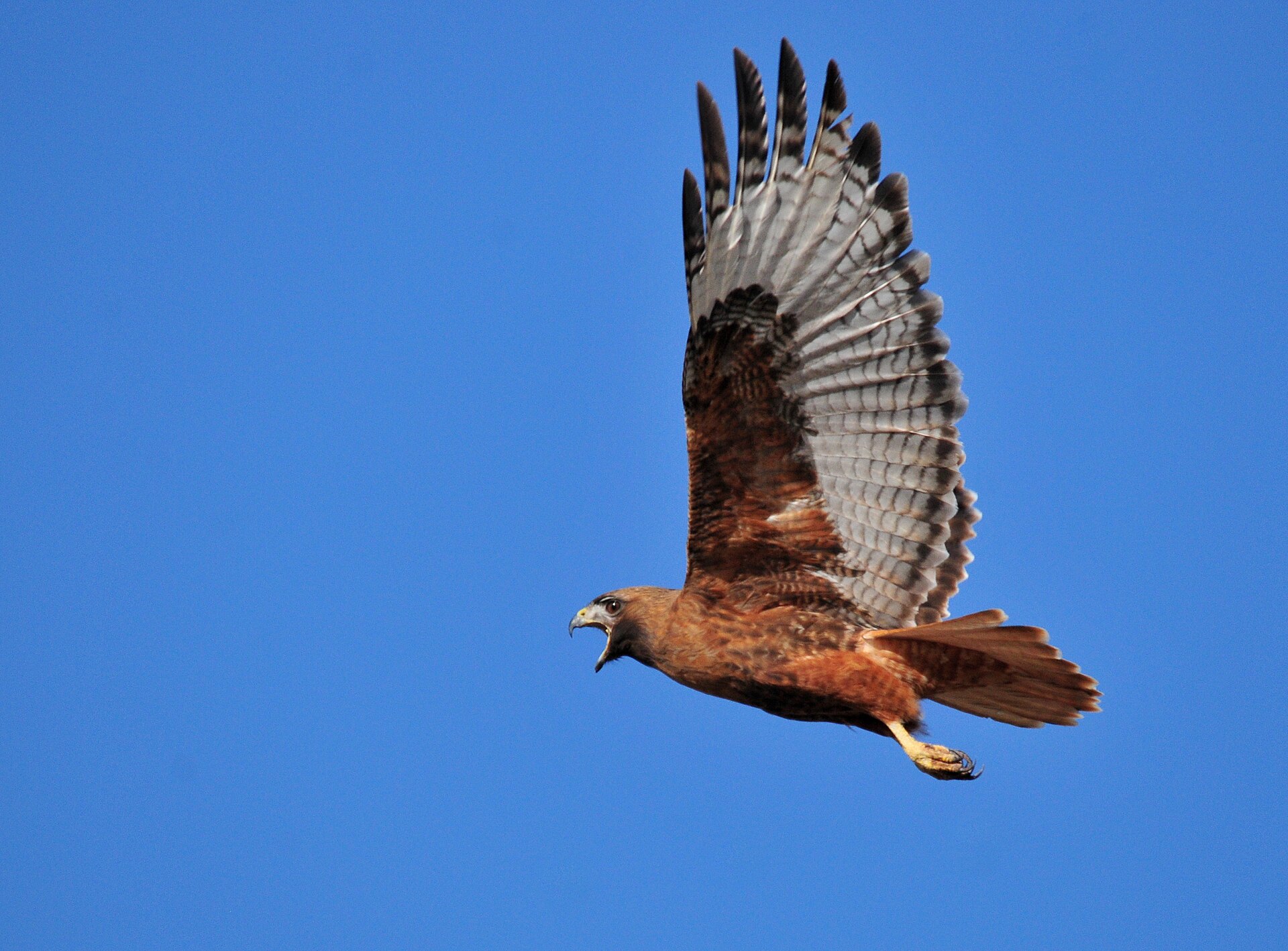
Not by harming it. All native hawks are protected under the federal Migratory Bird Treaty Act, which makes it illegal to kill, trap, or possess them, or to disturb an active nest, without a federal permit. What you can do is make your yard less appealing:
- Cover poultry runs and pet enclosures.
- If a Cooper’s or sharp-shinned hawk is hunting at your bird feeders, take the feeders down for a week or two. It will move on.
- Put feeders within a few feet of dense shrubs so songbirds have cover to escape to.
- For a truly problem nest, such as one over a school entrance, contact your state wildlife agency or the U.S. Fish and Wildlife Service rather than acting on your own.
It also helps to know the upside of having hawks around: a pair of red-tails eats a lot of mice, rats, voles and gophers, which is free pest control. For how feeder birds deal with hawks, see our article on how birds outsmart predators. And if you’ve been hearing hawks scream, here’s why hawks screech, including the nest-defense calls that often come right before a dive.
Quick answers
Can a hawk pick up a small dog? Very unlikely unless the dog is tiny. Most hawks can’t carry prey near their own two-to-three-pound weight. A hawk can still injure a very small animal on the ground, so supervise tiny dogs outdoors.
Will a hawk attack a child? Only in the same nest-defense way it might swoop at an adult, and serious injuries are extremely rare. Steer kids away from a nest tree in spring and early summer.
Do hawks carry diseases people can catch? The risk is very low since people rarely touch hawks. If you find an injured hawk, don’t handle it. Call a licensed wildlife rehabilitator. Those talons and hooked bill can do real damage to a hand.
Bottom line
Hawks aren’t dangerous to people. The only real encounters are brief, springtime nest defense, and a hat, an umbrella or a different route solves them. The genuine risks are to chickens and very small pets left alone outdoors, and covered runs and supervision take care of those. Everything else about a hawk in the neighborhood is good news, especially for your rodent problem.