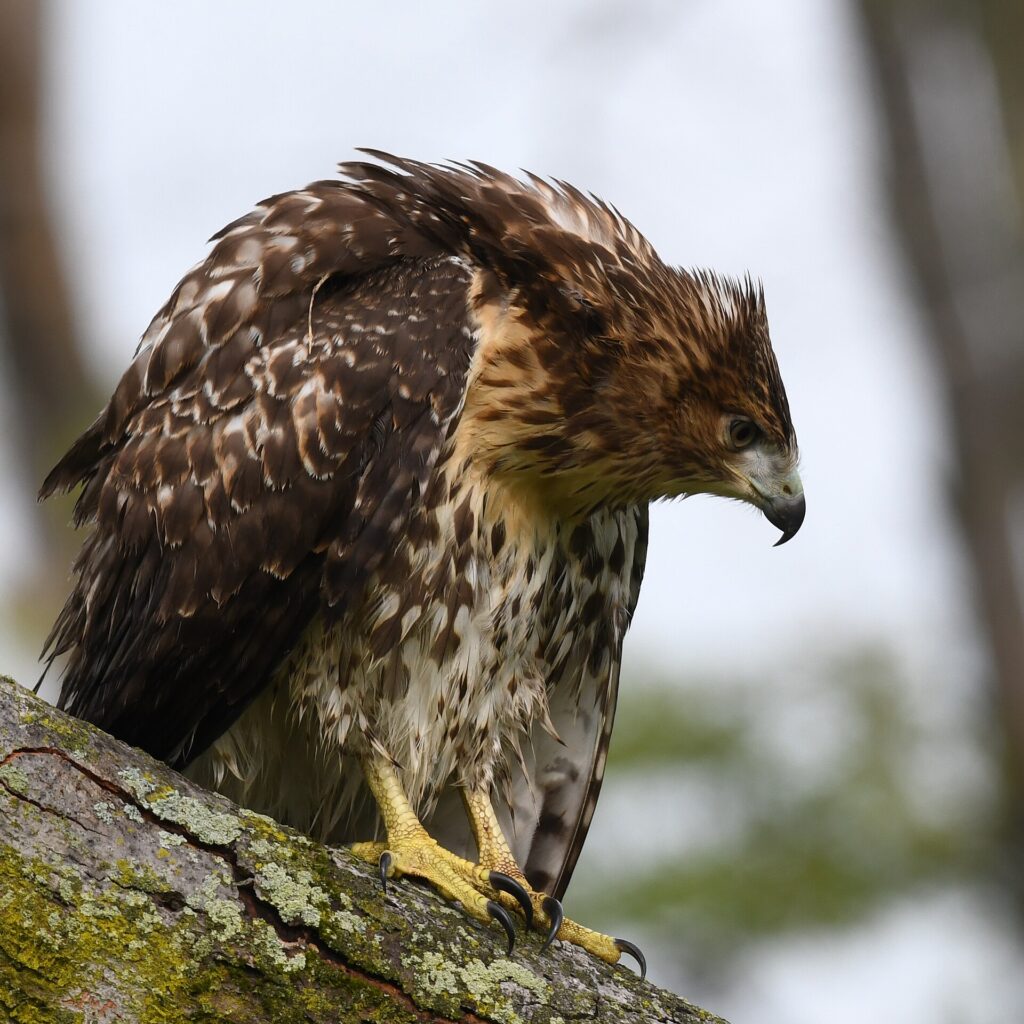
Hawks screech to say “this is mine”: to warn intruders away from a territory or nest, to call to a mate, and, in summer, because a hungry young hawk is begging its parents for food. The long, hoarse scream you hear overhead is almost always a red-tailed hawk, the most common hawk in North America. It’s the same sound Hollywood dubs over bald eagles, because the eagle’s real call is a surprisingly weak, chirpy whistle. Here’s what each kind of screech means, when hawks are loudest, and how to tell which hawk you’re hearing.
The short version
- Territory: a hawk screams to tell other hawks, and anything else big, to stay out of its space. This is the most common reason.
- Nest defense: a hawk circling and screaming over you in spring usually has a nest nearby. Move on and it will stop.
- Courtship and pair contact: mated pairs call to each other during display flights in late winter and spring.
- Begging: in July and August, young hawks that have left the nest scream for food for hours at a time. It’s the most persistent screeching of the year.
- Not usually when hunting: hawks that hunt feeder birds are silent when they attack. A screaming hawk is announcing itself, not sneaking up on anything.
The five reasons hawks screech
1. Claiming territory. Red-tailed hawks hold the same territory year after year, and a pair will defend it against other red-tails and bigger raptors like eagles. The scream is a long-distance “occupied” sign. It carries a long way over open country, so a hawk can warn off a rival without a fight. You’ll often hear it from a hawk soaring in wide circles high overhead, which is itself a display: the hawk is making sure it’s seen.
2. Defending the nest. From roughly March through June, a hawk that screams repeatedly while circling low over you, a dog, or a cat is telling you that you’re too close to its nest or young. Red-shouldered and Cooper’s hawks are especially vocal about this. Some will swoop, but most just circle and call until you leave. The fix is simple: keep walking, and give the tree a wide berth for a few weeks.
3. Courtship and keeping in touch. In late winter and early spring, paired hawks soar together, call, and put on dramatic dives. The male may drop steeply and climb back up in a “sky dance,” and the pair may lock talons briefly. The calls during all of this keep the pair in contact and advertise that the territory is held by two birds, not one.
4. Begging for food. This is the one that drives people crazy. Young red-tailed and red-shouldered hawks leave the nest in early summer but depend on their parents for weeks afterward, and they beg loudly and constantly. The call is a higher, whinier, more repetitive version of the adult scream. If a hawk has been screeching from the same trees all afternoon in July or August, it’s almost certainly a juvenile waiting to be fed. It fades by late summer as the young learn to hunt.
5. Being mobbed or warning of danger. Crows, ravens, blue jays and even small songbirds will gang up on a perched hawk to drive it off. A hawk being harassed will sometimes scream back. Hawks also call when a larger raptor, like an eagle or great horned owl, comes into view.
Which hawk are you hearing?
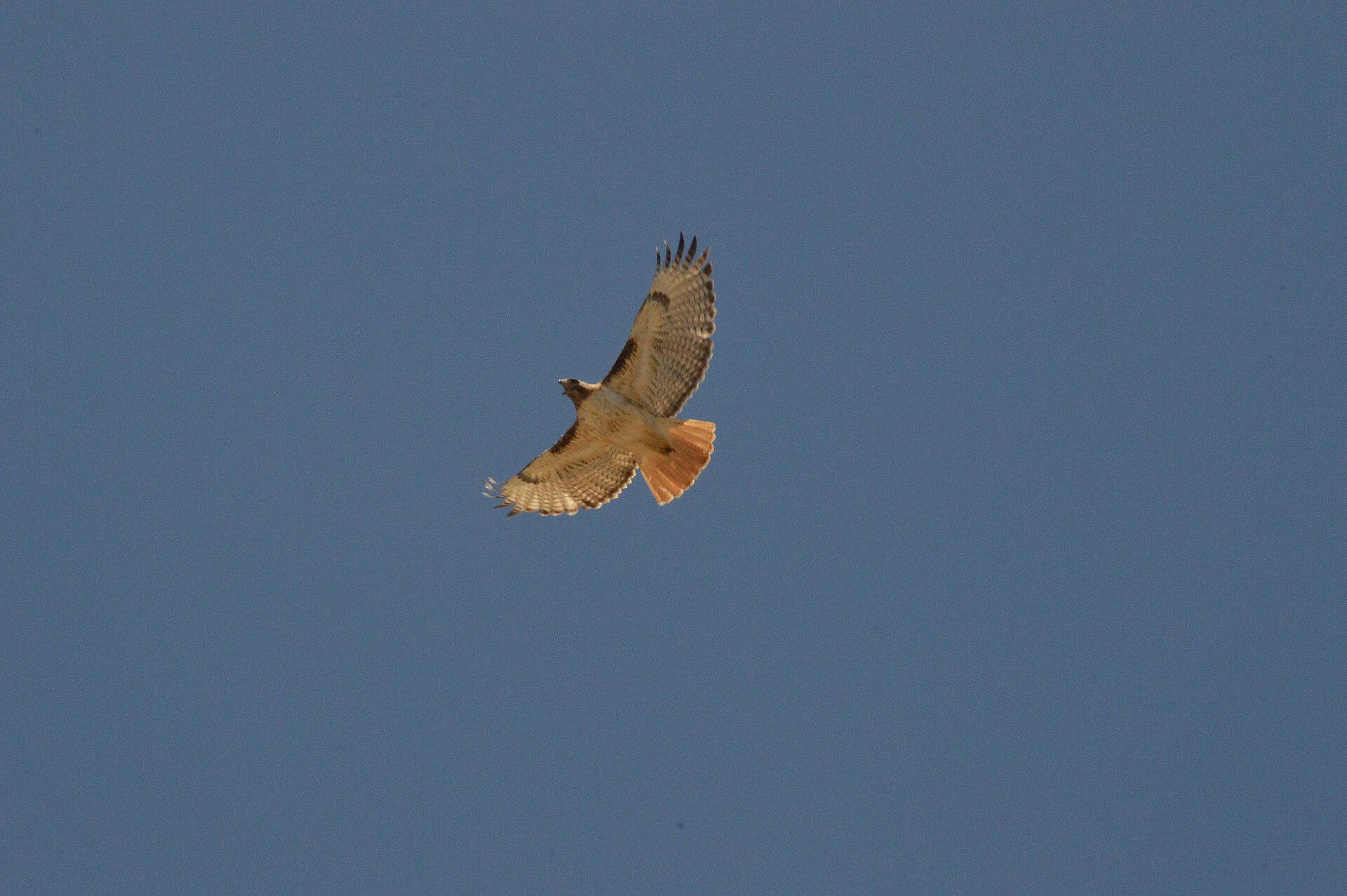
Red-tailed hawk: the classic scream. A hoarse, raspy, descending “keee-eeee-arrr” lasting two or three seconds, usually from a bird soaring high or perched on a pole, tree or highway light. It’s the scream in every Western movie and car commercial. Red-tails are big and bulky, pale below with a dark band across the belly, and adults have a brick-red tail. They live in every state and are common along highways and open country year-round.
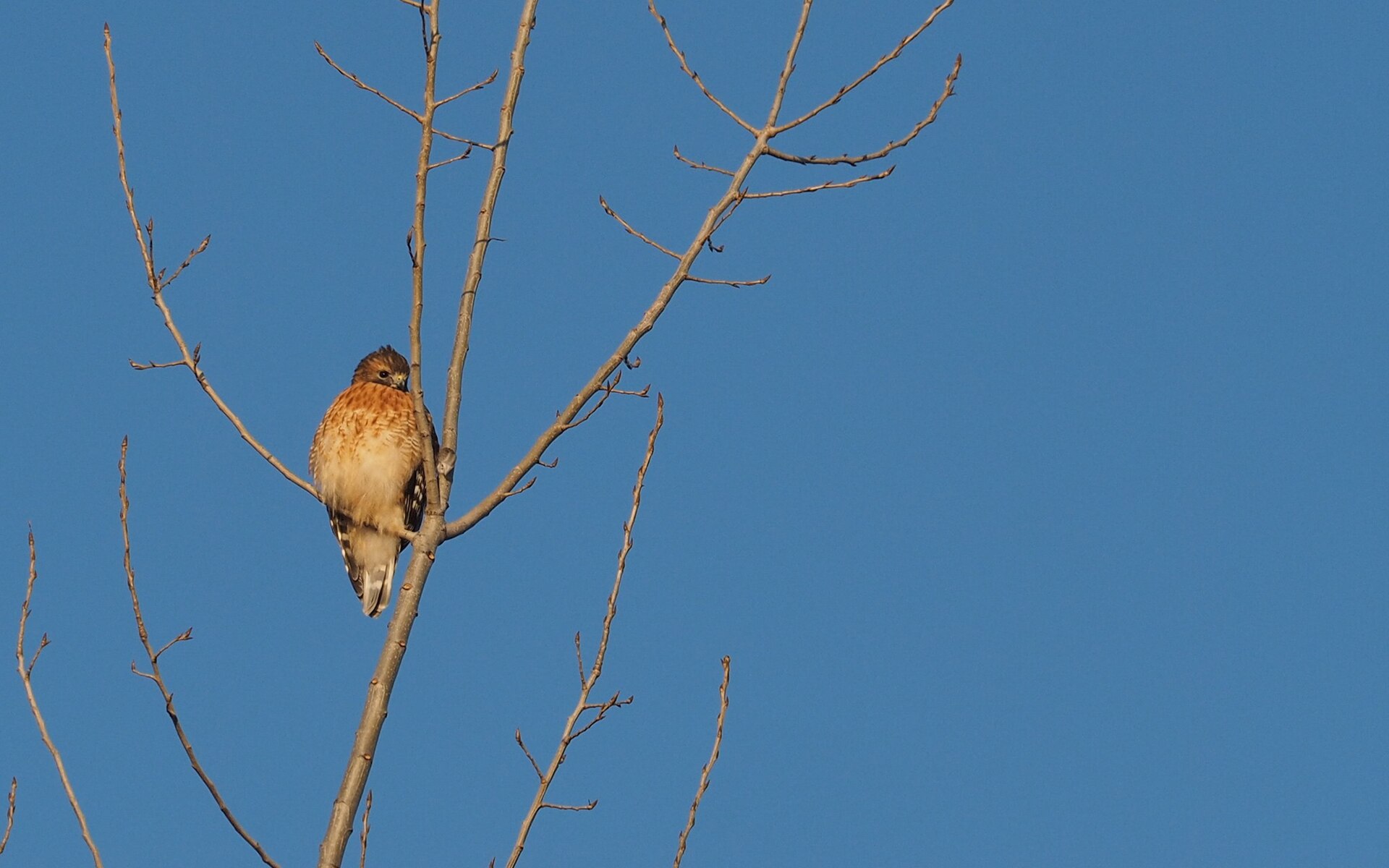
Red-shouldered hawk: the repeated “kee-aah.” A loud, clear “kee-aah, kee-aah, kee-aah” repeated five to ten times or more. This is the noisiest hawk in wooded suburbs and along rivers in the East, the Midwest, Florida and California, and it’s often what people mean when they say a hawk “won’t stop screaming.” Adults have rusty-barred chests and black-and-white checkered wings.
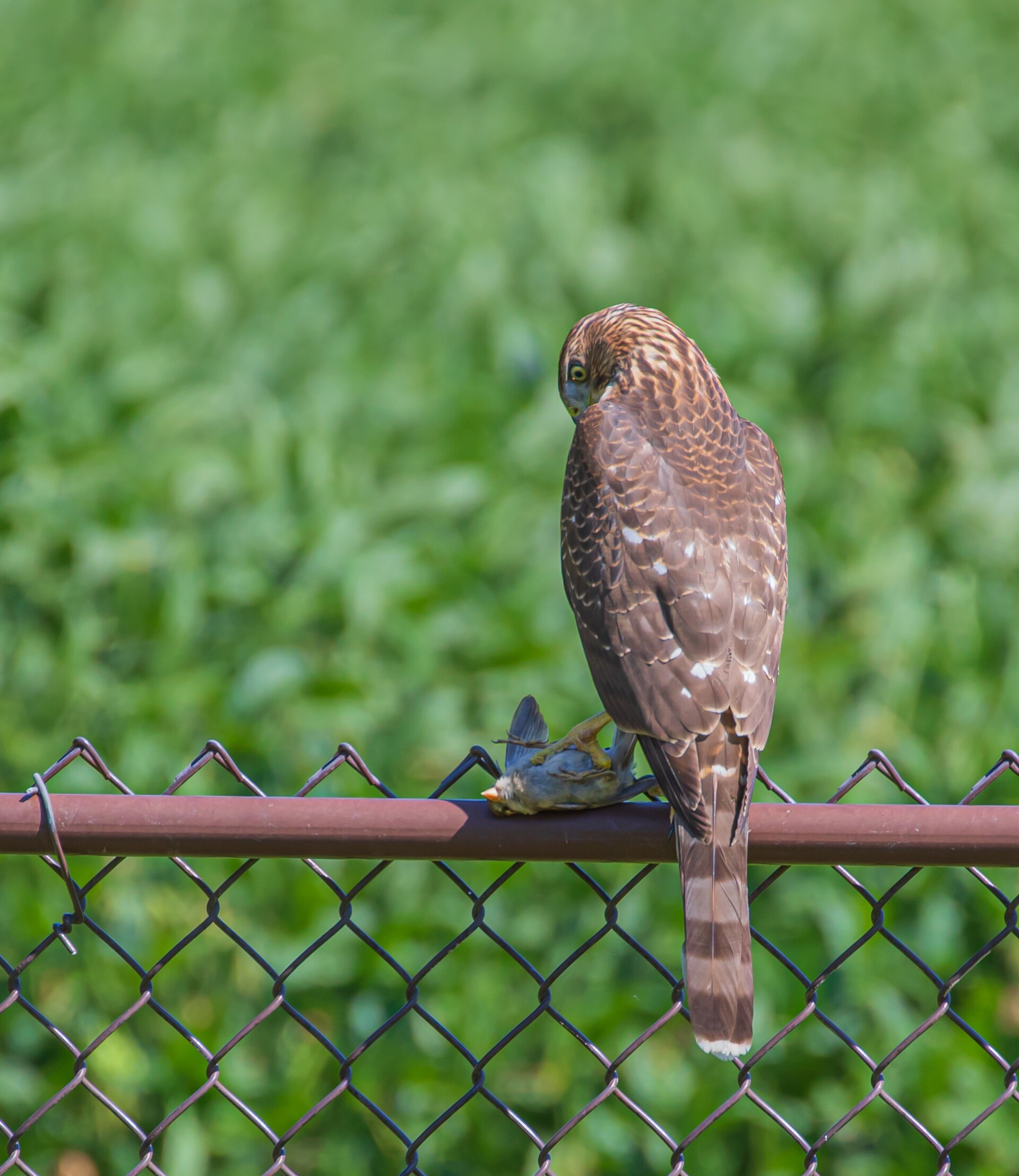
Cooper’s hawk: a harsh “cak-cak-cak.” A rapid, chattering series, mostly heard near the nest in spring. This is the crow-sized hawk that hunts songbirds and doves at backyard feeders, and it hunts in silence. If you hear cackling in the woods in May, there’s probably a Cooper’s hawk nest nearby. The sharp-shinned hawk, a smaller look-alike, gives a thinner, higher “kik-kik-kik.”
Broad-winged hawk: a thin whistle. A high, piercing “pee-teeeee,” more whistle than scream, from forests in the East and Midwest in summer. Broad-wings migrate south in huge flocks in September.
Watch out for the blue jay
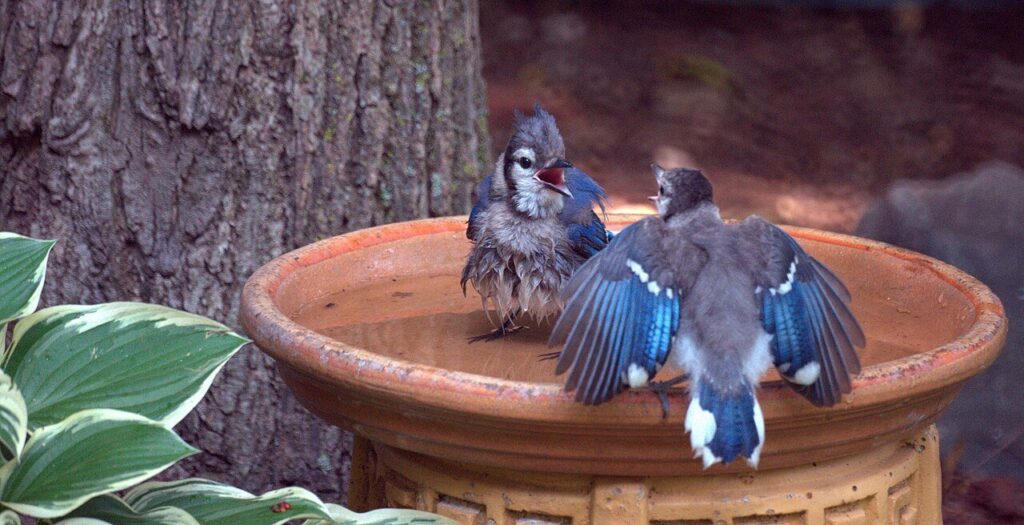
Blue jays are excellent mimics, and their favorite imitations are the calls of red-shouldered and red-tailed hawks. If you hear a perfect hawk scream coming from a shrub or the feeder, and no hawk ever appears, look for a jay. Nobody knows for sure why they do it. The two leading ideas are that it warns other jays a hawk is around, or that it scares other birds off a food source. For more on sorting out who’s calling, see our guide to identifying birds by their songs and calls. The free Merlin app from Cornell will also name most hawks from a recording.
Worried about a hawk that keeps screaming and diving near your yard? Here’s the straight answer to are hawks dangerous to humans? including pets, chickens and nest season.
When are hawks loudest?
- Late winter to spring (February–May): territory and courtship calls, then nest defense. Peak adult screaming.
- Summer (June–August): begging juveniles. Peak nonstop screaming, often from the same spot for hours.
- Fall and winter: much quieter. Resident hawks still call to defend territories, but less often.
Time of day matters too: hawks call most on warm, sunny mornings and midday when rising air lets them soar, which is also when they’re easiest to see.
Quick answers
Why is a hawk screaming at me? You’re probably near its nest or its begging young. Walk away and it will settle down. Hawks rarely make contact with people, and all hawks are protected under the federal Migratory Bird Treaty Act, so they can’t be harmed or their nests disturbed.
Why does a hawk screech for hours? In summer, that’s almost always a fledgling begging for food. It stops once the young bird can hunt on its own, usually by late August.
Is the movie eagle sound a real eagle? No. Films and TV routinely dub a red-tailed hawk’s scream over bald eagles. A real bald eagle gives a series of high, weak, chirping whistles.
Does a screaming hawk mean it’s hunting my feeder birds? Usually not. Feeder hunters like Cooper’s and sharp-shinned hawks attack in silence. If one is picking off birds at your feeder, take the feeders down for a week or two and it will move on. Our article on how birds outsmart predators explains what your feeder birds do about hawks.
Bottom line
A screeching hawk is announcing itself: guarding a territory, warning you off a nest, calling to a mate, or, in midsummer, a young hawk begging to be fed. The long, raspy scream is a red-tailed hawk. The repeated “kee-aah” is a red-shouldered hawk. And if the “hawk” is sitting in your shrubs, it’s probably a blue jay. Want a closer look at the next one overhead? See our picks for the best birding binoculars under $200.