Minnesota’s backyard birds change with the seasons more than almost anywhere in the lower 48. A core group of tough year-round residents (chickadees, nuthatches, woodpeckers, blue jays and cardinals) works the feeders through January mornings well below zero. In winter, finches and sparrows come down from Canada and the north woods to join them. From May through September, hummingbirds, orioles and grosbeaks fly in from the tropics. Here are the birds you’re most likely to see in a Minnesota yard, when to look for them, and what each one eats.
The short version
- Year-round: black-capped chickadee, white-breasted nuthatch, downy and hairy woodpeckers, blue jay, northern cardinal, American goldfinch, house finch, mourning dove.
- Winter only (roughly October–April): dark-eyed junco, American tree sparrow, and in some years common redpolls, pine siskins and red-breasted nuthatches in big numbers.
- Summer only (roughly May–September): ruby-throated hummingbird, Baltimore oriole, rose-breasted grosbeak, house wren, gray catbird, chipping sparrow.
- The one food that feeds the most of them: black-oil sunflower seed, plus suet in winter and open water all year.
- State bird: the common loon, a lake bird. You’ll hear it at the cabin, not at the feeder.
Year-round birds: the ones that tough out the winter
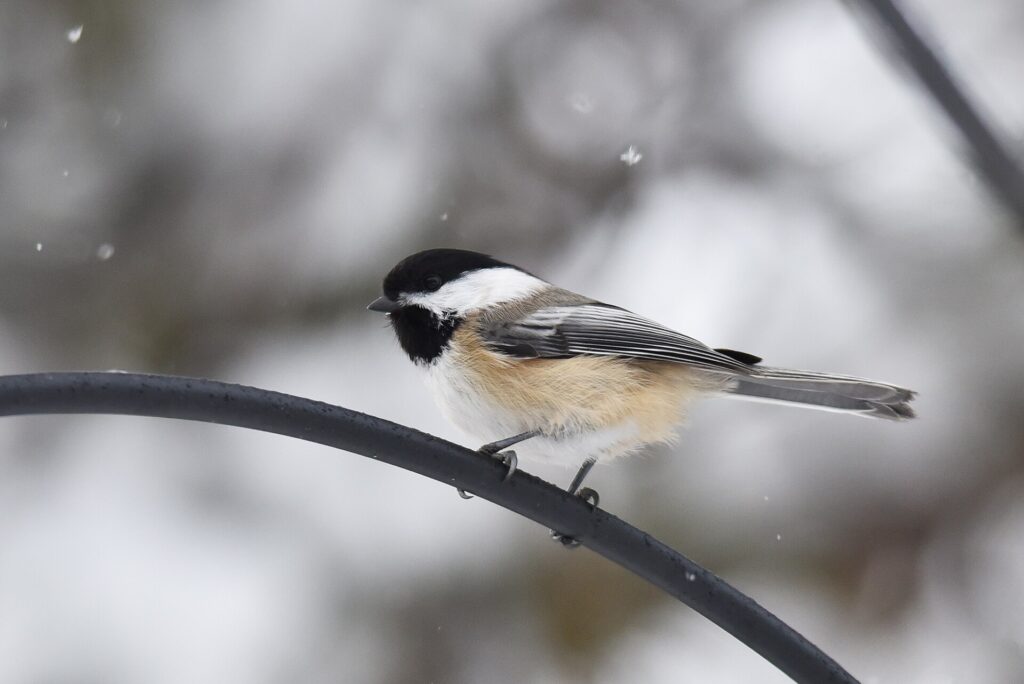
Black-capped chickadee. The most reliable feeder bird in the state and usually the first to find a new one. Black cap and bib, white cheeks, gray back, and the “chick-a-dee-dee-dee” call it’s named for. Chickadees get through subzero nights by fluffing their feathers and letting their body temperature drop to save energy. They grab one sunflower seed at a time, fly off to crack it or hide it, and come right back. They also love suet.
White-breasted nuthatch. The small gray-blue bird that walks headfirst down tree trunks. White face and belly, black cap, and a nasal “yank-yank” call. It takes sunflower seed, peanuts and suet, and often wedges a seed into bark to hammer it open. Its northern cousin, the red-breasted nuthatch, is smaller with a black eye stripe and rusty underparts. It’s common in the north woods and, in some winters, pours into yards statewide.
Downy and hairy woodpeckers. Two black-and-white woodpeckers that look almost identical. Males of both have a red patch on the back of the head. The downy is sparrow-sized with a short, stubby bill. The hairy is robin-sized with a bill about as long as its head. Both are steady suet customers all winter. In southern and central Minnesota, add the red-bellied woodpecker: zebra-barred back, red cap, and a rolling “churr” call. It has pushed steadily north over the past few decades.
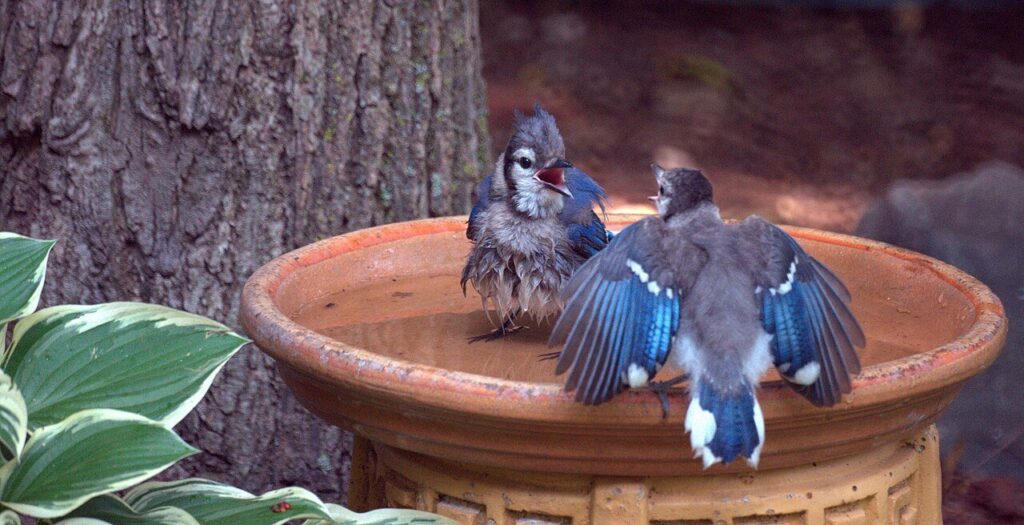
Blue jay. Loud, smart, and hard to miss. Jays go for peanuts, sunflower and corn, and they cache huge numbers of acorns in fall. Some Minnesota jays migrate and some stay, so you’ll see them year-round but in shifting numbers.
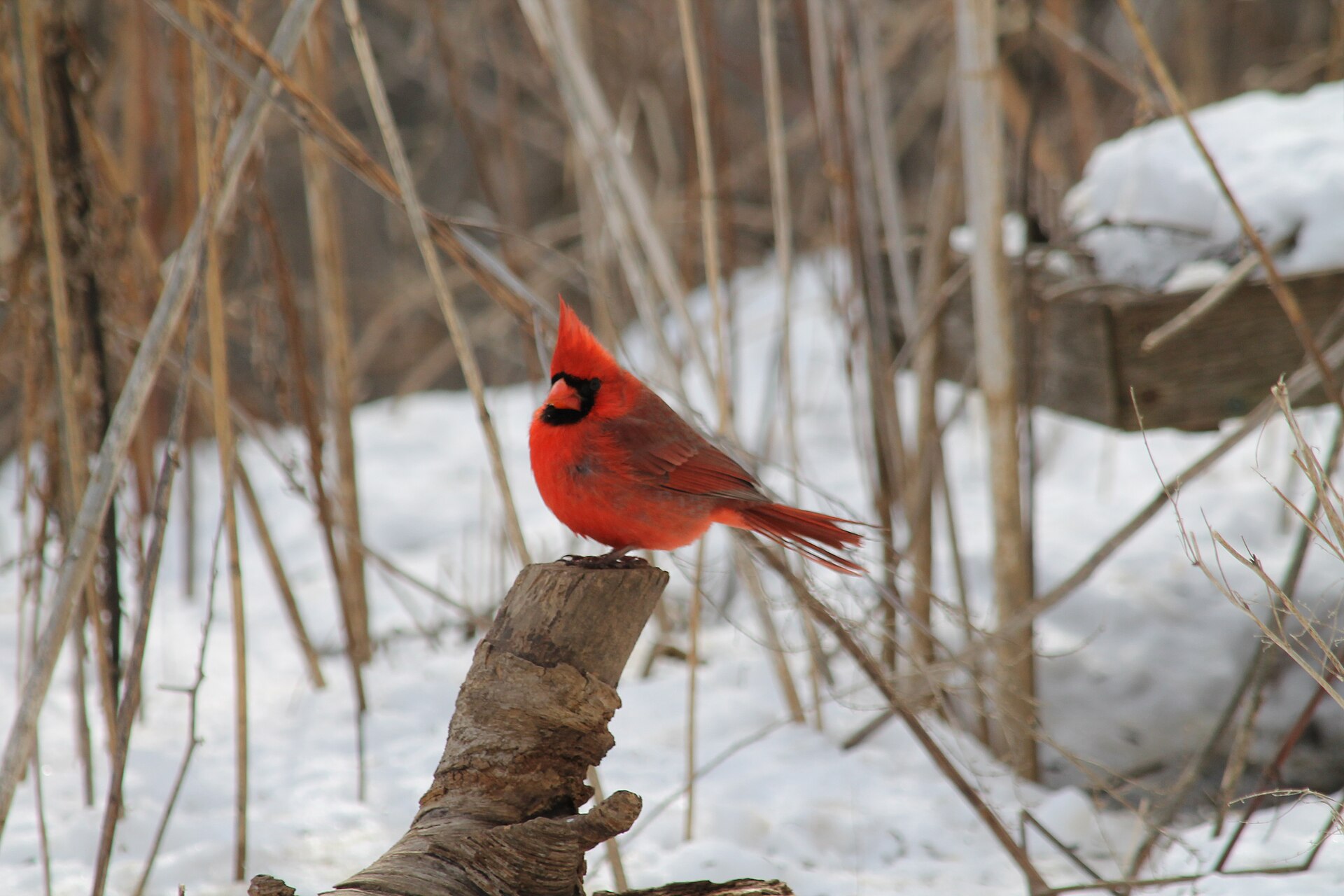
Northern cardinal. A century ago cardinals were rare in Minnesota. Today they’re common across the southern two-thirds of the state and still spreading north, helped by feeders and suburban shrubs. Males are all red with a black face. Females are warm tan with red accents. Both have the big orange-red bill built for cracking sunflower and safflower seed. They feed at dawn and dusk and like a platform or wide hopper better than a narrow tube. See our guide to feeders cardinals will actually use.
American goldfinch. Bright lemon-yellow in summer, then an olive-drab bird most people don’t recognize by November. Same bird, winter plumage. Goldfinches stay year-round in much of southern Minnesota and flock to nyjer (thistle) and sunflower hearts. More in our guide to attracting goldfinches with sunflower hearts.
House finch and mourning dove. The red-headed house finch (males) and the soft tan, cooing mourning dove round out the year-round crowd. Doves feed on the ground and on platform feeders and prefer millet and cracked corn.
Winter visitors: birds that come south to Minnesota
It sounds backward, but for a lot of birds Minnesota is the south. These arrive from Canada and the boreal forest as fall turns to winter.
Dark-eyed junco. The “snowbird”: slate gray above, white belly, pale pink bill, and white outer tail feathers that flash when it flies. Juncos nest in the far north of the state and spread into yards everywhere else from October on. They feed on the ground under the feeder, not on it, and want white millet. Full profile: Dark-eyed juncos, the winter snowbird.
American tree sparrow. A winter-only sparrow with a rusty cap, a gray face, and a small dark spot in the middle of a plain breast. Look for small groups on the ground with the juncos.
Common redpoll and pine siskin. Small, streaky finches that show up in huge numbers some winters and hardly at all in others. Birders call it an “irruption,” and it tracks the seed crop on northern birch, alder and conifers. Redpolls have a red cap and black chin. Siskins are brown and heavily streaked with a thin, pointed bill and flashes of yellow in the wings. Both go straight for nyjer and sunflower hearts. When they come, they come by the dozen. Like goldfinches, both are clinging feeders that can feed from a nyjer sock.
North woods specials. In the Arrowhead and along the North Shore, winter feeders can pull in evening grosbeaks, pine grosbeaks and Canada jays. Most of the country never sees these birds in a backyard.
Summer birds: the May-to-September crowd
Ruby-throated hummingbird. The only hummingbird that nests in Minnesota. It arrives in early to mid-May and is mostly gone by late September. Males have the glittering red throat, females a white one. Put nectar feeders out by early May (four parts water to one part white sugar, no dye) and keep them up until you haven’t seen a hummingbird for about two weeks. Our timing guide covers when to take hummingbird feeders down.
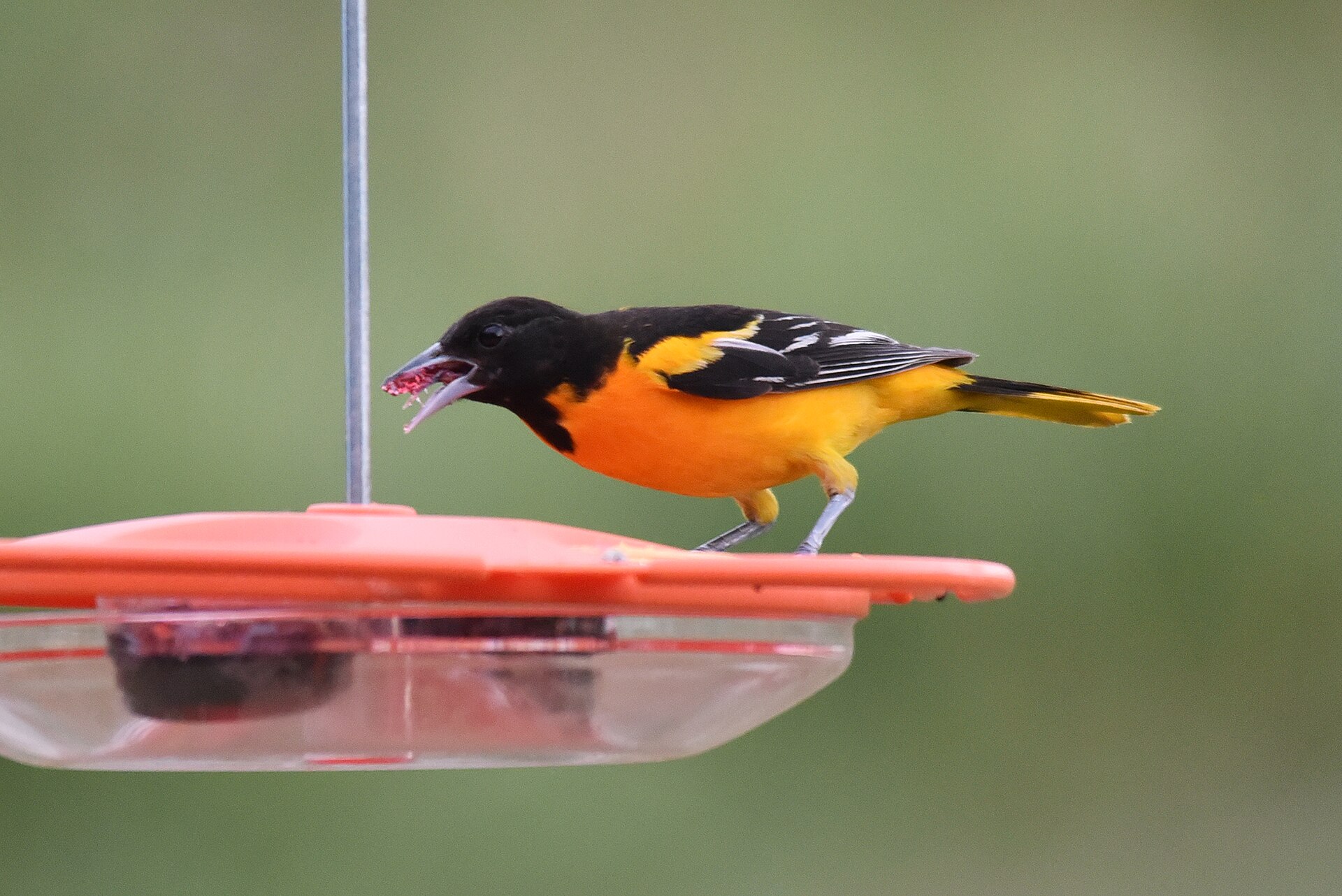
Baltimore oriole. Blazing orange and black males, yellow-orange females. Orioles show up in early May, hungry after migration, and go for orange halves and grape jelly. Get the jelly and oranges out the first week of May or they’ll pass you by. They build a hanging sock-shaped nest high in shade trees.
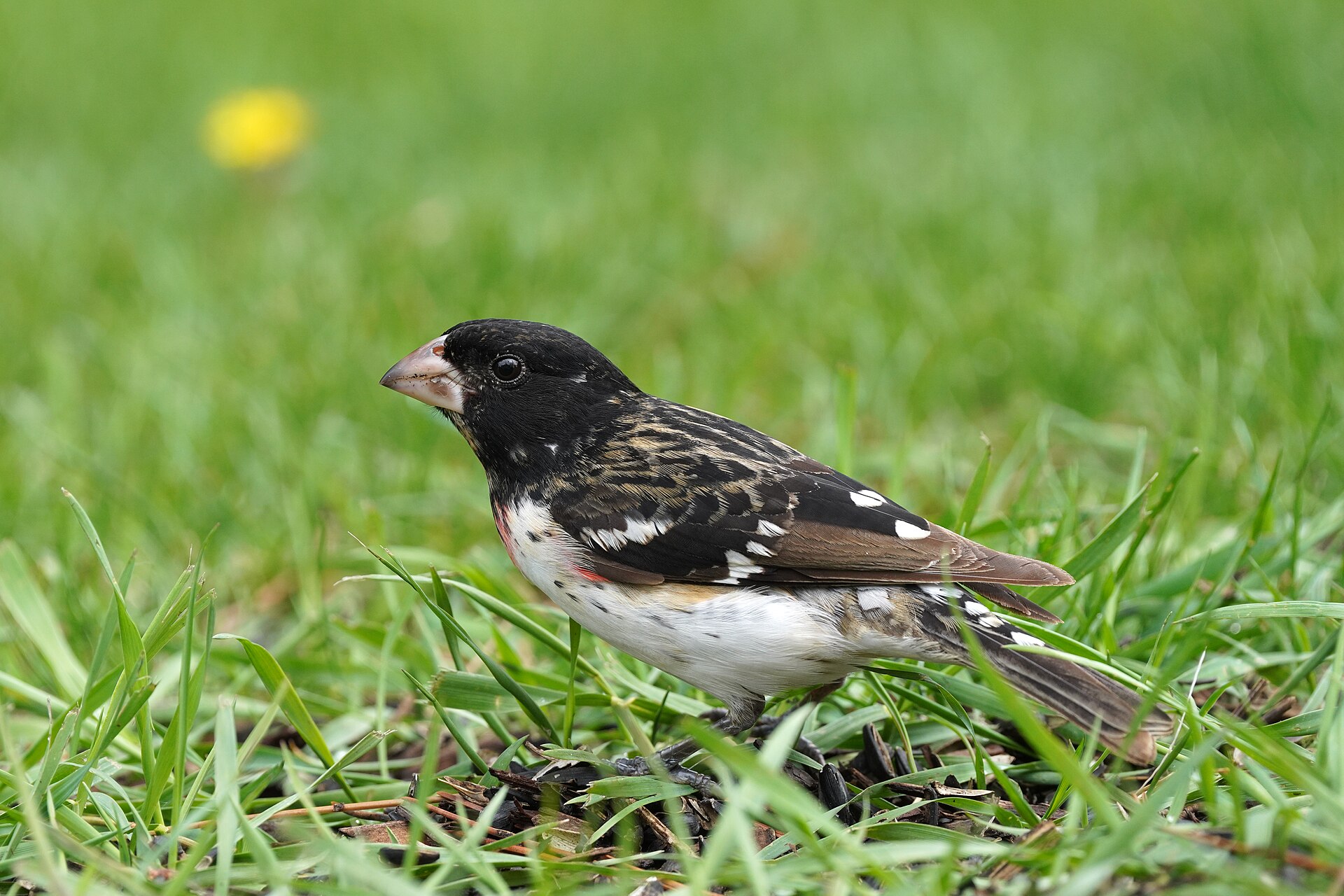
Rose-breasted grosbeak. The male is black and white with a bright rose-red triangle on the chest, one of the most striking birds that visits a Minnesota feeder. Females look like large, heavily streaked sparrows with a bold white eyebrow. Both love sunflower seed.
House wren, gray catbird and chipping sparrow. The wren is the small brown bird singing nonstop from your nest box. The catbird is the slate-gray bird with a black cap that mews like a cat from the shrubs. The chipping sparrow has a clean rusty cap and a black eye line, and picks up seed under the feeder. American robins are common all summer. Most leave in fall, but a surprising number winter in Minnesota on crabapples and other fruit.
How to feed Minnesota backyard birds
Start with black-oil sunflower. Chickadees, nuthatches, cardinals, jays, finches and grosbeaks all eat it, and it’s the best value for the money. Our bird seed guide covers blends and hearts.
Add suet from October through March. Woodpeckers, nuthatches and chickadees burn huge amounts of fat to stay warm, and suet is the densest calorie source you can put out. Minnesota winters are cold enough that suet rarely goes soft or rancid. See our suet feeder picks.
Scatter millet on the ground or a low tray for juncos, tree sparrows and doves, and hang a nyjer feeder in case the redpolls and siskins come.
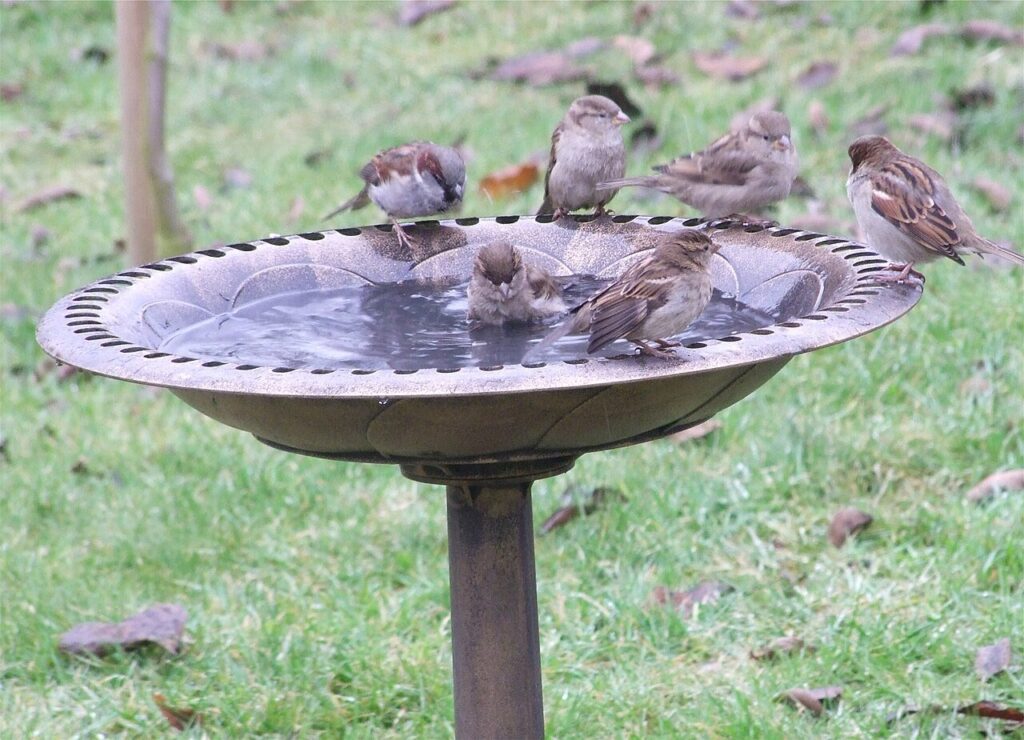
Give them water in winter. In a Minnesota January, open water is harder for birds to find than food. A heated birdbath will draw birds that never touch your seed. Here’s what to look for in a heated bird bath.
Keep feeders clean. Crowded winter feeders spread disease, especially among finches. Scrub them every couple of weeks. Here’s how to clean a bird feeder the right way.
Quick answers
What is the most common backyard bird in Minnesota? At winter feeders, the black-capped chickadee is almost always on top, along with downy woodpeckers, white-breasted nuthatches, blue jays and juncos. In summer, American robins and house sparrows are everywhere.
What is Minnesota’s state bird? The common loon, adopted in 1961. Minnesota has the largest loon population in the lower 48. It lives on lakes and doesn’t visit feeders.
What small gray bird is at my Minnesota feeder in winter? Most likely a dark-eyed junco (on the ground, white belly, pink bill), a black-capped chickadee (black cap and bib), or a white-breasted nuthatch (upside down on the trunk). Our gray bird ID guide covers the rest.
When should I put out oriole and hummingbird feeders in Minnesota? By the first week of May. Both arrive hungry, and early feeders catch birds that are still deciding where to nest.
Bottom line
A Minnesota yard runs on three shifts. Chickadees, nuthatches, woodpeckers, jays and cardinals stay all year. Juncos, tree sparrows and, in good years, redpolls and siskins come down for the winter. Hummingbirds, orioles and grosbeaks arrive for the summer. Black-oil sunflower, winter suet, millet on the ground and open water will cover nearly all of them. For how your region compares, see our winter backyard birds by region guide.