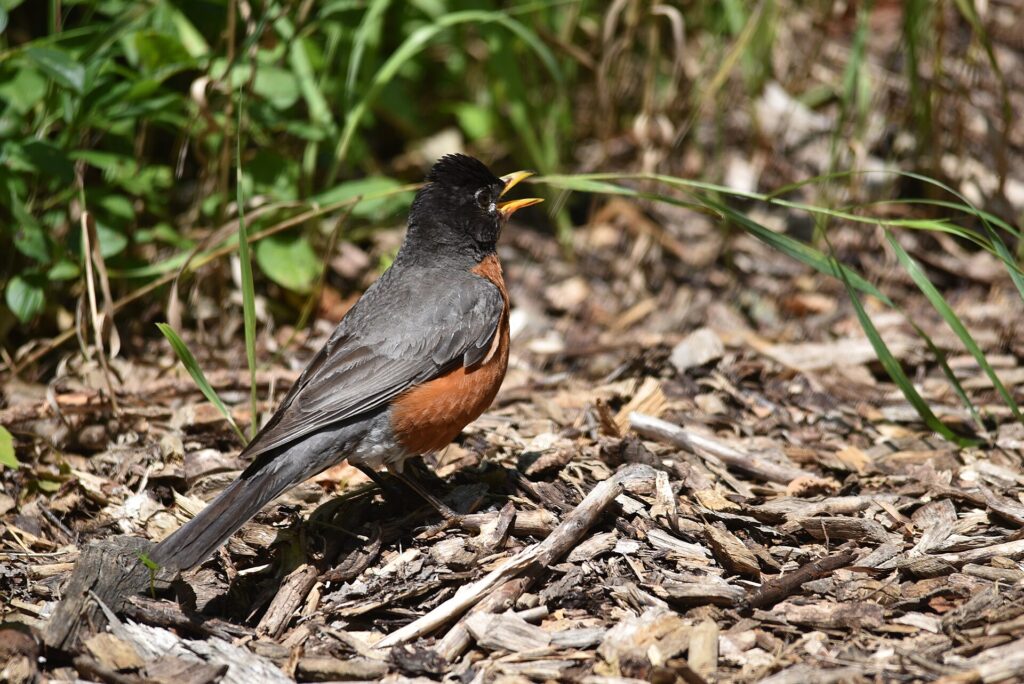
Most of the time, a bird sitting with its mouth open is simply hot. Birds can’t sweat, so they cool off by panting, just like a dog. But an open bill can also mean a hungry chick begging, a bird warning off a rival at the feeder, a bird catching its breath after a chase, or a bird singing. And once in a while, especially in cool weather, open-mouth breathing is a sign that the bird is sick. Here’s how to tell which one you’re seeing and when, if ever, to step in.
The short version
- Hot day, bird sitting still with its bill open and wings held out: it’s panting to cool off. Normal.
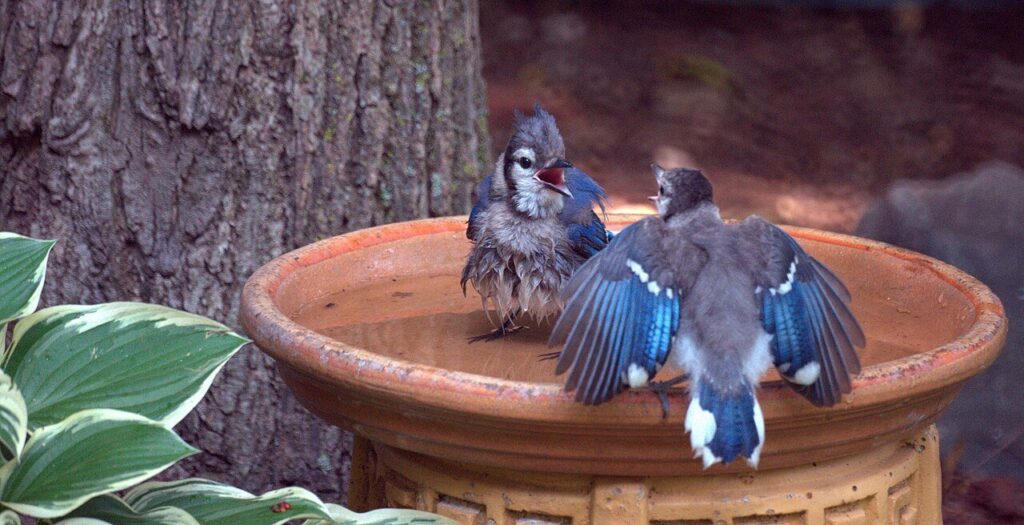
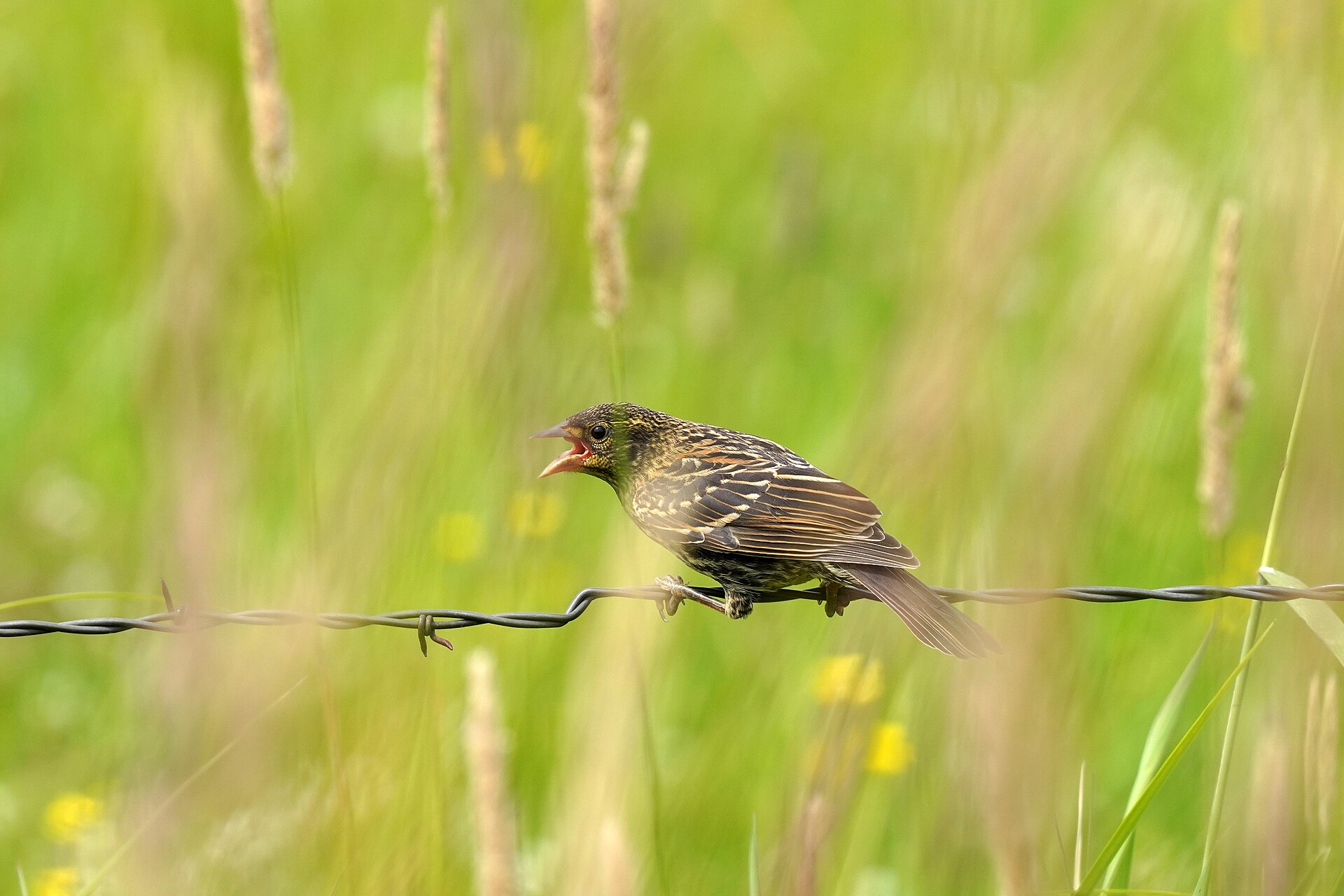
- Young bird, bill wide open, fluttering its wings at an adult: begging for food. Normal.
- Bird facing another bird with bill open, feathers raised: a threat display. Normal.
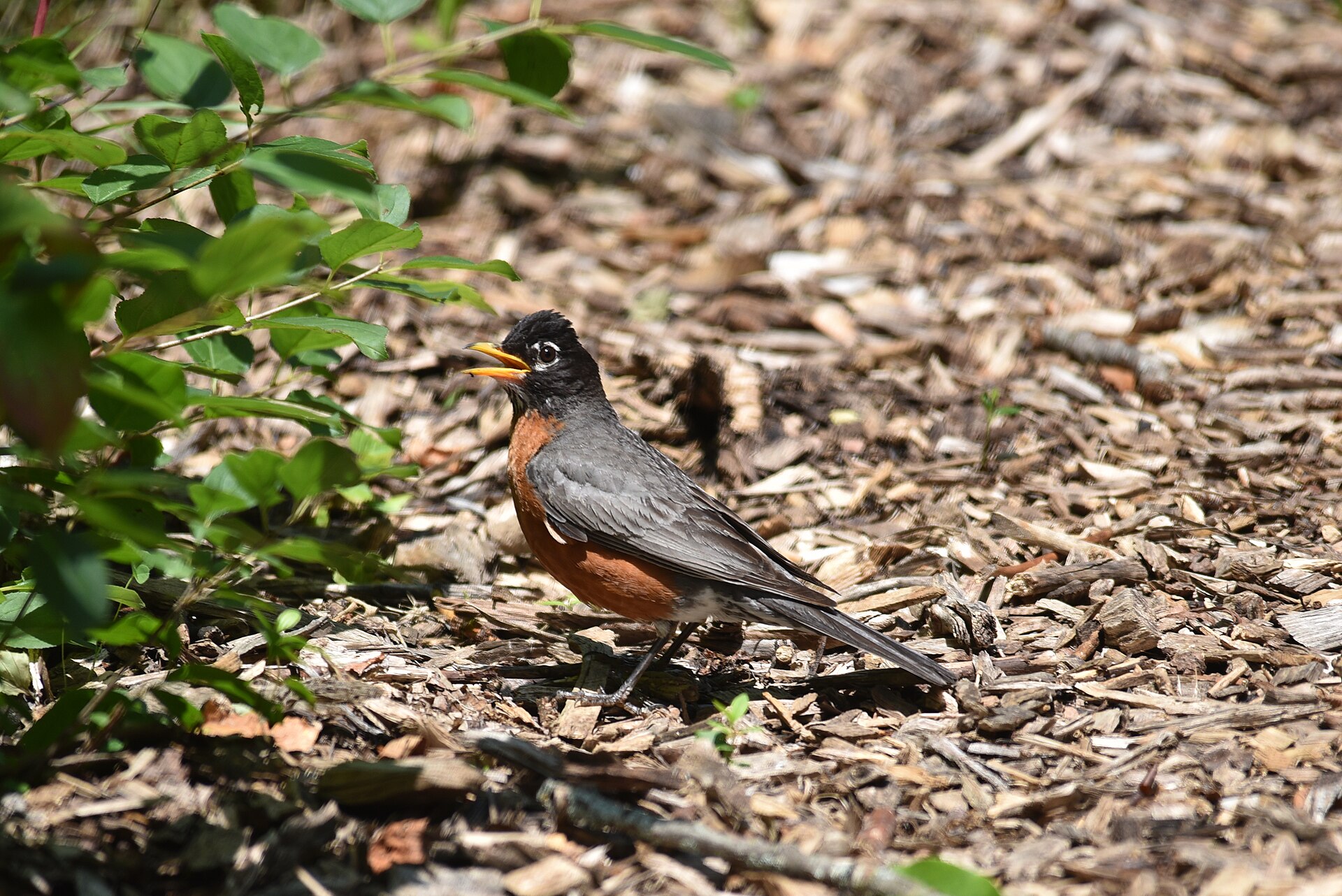
- Bird breathing hard through an open bill after flying or a scare: catching its breath. Normal if it recovers in a few minutes.
- Cool weather, bird fluffed up, eyes half closed, breathing with its bill open or tail bobbing: possibly sick. Watch it, and call a wildlife rehabilitator if it doesn’t improve.
1. It’s hot: birds pant to cool down
Birds run hot. Their normal body temperature is around 104 to 108°F, and they have no sweat glands. To shed heat, they open their bills and breathe fast and shallow, which moves air over the moist lining of the mouth and airways so water evaporates and carries heat away. It’s the same trick a dog uses.
Some birds add a second move called gular fluttering: rapidly vibrating the loose skin of the throat, which you can see as a fast pulsing under the bill. Doves, pigeons, herons, pelicans, cormorants, owls and nighthawks all do it. Songbirds mostly just pant.
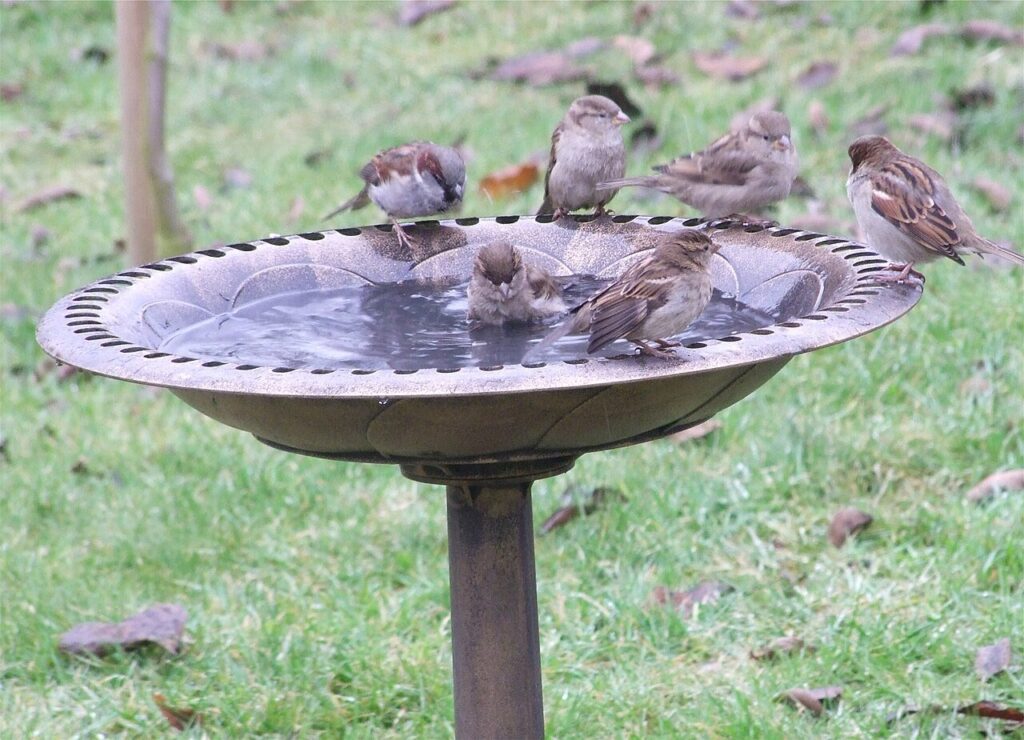
A panting bird usually looks like this: sitting still in the shade, bill open, wings held slightly away from the body to let heat escape from the thinly feathered “armpits,” and feathers sleeked down flat. It will often head for water. This is healthy behavior, not distress, but you can help on hot days by keeping a shallow birdbath full and in the shade. Our bird bath guide covers depth and placement.
2. It’s a young bird begging for food
Nestlings and fledglings beg with their mouths wide open, and the inside of a baby bird’s mouth is often brightly colored, with bright yellow or orange edges called flanges at the corners. The color is a target: it tells the parent exactly where to put the food. A fledgling on the ground or a branch, bill open, wings quivering, calling nonstop at an adult is simply asking to be fed. The parent is almost always nearby, so there’s no need to rescue it.
Adult birds use a softer version of the same begging during courtship: female cardinals, for example, often gape and quiver while the male feeds them seed.
3. It’s a threat: “back off”
At a busy feeder, you’ll often see a bird face another with its bill open wide, sometimes with its head lowered, feathers raised, or wings half spread. That’s a threat display, a warning to give up the perch before it turns into a fight. Starlings, grackles, house sparrows, house finches and jays do this constantly. Hummingbirds open their bills at each other in midair while defending a feeder. It’s all bluff and usually ends with one bird leaving.
4. It’s catching its breath, singing, or foraging
After exertion. A bird that just escaped a hawk, fought another bird, or flew into a window may sit breathing hard with its bill open. If it recovers and flies off within several minutes, it’s fine. If it stays dazed for more than a couple of hours, see below.
Singing and calling. Obvious, but a bird frozen in a photo mid-song can look like it’s just sitting with its mouth open.
Foraging. Starlings, grackles, blackbirds and meadowlarks use a technique called gaping: they push a closed bill into grass or soil, then force it open to pry apart the earth and expose grubs. If you see a grackle stabbing your lawn with its bill springing open, that’s what it’s doing. (More in what grackles eat.)
5. When an open mouth means a sick bird
Open-mouth breathing becomes a warning sign when the weather isn’t hot and the bird isn’t active. Watch for a combination of these:
- Breathing with the bill open while sitting still in cool weather, often with the tail bobbing with each breath
- Feathers fluffed up for long periods, eyes half closed or crusty
- Letting you walk up close without flying
- Wet, matted feathers around the bill, drooling, or trouble swallowing seed
Several diseases that spread at feeders can cause this. Trichomonosis, for example, causes lesions in the mouth and throat of finches and doves, so birds struggle to swallow and may look like they’re gaping. If you see sick birds at your feeders, take the feeders and birdbath down for a week or two, scrub them with a 1-part-bleach-to-9-parts-water solution, rinse and dry them, and rake up spilled seed. Our step-by-step guide covers how to clean a bird feeder. For a single visibly sick or injured bird, contact a local licensed wildlife rehabilitator rather than trying to treat it yourself.
Quick answers
Why is a bird sitting on the ground with its mouth open? On a hot day, it’s probably cooling off, often near water or in shade. If it’s a fledgling, it’s begging and a parent is nearby. If it’s cool out and the bird is fluffed and won’t fly, it may be sick or stunned.
What temperature do birds start panting? It varies by species and humidity, but you’ll commonly see backyard birds panting once afternoon temperatures climb into the 90s°F, especially in direct sun.
Do birds yawn? Yes. Birds yawn and stretch their jaws, often after resting. A single wide gape followed by normal behavior is just that.
Bottom line
An open bill is almost always normal: a bird cooling off on a hot day, a youngster begging, a feeder squabble, a bird catching its breath or singing. The one to watch is a fluffed, sluggish bird breathing through its mouth in cool weather. That’s when to clean your feeders and, if it doesn’t improve, call a wildlife rehabilitator.