Spark Lark is reader-supported. As an Amazon Associate we earn from qualifying purchases, at no extra cost to you. How we choose products.
Under $1,000, the best camera for bird photography is a superzoom, also called a bridge camera: one body with a built-in lens that zooms from wide angle to extreme telephoto, so there are no extra lenses to buy. Get the Nikon COOLPIX P950 if you can spend the money. The Panasonic LUMIX FZ80D gets you most of the way for much less.
The short version
- Best overall: Nikon COOLPIX P950. 83x zoom to 2000mm equivalent, a sharp OLED viewfinder, RAW files and a Bird-watching mode.
- Best value: Panasonic LUMIX FZ80D. 60x zoom to 1200mm equivalent and the same viewfinder resolution as the Nikons, in a much lighter body.
- Under $300: Kodak PIXPRO AZ528. 52x zoom for a quarter of the budget, if you can live without a viewfinder.
- Worth stretching for: Nikon COOLPIX P1100. 125x zoom to 3000mm equivalent, for birds too far away for anything else here.
- The accessory that matters: NEEWER monopod with stand base. Steadies the camera at full zoom.
Why a superzoom, not a “real” camera
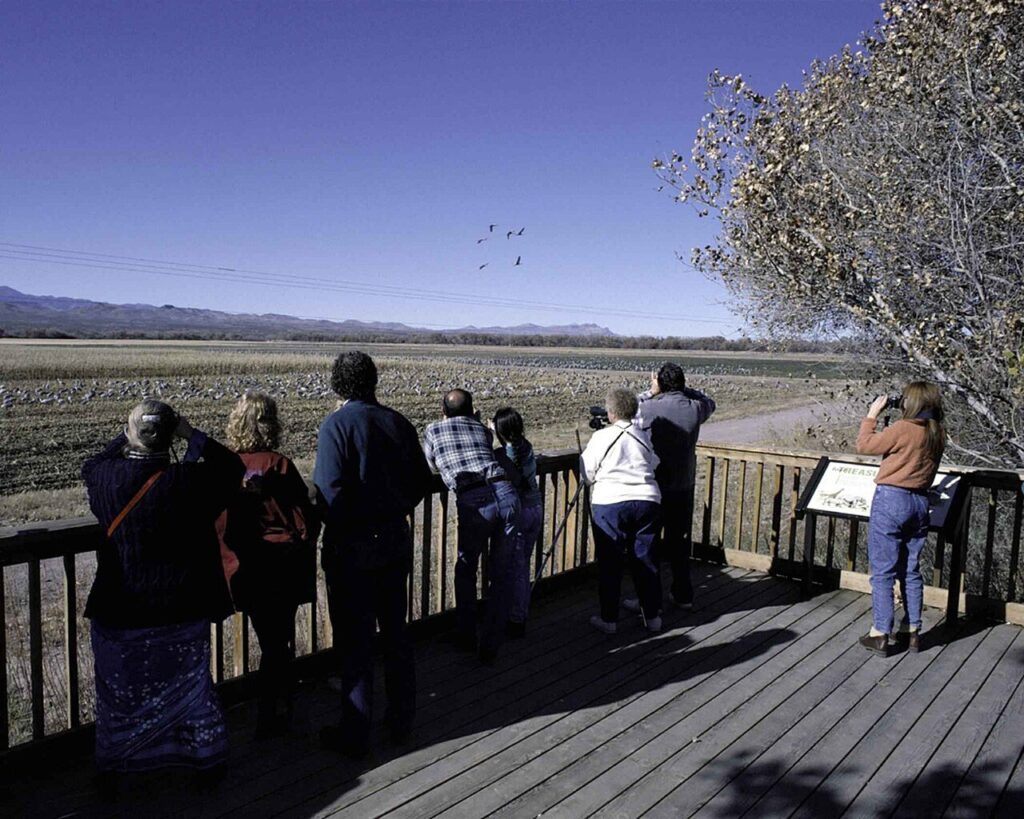
Birds are small and far away, so reach comes first. Writing for Audubon, bird photographer William H. Majoros says “you’ll need at least 400mm of focal length, and ideally more than that.” A mirrorless or DSLR kit with that reach costs more than this whole budget: Nikon’s Z50 II two-lens kit. Every superzoom below reaches at least 1,200mm equivalent for less.
Field biologist Bryan Pfeiffer makes the case in Audubon magazine: bridge cameras “bridge the gap” between point-and-shoots and interchangeable-lens bodies, and their photos are often sharp enough for social media, an eBird checklist, or settling an ID. He’s also frank about the limit. The small sensors in these cameras need good light, and on cloudy days or with backlit birds, he writes, “don’t expect it to make any magazine covers.” Bridge cameras with a larger 1-inch sensor, like the Sony RX10 IV he mentions, do better in poor light but cost more; Sony’s current RX10 V.
If you’d rather let the birds come to a camera while you’re at work, that’s a different product. Our bird camera guide covers feeder, nest box and trail cameras.
How to choose
- Zoom. Pfeiffer calls 60x or so “standard and best for most birders.” More zoom helps with distant ducks and hawks, but he notes the tradeoffs: more weight, bulk and cost. The P1100 at 125x weighs more than twice as much as the 60x FZ80D.
- A viewfinder. Pfeiffer says any worthy bridge camera should have one, plus manual controls. Holding the camera to your eye steadies it and makes a small bird easier to follow than on a rear screen in bright sun. Both Nikons and the Panasonic have a 2.36-million-dot electronic viewfinder; Kodak’s spec sheet for the AZ528 lists only the rear screen.
- RAW files. Majoros recommends shooting RAW rather than JPEG and editing on a computer. Both Nikons record RAW. Kodak’s AZ528 spec sheet lists JPEG only.
- Weight. A camera you leave at home takes no pictures. The FZ80D is about 1.4 pounds with battery and card (640 g, per Amateur Photographer’s review), the P950 is 35.5 ounces, and the P1100 is nearly 50 ounces.
- Battery life. These cameras are rated at roughly 240 to 300 shots per charge. Buy a spare battery with any of them.
The cameras
1. Nikon COOLPIX P950 — best overall
83x zoom, 24-2000mm equivalent · 16 MP, 1/2.3-inch sensor · f/2.8-6.5 · 35.5 oz · 290 shots per charge
The P950 is the camera Audubon’s Pfeiffer points to for “even higher zooms,” and it’s the best all-round pick on this list. The 83x lens reaches 2000mm equivalent, two-thirds farther than the FZ80D. Nikon’s specs add a 2,359k-dot OLED viewfinder, RAW (NRW) files, 4K video at 30p, and bursts of up to 10 shots at about 7 frames per second.
It also has a Bird-watching scene mode, which Nikon’s own birding tips recommend as the easy starting point for exposure and focus. Beginners can shoot in that mode on day one and move to aperture priority as they learn.
Downside: at 35.5 ounces it’s heavy for a camera you carry around your neck all day, and like every camera here its small sensor struggles in dim light. The Amazon listing is sold and shipped by Adorama, a camera retailer, rather than Amazon itself.
2. Panasonic LUMIX FZ80D — best value
60x zoom, 20-1200mm equivalent · 18.1 MP, 1/2.3-inch sensor · f/2.8-5.9 · about 640 g (1.4 lb) · about 300 shots per charge
The FZ80D sits right at the 60x zoom Pfeiffer recommends for most birders, and it costs much less than the P950. Panasonic lists a 2,360K-dot viewfinder, essentially the same resolution as the Nikons, plus USB-C charging and a 4K Photo mode that pulls 8-megapixel stills out of a 4K burst, handy for catching the instant a bird takes off. It’s the lightest camera here with a viewfinder.
Downside: Amateur Photographer’s review found long-zoom shots often lacked detail and that image quality dropped off in low light, and noted the camera has no Wi-Fi and no eye sensor to switch to the viewfinder automatically. You give up 800mm of reach compared with the P950. This listing is sold and shipped by Amazon.
3. Kodak PIXPRO AZ528 — best under $300
52x zoom, 24-1248mm equivalent · 16 MP, 1/2.3-inch sensor · f/2.8-5.6 · 17.9 oz (body only) · 240 shots per charge
If you want to try bird photography before committing real money, the AZ528 gets you past 1,200mm equivalent at a budget price. Kodak’s specs list optical image stabilization, bursts of about 6 frames per second, Wi-Fi for sending photos to your phone, and a 3-inch screen. It’s also a good first camera for a teenager or a grandparent who wants to photograph the feeder.
Downside: no viewfinder is listed, so you compose on the rear screen, which is harder to hold steady at full zoom and harder to see in bright sun. Video tops out at 1080p, and Kodak lists JPEG files only, so there’s less room to fix exposure later.
4. Nikon COOLPIX P1100 — worth stretching for
125x zoom, 24-3000mm equivalent · 16 MP, 1/2.3-inch sensor · f/2.8-8 · 49.7 oz · 260 shots per charge
This one is over budget, and it’s here because it does something none of the others can: 3000mm equivalent reach, 50% more than the P950. That matters for shorebirds across a mudflat, ducks in the middle of a lake, or a hawk at the far edge of a field. The P1100 replaced the long-running P1000 in 2025. According to DPReview, the main changes are a USB-C port, updated Wi-Fi and Bluetooth, and selectable autofocus areas in Bird-watching mode. It keeps the 2,359k-dot OLED viewfinder, RAW files and 4K video.
Downside: at nearly 50 ounces it’s a two-handed camera, and at 3000mm the smallest shake fills the frame, so plan on a monopod or tripod. The lens also gathers less light at full zoom (f/8) than the P950 (f/6.5). If most of your birds are in the backyard, the P950 is the better buy. This listing is sold and shipped by Amazon.
5. NEEWER Extendable Monopod with Stand Base — the accessory to add
20.5 to 66 inches · holds up to 11 lb · 1.3 lb · 5 sections
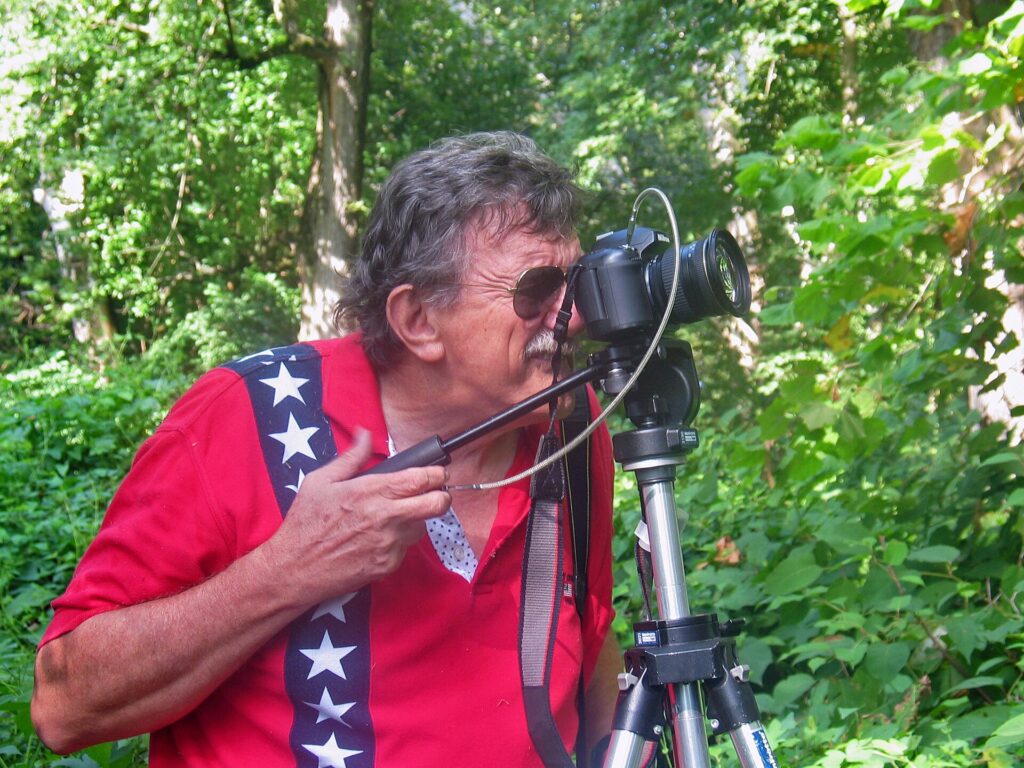
Nikon’s birding tips suggest a tripod or monopod once you’re zoomed to the longest settings. A monopod is faster to move than a tripod when a bird hops to the next branch. This one has a fold-out three-leg base, so it stands on its own at a feeder or on a deck while you wait, and it comes with both rubber and spiked feet. Its 11-pound load rating is far more than any camera here weighs.
Downside: there’s no head, so the camera screws straight onto the top and tilting it means tilting the whole pole. The small base steadies the monopod but isn’t as stable as a real tripod in wind.
Side by side
| Camera | Zoom | Longest reach (35mm equiv.) | Viewfinder | Weight | Shots per charge |
|---|---|---|---|---|---|
| Nikon COOLPIX P950 | 83x | 2000mm | 2,359k-dot OLED | 35.5 oz | 290 |
| Panasonic LUMIX FZ80D | 60x | 1200mm | 2,360K-dot | About 22.6 oz | About 300 |
| Kodak PIXPRO AZ528 | 52x | 1248mm | None listed | 17.9 oz (body only) | 240 |
| Nikon COOLPIX P1100 | 125x | 3000mm | 2,359k-dot OLED | 49.7 oz | 260 |
Specs are from the manufacturers, except the FZ80D’s weight, which is from Amateur Photographer’s review (with battery and card). Nikon weights include the battery; battery ratings are CIPA figures except the FZ80D’s, which comes from Panasonic’s manual.
One camera you might expect here is missing: the Canon PowerShot SX70 HS, which Audubon also mentions. When we checked, its new listings on Amazon showed no price, so we left it off.
Tips for sharper bird photos with a superzoom
- Use burst mode. Hold the shutter down and take a run of frames. Pfeiffer says roughly one in 10 of his shots are keepers, so don’t judge yourself by the misses.
- Shoot with the light behind you. Small sensors need light. Pfeiffer’s advice: “Sunlight low and at your back is generally best.” He also suggests aperture priority with the lens wide open, and spot or center-weighted metering so the camera exposes for the bird, not the sky.
- Brace yourself. Nikon’s tips: plant your feet, tuck your elbows in, support the lens with your left hand, lean on a tree or railing, and use a fast shutter speed. Turn image stabilization on.
- Let the birds come to you. In the Cornell Lab’s Living Bird magazine, photographer Melissa Groo suggests a quiet “sit spot,” where birds go back to normal in roughly 20 to 30 minutes. On foot, zigzag rather than walking straight at a bird: “Move only when the targets have their heads down.”
- Set up your yard as a studio. Groo notes that birds need a perch near the feeder to scan for danger before flying in, and that photos look best with the bird on a natural perch rather than the feeder. A platform feeder on a squirrel-proof pole with a branch nearby makes an easy backyard setup, and native plants bring birds in naturally. Our guide to winter backyard birds by region shows who to expect this season.
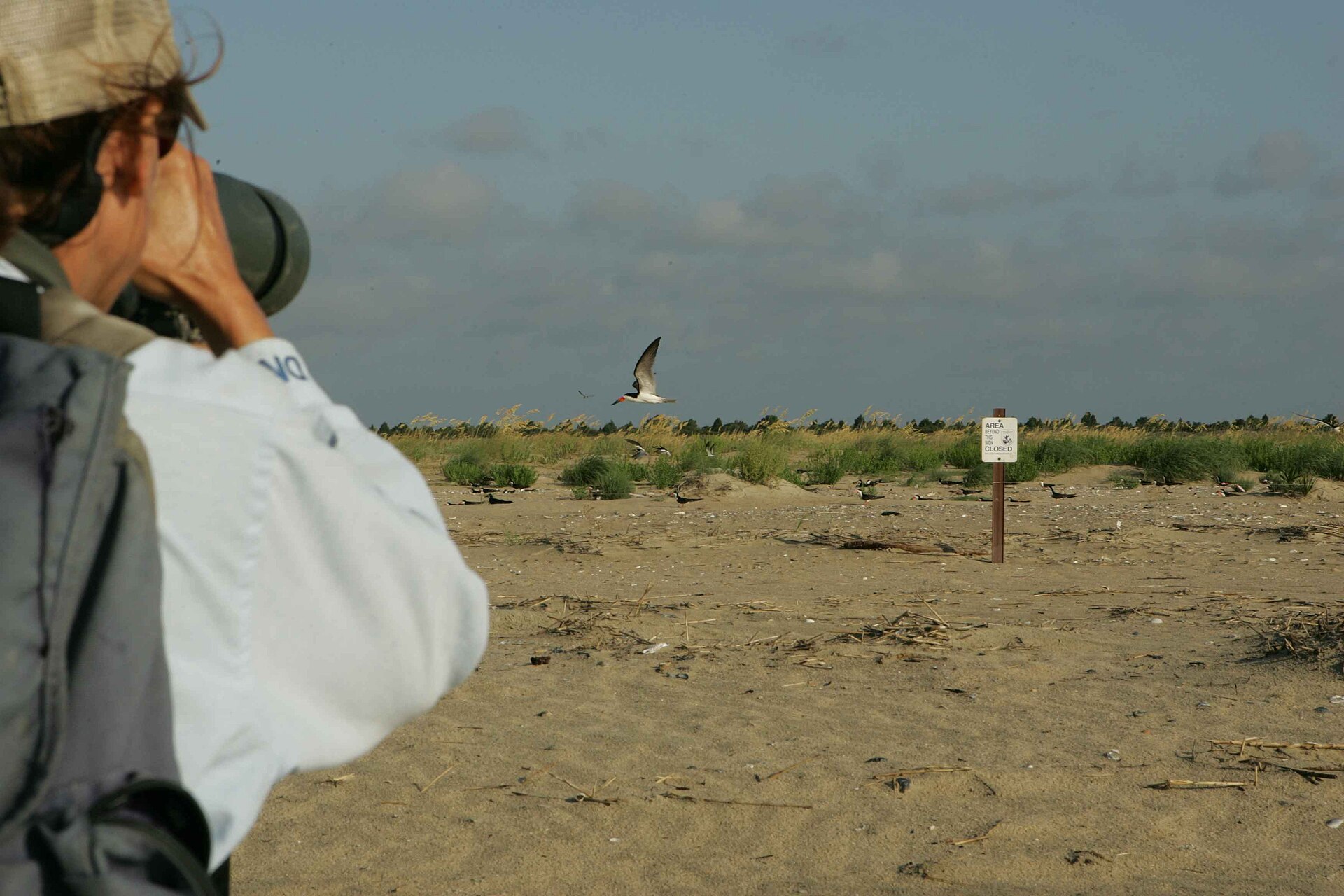
- Keep your distance. Audubon’s ethics guide says to “maintain enough distance to allow your subject to behave naturally,” and that playback of bird calls shouldn’t be used. Near nests it recommends telephoto lenses of at least 500mm, which every camera here easily covers.
A camera doesn’t replace binoculars for finding birds; see our best binoculars under $500. And if you already own a spotting scope, Majoros points out that digiscoping (shooting through the scope) can cost less than a camera-and-lens setup. Our spotting scope guide covers our spotting scope picks.
Bottom line
For most birders with up to $1,000 to spend, the Nikon COOLPIX P950 is the camera to buy: plenty of zoom for backyard and field birds, a good viewfinder and RAW files. If you want to spend less or carry less, the Panasonic LUMIX FZ80D does most of the same job for less. The Kodak AZ528 is a cheap way to find out whether you like bird photography, and the Nikon P1100 is worth the extra money only if your birds are usually far away. Whichever you pick, add a monopod and a spare battery.