Spark Lark is reader-supported. As an Amazon Associate we earn from qualifying purchases, at no extra cost to you. How we choose products.
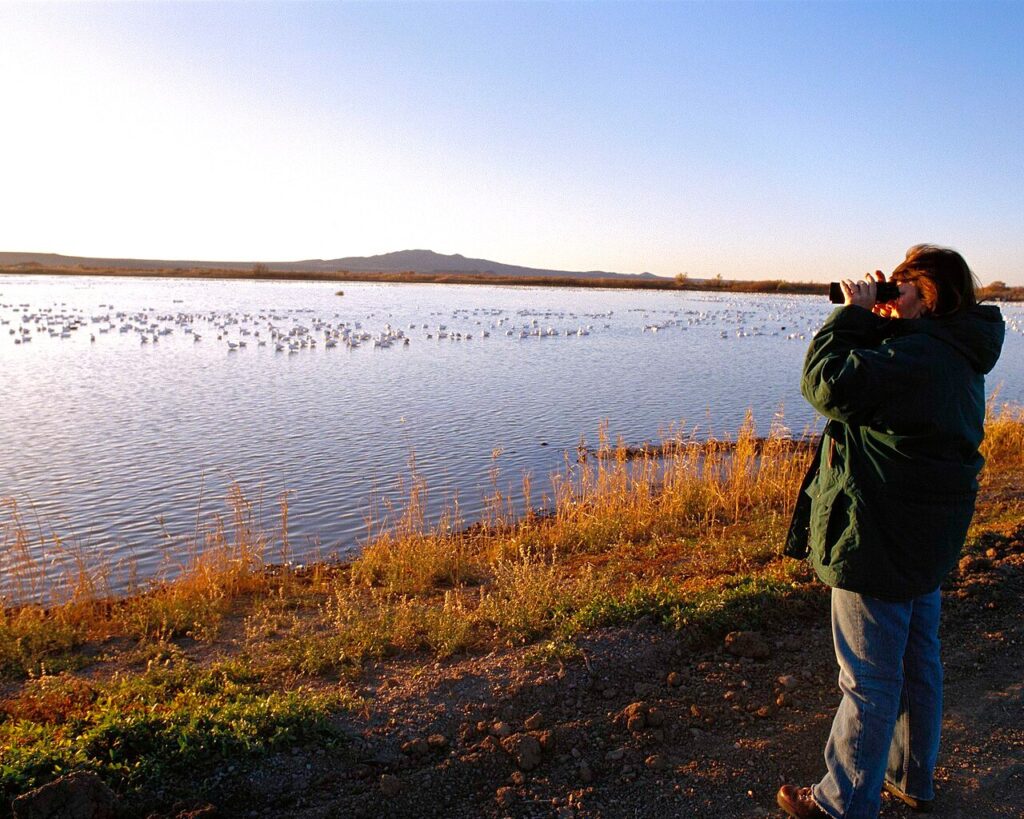
Binoculars get you close to the bird in the next tree. A spotting scope gets you close to the ducks across the lake, the shorebirds on the far mudflat, the hawk on a distant snag, or the nest across the pond, at 20 to 60 times magnification instead of 8. If you bird open water, fields, beaches or refuges, a scope is the next thing to buy after good binoculars.
The short answer: the Vortex Diamondback HD 16-48×65 angled for most birders, the Vanguard Endeavor HD 82A if you want ED glass, and the Celestron Ultima 80 if you want to try a scope without spending much. Whatever you buy, budget for a real tripod; it matters as much as the scope.
The short version
- Best overall: Vortex Diamondback HD 16-48×65 angled. Sharp HD glass, close focus of 16.4 feet, and a warranty that covers accidents.
- Best ED glass: Vanguard Endeavor HD 82A. ED glass, an 82 mm lens and a no-fault lifetime warranty.
- Biggest Vortex: Vortex Diamondback HD 20-60×85 angled. 85 mm of glass for dawn, dusk and phone photos through the scope, with the same accident-proof warranty.
- Best budget: Celestron Ultima 80 angled. A long-running starter scope with a big 80 mm lens.
- Cheapest way to try one: Athlon Talos 20-60×80. Comes with a tabletop tripod and case.
How to choose a spotting scope
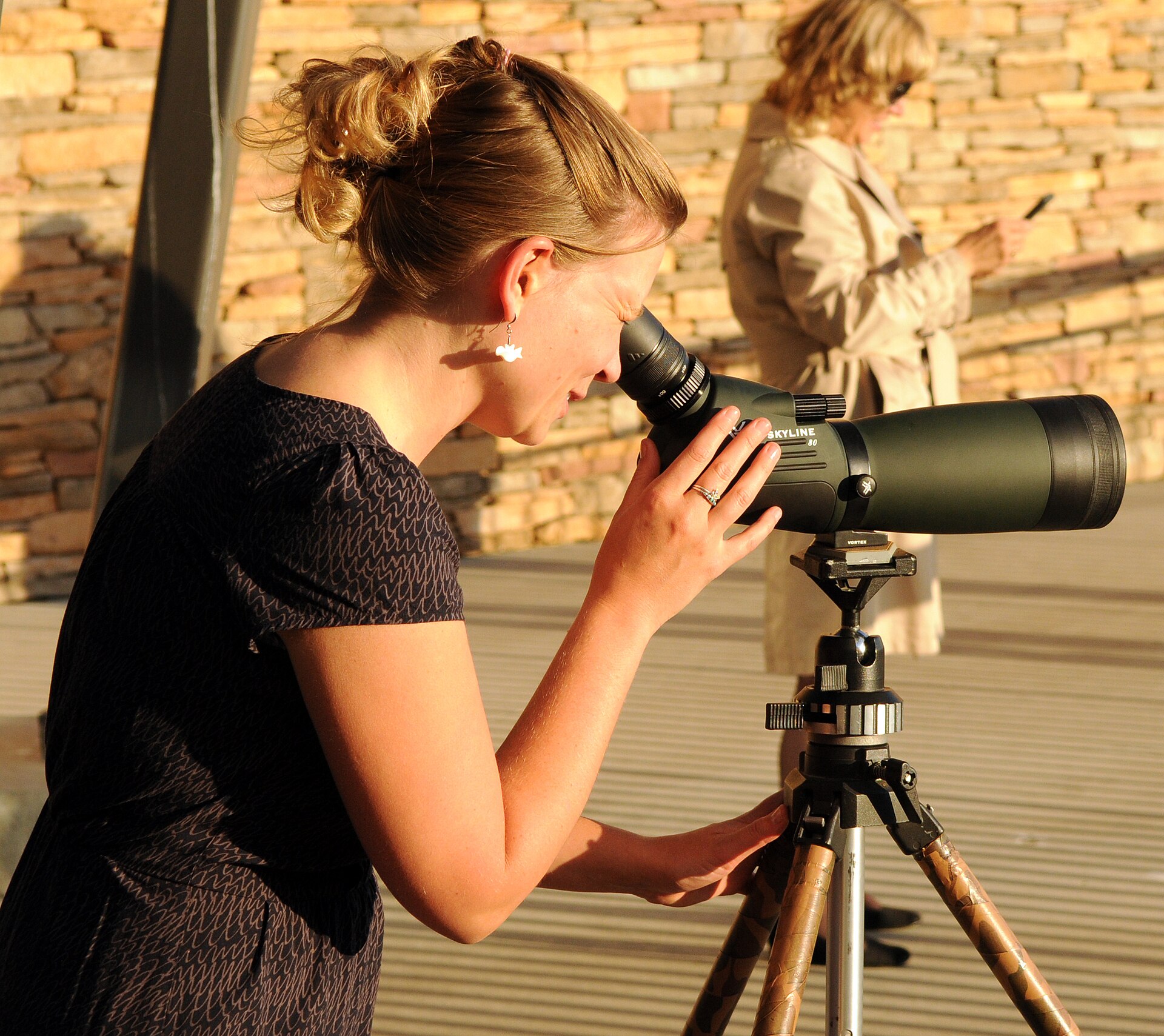
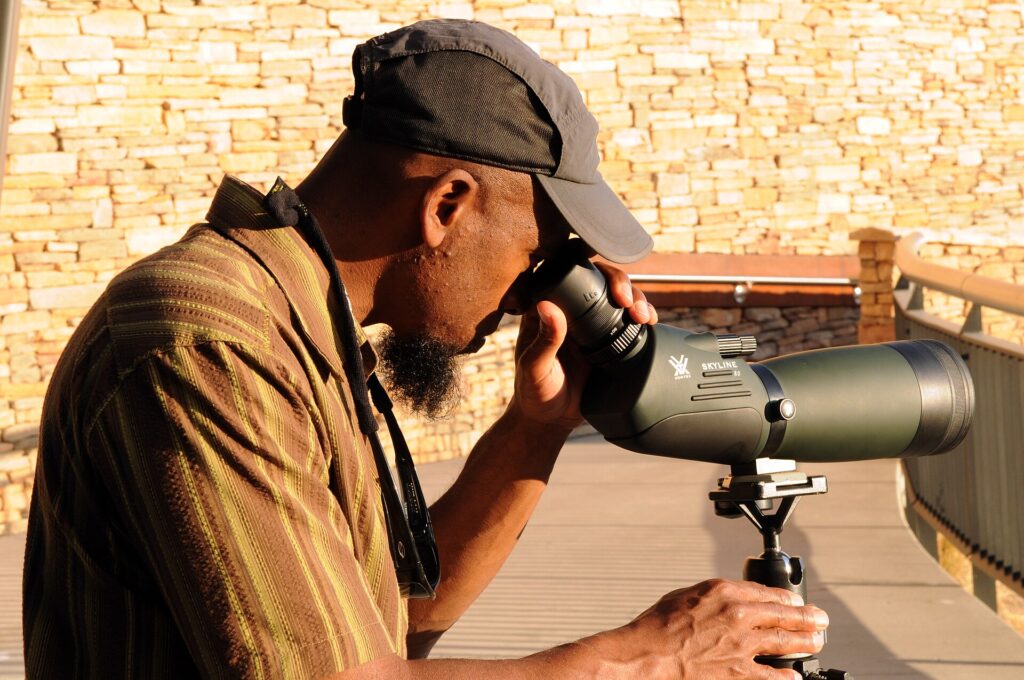
- Angled, not straight. An angled eyepiece sits at 45 degrees. The Cornell Lab notes it makes viewing above the horizon easier, works on a shorter and steadier tripod, and lets people of different heights share the scope. Every scope here is angled.
- Objective size: 60 to 85 mm. The front lens decides how bright the image is. Cornell suggests at least 60 mm for birding and around 85 mm for taking photos through the scope. Bigger is brighter but heavier: our picks run from 38.5 ounces to 63.8 ounces.
- Zoom: start low. Scan at 15x to 20x to find the bird, then zoom in. Past about 40x, heat shimmer and shake limit what any scope shows, so the top number on the box matters less than the glass.
- ED or HD glass cuts the color fringing that softens a bird at high power. It’s the biggest optical difference between a $200 scope and a $600 one.
- Close focus. Audubon suggests a scope that focuses within about 20 feet, so you can use it on nearby birds too. Where the makers list it, our picks range from 16.4 feet to 26.2 feet.
- The tripod. Cornell puts it bluntly: even the best scope “won’t provide a good image if it’s mounted on a flimsy tripod.” See the tripod section below.
The scopes
1. Vortex Diamondback HD 16-48×65 angled — best overall
16-48x zoom · 65 mm · 16.4-ft close focus · 49.8 oz · 14.3 in long · 138-72 ft field of view
The 65 mm Diamondback HD hits the balance most birders want: bright and sharp enough for shorebirds across a mudflat, light and short enough to carry on a walk, with a close focus of 16.4 feet, the closest listed here. The 16x low end gives a wide 138-foot view for finding birds before you zoom in. And it carries Vortex’s VIP warranty, which covers the scope for life no matter what happened to it, including a tripod tipping over in the wind.
Downside: 48x is the top of the zoom. For most birding that’s plenty, but the 85 mm version below reaches 60x.
2. Vanguard Endeavor HD 82A — best ED glass
20-60x zoom · 82 mm ED · 63.8 oz · 15 in long · 152-110 ft field of view · 19-20 mm eye relief
The Endeavor HD is the one scope here sold with ED glass, which keeps colors clean and edges crisp at the top of the zoom, and it pairs that with a big 82 mm lens for a bright image at dawn and dusk. It has a magnesium body, a dual focus wheel for coarse and fine adjustment, a built-in sunshade, and 19 to 20 mm of eye relief, which helps if you wear glasses. Vanguard’s lifetime warranty is no-fault, and it’s sold and shipped by Amazon.
Downside: at 63.8 ounces it’s the heaviest scope here and needs a sturdy tripod, and Vanguard doesn’t list a close-focus distance.
3. Vortex Diamondback HD 20-60×85 angled — biggest Vortex
20-60x zoom · 85 mm · 24.6-ft close focus · 60.9 oz · 16 in long · 108-60 ft field of view
An 85 mm lens gathers about 70 percent more light than a 65, and you see it at dawn and dusk and at 60x, where smaller scopes get dim. It’s also the size Cornell suggests for digiscoping, taking photos by holding a phone to the eyepiece. Same HD glass and same VIP warranty as the 65 mm model.
Downside: at 60.9 ounces it needs a sturdy tripod, and its 24.6-foot close focus is longer than the 65’s.
4. Celestron Ultima 80 angled — best budget
20-60x zoom · 80 mm · 26.2-ft close focus · 57 oz · 19.3 in long · 105-53 ft field of view · 18 mm eye relief
The Ultima 80 is a long-running starter scope: a big 80 mm lens for a bright image at a low price, BaK4 prisms, fully multi-coated optics, and a waterproof, nitrogen-filled body. For ducks on a pond or a heron across a marsh at 20x to 40x, it does the job.
Downside: no ED glass, so the image softens at the top of the zoom; at 19.3 inches it’s the longest scope here; and the 26.2-foot close focus is the longest too. No tripod is included.
5. Athlon Talos 20-60×80 — cheapest way to try one
20-60x zoom · 80 mm · 38.5 oz · 83-48 ft field of view · tabletop tripod and case included
If you’re not sure you’ll use a scope, the Talos is the low-cost way to find out. It’s the lightest scope here at 38.5 ounces, it’s sealed and waterproof, and it comes with a small tabletop tripod and a soft case, so it works out of the box on a picnic table or a porch rail.
Downside: it uses K9 prisms rather than the BaK4 prisms in the other scopes here, which means a less bright, less crisp image, especially at higher zoom. The tabletop tripod is too short for standing use; you’ll want a full-size tripod.
Don’t skip the tripod
At 40x, a scope magnifies every shake and gust of wind 40 times. Audubon reminds buyers to budget for a tripod up front. Look for one that extends to your eye level with the center column down, has flip or twist leg locks you can work with gloves on, and a smooth pan head so you can follow a bird. Two that work well: the Vortex Mountain Pass tripod kit is compact at 3.1 pounds and 56 inches tall, which with an angled eyepiece works well seated or for shorter birders, holds up to 22 pounds, and carries the same unconditional Vortex warranty. For a tripod you can stand at, the SLIK Pro 700 DX with 3-way pan head extends to 75 inches, has flip leg locks, and supports up to 44 pounds, though at 7 pounds it’s heavier to carry.
Side by side
| Scope | Zoom | Lens | ED/HD | Close focus | Weight | Warranty |
|---|---|---|---|---|---|---|
| Vortex Diamondback HD 65 | 16-48x | 65 mm | HD | 16.4 ft | 49.8 oz | Lifetime, unconditional |
| Vanguard Endeavor HD 82A | 20-60x | 82 mm | ED | Not listed | 63.8 oz | Lifetime, no-fault |
| Vortex Diamondback HD 85 | 20-60x | 85 mm | HD | 24.6 ft | 60.9 oz | Lifetime, unconditional |
| Celestron Ultima 80 | 20-60x | 80 mm | No | 26.2 ft | 57 oz | Limited lifetime |
| Athlon Talos 80 | 20-60x | 80 mm | No | Not listed | 38.5 oz | Not listed |
Specs are from the manufacturers. Field of view is feet at 1,000 yards.
Getting the most from a scope
- Find the bird with binoculars first, then line up the scope along its barrel and look through at the lowest zoom.
- Bird in the morning. By midday, heat rising off water and fields blurs the image at high zoom no matter what scope you own.
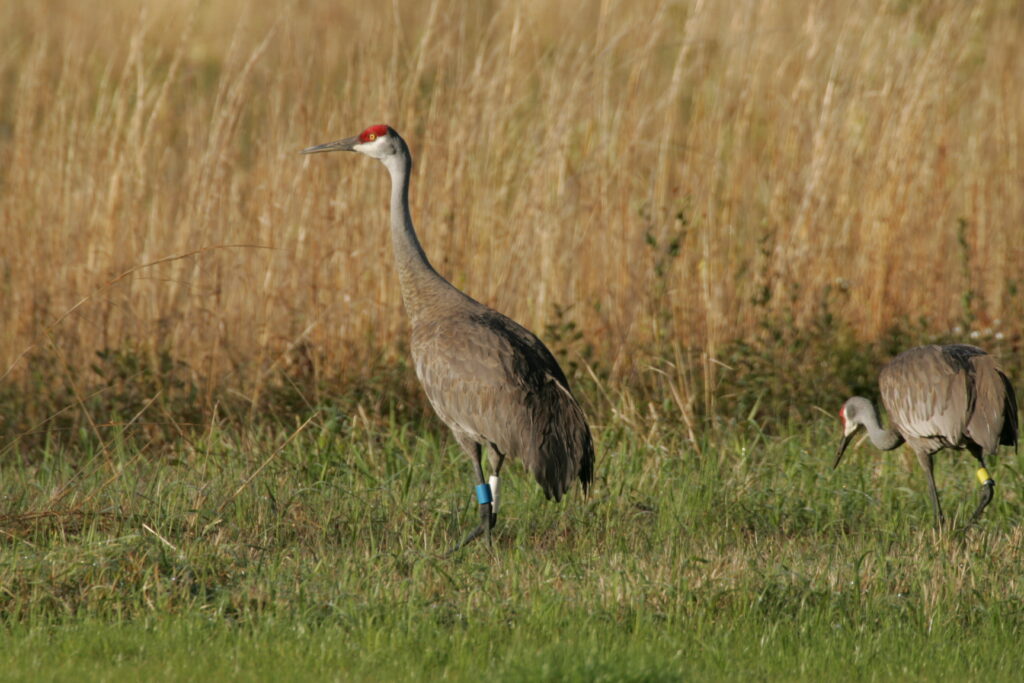
- Try digiscoping. Hold your phone’s camera to the eyepiece, or use a phone adapter, to photograph birds too far for any camera lens you own.
- Keep the lens caps on between birds, and clean the glass with a blower and lens cloth.
A scope pairs with good binoculars, not instead of them; see our binoculars under $500 and under $200 guides. Shopping for a birder? Our gifts for bird lovers has more ideas.
Photographers should also see the best cameras for bird photography under $1,000; several pair well with a scope for digiscoping.
Bottom line
For most birders, the Vortex Diamondback HD 16-48×65 angled is the scope to buy: sharp, light enough to carry, close-focusing, and covered for life whatever happens to it. If you want ED glass and a big, bright lens, the Vanguard Endeavor HD 82A is the pick. If you’re on a budget, the Celestron Ultima 80 will show you what a scope can do, and the Athlon Talos is the cheapest way to find out whether you’ll use one. And put whichever you choose on a solid tripod.