If a bird is building a nest on your house, on the porch light, in a door wreath or under the eaves, you’re in good company. People have been reading meaning into it for centuries. In parts of Europe a stork or swallow nest on a house was taken as a sign of luck and protection, and destroying one was thought to bring trouble. Those beliefs are folklore, and there is no scientific evidence that a nesting bird carries a message or changes your luck. What the nest does tell you is practical: a bird found your house safe, sheltered and close to food. Below we cover the old beliefs, which bird is most likely nesting on your home, how long it will stay (with a chart), and what U.S. law says you can and can’t do about it.
The short version
- The folklore: Bulgarian tradition held that a house with a stork’s or swallow’s nest was protected from misfortune, and Irish farm families took swallows nesting in their buildings as a sign of great luck. In both traditions, harming the nest was bad news.
- The “spiritual meaning”: Modern websites say a nest on your house means new beginnings, fertility or a blessing on the home. These are beliefs, not facts, and nothing shows that birds choose a house for any reason but shelter.
- The likely bird: In the U.S., house finches, barn swallows, American robins, eastern phoebes, Carolina wrens, chimney swifts and house sparrows are among the birds that commonly nest on or in houses.
- How long it lasts: For most of these birds, eggs and chicks are done in about three to six weeks.
- The law: Most native birds are protected by the Migratory Bird Treaty Act. You can’t remove or destroy a nest with eggs or chicks in it without a federal permit, but you can usually remove it once it’s empty.
What does it mean when a bird builds a nest on your house?
There’s no single answer, because the meaning depends on whose folklore you ask. Most of the traditions we found are positive. A nest on the house was usually read as a good sign for the household, and the people living there were expected to protect it.
Storks: luck, prosperity and babies
In Germany, a stork nest on a building is traditionally seen as a good omen tied to prosperity and fertility, according to a U.S. Air Force feature on German stork folklore. The same piece notes that the European legend of storks delivering babies may have grown out of the birds’ habit of nesting on rooftops.
Swallows: protection and good fortune
Swallows have the strongest house-nest folklore. Radio Bulgaria’s 2026 report on folk beliefs says a house with a stork’s or swallow’s nest was believed to be protected from misfortune and black magic, and that destroying their nests or breaking their eggs was considered a great sin. In Ireland, folklorist Shane Lehane wrote in the Irish Farmers Journal that swallows nesting in farm buildings were “always taken as a sign of great luck,” and that children who disturbed the nests could be blamed when blood showed up in the milk. In China, swallow nests under the eaves of buildings in Fujian came to stand for the hope that travelers would return home, as the swallows returned to their nests, according to Cultural Keys.
A bird inside the house is a different superstition
Don’t confuse a nest on the house with a bird flying inside. In early American folklore, a bird that flew into a house was said to carry a message for the people inside, and if it couldn’t get out again, it was a sign of death, as bird writer Laura Erickson explains in her For the Birds radio program on superstitions. She adds that the death was usually the bird’s. A nest on the outside of your house has no such reputation in the traditions we found.
The modern “spiritual meaning”
Search for the spiritual meaning of a bird nesting on your house and you’ll find claims that it means new beginnings, a growing family, abundance or protection. Some of that echoes the stork and swallow traditions above, but we couldn’t trace the specific modern claims to older sources. If the idea of a nest as a blessing on your home means something to you, there’s no harm in it. Just know it’s a belief, and the bird’s reasons are much simpler.
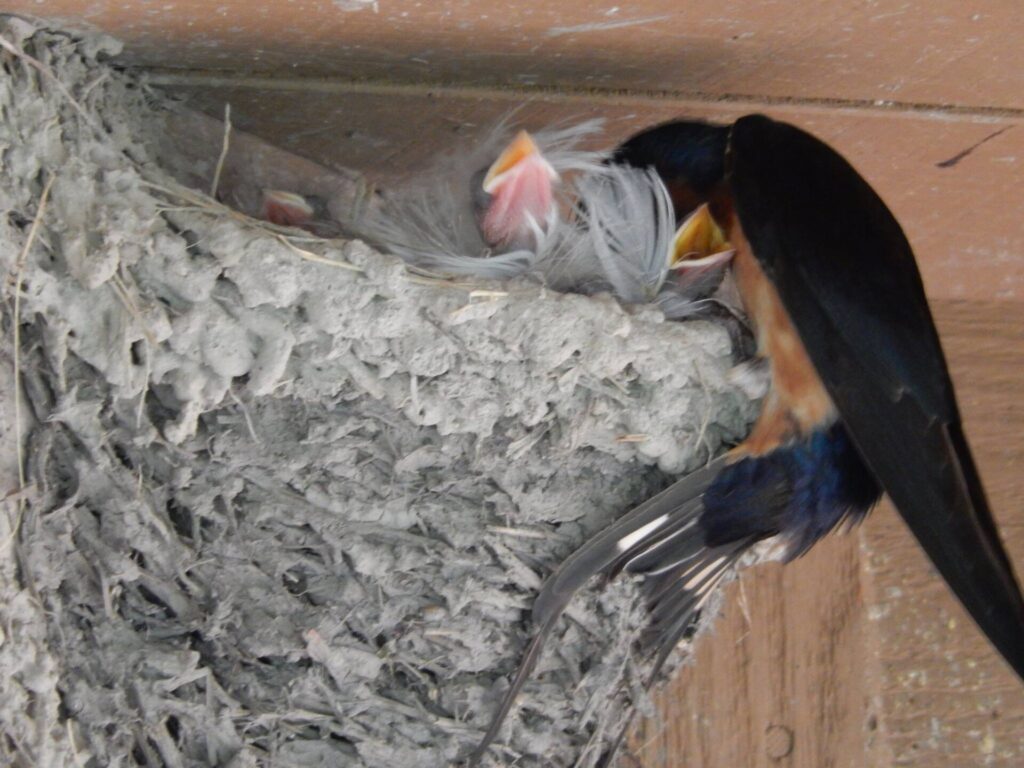
Why birds really nest on houses
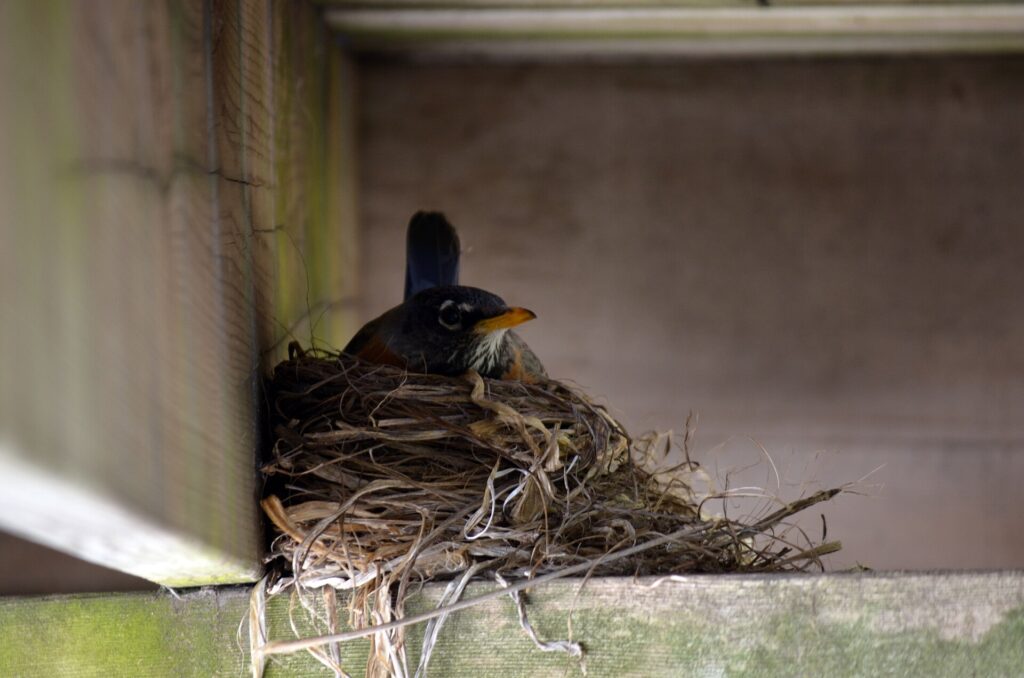
A house offers what many birds look for in a nest site: a roof over the nest, a ledge or hollow to build on, and protection from wind and rain. Eastern phoebes, for example, “greatly prefer nest sites that are close to overhead cover,” according to the Cornell Lab’s NestWatch.
Some birds have shifted almost entirely to buildings. Barn swallows once nested in caves and crevices, and those sites were scarce enough to keep their numbers low, Journey North explains. When people started putting up buildings, swallows moved in right away. Today their preferred sites are the eaves, rafters and cross beams of barns, sheds and stables, says All About Birds. Chimney swifts made a similar move from caves and hollow trees to chimneys, which is now where they mainly nest, according to the Cornell Lab.
Which bird is nesting on my house?
These are common birds that nest on, in or right next to houses in the U.S. The nest sites and egg counts come from each species’ life history page on All About Birds, plus NestWatch for the eastern phoebe and Audubon Great Lakes for wreaths and doorways.
| Bird | Where it nests on or near houses | Eggs | Protected by the MBTA? |
|---|---|---|---|
| House finch | Vents, ledges, street lamps, ivy, hanging planters and front-door wreaths | 2–6 | Yes |
| Barn swallow | Mud nests under eaves and on rafters and beams of barns, sheds and stables | 3–7 | Yes |
| American robin | Gutters, eaves, outdoor light fixtures and ledges over doors | 3–5 | Yes |
| Eastern phoebe | Ledges and walls with an overhang above, often near water | 2–6 | Yes |
| Carolina wren | Odd spots: flowerpots, mailboxes, propane-tank covers, even boots and coat pockets | 3–7 | Yes |
| Chimney swift | Inside chimneys | 3–5 | Yes |
| House sparrow | Holes in buildings, signs and streetlights | 1–8 | No (not native) |
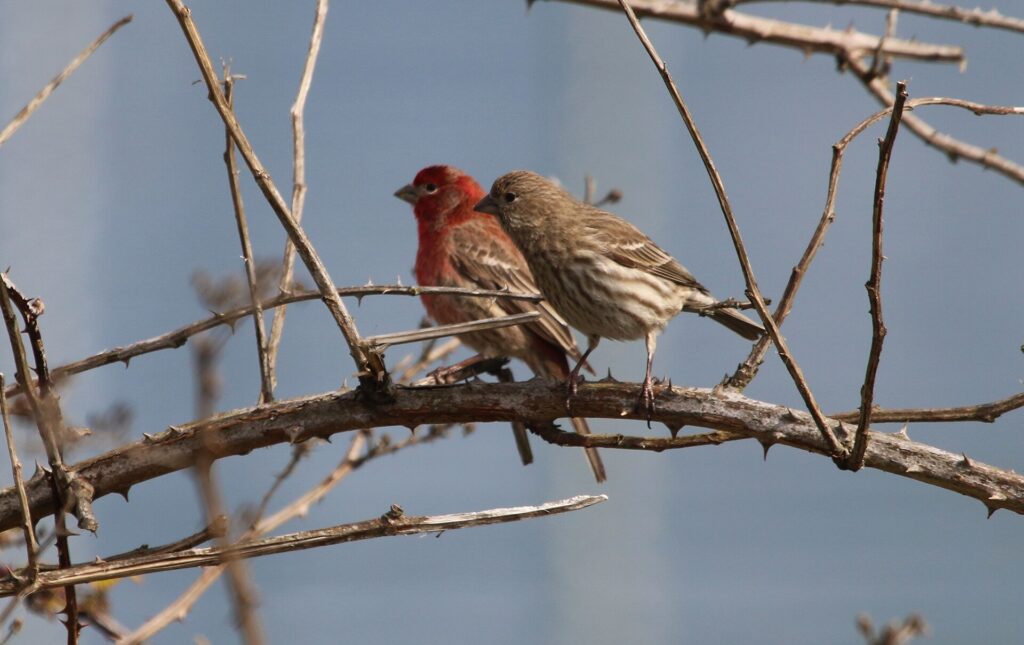
- House finch: The classic wreath and hanging-basket nester. The nest is a cup of fine stems, leaves, rootlets and twigs, about 3 to 7 inches across.
- Barn swallow: Look for a cup of mud, often mixed with grass, stuck to a beam or wall under a roof. Both parents build it.
- Eastern phoebe: Also uses mud, along with moss, leaves, grass and animal hair, usually under an overhang.
- Chimney swift: Glues a small half-saucer of twigs to the inside of a chimney with its saliva.
- Carolina wren: Will tuck a nest into nearly anything left outside, from a flowerpot to a boot on the porch.
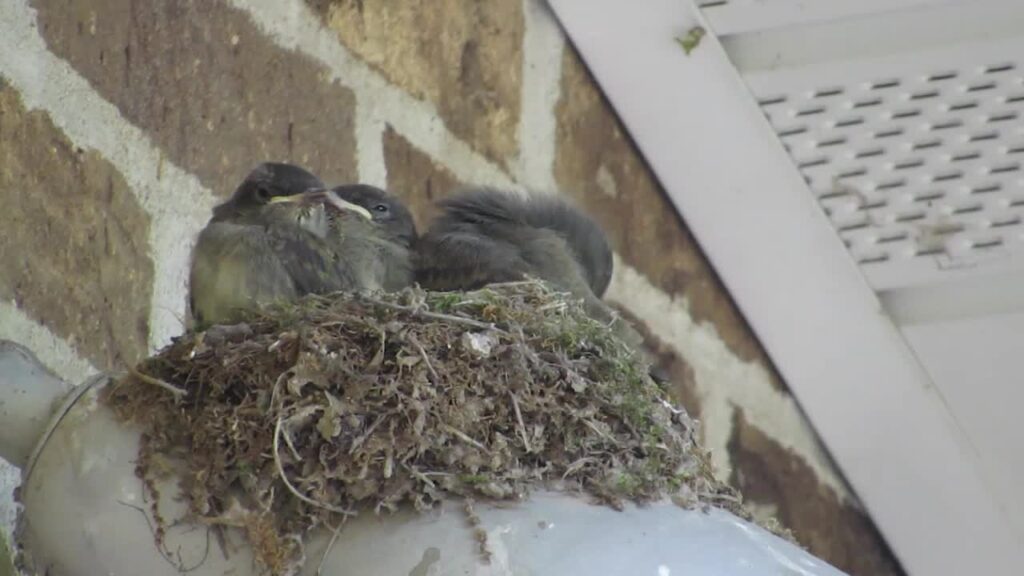
How long until the birds leave? Our chart
The good news for anyone waiting out a nest by the front door: it doesn’t last long. We charted the incubation and nestling periods for each bird from the Cornell Lab’s life history pages. Add the two together and most of these families are done in about three to six weeks, from the start of incubation to the chicks leaving the nest.
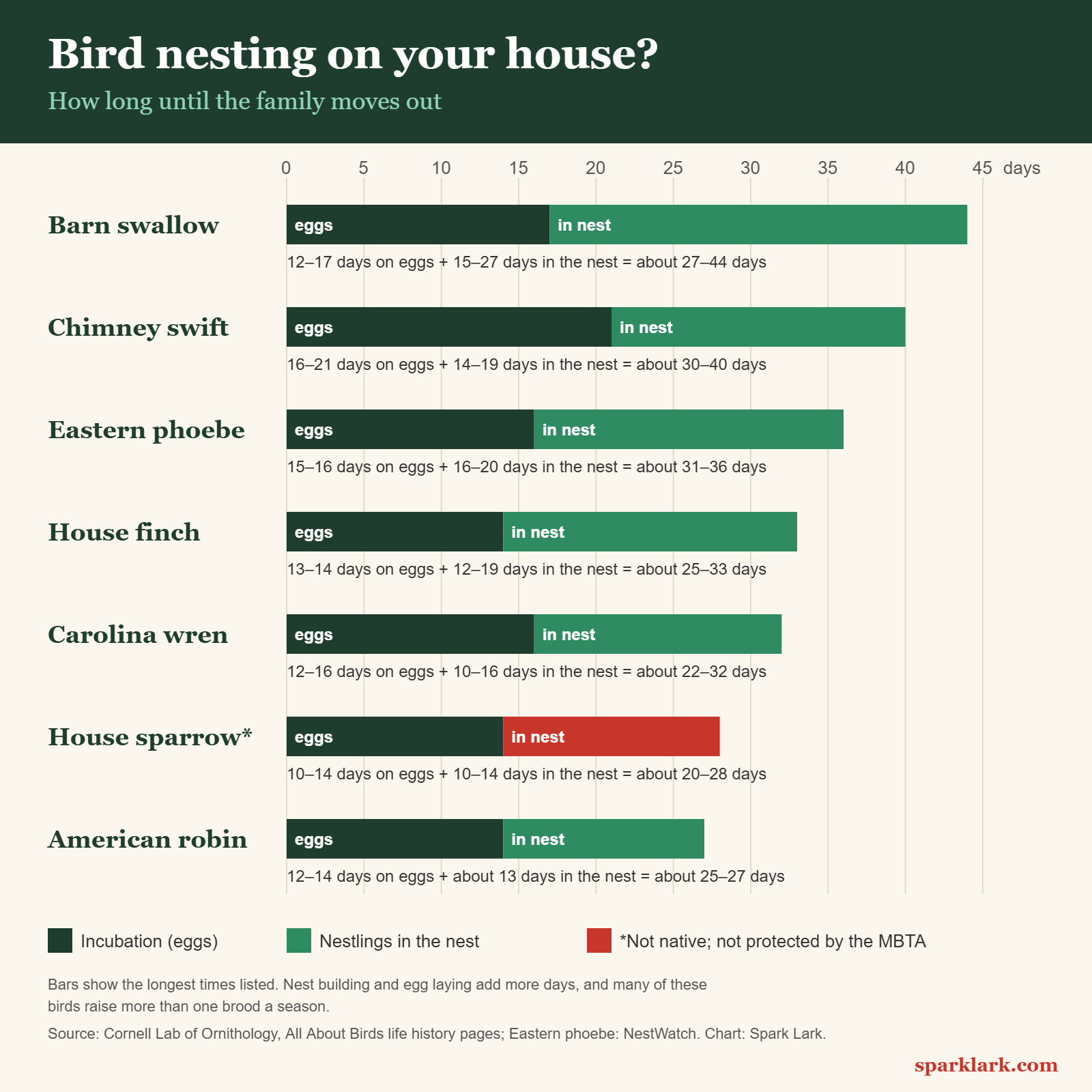
Two caveats. First, building the nest and laying the eggs take extra days on top of what the chart shows. Second, many of these birds nest more than once a season. Robins raise one to three broods, Carolina wrens one to three, and house finches can raise as many as six, so the same spot may get used again.
Can you remove a bird nest from your house?
It depends on the bird and on whether the nest is in use. Most bird nests in the U.S. are protected under the Migratory Bird Treaty Act, the U.S. Fish and Wildlife Service says. Here’s how the rules break down, based on the Fish and Wildlife Service, the Cornell Lab and Audubon Great Lakes:
- Active nest (eggs or chicks): Leave it alone. Moving or removing it requires a federal permit, and those are granted only when public health, safety or property are at extreme risk. Audubon notes it’s common for the chicks to leave before a permit would even come through. It’s also illegal to move a nest just because it’s inconvenient.
- Just started building, no eggs yet: The Cornell Lab says you can discourage a bird that has only just started building, before it lays any eggs.
- Empty (inactive) nest: Usually fine to remove once the birds are done. Audubon adds that you can’t keep it.
- House sparrows, European starlings and feral pigeons: These non-native birds are not protected by state or federal law, and their nests can be removed at any time.
- Eagles and endangered species: Separate, stricter laws apply, including for empty eagle nests.
This is general information, not legal advice. State rules can add to the federal ones, so if a nest is causing a real problem, call your state wildlife agency or the U.S. Fish and Wildlife Service before doing anything.
Living with a nest on your house
For most people the easiest path is to wait it out. Audubon Great Lakes advises avoiding the area around a house finch nest in a wreath or a robin nest over a door until the chicks fledge or the nest fails. A few things help in the meantime:
- Use another door for a few weeks if the nest is by the front door, and keep pets and kids back.
- Don’t peek often. Birds often abandon nests and eggs that have been moved, Audubon warns, so give the nest space.
- Clean up after. Once the nest is empty and the season is over, remove it and the mess underneath if you don’t want birds back in that spot.
- Offer an alternative. If you’d rather have birds nest somewhere other than your porch light, a nest box away from the door gives cavity nesters another option. See our guide to birdhouses and roosting boxes.
Chimney swifts deserve a special mention. The 2025 State of the Birds report lists them as an “Orange Alert Tipping Point” species that has lost more than half its population in 50 years, according to All About Birds. If swifts nest in your chimney, the wait is short: the Cornell Lab puts incubation at 16 to 21 days and the nestling period at 14 to 19 days.
FAQ
Is it good luck when a bird builds a nest on your house?
Many traditions say so, especially for swallows and storks, and some held that destroying the nest brought bad luck. There’s no evidence a nest changes your luck. It does mean a bird judged your house a safe place to raise young.
What does it mean when a bird builds a nest by your front door?
Practically, it means the spot is sheltered and quiet enough for the bird. House finches and robins are the usual front-door nesters. In most cases the chicks are gone in a month or so.
Is a bird nest on the house a bad omen?
Not in the folklore we found. The bad-omen superstition is about a bird flying inside a house, which is a different belief. A nest outside was generally seen as a good sign.
Will the birds come back next year?
They may. Many of these birds raise more than one brood a season, so the same spot can be used again. If you don’t want birds there, remove the nest once it’s empty and the season is over.
Can I move a nest a few feet?
Not if it has eggs or chicks in it, unless it’s a non-native house sparrow, starling or pigeon. Moving an active nest of a protected bird is illegal without a permit, and the parents often abandon a nest that’s been moved.
Bottom line
A bird building a nest on your house has meant luck, protection and new life in plenty of old traditions, from Bulgarian and Irish swallow beliefs to German stork lore. Those meanings are folklore. The real reason is shelter, and the real meaning for you is a few weeks of sharing your porch. Most of these nests are protected while they’re in use, so the best move is usually to give the birds space and clean up once they’ve gone. For more bird beliefs and the science behind them, read hummingbird meaning and folklore, what it means when you see a cardinal and blue jay meaning and folklore.