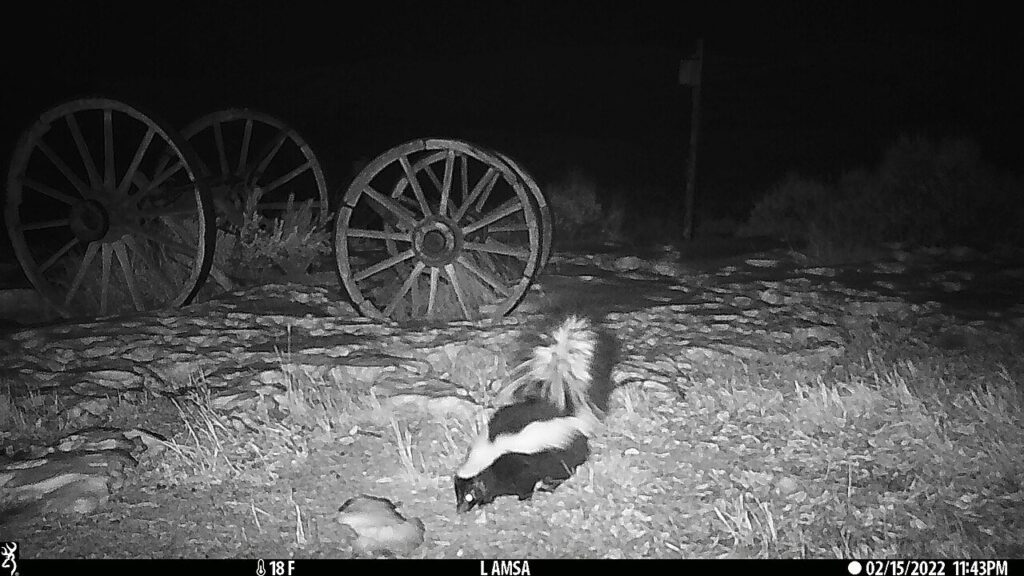
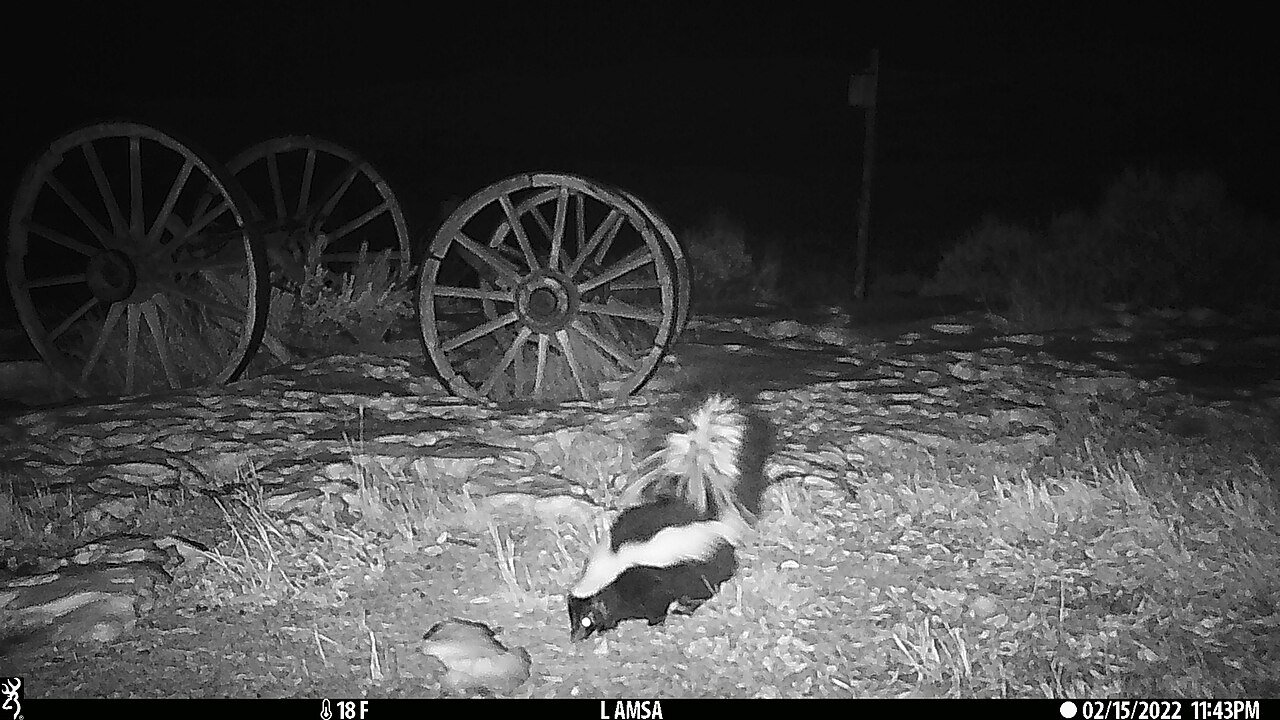
Yes. Skunks eat bird seed, and a feeder that drops seed on the ground is a nightly buffet for one. The good news is that the common striped skunk is a poor climber, so it rarely touches the feeder itself; they clean up what falls under it, along with the grubs in the lawn and the mice the spilled seed attracts. The fix is to stop the seed from hitting the ground, and it’s cheap.
What skunks actually eat
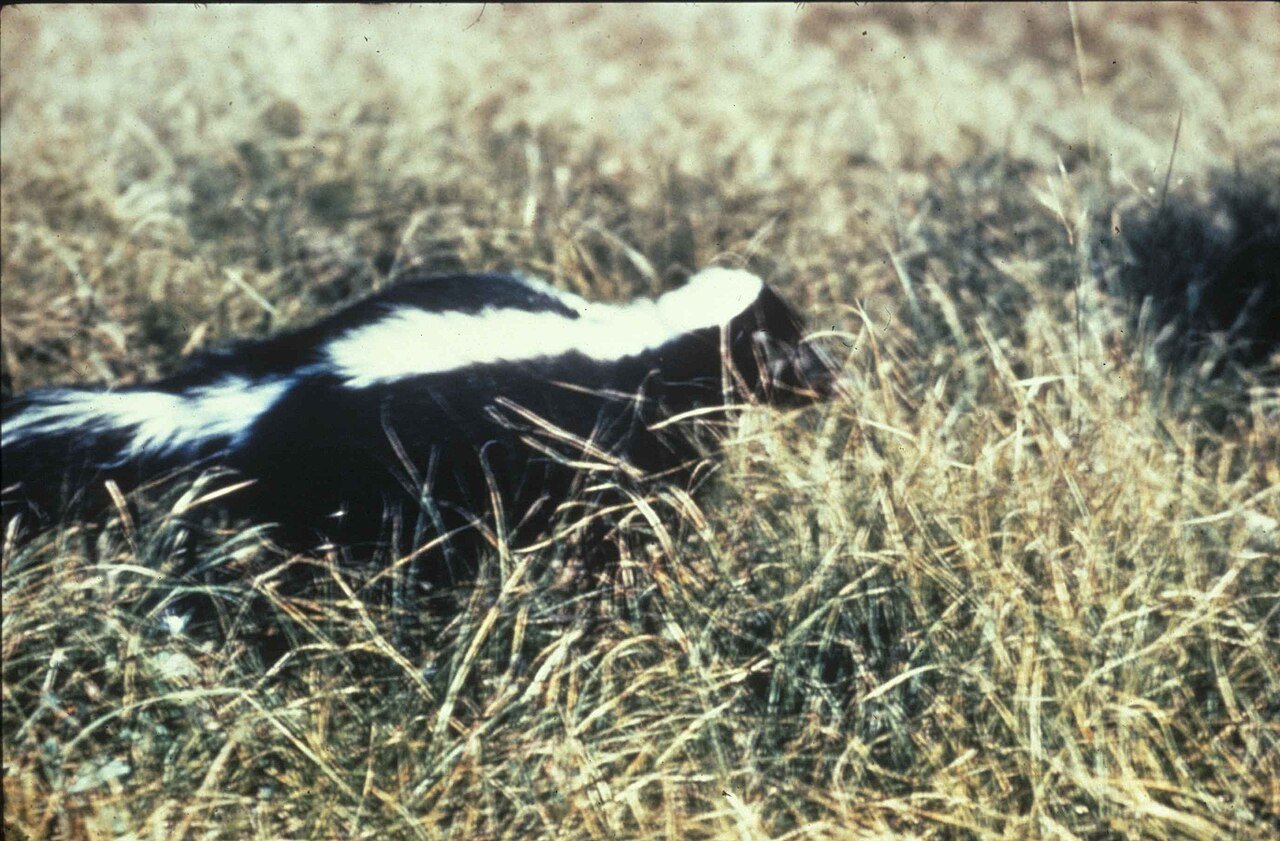
Striped skunks, the black-and-white one found in every state but Alaska and Hawaii, are omnivores that lean toward insects: grubs, beetles, crickets, grasshoppers, and bee and wasp larvae, which is why a skunk will tear open a yellowjacket nest. They also take mice, eggs, fallen fruit, and whatever’s easy. Sunflower seed, cracked corn, millet and peanuts under a feeder are easy. A skunk works the ground under a feeder the way it works a lawn, nose down, and it’ll come back every night as long as there’s seed.
They’re nocturnal, so you usually don’t see them. The signs are small cone-shaped holes dug in the lawn (grubbing), seed hulls and droppings under the feeder that weren’t there at dusk, and, once, the smell. Skunks spray only when threatened, and they give plenty of warning first: stamping the front feet, raising the tail, and turning the rear toward the threat. The smaller spotted skunk adds a handstand. A skunk under the feeder that sees you will simply walk away.
Why it matters
A skunk isn’t a threat to the birds. The problem is what comes with it: a den under the deck or shed, a dog that gets sprayed, and, more seriously, rabies. Skunks account for about 17 percent of the rabies cases reported in animals in the U.S., behind only bats and raccoons, according to the CDC. A skunk out in daylight, staggering, or unafraid of people should be reported to animal control and not approached. And the spilled seed that draws the skunk draws rats first, which is the better reason to fix it.
When skunks show up
Skunks slow down in winter but don’t disappear. MassWildlife notes they come out for stretches whenever nighttime temperatures stay above about 30°F, so a winter thaw can bring one straight back to the feeder. Mating runs February through March, and females give birth to two to ten kits between late April and early June. In summer, skunks often sleep above ground, in tall grass, under shrubs, or under decks and buildings. MassWildlife’s own advice is simple: if skunks are around your yard regularly, take the feeders down for a while.
Keeping them off the seed
- Catch the spill. A seed tray that clips under a tube feeder catches most of what birds flick out. The Aspects Bigfoot fits most tubes; other brands have their own.
- Stop the flicking. Birds throw seed out of a feeder to get to what they want. Fill it with straight black-oil sunflower or, better, hulled sunflower chips, and there’s nothing to reject and no hulls on the ground. Our seed guide explains why the cheap mixes are the worst offenders.
- Rake at dusk. A quick rake under the feeder before dark, a few nights in a row, and the skunk finds nothing and moves on.
- Pole and baffle. Striped skunks are poor climbers, but raccoons, which come with them, climb well. A pole with a baffle handles both; see the squirrel-proof feeder guide.
- Store the seed in metal. A skunk or a raccoon in the garage will open a bag or a plastic bin. Our seed storage guide covers the galvanized can that ends it.
- Skip ground feeding. No seed scattered on the ground, no platform feeder low to the lawn, and pull the suet at night if a raccoon is visiting.
If it’s already living under the deck
A skunk denning under a deck, shed or porch in spring may have kits, and sealing it in is both cruel and a smell you’ll never forget. Kits don’t leave the den until they’re about six to eight weeks old and stay with the mother until they’re two to five months old, so wait until late summer, when the young are out, then confirm the den is empty (sprinkle flour at the entrance and check for tracks the next morning for three nights), and close it with hardware cloth buried a foot down. Motion lights and a radio under the deck encourage the move. If you’d rather not, most counties have a wildlife-control service, and it’s a routine job for them.
If the dog gets sprayed
Skunk spray can reach up to 16 feet, and a dog that charges a skunk under the feeder usually takes it in the face. Texas A&M’s veterinary college recommends one quart of 3 percent hydrogen peroxide, a quarter cup of baking soda and a teaspoon of liquid dish soap. Mix it in an open container and use it right away; never store it in a closed bottle, which can burst. Work it into the coat, keep it out of the eyes, mouth and nose, rinse, and repeat until the smell fades. Don’t add extra peroxide, which can burn the skin, and use fresh baking soda and peroxide. Spray in the eyes can cause real irritation, so call the vet if the dog’s eyes stay red or it keeps pawing at its face.
Related: The best squirrel-proof feeders · How to store bird seed · Keeping squirrels off feeders