A hummingbird weighs about as much as a penny and will chase a hawk. At a feeder, that translates into one bird sitting on a nearby twig all day, diving at every other hummingbird that comes near, and a feeder that stays mostly empty while a dozen birds wait in the shrubs. It looks like a problem. It’s the normal behavior of the species, and the fix is not to stop it but to work around it.
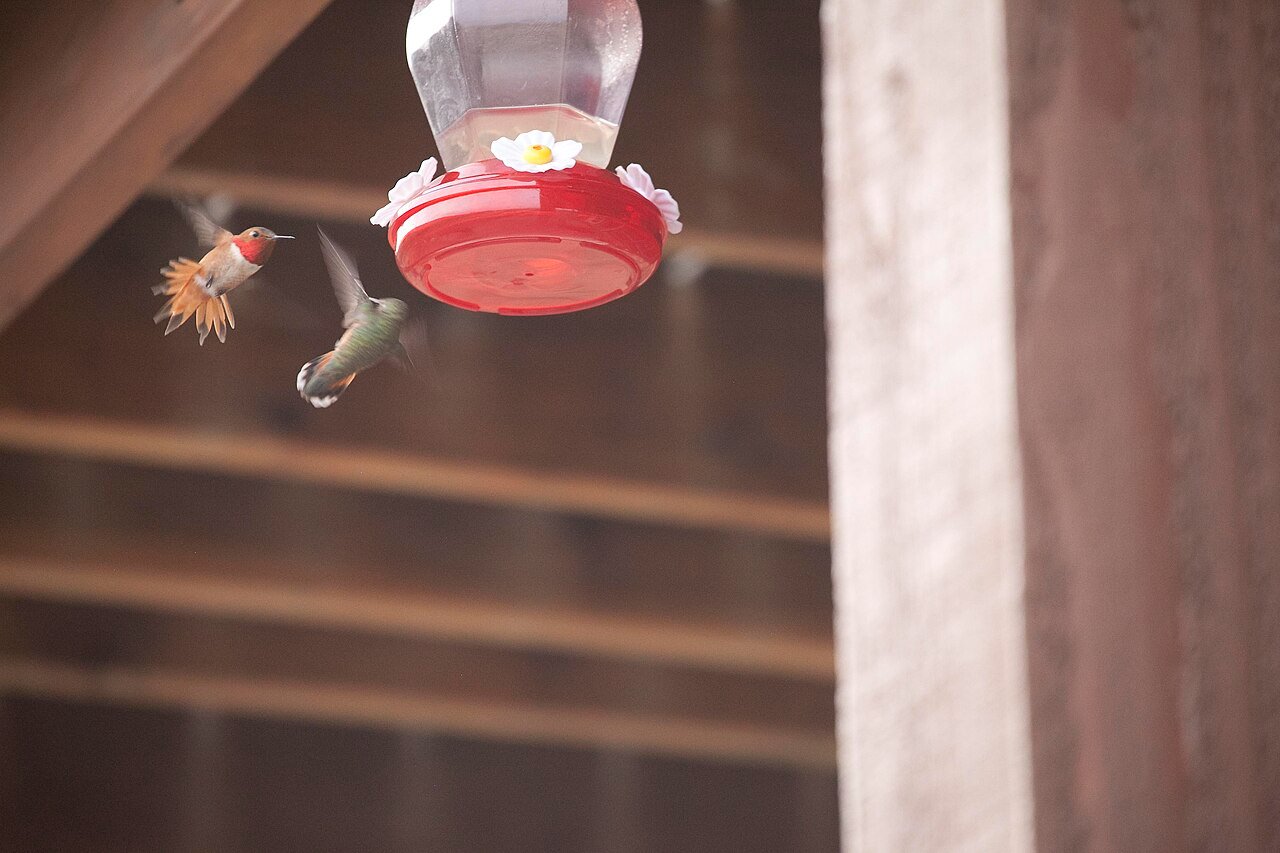
Why they fight
Hummingbirds run the highest metabolism of any warm-blooded animal and live a few hours from starvation. A reliable nectar source is worth defending with everything they have, so they defend it: a male picks the best flower patch or feeder in range, perches where he can see it, and drives off every rival. In summer that’s about food. In spring and early summer it’s also about mates; a male’s territory is his display ground. In late summer, when migrating rufous and ruby-throats pass through, the fighting peaks, because the migrants are desperate for fuel and the residents are defending it. The dives, chases, chattering, and the rare bill-locking tumble to the ground are all part of one behavior: keep the sugar.
Females fight too, especially near a nest, and juveniles in August fight everyone, including their own siblings. Winter brings no truce where hummingbirds stay year-round: Anna’s hummingbirds on the West Coast aggressively defend territories through the cold months, feeders included.
Why a feeder is worth the fight
The numbers explain the temper. According to Journey North, no animal has a faster metabolism. A hummingbird’s heart beats around 500 times a minute, and the bird eats one and a half to three times its own weight in nectar and insects every day, visiting hundreds of flowers to get it. At night it can drop into torpor: the heart slows to fewer than 50 beats a minute, body temperature falls by almost 50 degrees, and the bird burns as little as one-fiftieth of the energy it uses awake. A bird running that close to empty doesn’t share a feeder that never runs dry if it can help it.
What it looks like
- The perch guard. One bird sits on a bare twig within sight of the feeder for hours. That’s the owner.
- The dive. A U-shaped plunge at an intruder, sometimes with a buzz or a pop from the tail feathers. Mostly bluff.
- The chase. Two birds spiraling through the yard at full speed, chattering. Ends when the intruder leaves the territory.
- The grapple. Rare: two birds lock bills or feet and fall to the ground together. They usually separate within seconds.
- Nobody at the feeder. The owner is so busy chasing that neither he nor anyone else eats. This is the sign to add a feeder.
The worst offender
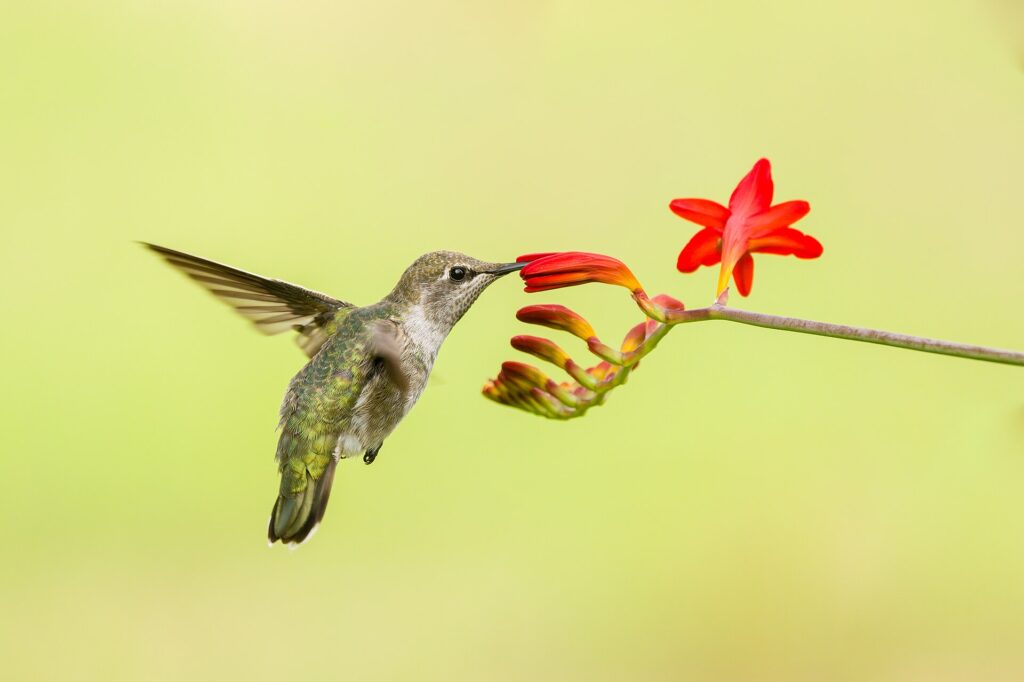
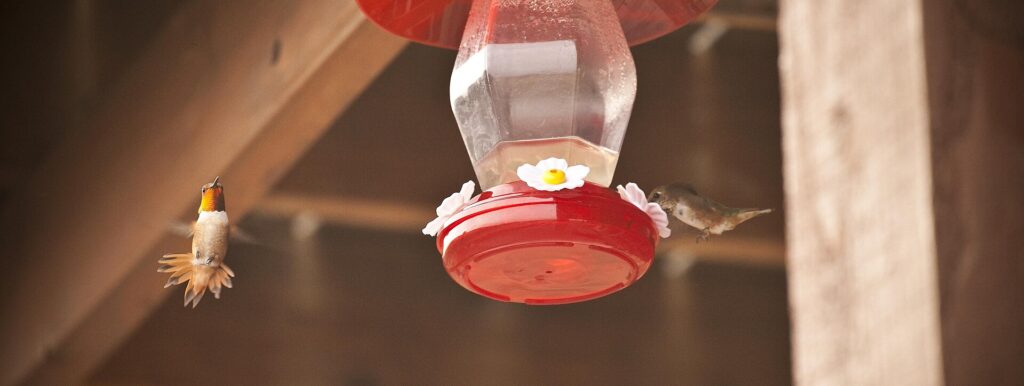
If the bully at your feeder is orange, it’s probably a rufous. Cornell’s All About Birds calls rufous hummingbirds relentless attackers at flowers and feeders, extremely territorial at every time of year, and willing to go after hummingbirds that weigh twice as much. They also make one of the great small-bird migrations, roughly 3,900 miles each way between Alaska and Mexico. East of the Great Plains, the ruby-throat is the one common hummingbird, so nearly every feeder fight there is ruby-throat against ruby-throat.
How to get more birds fed
A hummingbird can defend what it can see. So the fix is to put out more feeders than one bird can watch: two or three small feeders, out of sight of each other, around a corner of the house or behind a shrub. The owner claims one; the others feed everyone else. This works better than one big feeder every time, and it’s cheaper. A two-pack of saucer feeders is the easy way to start; our hummingbird feeder guide covers the rest. Put flowers between them too, so there’s more nectar than any one bird can hold.
Two more things help. Feeders with several ports in a ring, like a saucer, let two birds feed on opposite sides without seeing each other, which a bottle feeder with ports on one face doesn’t. And keep every feeder full and fresh; a bird defending a stale feeder fights harder for less, and our bees and wasps guide explains why fresh matters in August anyway.
Keep the nectar worth sharing
Fights are worst around the one good feeder in the neighborhood, so keep all of yours good. The Hummingbird Society’s recipe is four parts water to one part table sugar, with no red dye, honey or other sweeteners; the feeder supplies the red. Change it every two to three days, more often when it’s over 90°F, and clean the feeder at every refill instead of topping it off. The same group’s feeding guide recommends what this page does: more than one feeder, to feed more birds and take the edge off the territorial fights.
When it stops
In most of the country the fighting ends with the migration. Ruby-throats in the East leave between late August and early October; rufous in the West pass through July and August and are gone by September. The last bird at the feeder is often a lone juvenile, and it stays a week or two after the fights end. Leave the feeder up two weeks past the last visitor; a straggler needs it more than the resident ever did.
Related: The best hummingbird feeders · Keeping bees and wasps off feeders · Hummingbird plants by region