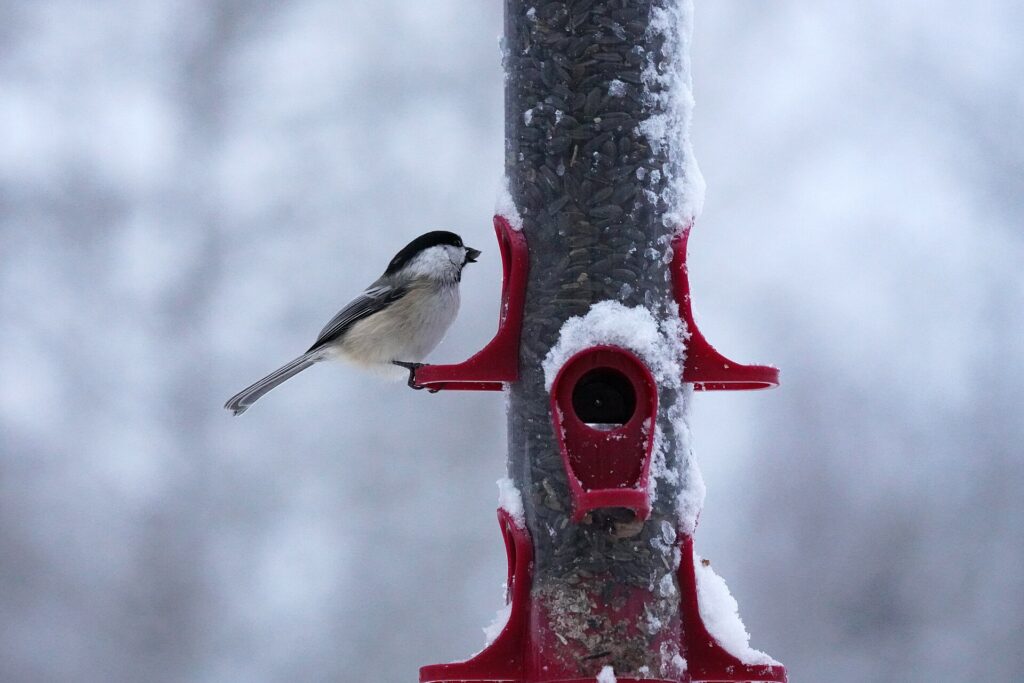
To prepare your bird feeders for winter, do the work in fall, before the first hard freeze and the first snow: scrub and disinfect every feeder, fix or replace anything that lets seed get wet, move feeders to safe spots you can still reach in the snow, put up baffles while the ground can still be dug, and switch to high-energy foods like black-oil sunflower seed and suet. Then plan for the two winter problems feeders don’t solve on their own: wet, moldy seed and frozen water. Here’s the full checklist, step by step, with what the Cornell Lab of Ornithology, Audubon and other sources recommend for each.
The short version
- Clean first. Scrub feeders, soak them 10 minutes in 1 part bleach to 9 parts water, and let them dry completely before refilling (Project FeederWatch).
- Keep seed dry. Feeders with a roof or drainage holes help prevent wet, moldy seed.
- Place them safely. About 10 feet from dense cover, and either within 3 feet of a window or more than 30 feet away.
- Stop squirrels now. A baffle is usually the best fix, according to FeederWatch, and poles are easier to set before the ground freezes.
- Feed for cold. Black-oil sunflower seed and suet are high-energy staples.
- Plan for snow and ice. Clear snow off feeders after storms and add open water if you can.
Why fall is the time to get feeders ready
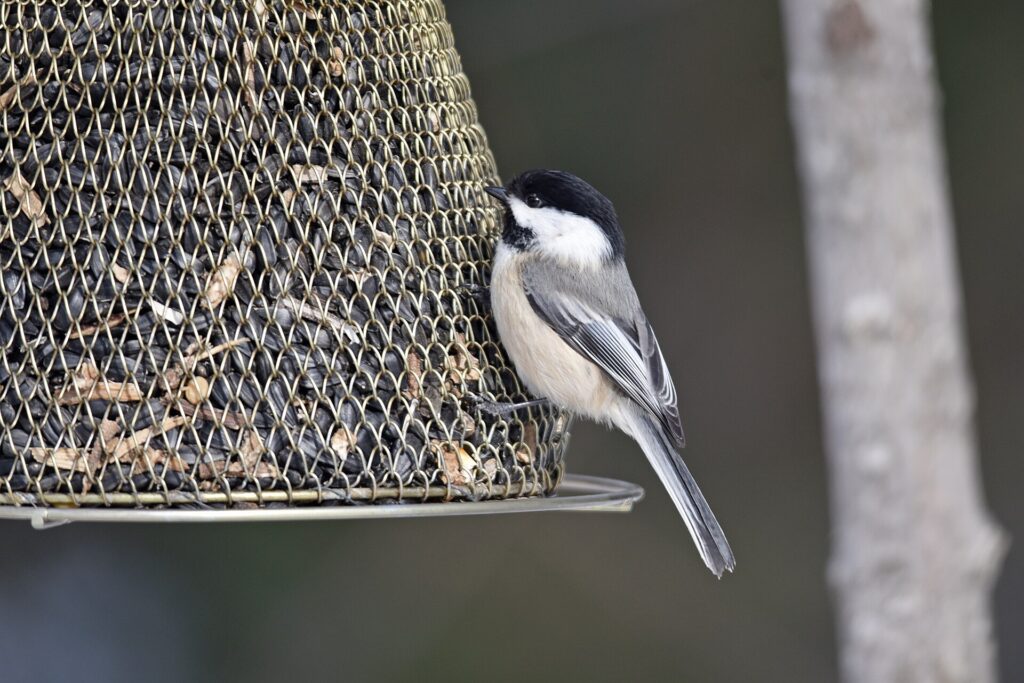
Winter is when feeders matter most to birds. In its guide to winter bird feeding, Audubon notes that feeder birds “often rely most heavily on feeders in winter, when food is scarce.” A Cornell Lab handout on winter feeding adds that natural food sources “often disappear overnight” when snow covers them.
It’s also when feeders are hardest to look after. Scrubbing a tube feeder in an icy yard, or digging a pole hole in frozen ground, is no fun. Doing the setup in October or early November means that by the time the first storm hits, you only have to keep the feeders filled. If you want to count your winter visitors for science, Project FeederWatch’s season starts November 1, so a ready feeder station lines up well with that.
The 9-step winter feeder checklist
1. Deep-clean every feeder
Start the season with clean equipment. Project FeederWatch recommends washing feeders, then soaking the parts for 10 minutes in a solution of one part bleach to nine parts water, and letting everything dry completely before you put it back together and refill it. Our step-by-step guide on how to clean a bird feeder walks through tube, hopper, platform and suet feeders.
Don’t stop after the first scrub. FeederWatch says to clean seed and suet feeders “every week or two,” and more often during heavy use or wet weather. Winter brings both: more birds at once, plus snow and freezing rain soaking the seed. Audubon Great Lakes gives the same schedule: clean every one to two weeks with a 9-to-1 water-and-bleach solution.
2. Check for damage and anything that lets seed get wet
While feeders are apart, look for cracked tubes, loose perches, rusted hangers and clogged drainage holes. Wet seed is a common winter feeder problem. University of Wisconsin Extension recommends feeders that have “a roof to protect the seed from getting wet” or drainage holes so water can run out. A hopper with a wide roof or a tube feeder with a weather dome keeps seed drier than an open tray. If you’re replacing a feeder this year, our picks for the best bird feeders for winter focus on roofs, capacity and how easy they are to clean with cold hands.
3. Move feeders to safe, reachable spots
Think about where you’ll be walking in January. A feeder you can reach from a shoveled path or a deck gets filled more often than one at the far end of a snowy yard. Then check three distances:
- Cover: Project FeederWatch suggests feeders near trees or shrubs so birds have a place to wait and hide, but not so close that branches give squirrels and cats a jumping-off point. It calls about 10 feet “a good compromise.” Evergreens are ideal because they also buffer winter winds, according to FeederWatch.
- Windows: Audubon says to hang feeders “3 feet (or 30-plus feet) from a window” to avoid collisions. Cornell’s winter feeding handout calls feeders attached to the window or within 3 feet of it the safest, because birds are more likely to notice the glass. A window-mounted feeder is one way to do that.
- Height: Audubon suggests hanging feeders at least 5 feet off the ground.
4. Squirrel-proof before the ground freezes
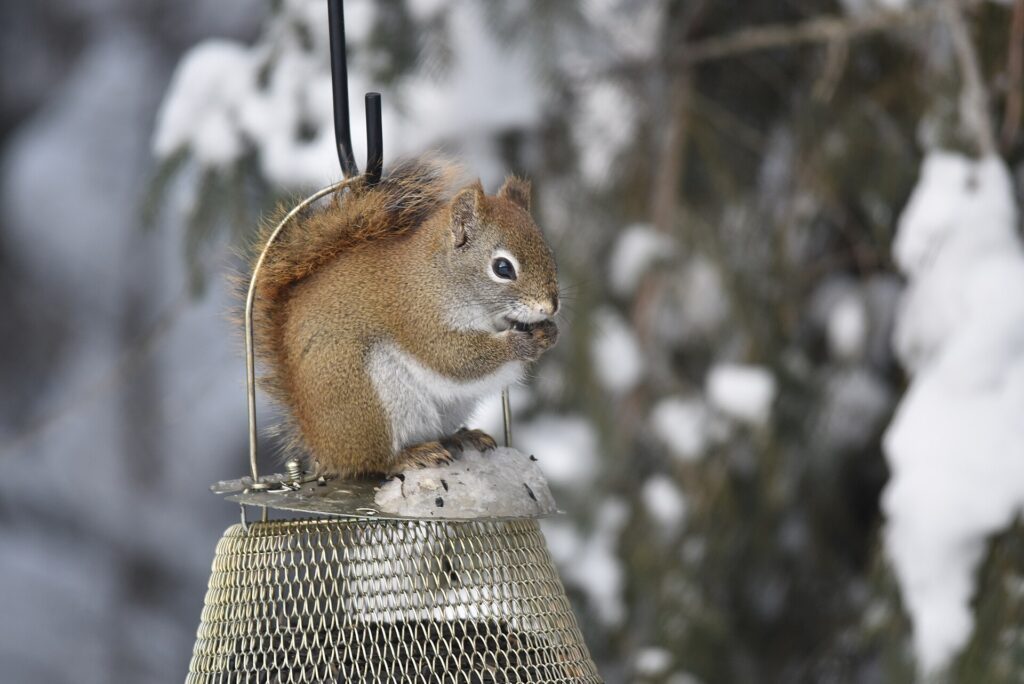
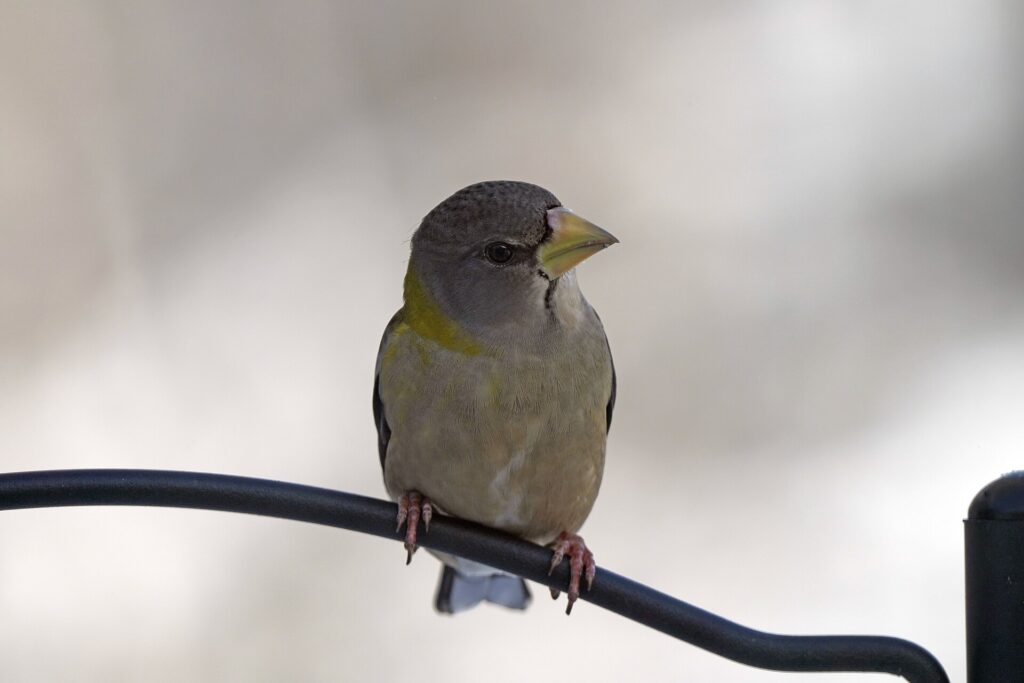
Project FeederWatch says baffles, barriers placed between squirrels and feeders, “are usually the best way to keep squirrels away from your seed.” If you’re putting in a new pole or moving one, do it while the soil is still workable. Our guide to the best squirrel baffles covers pole, post and hanging styles, including baffles that fit the pole you already have.
5. Switch to high-energy winter food
Black-oil sunflower seed is the most common seed offered at feeders in North America, according to FeederWatch, which describes it as high in energy with thin shells. FeederWatch also calls suet “a good choice for attracting insect-eating birds” such as woodpeckers and nuthatches. For what to put in each feeder, see what to feed birds in winter.
One caution from FeederWatch: hulled sunflower (sunflower hearts) spoils faster than sunflower in the shell, so keep it dry. Filling feeders with smaller amounts more often also keeps less seed sitting out in wet weather.
6. Store seed where moisture and rodents can’t get it
Cornell’s winter feeding handout says to store birdseed “in tight, waterproof containers,” and notes that metal containers keep rodents from chewing their way in. It also advises keeping food and storage containers “dry and free of mold and insects.” If seed does get damp, the handout suggests spreading it on trays to air-dry, and using it only if it is dry and free of mold. When in doubt, throw it out.
7. Make a snow plan
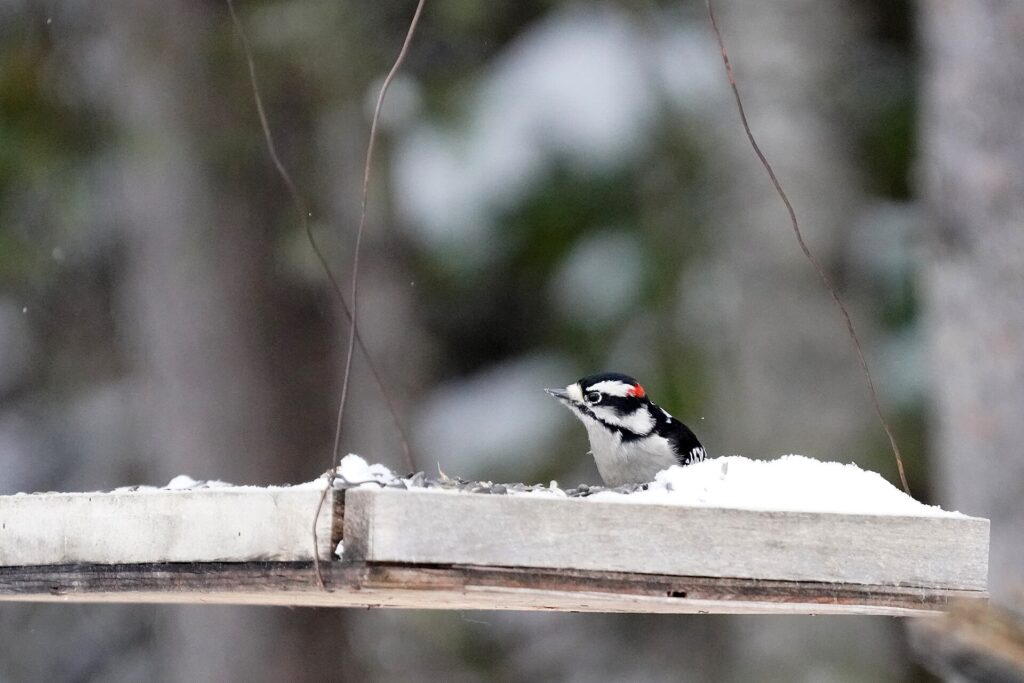
Right after a storm is when birds need your feeders most, because snow has just buried their natural food. Keep a brush or broom by the door so you can knock snow off feeder roofs and ports and sweep off platform trays before refilling. FeederWatch also recommends raking or sweeping the ground under feeders regularly so waste doesn’t pile up, and moving feeders to new spots from time to time. Snowmelt and spilled seed under a feeder turn into a soggy mess fast.
Cover helps birds ride out storms, too. Audubon Great Lakes suggests brush piles as shelter during winter weather, and evergreens near the feeders give birds a windbreak.
8. Add open water
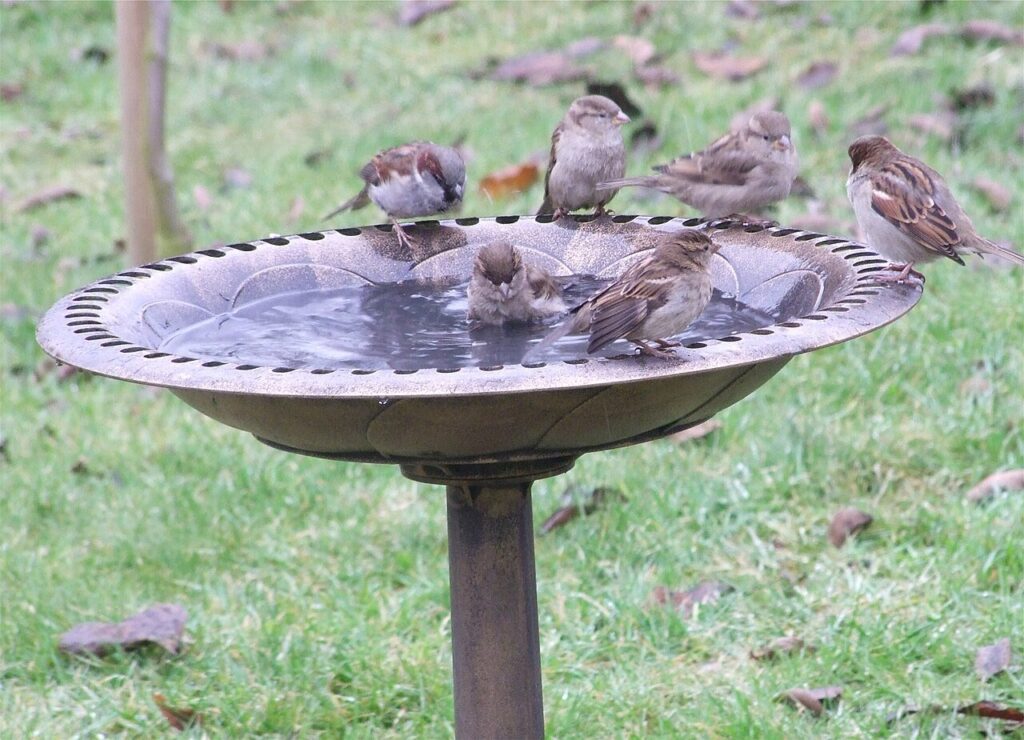
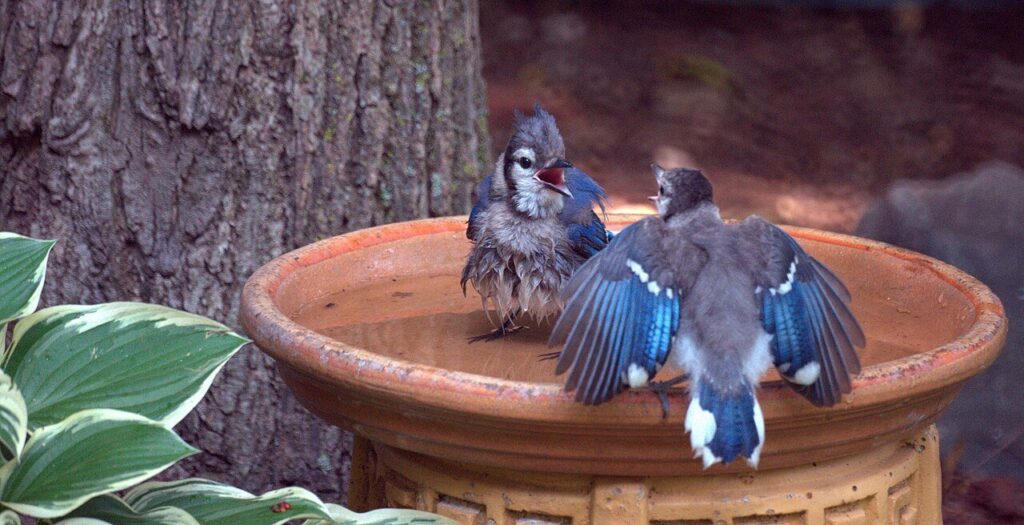
A Cornell Lab handout puts it plainly: unfrozen water “can be as hard for birds to find in winter as food.” Water near your feeders makes your yard a complete winter stop. Our guide on how to keep a bird bath from freezing covers no-power methods, and if you have an outdoor outlet, compare our picks for the best heated bird baths.
9. Check local wildlife and disease guidance
Feeding rules depend on where you live. If you live in bear country, Project FeederWatch recommends against feeding “except when bears are hibernating,” so winter is the safer season there, but take feeders in if bears are still active. Audubon Great Lakes also suggests checking your state’s guidance on highly pathogenic avian influenza, and in areas with chronic wasting disease, fencing feeders so deer can’t reach them.
Winter feeder prep at a glance
| Task | When | Why |
|---|---|---|
| Scrub and bleach-soak feeders | Before you fill them for the season | Starts winter with clean equipment |
| Repair or replace leaky feeders | Fall | Wet seed molds and spoils |
| Move feeders near cover, safe from windows | Fall | Shelter from predators and wind; fewer collisions |
| Install poles and baffles | Before the ground freezes | Easier digging; stops squirrels early |
| Stock black-oil sunflower and suet | Late fall | High-energy food for cold days |
| Set up sealed seed storage | Fall | Keeps seed dry and rodents out |
| Clear snow and sweep under feeders | After every storm | Keeps food reachable and the area clean |
| Add a heated bath or de-icer | Before the first hard freeze | Open water is scarce in winter |
| Keep cleaning | Every week or two | More birds and wet weather spread germs |
Once you start, do you have to keep feeding all winter?
Not as strictly as many people fear. The Cornell Lab handout notes that studies show birds with full access to feeders still get about three-quarters of their diet elsewhere, and that birds deprived of feeder food “quickly revert” to natural foods. So a missed weekend won’t doom your chickadees.
That said, birds do learn where the food is. University of Wisconsin Extension notes that birds can become used to relying on feeders for part of their diet and suggests feeding consistently through late winter and early spring. If you’re going away, ask a neighbor to top off the feeders, especially after storms.
Common questions
When should I get my feeders ready for winter? Fall, before your first hard freeze and first snow. In much of the U.S., October and early November is a good window. Project FeederWatch’s counting season opens November 1.
Do I really need to clean feeders in winter? Yes. Project FeederWatch says every week or two, and more often in heavy use or wet weather, both common in winter.
Should I take my feeders down for winter? In most places, no. Winter is when birds rely on feeders most. The main exception is bear country while bears are still active.
Which birds will show up? It depends on your region. Chickadees, nuthatches, woodpeckers, juncos, cardinals and finches are common winter feeder birds in much of the country. Use our free backyard bird ID chart and backyard bird life list to keep track of who visits.
Bottom line
Preparing bird feeders for winter comes down to a few fall chores: clean and disinfect them, fix anything that lets seed get wet, place them about 10 feet from cover and safely away from windows, put up baffles before the ground freezes, and stock high-energy food in sealed containers. Then keep a broom by the door for snow, add water if you can, and keep cleaning every week or two. Do that, and your feeders will be ready when birds need them most.