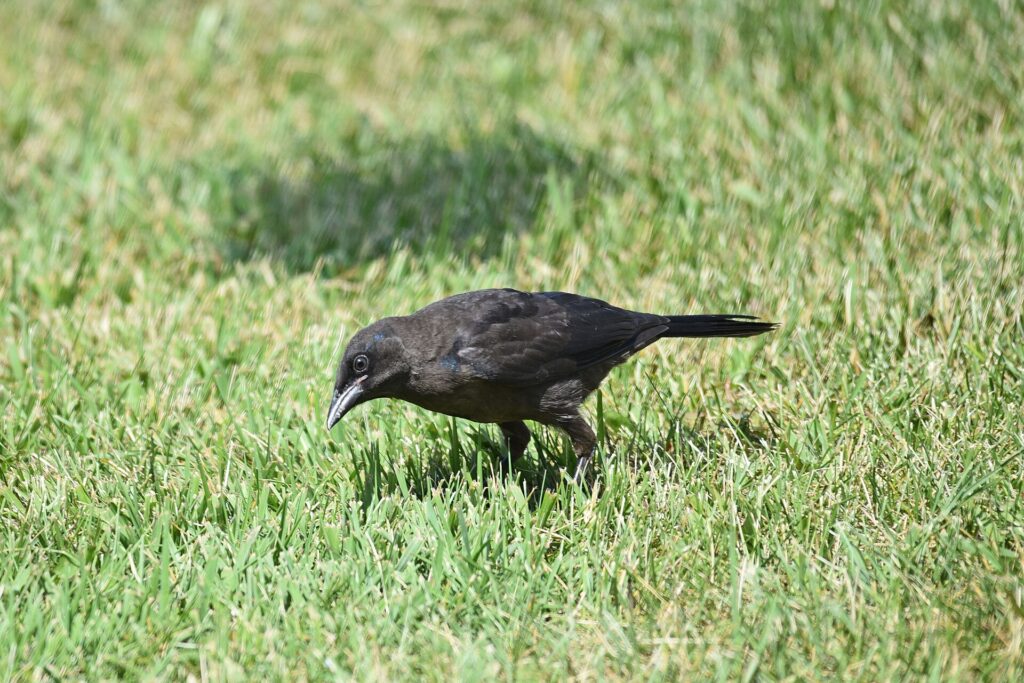
Grackles eat almost anything, which is the whole problem. Seeds and grain make up most of the diet, especially corn, rice, sunflower and acorns, but in summer a quarter or more of what a common grackle eats is animal: beetles, grasshoppers, caterpillars, spiders, crayfish, minnows, frogs, mice, and other birds’ eggs and nestlings. They will also eat fruit, garbage and whatever is spilled under your feeder. Knowing what they want, and how they get it, explains why a flock can empty a feeder in an afternoon, and why the fix is to change the food rather than fight the bird.
The short version
- Most of the year: seeds and grain. Corn is the big one; Cornell’s All About Birds calls grackles “the #1 threat to corn.” Also rice, sunflower, acorns, sweetgum and other tree seeds.
- Summer: a quarter or more of the diet is animals, from insects and spiders to fish, frogs, mice and small birds.
- Anywhere, any time: fruit, garbage, pet food, bread and anything on the ground under a feeder.
- What they mostly leave alone: safflower, nyjer, and seed inside feeders they can’t stand on.
Seeds and grain: the everyday diet
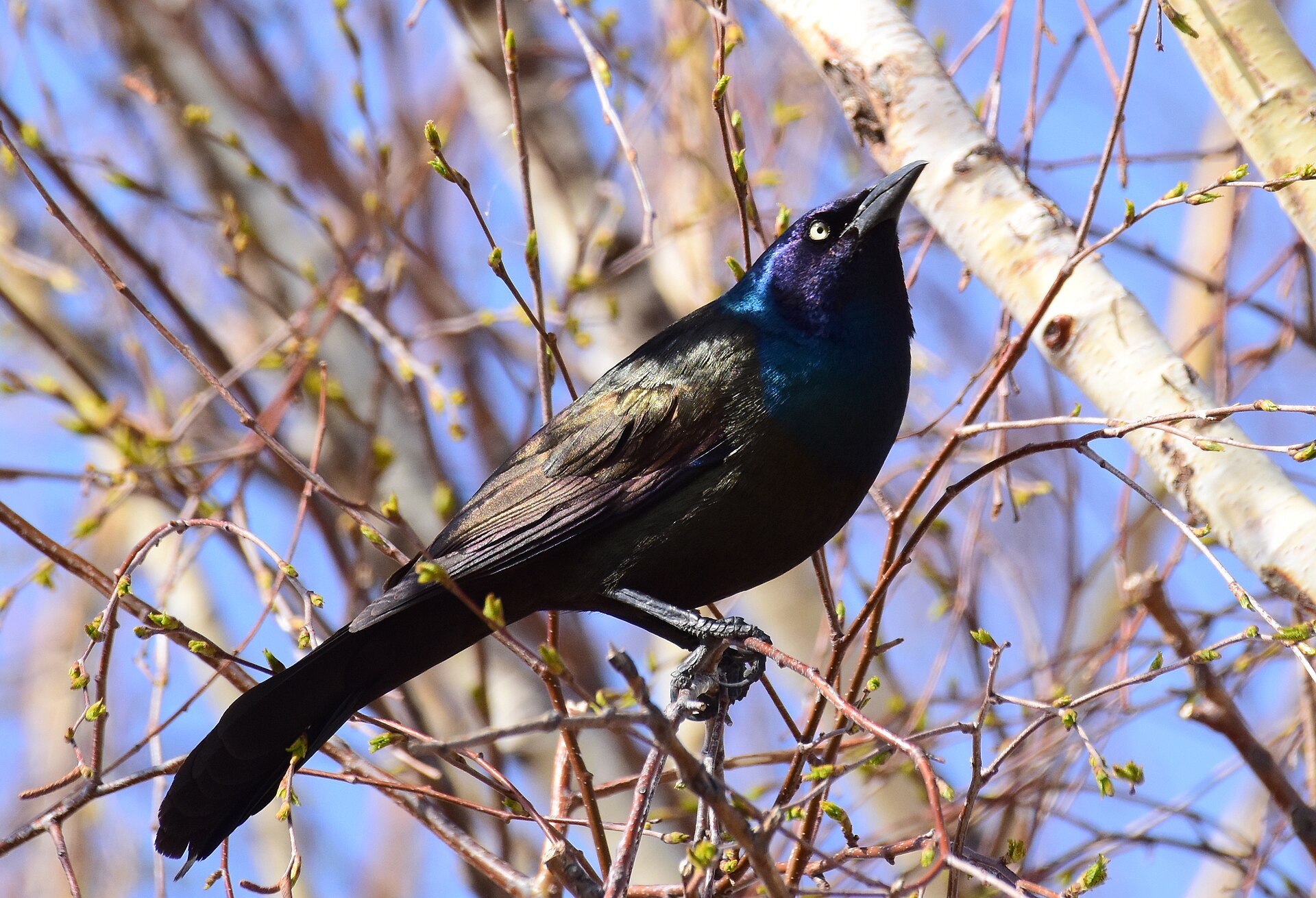
Outside the breeding season, a common grackle is a seed-eater first. In farm country that means corn, rice, wheat and oats, taken from the field as the crop ripens and again as waste grain after harvest, and taken as sprouts in spring. Grackle flocks do enough damage to ripening corn that Cornell’s All About Birds ranks them ahead of every other bird as a threat to the crop, with losses running to millions of dollars a year.
Away from farms, the same appetite goes to sunflower seed, tree seeds like sweetgum, and acorns. Acorns are worth a closer look, because they explain something about the bird’s bill. A grackle has a hard ridge, called a keel, on the inside of its upper mandible. It scores the narrow end of an acorn against that ridge, then bites the shell open. Very few songbirds can do that, and it’s part of why grackles thrive in oak-lined suburbs where a chickadee would go hungry in winter.
That same heavy bill is why cheap bird seed mixes are grackle food. Mixes built on cracked corn, milo and wheat are, from a grackle’s point of view, a farm field poured into a tray.
Summer: when grackles turn into predators
From late spring through summer, grackles need protein to raise young, and the diet changes. According to All About Birds, a quarter or more of the summer diet can be animals. The list is long: beetles, grasshoppers, caterpillars, spiders, earthworms, crayfish, snails, small fish, frogs, salamanders, mice, and the eggs and nestlings of other birds. Adult birds are occasionally killed and eaten too.
They get this food in some inventive ways. Grackles follow plows to grab the insects and mice turned up by the blade. They wade into shallow water to catch minnows. They have been recorded picking leeches off the legs of turtles, and stealing earthworms from American robins that did the work of pulling them up. Cornell also notes that grackles raid nests, which is the reason many backyard birders dislike them more than the seed bill justifies.
For the feeder, the summer shift matters in one way: a grackle in June is less interested in your sunflower than a grackle in October. The worst feeder pressure comes in spring migration, when flocks arrive hungry, and again in late summer and fall, when the young have fledged and the flocks build toward winter roosts that can run into the millions of birds. (For why those flocks form and how long they stay, see why grackles gather in huge flocks in fall.)
What grackles eat at your feeder, in order
Watch a flock work a backyard and a pattern shows up fast.
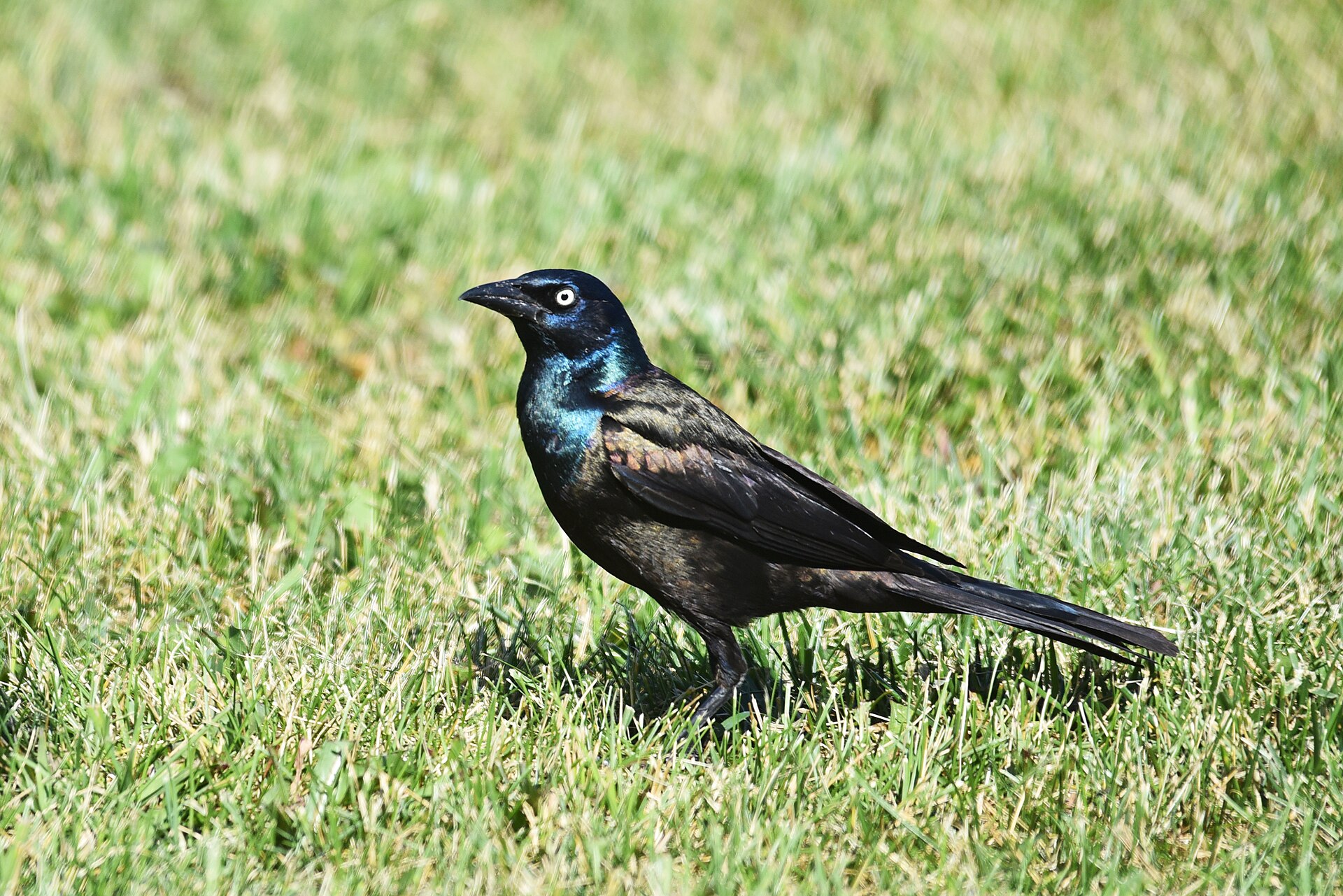
- Whatever is on the ground. Grackles are ground foragers by habit. Spilled seed, cracked corn, and anything scattered on purpose is the first thing they take, and it’s what draws the flock in.
- Platform and tray feeders. A wide, flat surface is a grackle’s favorite piece of feeder furniture. They stand flat-footed, sweep seed aside with the bill, and crowd out everything smaller. All About Birds puts it plainly: at feeders they “tower over other birds and push them aside to get at food.”
- Hoppers with wide ledges. Same idea, smaller stage.
- Black oil sunflower. Thin shell, high fat. Grackles eat it happily wherever they can reach it.
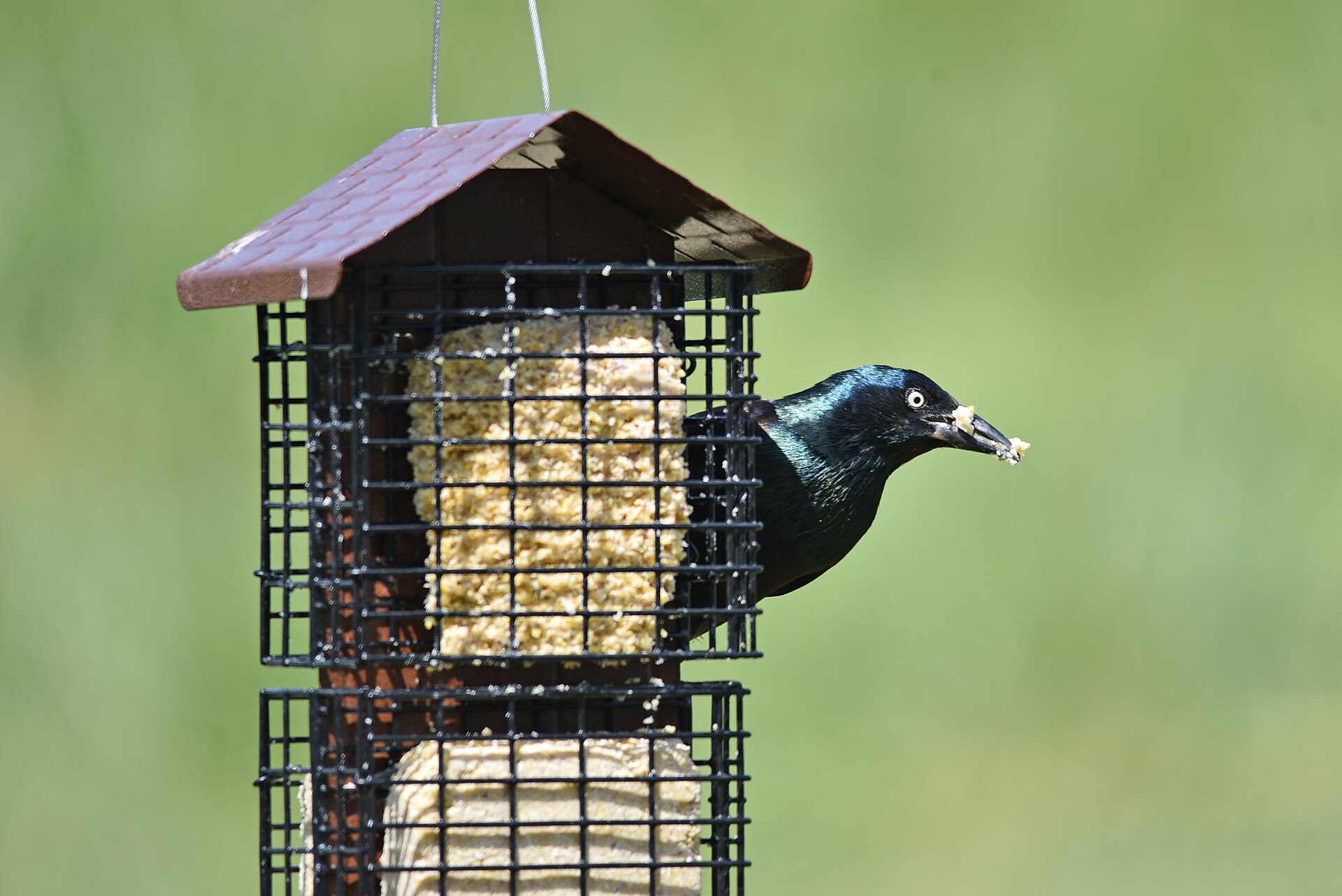
- Suet, when it’s easy. Grackles are not suet specialists the way starlings are, but an open suet cage in a flock’s path will get emptied.
- Tube feeders, reluctantly. A 12-inch bird with a long tail has a hard time hanging from a short perch. Grackles will try, flapping and clinging, but they give up on a tube feeder long before they give up on a tray.
What grackles mostly won’t eat
This is the useful part, because it is the whole strategy for keeping them off a feeder without harming them.
Safflower. A white, slightly bitter seed that cardinals, chickadees, nuthatches, titmice and house finches eat readily. Project FeederWatch notes it appeals to cardinals and other big-billed birds. In most yards grackles and blackbirds leave it alone, and so do squirrels. It is the single most effective seed switch for a grackle problem. Some flocks take a few days to lose interest, and a few individual birds do learn to eat it, but the flock usually moves on.
Nyjer. The tiny black seed sold for goldfinches. It’s too small to be worth a grackle’s effort, and it’s served in feeders with ports a grackle’s bill can’t work.
Striped sunflower. The big, thick-shelled kind. Grackles can crack it but many prefer not to bother, which is why striped sunflower is a common fallback where safflower doesn’t take.
Anything inside a feeder they can’t stand on. Weight-activated feeders that close under a large bird, caged feeders sized for finches and chickadees, and upside-down suet feeders all work because of grackle anatomy, not grackle preference. The bird is simply too big and too heavy-footed for the feeder. Project FeederWatch recommends exactly these designs, along with short-perch tube feeders with no catch tray, for yards with grackle, starling or blackbird trouble.
Do grackles eat other birds?
Yes, sometimes. Grackles raid nests for eggs and nestlings, and Cornell’s account includes killing and eating adult birds. It is not their main food and most grackles never do it, but it happens, especially where house sparrows nest in reach. This is the same behavior blue jays get blamed for, and it’s just as real in grackles. There is nothing to do about it in a backyard beyond not putting out nest boxes with oversized holes and not scattering food that draws a flock in during nesting season.
Why the diet is the answer
Grackles are native birds protected under the Migratory Bird Treaty Act, so trapping or harming them is off the table, and it wouldn’t work anyway with a flock that size. What works is taking away the things on the list above. Switch the seed to safflower, stop the ground buffet, replace the open tray with a tube or a weight-activated feeder, and protect the suet with an upside-down cage. Our step-by-step guide to getting rid of grackles and keeping blackbirds away from feeders walks through that in order, and the squirrel-proof feeder guide covers the weight-activated models, which stop grackles for the same reason they stop squirrels.
Not sure it’s a grackle at all? A yellow eye and a long, keel-shaped tail are the giveaways. Our guide to telling grackles, blackbirds and starlings apart sorts out the look-alikes in a few seconds.
Common questions
Do grackles eat safflower seed? Rarely. It’s the standard seed switch for a grackle problem. A few birds may sample it; the flock usually leaves.
Do grackles eat suet? They will if it’s easy to reach. An upside-down suet feeder, which only lets birds feed from below, mostly stops them.
Do grackles eat hummingbird nectar? Not as a rule. Reports of grackles at nectar feeders are usually about a bird drinking, not feeding, and it’s uncommon.
Do grackles eat mealworms? Yes, eagerly, which is why an open mealworm dish for bluebirds needs a cage around it.
Are grackles good for anything? In summer they eat large numbers of beetles, grasshoppers, caterpillars and other lawn and garden pests. A flock working a lawn in June is doing free pest control.
Bottom line
Grackles eat grain and seed most of the year, animals in summer, and anything spilled on the ground all year. At a feeder they go for the ground, the tray and the cheap mix first. They mostly skip safflower and nyjer, and they can’t manage feeders built for small birds. Change the seed and the feeder, and the diet that made them a problem becomes the reason they leave.