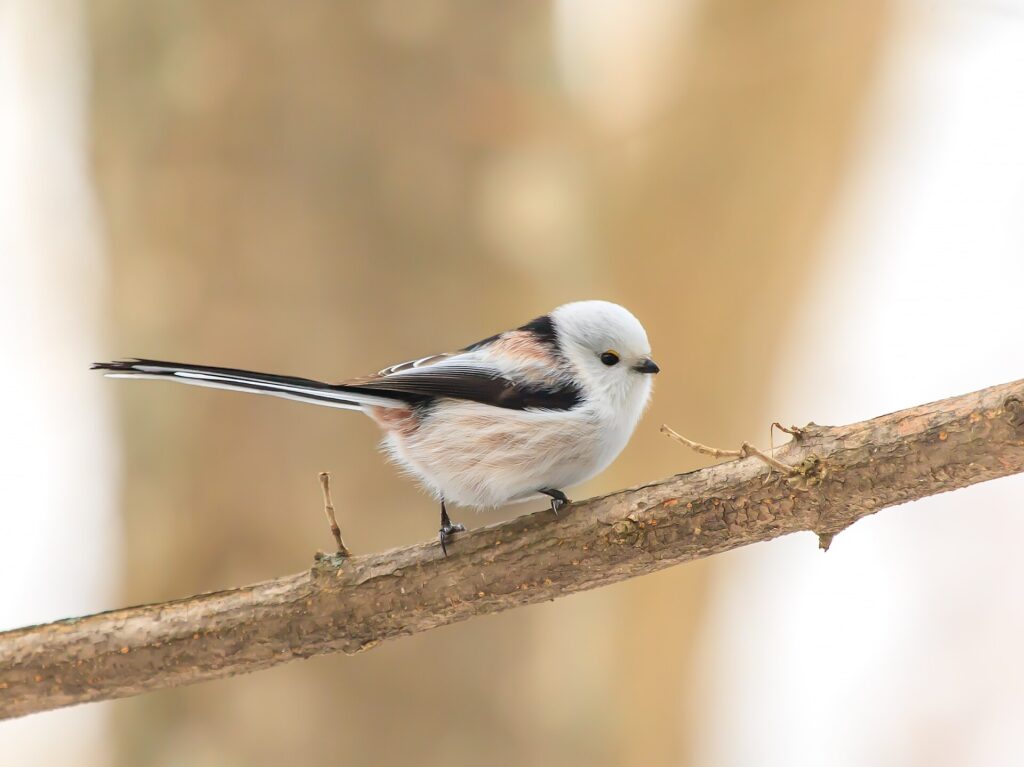
The Japanese “snow fairy” bird is the shima enaga, the Hokkaido form of the long-tailed tit (Aegithalos caudatus). It is a real wild bird, five to six inches long and about a quarter of an ounce in weight, and it lives only on Japan’s northern island of Hokkaido. Its all-white face and puffed-up winter feathers make it look like a cotton ball with a tail. You can’t see one in the United States, but its closest American relative, the Bushtit, lives in the West.
What is the shima enaga?
Shima enaga is the Japanese name: “enaga” is the long-tailed tit, and “shima” means island, because this form lives only on Hokkaido. Japanese sources and most news coverage call it Aegithalos caudatus japonicus. A 2017 study of long-tailed tits across Eurasia agreed the Hokkaido and southern Kuril birds are distinct enough to keep that name, though some international checklists still fold them into the white-headed northern subspecies A. c. caudatus.
Either way, it is not a separate species. It is one population of a bird that ranges from Ireland to Japan. Despite the name, long-tailed tits are not in the chickadee family. They have their own family, Aegithalidae, with a single member in the Americas.
And yes, the photos are real. A German-language fact-checking site investigated a rumor that the viral images were AI-generated and rated it false. The bird really does look like that in winter.
Why the snow fairy bird looks like a cotton ball
Three things create the look. First, the face. Long-tailed tits across most of Europe and southern Japan have a broad black eyebrow stripe. Northern birds, including the Hokkaido population, have a pure white head with no stripe at all. That blank white face, tiny black eyes, and stubby triangular bill make it read as a plush toy.
Second, the feathers. Cornell’s All About Birds calls the plumage “soft and fluffy,” and in cold weather the bird fluffs it out to trap warm air. In a Hokkaido winter, that turns a slim bird into a sphere. Young birds have brownish head sides and molt into the clean white adult look by their first winter.
Third, the size. All About Birds lists the long-tailed tit at 5.1 to 6.3 inches and 0.2 to 0.3 ounces, one of Europe’s smallest birds by weight. The British Trust for Ornithology (BTO) puts the average at 7.8 grams, about a quarter of an ounce. More than half of that length is tail, so the body is barely bigger than a golf ball.
Where the shima enaga lives, and where to see one in Japan
The long-tailed tit as a species lives across temperate Europe and Asia. Cornell splits it into three groups: the white-headed caudatus group from Scandinavia across Russia to northern Japan, the dark-browed europaeus group from Ireland to Turkey and into Korea and Japan, and a grayer alpinus group around the Mediterranean. The UK alone holds around 380,000 breeding territories.
The white-faced shima enaga is limited to Hokkaido, Japan’s northernmost and second-largest island. Cross the strait south to Honshu and the long-tailed tits have dark eyebrows again. The birds are year-round residents, but winter is when they look like snow fairies. Cold puffs the feathers up, and bare trees make a small white bird easy to spot.
For travelers, you don’t need to go deep into the backcountry. Japanese tourism guides point to public parks in Sapporo, including Maruyama Park, Asahiyama Memorial Park, Makomanai Park, and Takino Suzuran Hillside National Government Park. The town of Teshikaga, where BirdLife International’s honorary president photographed them, is another known spot. Listen for thin, high-pitched calls and watch for a loose flock of 5 to 20 birds moving through the branches. A decent pair of binoculars helps; see our guide to birding binoculars under $200.
How the long-tailed tit survives winter: diet, flocks, and huddling
Long-tailed tits eat insects and spiders all year, with a particular taste for the eggs and caterpillars of moths and butterflies. They pick these off twig tips, often hanging upside down. In fall and winter they add some seeds, and in the UK they have become regular feeder visitors. On Hokkaido they have a winter trick: drinking sap that drips from maple and sawtooth oak trees, sometimes hovering to reach a frozen drip.
Outside the nesting season they travel in tight flocks, usually 6 to 17 birds and sometimes around 20, mostly extended family groups. They call constantly to stay in contact as they stream from tree to tree.
A bird this small loses heat fast, so on cold nights the flock roosts pressed together in a row along a branch. Tokyo Weekender described it as looking “like a string of marshmallows.” Huddling raises the odds of surviving the night for a bird whose typical lifespan is about two years. In spring, newly fledged chicks squeeze together on a branch the same way.
The famous feather-lined nest
BTO calls it a “beautifully intricate domed nest.” The pair weaves a pouch out of moss bound with spider silk, which works like natural Velcro: tiny moss leaves are the hooks and silk strands the loops. The outside is covered with hundreds of flakes of pale lichen for camouflage.
Inside, the birds pack in feathers for insulation. BTO cites up to 1,500 feathers; other counts run past 2,000, with total pieces in a nest topping 6,000. The finished nest is a flexible sac with a small round entrance near the top, with enough give in the walls to hold a growing brood of 6 to 8 chicks.
Nests are usually placed low, typically under about 10 feet up in a thorny shrub or a branch fork. Even so, predators find most of them, and only about 17 percent succeed. Long-tailed tits also breed cooperatively: extra adults help a pair feed its chicks.
Why the Japanese snow fairy went viral
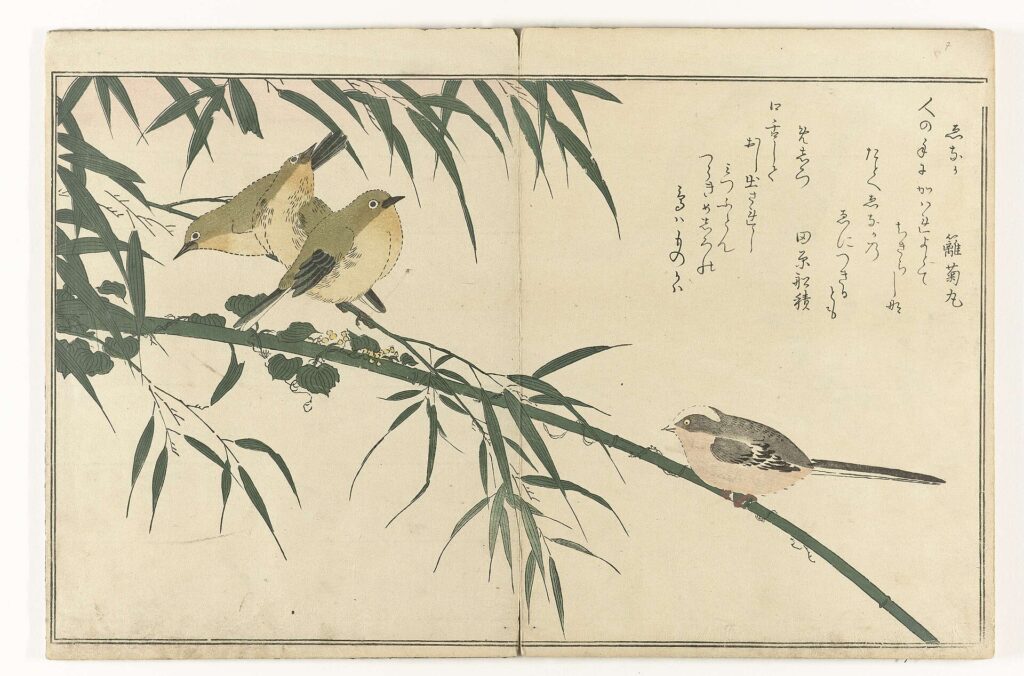
Photos of the shima enaga spread widely on Twitter and other social platforms, and they keep resurfacing. A round white bird on a snowy branch photographs beautifully, and its habit of tilting its head at the camera doesn’t hurt. Princess Takamado of Japan, honorary president of BirdLife International, wrote that its “friendliness and adorable gestures” are what win people over.
In Hokkaido the bird has become something of a mascot. Shops sell snow fairy sweets, plush toys, stationery, and home goods, and hotels in Sapporo and Furano have offered themed rooms paired with birdwatching tours.
Can you see a snow fairy bird in the US?
No. The long-tailed tit does not occur anywhere in North America, and the shima enaga is a year-round Hokkaido resident that stays put. This is a bird you see in Japan or not at all.
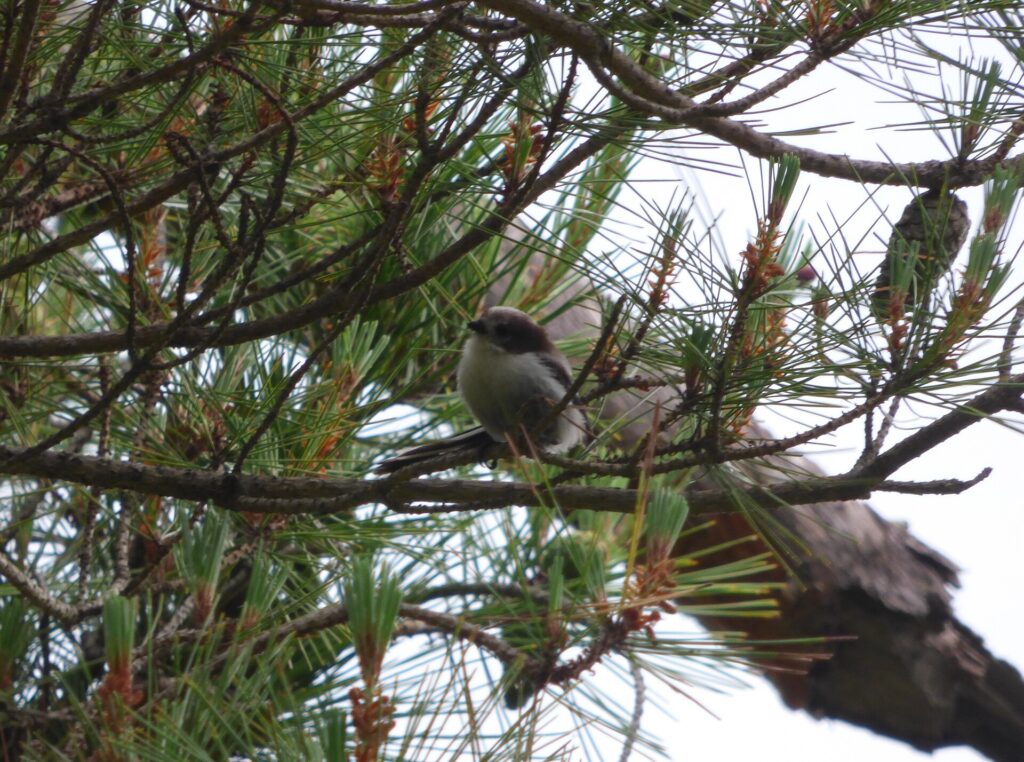
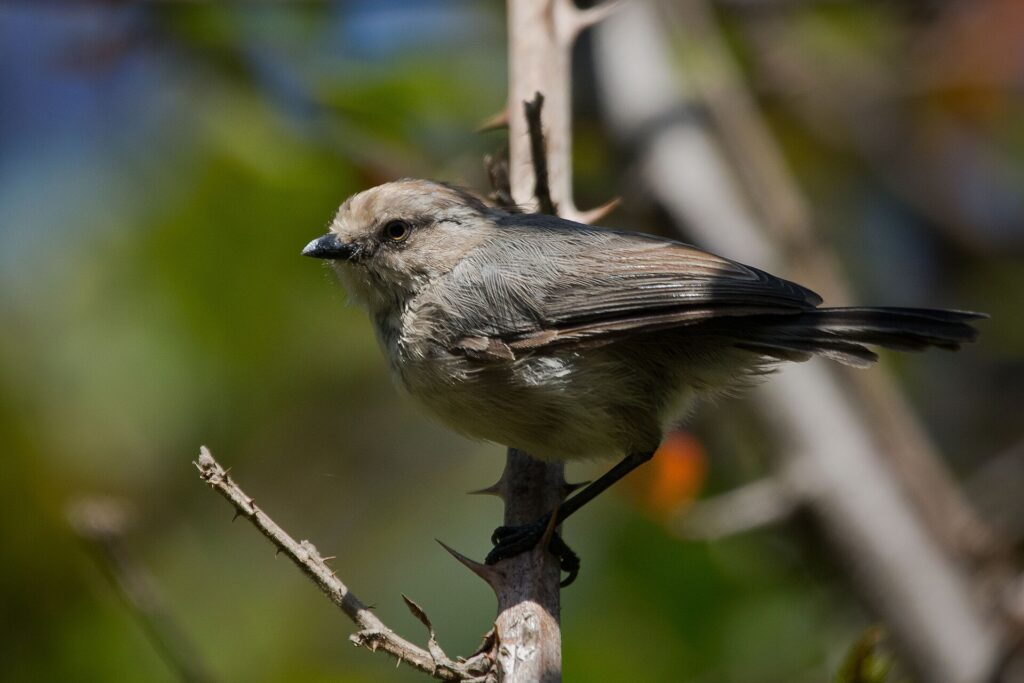
What the US does have is the Bushtit, the only member of the long-tailed tit family in the New World. It lives in the West, from British Columbia through the Great Basin and California into Mexico. It is even smaller than its Japanese cousin, plain gray-brown instead of white and pink, and it builds a hanging sock-shaped nest of moss, spider webs, and grass. Bushtits move in chattering flocks of 10 to 40, so the behavior is familiar even if the look isn’t. If you have seen a small gray bird with a white belly streaming through a western hedge, it may have been a Bushtit.
For most Americans, the closest everyday experience is a winter chickadee flock: same restless energy, same acrobatic feeding, same social calls. Here is how the four birds stack up.
| Bird | Length | Weight | Where found |
|---|---|---|---|
| Shima enaga (long-tailed tit) | 5.1–6.3 in, over half of it tail | 0.2–0.3 oz | Hokkaido, Japan (species: Europe to Japan) |
| Bushtit | 2.8–3.1 in | 0.1–0.2 oz | Western US, British Columbia to Mexico |
| Black-capped Chickadee | 4.7–5.9 in | 0.3–0.5 oz | Northern US, southern Canada, Alaska |
| Golden-crowned Kinglet | 3.1–4.3 in | 0.1–0.3 oz | Breeds far north and mountain West; winters across most of North America |
The chickadee is the heaviest bird on the list even though the shima enaga is longer; by weight, the snow fairy is closer to a kinglet. To sort out your own winter visitors, start with our winter backyard birds by region guide and the backyard bird ID chart by color.
Frequently asked questions
Is the shima enaga a different species from the long-tailed tit?
No. It is a subspecies of the long-tailed tit, Aegithalos caudatus. The white face is the main visible difference from the birds of mainland Japan and most of Europe.
Is the snow fairy bird rare or endangered?
The long-tailed tit is listed as Least Concern globally, with hundreds of thousands of pairs in the UK alone. The Hokkaido population is far smaller, but it is seen regularly in public parks around Sapporo.
When is the best time to see a shima enaga?
Winter, roughly December through February. The birds are present all year, but cold puffs their feathers into the round shape people want to see, and leafless trees make flocks easier to find.
Is there an American “snow fairy” bird?
Not a white one. The Bushtit is the only American relative. If you want a US bird that arrives with the snow, the Dark-eyed Junco is the classic “snowbird.”
Bottom line
The Japanese snow fairy is the shima enaga, Hokkaido’s white-faced long-tailed tit, and the photos are real. It weighs about a quarter ounce, eats insects and tree sap, roosts in a huddled row on winter nights, and builds a stretchy feather-stuffed nest in spring. You won’t find one in North America; the Bushtit is its only American cousin. If you want the real thing, plan a winter trip to Sapporo’s parks or the town of Teshikaga.