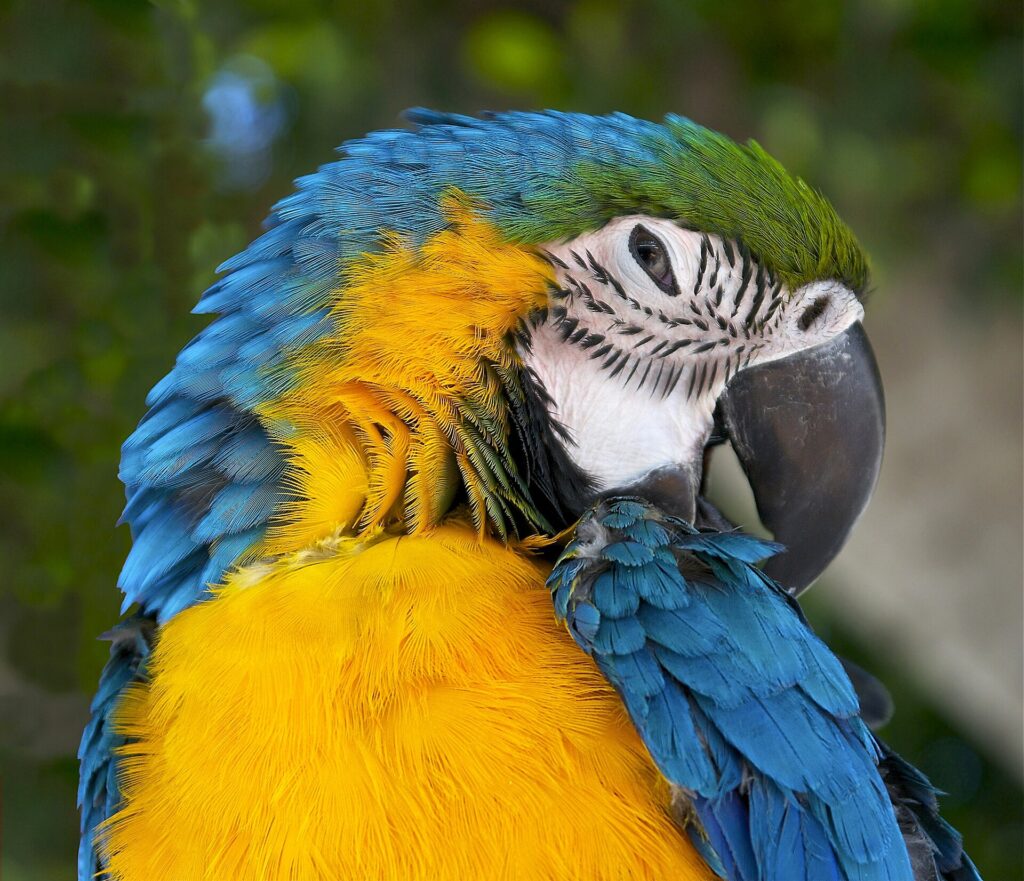
A macaw from a breeder in the United States typically costs between $1,500 and $7,000 for the common large species, with mini macaws at the low end and the hyacinth macaw running $10,000 to $30,000. Adopting from a parrot rescue is far cheaper, usually $500 to $700. The purchase price is the small part, though. A large macaw can live 50 years or more, needs a cage the size of a closet, and costs thousands of dollars a year to feed, house, and keep healthy.
How much is a macaw from a breeder?
Macaw prices vary a lot by species, region, and year, so treat every figure below as a range rather than a quote. Breeders in states with many aviaries often charge less than those where few macaws are bred. Hand-raised, weaned babies cost more than older birds, and rare color mutations cost far more.
Current price guides and owner reports on parrot forums put the common species in these brackets:
- Hahn’s macaw and other mini macaws (Hahn’s, noble, yellow-collared, Illiger’s, severe): roughly $1,500 to $4,000
- Military macaw: roughly $2,500 to $4,500
- Blue-and-gold macaw: roughly $2,000 to $3,500, with older forum reports of $1,000 to $2,000
- Scarlet macaw: roughly $3,500 to $6,000
- Green-winged macaw: roughly $4,000 to $7,000
- Hyacinth macaw: roughly $10,000 to $30,000, and VCA Animal Hospitals calls it “the most expensive to purchase”
If a listing is far below these ranges, be suspicious. Scam “breeders” with stock photos and no address are common; a legitimate seller will let you see the actual bird.
Macaw adoption fees: the cheaper route
Parrot rescues rehome macaws for a fraction of breeder prices. Florida Parrot Rescue, for example, lists $500 for miniature macaws and $650 for large macaws such as blue-and-golds, scarlets, and green-wings. Those fees typically cover a veterinary exam already done, help converting the bird to a healthy diet, and in many cases the bird’s existing cage.
The trade-off is process. Reputable rescues require an application, consultations, and involvement from everyone in the household, and many will not adopt to breeders or as a gift. Rescued macaws are often adults, which is not a bad thing: an adult’s personality is already known, while a baby’s temperament can shift at maturity.
One more reason to adopt: rescues are full. National Geographic has described parrot rescues struggling with intake after a pandemic surge in bird ownership. One rescue director put it plainly: “We were so full, we were beyond full.”
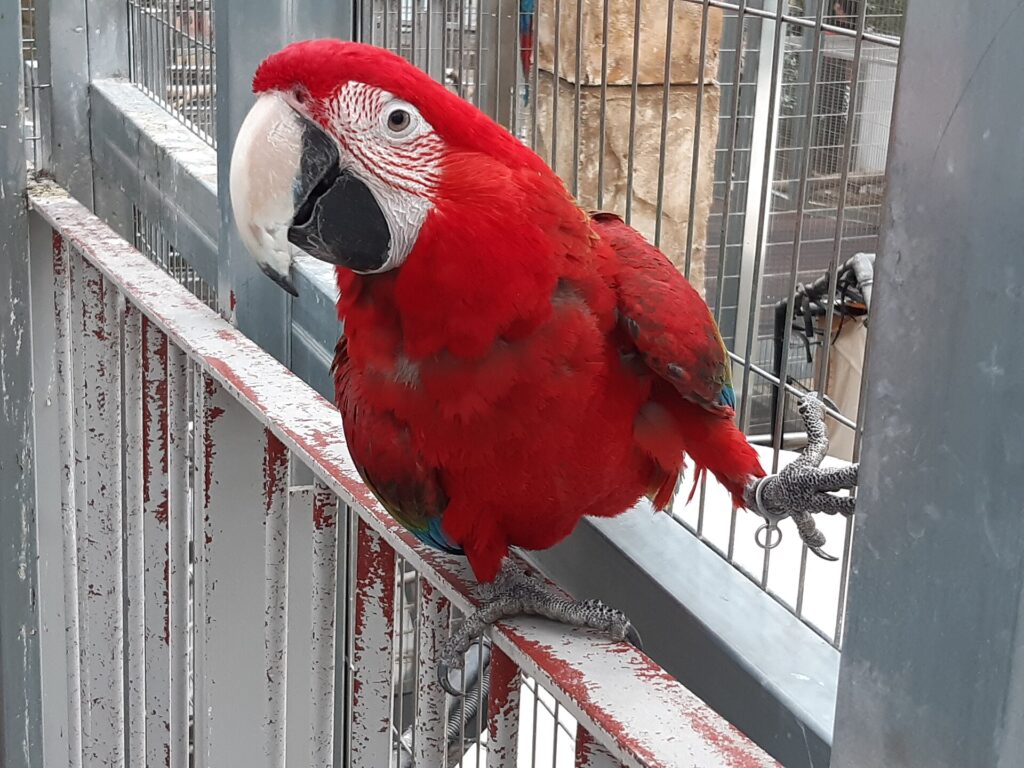
Macaw price, size, and lifespan by species
Lifespan figures for large macaws come from VCA Animal Hospitals (50 to 60 years typical, some past 75) and Lafeber (blue-and-gold “upwards of 70 years”).
| Species | Typical purchase range (US) | Adult length | Lifespan in captivity |
|---|---|---|---|
| Hahn’s macaw (mini) | $1,500–$2,500 | About 12 in | 30–40 years |
| Military macaw | $2,500–$4,500 | About 28 in | 50–60 years |
| Blue-and-gold macaw | $2,000–$3,500 | 32–35 in | 50–70 years |
| Scarlet macaw | $3,500–$6,000 | 32–36 in | 50–60 years |
| Green-winged macaw | $4,000–$7,000 | About 36 in | 50–60 years |
| Hyacinth macaw | $10,000–$30,000 | 37–39 in | 50 years or more |
Britannica counts about 18 macaw species, native to tropical North and South America. Only a handful are common in the pet trade, and the hyacinth is the world’s largest parrot by length.
How much does a macaw cost to set up?
Before the bird comes home, plan on these one-time costs. Figures are general ranges, not brand recommendations.
- Cage: $600 to several thousand dollars. VCA recommends a minimum of 4 ft by 5 ft by 5 ft for a large macaw and 3 ft by 3 ft by 4 ft for a mini. A macaw’s beak will bend or snap cheap wire.
- Play stand: a few hundred dollars. Macaws need daily out-of-cage time, and a stand keeps it off your furniture.
- Toys, perches, and bowls: $250 to $1,200 in year one. VCA notes macaws need continuous access to destructible toys. A wood toy that takes a week to shred is doing its job, so this cost recurs.
- Initial avian vet exam: $250 to $1,500 for the first year including a well-bird check, bloodwork, and follow-up. VCA advises an exam within the first week.
Added up, first-year costs including the bird commonly run $2,000 to $15,000 depending on species. A rescued mini macaw with its cage included sits at the bottom; a hyacinth with a custom enclosure sits well above it.
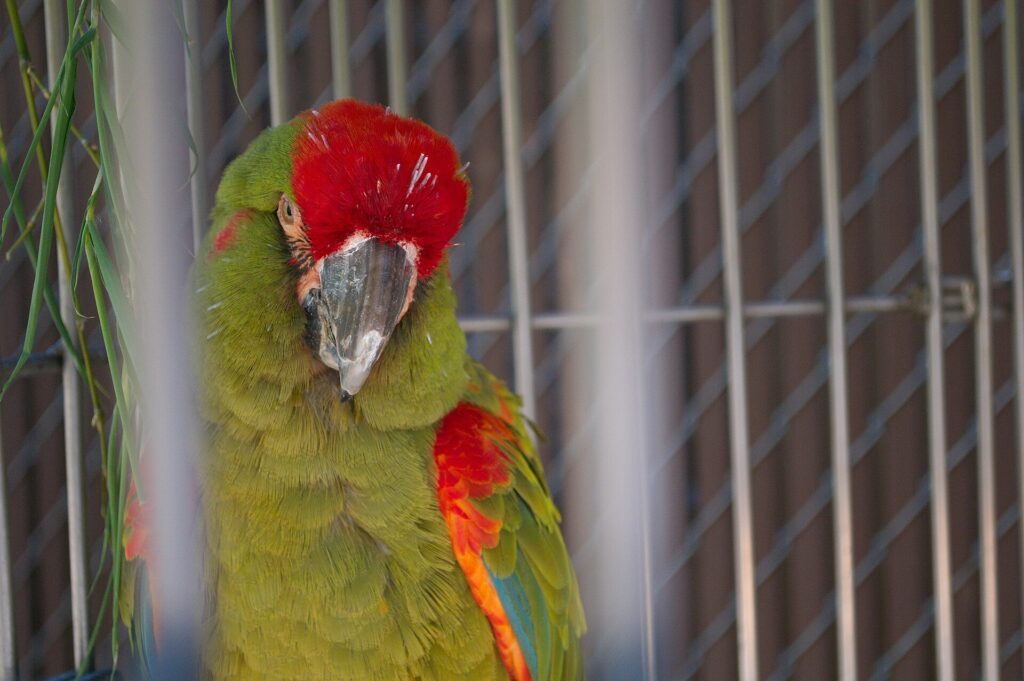
Annual cost of owning a macaw
After setup, the recurring costs are food, veterinary care, and replacement toys. A macaw’s diet should be built on formulated pellets with fresh vegetables, fruit, and nuts, and large species eat a lot. Published estimates put first-year food at $500 to $3,500 depending on species; nuts add up fast for hyacinths, which eat palm nuts in the wild.
VCA states that “annual veterinary health examinations are highly recommended.” Avian vets are specialists, so exam fees run higher than a dog or cat visit, and an emergency such as a broken blood feather or heavy-metal poisoning from a chewed fixture can cost hundreds to thousands.
A realistic all-in figure for a large macaw is $1,000 to $3,000 in a normal year. Over a 50-year lifespan that is $50,000 to $150,000, before you count your time.
The hidden costs: noise, space, and time
Noise. VCA describes macaw calls as “loud, harsh, penetrating squawks” and says that makes them unsuitable for many households. Decibel figures widely quoted from the parrot-care book Good Parrotkeeping list a blue-and-gold at about 105 dB and a scarlet at about 102 dB from 15 feet, roughly chainsaw level. Lafeber notes blue-and-golds scream especially around dusk. In an apartment or a house with shared walls, that is a dealbreaker. If you want loud, expressive birds without owning one, identifying birds by their songs and calls is a cheaper hobby.
Space. Beyond the cage, a macaw needs room to flap, climb, and play under supervision every day. VCA says these birds require “a great deal of space.” Plan on a bird room or a large corner of the living area, and expect window trim, door frames, and remotes to get chewed.
Time. Macaws are flock animals and treat their humans as the flock. VCA describes them as “intelligent, playful, and inquisitive” and warns that some bond intensely with one person and turn aggressive toward others. A bird left caged alone all day often develops screaming, feather plucking, or biting. Plan on hours of interaction daily, for decades.
If the goal is to get a child excited about birds, a macaw is the wrong tool. Start with getting kids interested in birdwatching and a bird ID chart by color. For families set on a pet parrot, a smaller species is a better first step; see our guide to the blue quaker parrot.
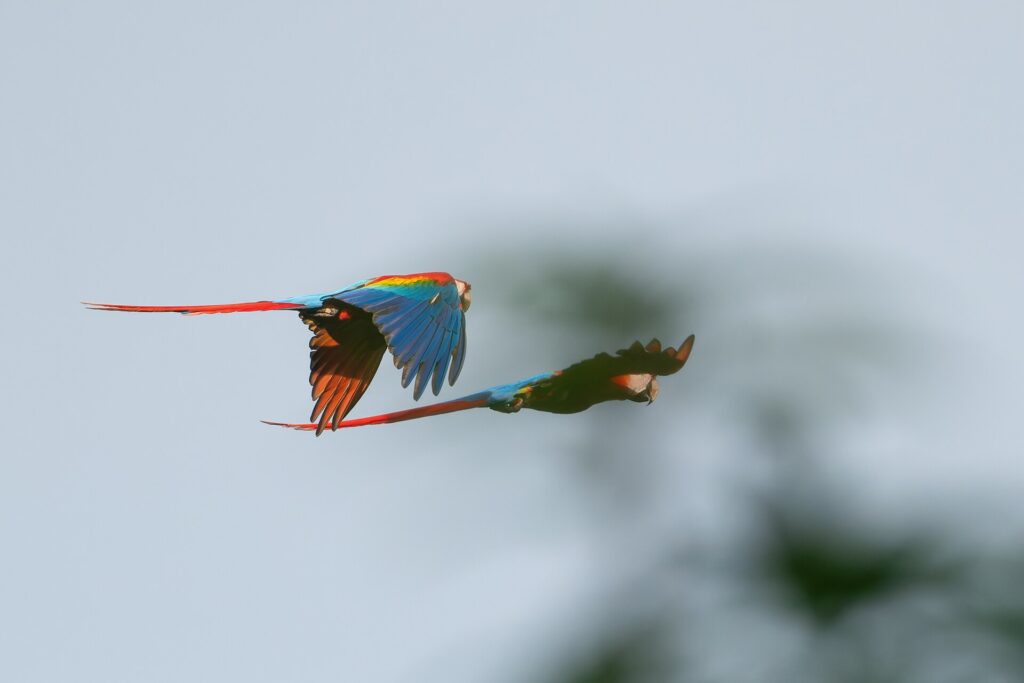
Macaw laws: CITES, the Wild Bird Conservation Act, and paperwork
Every macaw sold in the United States should be captive-bred, and you should be able to prove it. The Wild Bird Conservation Act of 1992 ended the import of most wild-caught parrots for the pet trade; at the time, the US Fish and Wildlife Service reported the country was importing about 500,000 wild birds a year, more than any other nation. Under the Act, CITES-listed birds cannot be imported unless the Service has placed the species on an approved list.
All macaws are listed under CITES, the international wildlife-trade treaty, and the hyacinth macaw is on Appendix I, the strictest tier. The World Parrot Trust reports the wild hyacinth population fell to roughly 3,000 birds by 1990 because of trapping for the pet trade; it is now listed as Vulnerable with an estimated 4,700 to 11,000 mature birds.
What this means for a buyer:
- Ask for a closed leg band or microchip and a hatch certificate or bill of sale showing captive breeding.
- For Appendix I species such as the hyacinth, keep the paperwork for the life of the bird; you may need it to sell, rehome, or move it.
- Never buy a bird advertised as “imported” or “wild-caught.” The sale is almost certainly illegal.
Who takes the bird when you’re gone?
This is the cost most buyers never price in. A 30-year-old who buys a baby blue-and-gold will likely die before the bird does. National Geographic reports that parrots routinely outlive their owners and that rescues are overwhelmed with surrendered birds. Lafeber’s advice to blue-and-gold buyers is to consider “a trust or a clause in your Will dedicated to the bird.”
Lafeber’s advice column recommends a will, a conversation with an attorney, and a written care notebook covering diet, habits, and medical history that family members can find. Some established parrot sanctuaries offer estate-planning programs that guarantee placement. Without a plan, birds end up with relatives who don’t want them, at animal control, or in a rescue pipeline that is already full.
Frequently asked questions
What is the cheapest macaw?
The Hahn’s macaw and other mini macaws, generally $1,500 to $2,500 from a breeder or around $500 from a rescue. They’re also quieter, smaller, and shorter-lived, which makes them the most practical macaw for a first-time owner.
Why are hyacinth macaws so expensive?
Supply. The hyacinth is a CITES Appendix I species with a small wild population, no legal imports, and slow captive breeding by few US breeders. That scarcity, plus its size and gentle reputation, keeps prices at $10,000 and up.
How long do macaws live as pets?
VCA Animal Hospitals gives 50 to 60 years for large macaws, with a maximum around 75 and a few past 90. Mini macaws live 30 to 40 years. Diet and regular avian vet care are the biggest factors.
Is a macaw a good pet for a family with kids?
Rarely. A macaw’s beak can break a finger, the noise is hard on children, and the bird will still be around when the kids have kids of their own. Most families get more from a bird-friendly garden and a pair of binoculars.
Bottom line
A macaw costs $1,500 to $7,000 for most species from a breeder, $10,000 or more for a hyacinth, and $500 to $700 from a rescue. Budget another $2,000 to $10,000 for the cage and first-year setup, then $1,000 to $3,000 a year for 50 years or more. Buy captive-bred with paperwork, plan for the noise, and write the bird into your will before you bring it home.