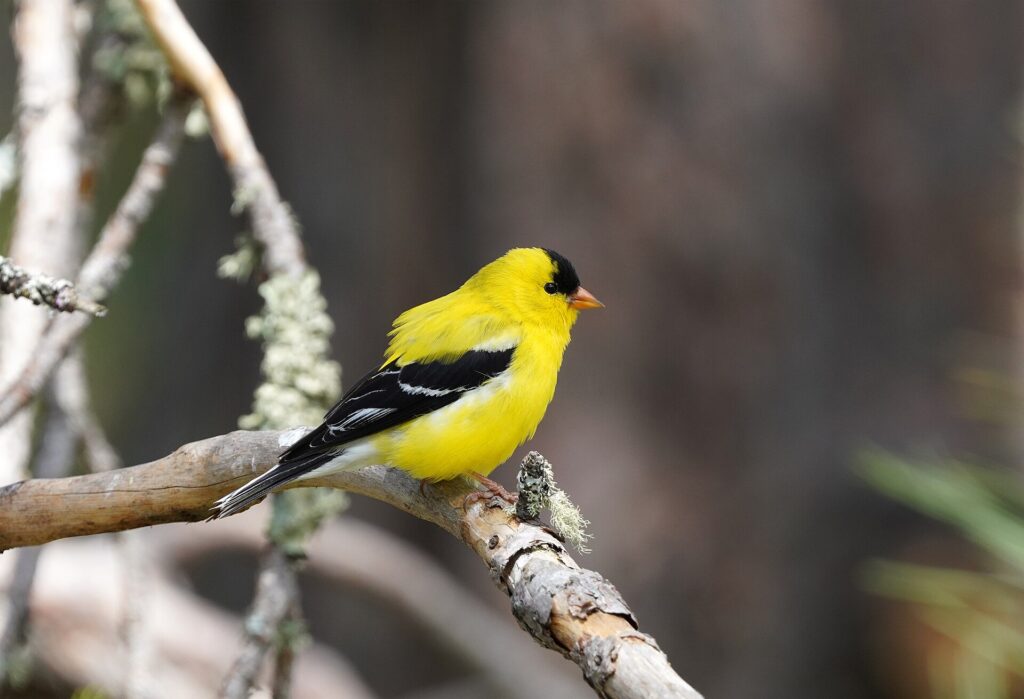
Woodstock, Snoopy’s little yellow sidekick in Peanuts, is not any real species of bird. Charles Schulz never assigned him one, and late in his life he wrote that Woodstock and Snoopy had “never been able to figure out what kind of bird he is.” The closest real-world match, based on his size, color, and bouncy flight, is the American goldfinch, with the yellow warbler and canary as runners-up.
Did Charles Schulz ever say what kind of bird Woodstock is?
No. In nearly 50 years of drawing Peanuts, Schulz never named a species for Woodstock, and he was asked more than once. When bird writer and radio host Laura Erickson wrote to him in the late 1990s, his reply was that the bird’s identity was a mystery even to the characters. He added that Woodstock “was originally a girl bird,” since the character started out as Snoopy’s secretary.
Schulz did play with the question inside the strip. In one sequence, Snoopy runs through bird impressions to test Woodstock’s identity, trying a bittern, a wren, a towhee, a cuckoo, a goose, and a warbler before giving up. That running gag is the closest thing to an official answer: there isn’t one, and Schulz liked it that way.
When did Woodstock first appear in Peanuts?
The bird who became Woodstock first showed up on March 4, 1966, as one of two unnamed chicks. A mother bird had built her nest on Snoopy’s stomach while he lay on top of his doghouse, and the eggs hatched right there. A single bird came back on April 4, 1967, and hung around Snoopy for the next three years without a name.
The name arrived in the June 22, 1970 strip. Schulz had been reading a Life magazine story about the 1969 Woodstock music festival. As Charles M. Schulz Museum curator Benjamin Clark tells it, Schulz picked up the magazine and decided, “Woodstock, that’s a good name for this bird.” His widow, Jean Schulz, has said he wasn’t sure about the name at first, but it stuck for the remaining 30 years of the strip.
What clues does the comic give about Woodstock’s species?
Even without a label, the strip gives a birder plenty to write down:
- Color: solid yellow all over, with no wing bars, streaks, or dark cap.
- Size: tiny. He fits in Snoopy’s paw and rides on his nose. Peanuts reference material puts his weight at roughly 50 grams, which is heavier than any goldfinch or warbler but still a very small bird.
- Flight: erratic. He flutters up and down, sometimes upside down, and crashes often. His widow, Jean Schulz, has said he enjoyed drawing Woodstock’s zigzag flight because it was good visual comedy.
- Voice: a string of vertical “chicken scratch” marks that only Snoopy can understand.
- Head: a few scraggly feathers sticking up on top, which some fans read as a crest or tuft.
- Habitat: a nest in a tree near a suburban doghouse, year-round. He doesn’t migrate (though Snoopy has tried to send him south).
Erickson, who has spent decades identifying birds for a living, joked on her radio show that Woodstock flies like a cedar waxwing that has eaten fermented berries, is colored like a yellow warbler, and has a crest like a tropical curassow. Her conclusion: a species not yet described in the ornithological literature.
Which real bird is closest to Woodstock? Fan guesses compared
Four real birds come up again and again when Peanuts fans debate this question: the canary, the yellow warbler, the American goldfinch, and the lesser goldfinch. Here is how they stack up against what the strip shows, using measurements from the Cornell Lab of Ornithology.
| Bird | Length | Weight | Color | Where you’d see it | Song or call | Woodstock match |
|---|---|---|---|---|---|---|
| American goldfinch | 4.3–5.1 in | 0.4–0.7 oz | Breeding male bright yellow with black forehead and black-and-white wings; drab brown in winter | Year-round across most of the US; common at feeders | “Po-ta-to-chip” call given in bouncy flight | Strong: right color, right flight, right backyard |
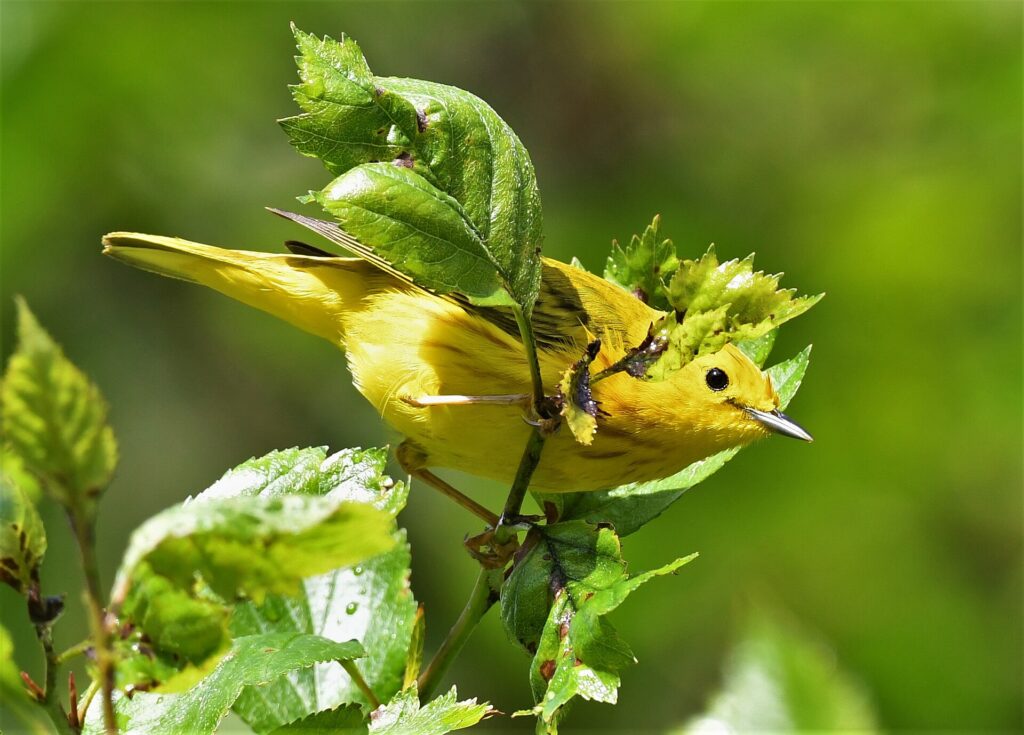
| Yellow warbler | 4.7–5.1 in | 0.3–0.4 oz | Bright yellow overall; male has chestnut streaks on chest; plain face with big dark eye | Breeds across most of the US and Canada in wet thickets and willows; leaves for the tropics in fall | Whistled “sweet sweet sweet I’m so sweet” | Good: purest yellow of the group, but a migrant that skips feeders |
| Lesser goldfinch | 3.5–4.3 in | 0.3–0.4 oz | Male yellow below with glossy black cap; back black or greenish depending on region | Western US and Texas; visits suburban feeders in flocks | Wheezy song that mimics other birds | Fair: right size, but the black cap doesn’t match |
| Canary (domestic) | About 5–6 in | About 0.5–0.7 oz | Bright yellow in the familiar pet variety; wild ancestor is gray-green | Pet cages only; no wild population in the continental US | Long, musical, human-shaped song | Fair: looks the part, but it’s not a backyard bird |
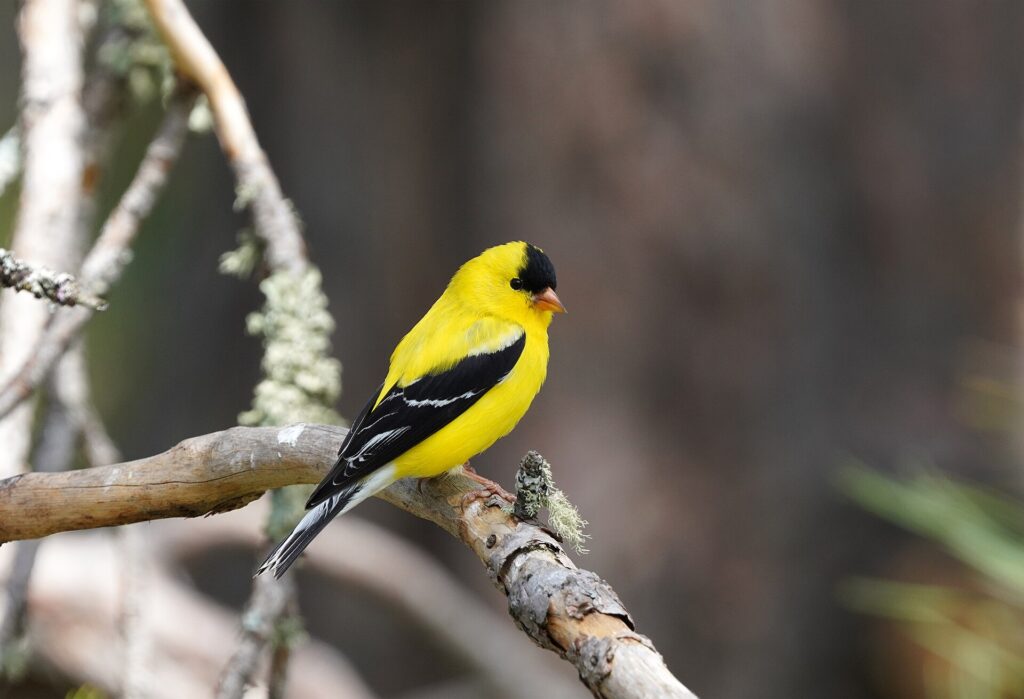
If you have to pick one, the American goldfinch wins. Cornell describes its flight as “bouncy, undulating,” which is as close to Woodstock’s roller-coaster path as a real bird gets. A breeding male is bright yellow, the size fits, it lives in suburban yards, and it stays through the winter across most of the country, just as Woodstock hangs around Snoopy’s doghouse all year. Fans have also pointed to the goldfinch’s small head feathers as a match for Woodstock’s tuft.
The yellow warbler is the better color match, since it has no black on the wings or forehead. But it’s a migrant that spends the winter in Central and South America and eats insects, so it rarely comes near a feeder or a doghouse. The canary looks right in the pet-store sense, and “canary yellow” is probably what many people picture, but the wild Atlantic canary is a gray-green bird from islands off Africa, and the bright yellow version exists only because breeders selected for it over centuries.
Keep in mind that Schulz drew Woodstock as a cartoon, not a field-guide plate. He simplified everything down to a yellow blob with feet, and he said it took him 20 years of drawing to get the character right. The lack of a species is a feature, not a mistake.
Yellow birds you might see in your yard
A kid who wants to find a real Woodstock has good odds in most of the United States. These are the yellow birds most likely to show up, split by season.
Spring and summer
- American goldfinch. The top pick nationwide. Males turn brilliant yellow in spring, and pairs nest late, in June or July, once thistle and milkweed have gone to seed. Put out nyjer or sunflower seed and they’ll come. Our bird seed guide covers what to buy.
- Yellow warbler. Look near streams, ponds, and willow thickets rather than at feeders. Learn the “sweet sweet sweet I’m so sweet” song and you’ll hear it before you see it. Our guide to identifying birds by song can help.
- Lesser goldfinch. If you live in the West or in Texas, this smaller cousin often outnumbers the American goldfinch at feeders. Check for the black cap.
Fall and winter
- American goldfinch (winter plumage). Still around, but molted into drab brown with pale wing bars. Kids are often surprised to learn it’s the same bird.
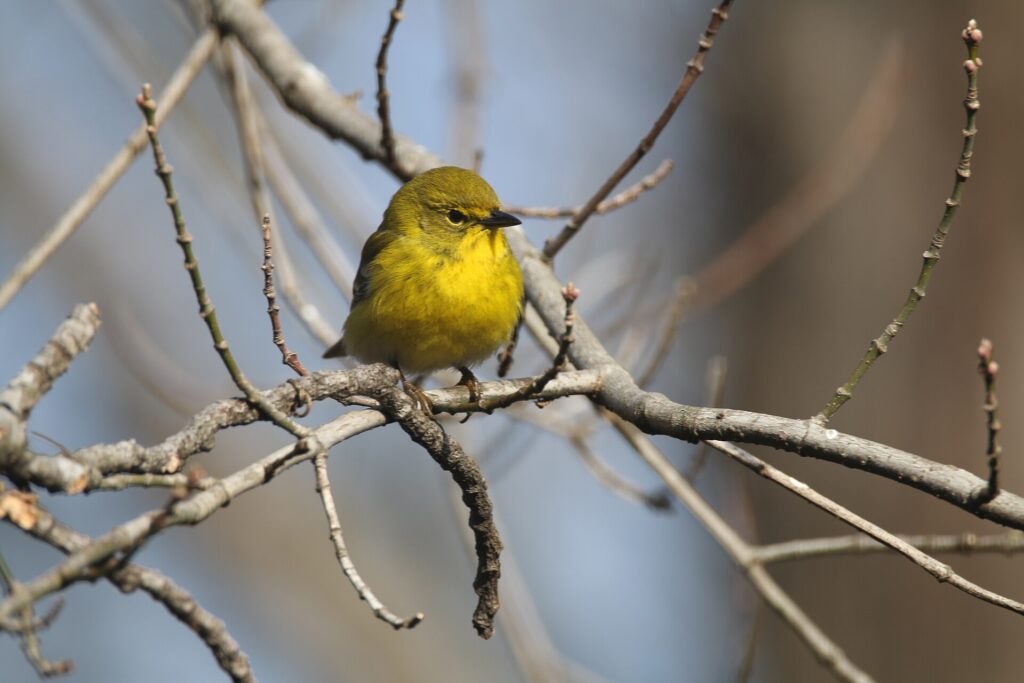
- Pine warbler. One of the only warblers that visits feeders, taking seed and suet. Males keep a bright yellow throat and chest through winter across the Southeast.
- Yellow-rumped warbler. Mostly gray-brown in winter but with a bright yellow rump patch and yellow flanks. It winters farther north than any other warbler by switching to berries, and it will take suet.
- Evening grosbeak. A robin-sized finch with a mustard-yellow body, yellow eyebrow, and thick pale bill. In some winters, flocks push south from the northern forests and crowd sunflower feeders. Big, loud, and unmistakable.
For a fuller picture of what to expect in your area once the leaves drop, see our guide to winter backyard birds by region.
Family activity: spot a real Woodstock
Woodstock is a natural gateway for kids who already love Peanuts. Here is a simple weekend project that turns the cartoon question into a real bird hunt.
- Make a “Woodstock wanted poster.” Have your child list Woodstock’s field marks from the strip: yellow, tiny, messy head feathers, bouncy flight. This is exactly how birders describe an unknown bird.
- Set the bait. Fill a feeder with nyjer or black-oil sunflower seed. Goldfinches will find it, usually within a week or two.
- Watch the flight path. Ask your child to trace a goldfinch’s path in the air with a finger. The up-and-down bounce is the “Woodstock test.”
- Listen for the call. Goldfinches say “po-ta-to-chip” as they bounce overhead. Kids pick it up fast.
- Score the match. Use the table above and give each yellow bird a “Woodstock score” out of 10 for color, size, and flight. There is no wrong answer, which is the whole point.
If this sparks something, our guide on getting kids interested in birdwatching has more ideas, and planting the thistles, coneflowers, and milkweed from our bird-friendly garden guide will keep the goldfinches coming back every summer.
Frequently asked questions
Is Woodstock a canary?
Not officially. Many people assume so because of his bright yellow color, but Schulz never said it, and canaries don’t live wild in North American backyards. A pet canary is the one bird on the list that a child could see up close indoors, though.
Is Woodstock a boy or a girl?
Schulz wrote that Woodstock started out as a girl bird when the character was Snoopy’s secretary. Later strips refer to Woodstock as “he,” and that is how the character is treated today.
Why can’t Woodstock fly well?
Because it’s funnier that way. Schulz built the character around a bird who is bad at flying, and his family has said he enjoyed drawing the erratic up-and-down path. Real goldfinches bounce through the air on purpose, so a kid watching one gets a taste of the joke.
Bottom line
Woodstock has no official species, and Charles Schulz said so himself. Among real birds, the American goldfinch is the best match for his yellow color, tiny size, bouncy flight, and year-round suburban lifestyle, with the yellow warbler a close second on color alone. The good news for families is that a goldfinch is one of the easiest birds in America to bring to a feeder, so a real “Woodstock” is probably closer than you think.