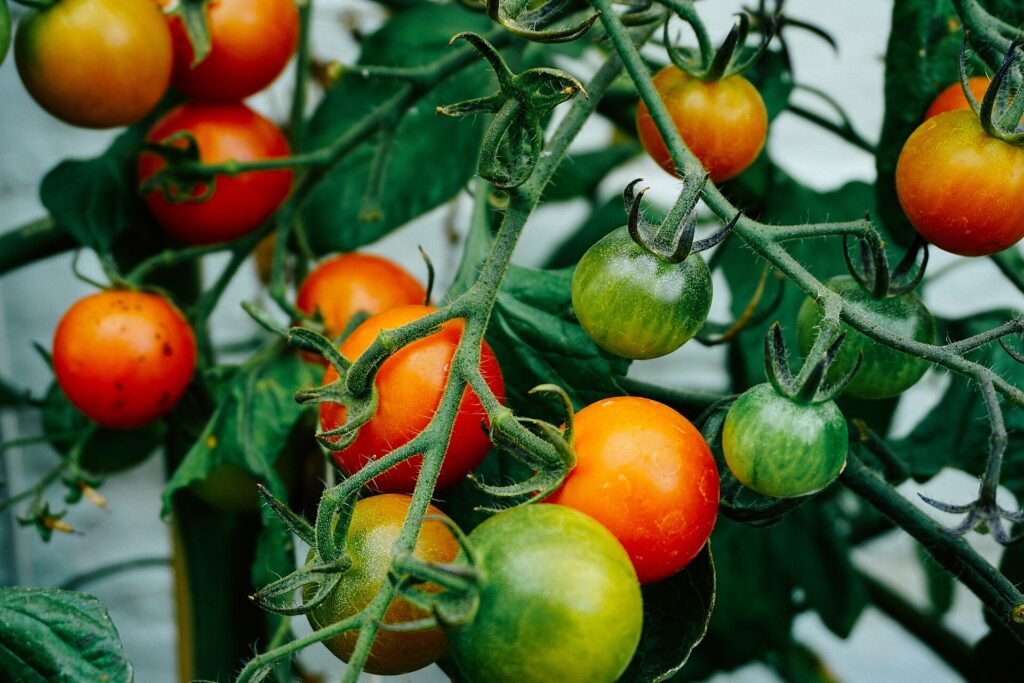
Birds peck ripening tomatoes because fruit is food, and possibly because it holds water: a UC Master Gardener writer describes a common theory that thirsty birds go after juicy fruit. The fixes that hold up are simple. Offer a water source, cover plants with fine netting or a wire cage, pick tomatoes at the first blush of color and let them finish indoors, and if you use decoys or reflective tape, move them every few days so birds don’t get used to them.
Why do birds eat tomatoes, and which birds do it?
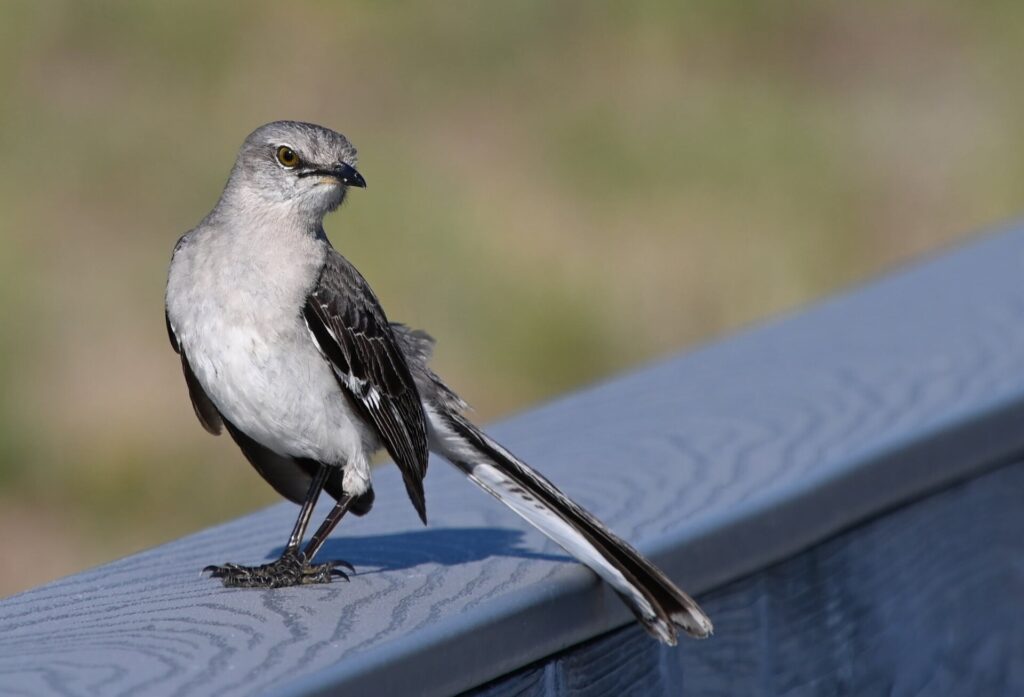
Plenty of backyard birds eat fruit, and a ripening tomato is a big, soft, easy target. The Northern Mockingbird gets most of the blame. A UC Master Gardener column calls mockingbirds “notoriously voracious when it comes to tomatoes.”
Several other common birds eat cultivated fruit, according to the Cornell Lab of Ornithology and university extension services:
- Gray Catbirds switch from insects to fruit when it’s available, and Cornell notes they sometimes damage garden raspberries, cherries, grapes and strawberries.
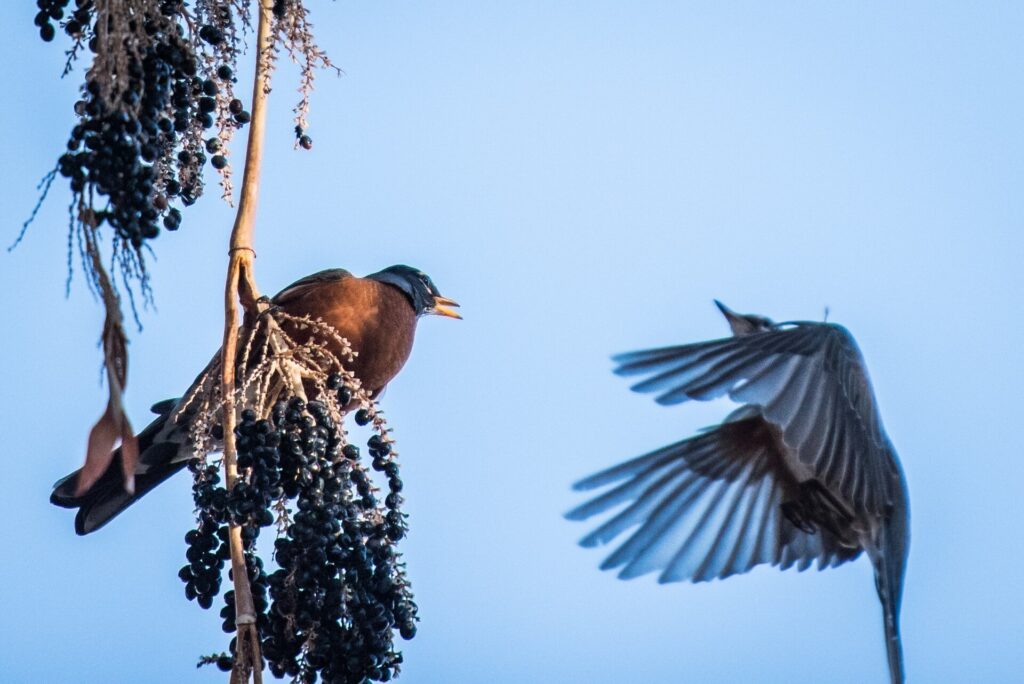
- American Robins are called the most fruit-eating species in the Midwest by University of Minnesota Extension.
- European Starlings are on the same Minnesota list of fruit-eating birds that damage crops.
- Common Grackles eat wild and cultivated fruits along with grain and seeds, per Cornell.
- Blue Jays live mostly on acorns, nuts, fruits and grains, with insects making up the rest.
- House Finches eat almost nothing but plant material, including orchard fruit like cherries, peaches and figs.
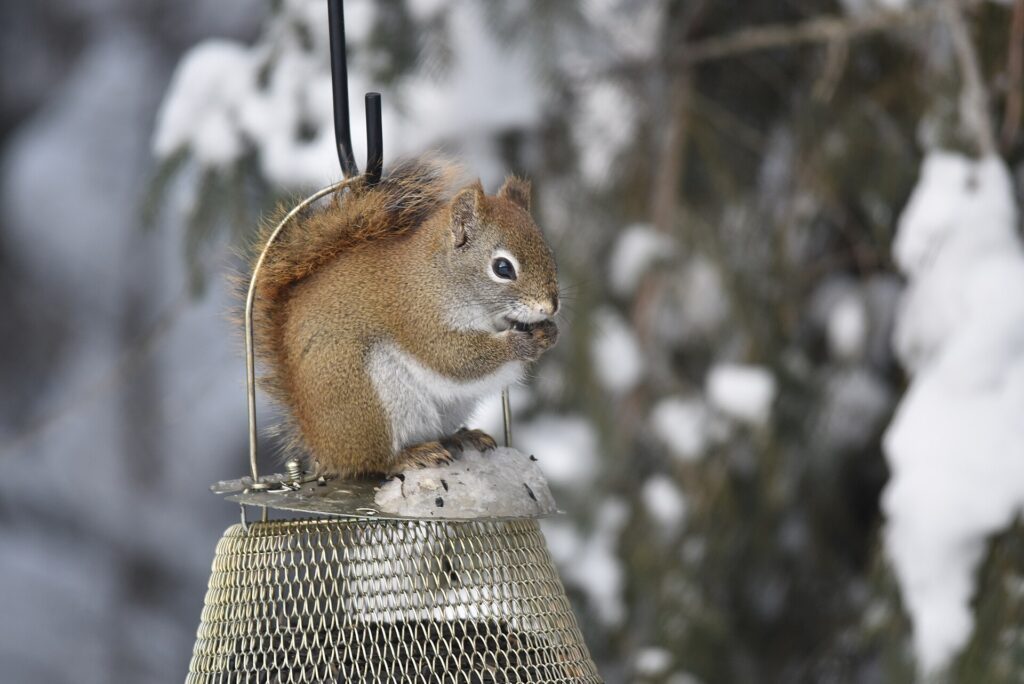
Cornell’s species accounts don’t name tomatoes for most of these birds, so treat this as a list of likely suspects, not a confirmed lineup. Mammals are often the real culprits. Squirrels, chipmunks and rats all eat tomatoes, and University of New Hampshire Extension says chipmunks are especially fond of them.
How to tell bird damage from squirrel or insect damage on tomatoes
Before you buy netting, figure out who’s eating your crop. The bite marks and the timing tell you a lot.
- Birds: Triangular peck marks, usually on fruit still on the plant. UC Master Gardeners in Contra Costa County note birds typically do less damage per tomato than rodents.
- Squirrels: They often pull the tomato off and carry it somewhere else, so you may find only a small leftover piece. The Missouri Botanical Garden says they favor fruit that’s just starting to ripen and often take a few bites before moving to the next one. They feed only in daylight.
- Rats: Heavy damage to the top of the fruit while it’s still on the plant, done at night or around dusk and dawn.
- Chipmunks: Look for small holes and tunnels in and around the garden.
- Insects and slugs: University of Minnesota Extension lists tomato hornworms, tomato fruitworms, cutworms and slugs as causes of holes chewed into fruit. Stink bugs don’t chew holes. They leave whitish or golden-yellow blotches with spongy tissue underneath, a condition the University of Maryland calls cloudy spot.
If squirrels are the problem, they may already be raiding your feeders too. Our guide to keeping squirrels off bird feeders covers the baffles and placement that slow them down.
Does a bird bath keep birds off tomatoes?
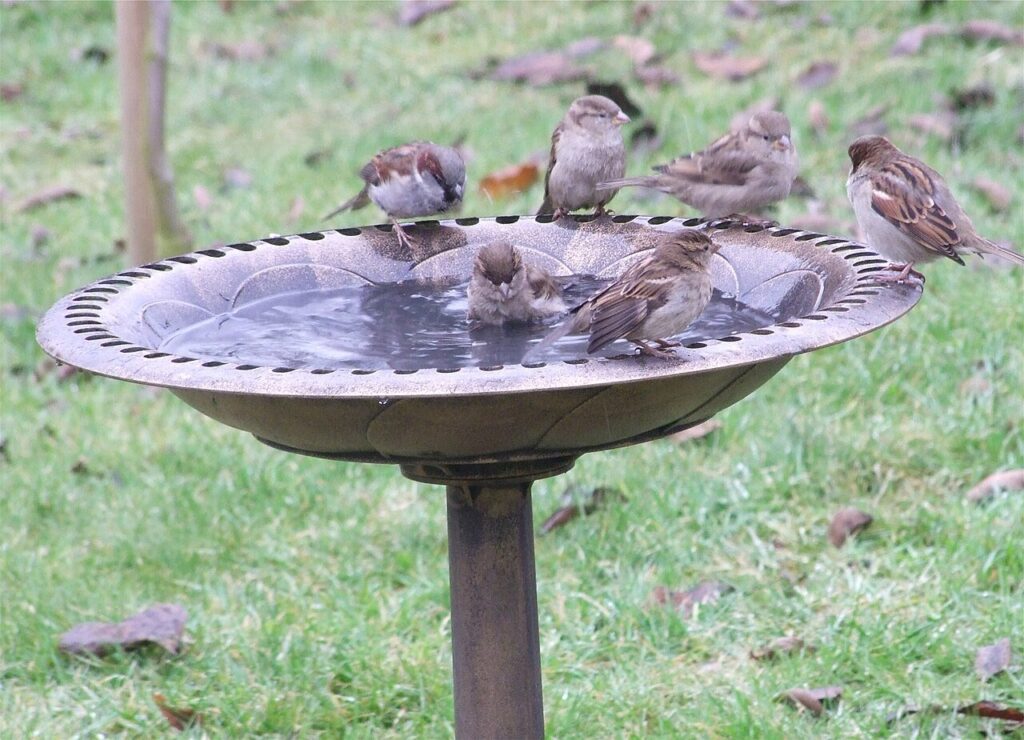
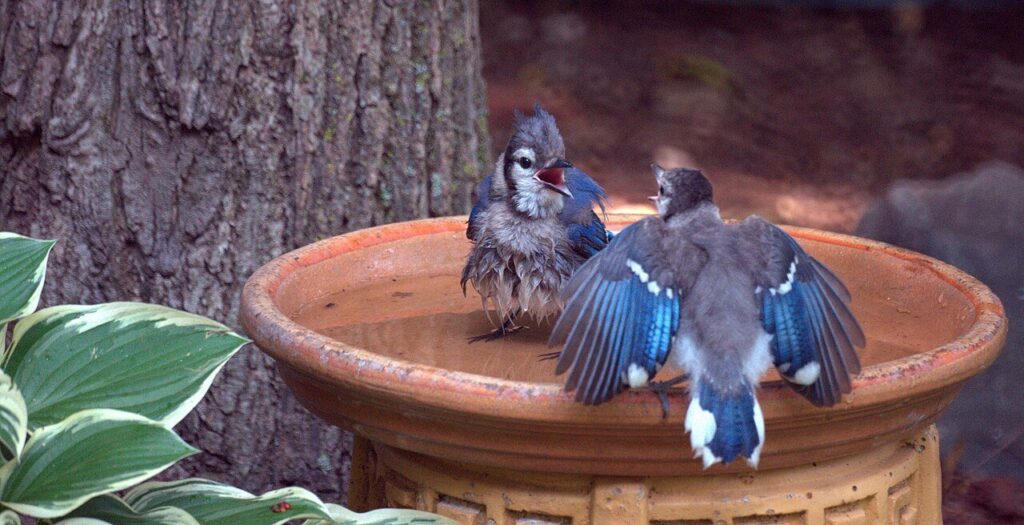
It might, and it’s the easiest thing to try. The thirst theory holds that birds peck tomatoes partly for moisture, so a reliable water source nearby could give them a better option. The same UC Master Gardener column suggests a birdbath for exactly this reason.
Be clear-eyed about it: we couldn’t find a study showing a bird bath reduces tomato damage, and it won’t stop a bird that wants the fruit itself. But it costs little and helps every bird in the yard. Keep the water shallow, clean and refilled, especially during dry spells. Our bird bath guide covers depth, placement and cleaning.
How to net or cage tomato plants without trapping birds
A physical barrier is the one method birds can’t get used to. University of Minnesota Extension calls netting the most effective and reliable bird control, “almost 100% effective when used properly.” University of Arizona Extension agrees that well-placed netting prevents or discourages most bird damage.
Netting done badly can kill birds and other wildlife that get tangled in it. Wildlife-safe netting guidance from the Victorian government in Australia is the clearest we found:
- Use mesh with holes 5 mm (about 3/16 inch) or smaller when stretched. If you can poke a finger through, it’s too coarse.
- Choose white netting, which animals active at night can see and avoid more easily.
- Keep it taut, stretched over a frame rather than draped loosely on the plant.
- Check it every day. If an animal is caught, call a wildlife rehabilitator instead of cutting it free yourself.
Close off the bottom, too. Montana State University Extension warns against leaving any openings at the base, and UMass Extension weighs down net edges so birds can’t slip under.
Wire cages are sturdier and stop mammals as well as birds. UC Master Gardeners recommend metal mesh with holes no larger than ½ inch to fully exclude pests. A tomato cage wrapped in hardware cloth, with a removable top for picking, works on the same principle.
Row covers are best for young plants. University of Arizona Extension notes floating row cover protects seedlings from birds. Once tomatoes are flowering, heavier covers become a problem: University of Wisconsin Extension warns tomatoes can drop blossoms if it gets above 86°F under the fabric.
Should you pick tomatoes early to keep birds from getting them?
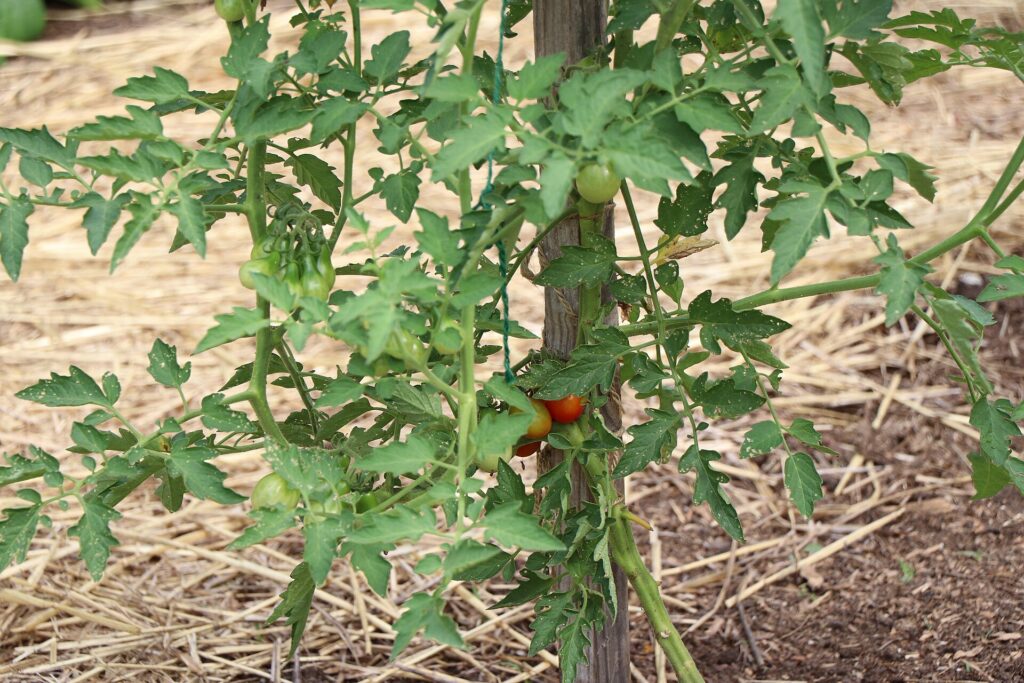
Yes. This is the fix that costs nothing, and extension experts back it. The trick is picking at the breaker stage, when the first pink or yellow color shows up on the fruit. Frank Watson, a University of Georgia Cooperative Extension agent, explains that tomatoes at this stage are physiologically mature and will finish coloring after they’re picked.
Joe Masabni of Texas A&M AgriLife Extension puts it plainly: “Once it’s physiologically ripe, it is considered vine ripened.” He adds that the longer tomatoes hang on the plant, the greater the chance birds and insects get them first.
Colorado State University Extension says tomatoes picked with a pink blush ripen off the vine with no loss of flavor. Store them somewhere between 55°F and 70°F. At the warm end they’ll ripen in about two weeks; cooler rooms take about a month. Keep them out of the refrigerator, because tomatoes held below 50°F turn bland.
Do reflective tape and fake owls keep birds away from tomatoes?
They work for a while, then they stop. Birds learn that a shiny ribbon or a plastic owl that never moves isn’t a threat. Montana State University Extension says birds usually get used to reflective tape, eyespot balloons and hawk kites, and University of Arizona Extension notes birds often habituate to frightening devices.
You can stretch their usefulness. University of Minnesota Extension advises moving visual scare devices around daily to keep birds guessing. Montana State suggests varying the location and type of device, starting before birds get attached to your garden, and staying persistent. Its guide also notes motion-activated water sprayers hold up better, because they only go off when a bird is close.
Whatever you try, stick to scaring and excluding. University of Arizona Extension points out that most birds are protected under the Migratory Bird Treaty Act, and harming or harassing them without a U.S. Fish and Wildlife Service permit is illegal. That covers mockingbirds, catbirds, robins, grackles, jays and House Finches.
Three introduced species are the exceptions. The U.S. Fish and Wildlife Service says the European Starling and House Sparrow aren’t covered because their bird families aren’t part of the treaties, and the Rock Pigeon (the feral pigeon of city streets) is on the federal list of non-native birds the act doesn’t apply to. State and local laws can still apply, so check with your state wildlife agency before doing anything beyond deterrence. More on feral pigeons in our piece on whether pigeons are dirty birds.
| Method | How well it works | Effort | Notes |
|---|---|---|---|
| Fine netting on a frame | Very well; birds can’t get used to it | Medium to high | Mesh 5 mm or smaller, white, taut, closed at the bottom; check daily |
| Wire mesh cage | Very well; also stops squirrels and rats | Medium | Holes ½ inch or smaller; leave a way in for picking |
| Picking at breaker stage | Very well for the fruit you pick | Low | Ripen indoors at 55–70°F; don’t refrigerate |
| Bird bath nearby | Unproven; may help if thirst is the driver | Low | Keep clean and full, especially in dry weather |
| Floating row cover | Good for seedlings and young plants | Low to medium | Heat under fabric can cause blossom drop above 86°F |
| Motion-activated sprayer | Better than static scare devices | Medium | Only triggers when a bird is close |
| Reflective tape, balloons, kites | Short term only | Low | Move daily; birds habituate |
| Fake owl or hawk decoy | Short term only | Low | Move every few days or it stops working |
Frequently asked questions
Can I pick tomatoes while they’re still green?
Mature green tomatoes will ripen indoors, but Colorado State University Extension says the flavor won’t fully develop. Look for a white, star-shaped pattern on the blossom end as a sign the fruit is mature. For the best taste, wait for the first blush of color.
Why is half my tomato missing?
That points to a mammal, not a bird. Squirrels often carry fruit away and leave a small piece behind, and rats do heavy damage to the top of the fruit at night. Birds usually leave smaller peck marks.
Will my bird feeder draw pests to the tomatoes?
It can bring in rodents. UC Master Gardeners advise against leaving birdseed out overnight, and University of New Hampshire Extension lists removing feeders as one way to discourage chipmunks. Our bird-friendly garden guide covers ways to welcome birds without feeding every critter in the neighborhood.
Bottom line
The two surest fixes are picking tomatoes at the first blush of color and covering plants with fine, taut netting or a wire cage. A bird bath is cheap and worth trying, and scare devices only help if you keep moving them. Deter and exclude birds, but don’t harm them, because most of the ones in your garden are protected by federal law.