If you’re hearing a squeaky-toy sound in the dark, the most likely bird is a Northern Saw-whet Owl or a young owl begging for food. Cornell Lab of Ornithology lists “whines,” “squeaks,” and “high-pitched barks” among the saw-whet’s calls, and owlets of Great Horned, Long-eared, and Barn Owls make loud, repeated begging calls on summer nights. Eastern Screech-Owls, American Woodcocks, and even a few non-birds can also fool you.
Which owls sound like a squeaky toy? Saw-whets and screech-owls
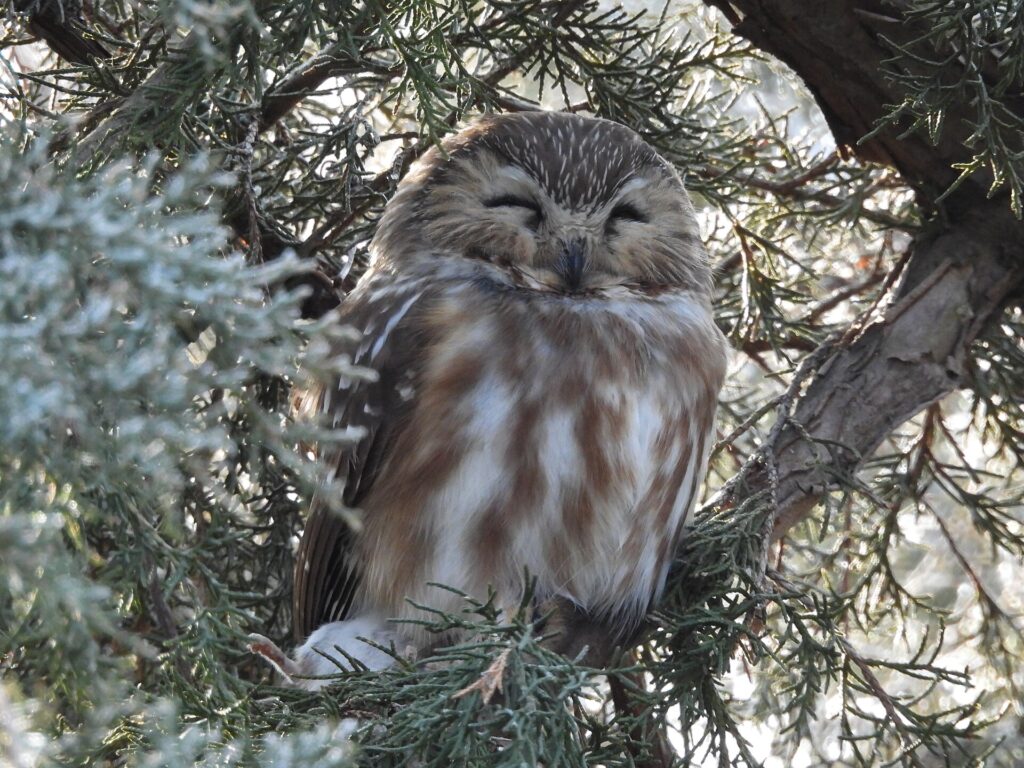
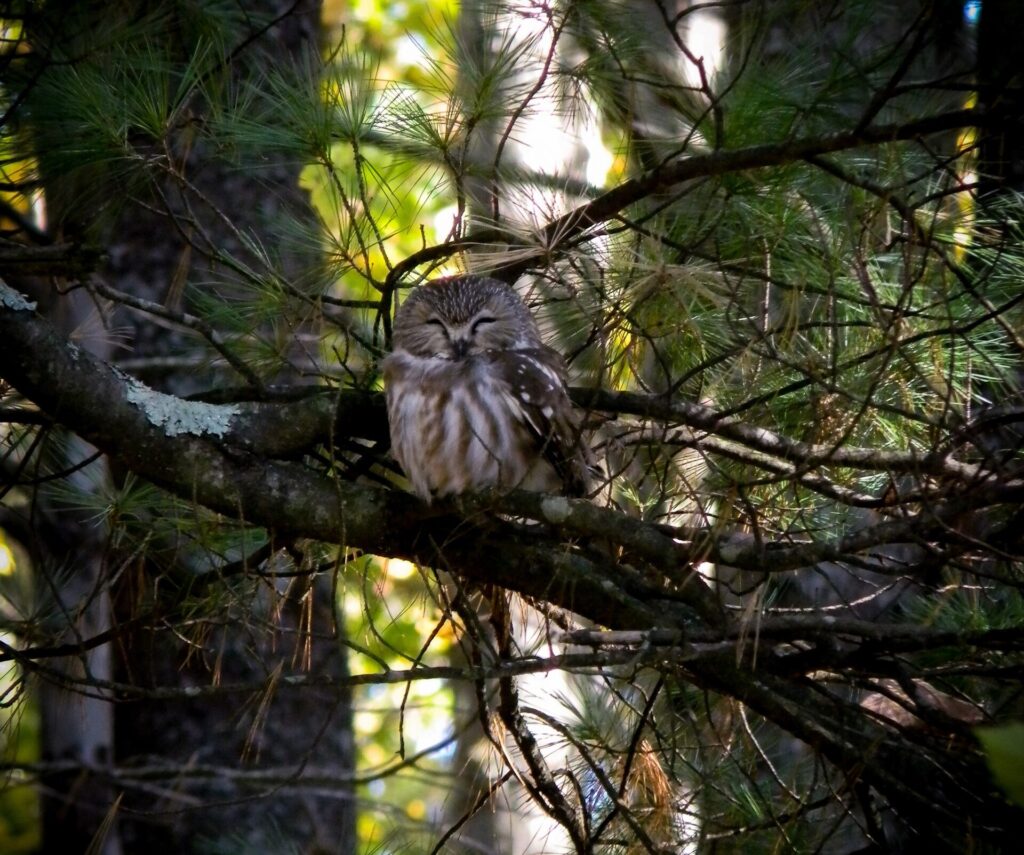
The Northern Saw-whet Owl is a tiny forest owl that is, in Cornell’s words, “highly nocturnal and seldom seen.” Its best-known sound is a steady too-too-too of whistled notes on one pitch, about two notes per second. Cornell describes it as a common evening sound in evergreen mountain forests from January through May.
That tooting alone can sound like someone squeezing a rubber toy over and over. On top of it, saw-whets give whines, squeaks, high tssst calls, and barks. Audubon notes that males may sing through the night for hours with scarcely a break in late winter and spring.
Saw-whets breed in northern and mountain forests, but Cornell notes they show up across the U.S. in winter, and Audubon says they favor dense conifer groves then. Squeaks from pines or spruces between late winter and spring put this owl at the top of your list.
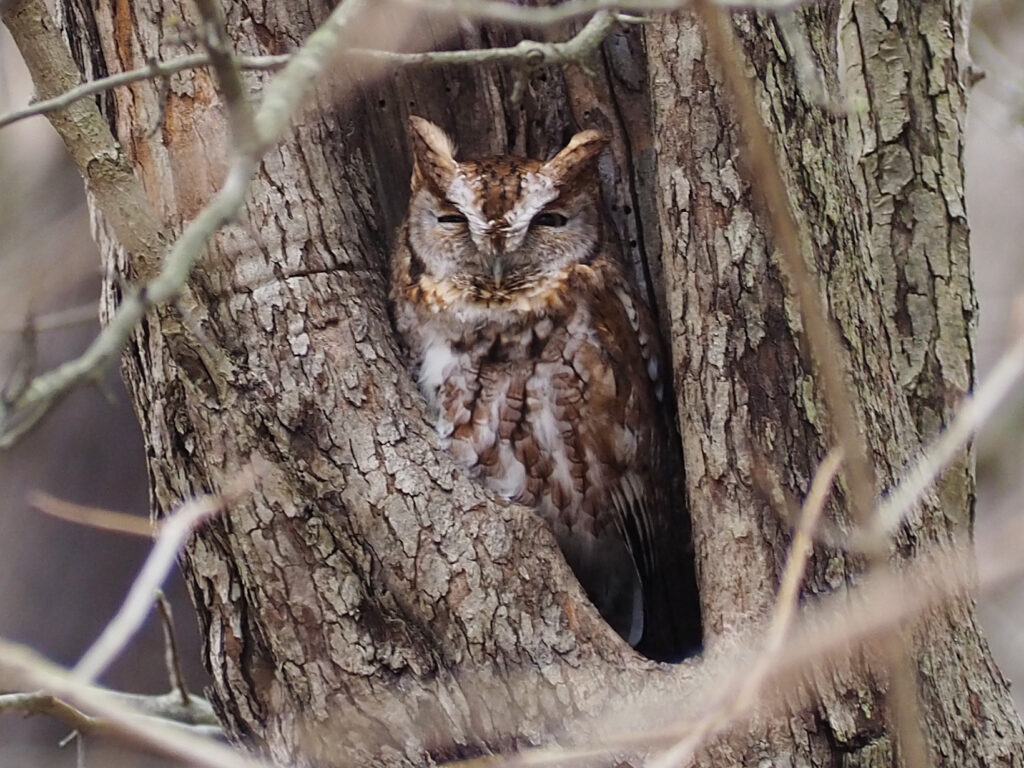
The Eastern Screech-Owl is the other small owl to check. Despite the name, its two main songs are a shrill, descending whinny and an even-pitched trill that Cornell calls a “bounce song.” It also barks, rattles, clacks its bill, and screeches when defending nests or fledglings.
Cornell says screech-owls are common east of the Rockies in woods, suburbs, and parks, and they’ll use backyard nest boxes. Pairs may sing back and forth, so a whinny answered from another tree is a strong clue. For how owl calls compare with daytime raptors, see why hawks screech.
What makes a squeaky sound all night in summer? Begging baby owls
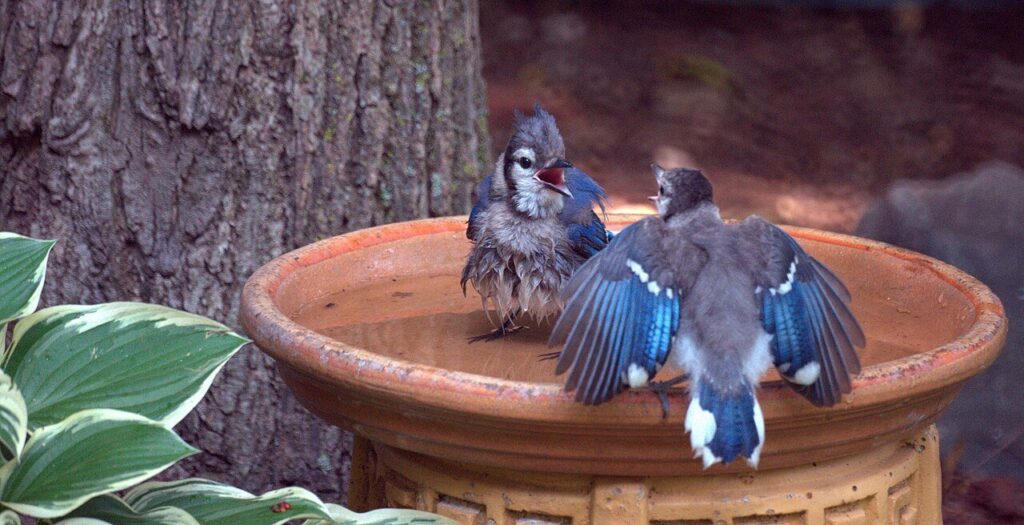
If the squeaking starts in late spring or summer and goes on for hours, think young owls. Owlets keep begging their parents for food after they leave the nest, often from different trees as they learn to fly.
- Great Horned Owl. Cornell says young owls “give piercing screams when begging for food.” A Virginia Department of Wildlife Resources account of one fledgling describes faint, screechy noises at first, then begging “all night long” by June, continuing through summer. Great Horned Owls live almost everywhere in North America, including backyards and cities.
- Long-eared Owl. BirdWatch Ireland describes the begging call of young Long-eared Owls as a high-pitched squeak “reminiscent of a rusty gate,” heard mostly in late evening and at night. It’s the same species found in North America.
- Barn Owl. Barn Owl chicks make a hissing begging call that the British Trust for Ornithology says is sometimes called “snoring.” It’s often heard early in the evening while chicks wait for a parent. Adults add harsh screeches. Cornell notes Barn Owls hunt open country and often roost in barns and old buildings.
Other night birds that squeak, peent, or twitter after dark
Not every odd night sound is an owl. These birds call at dusk, dawn, or after dark, and several make short, toy-like notes.
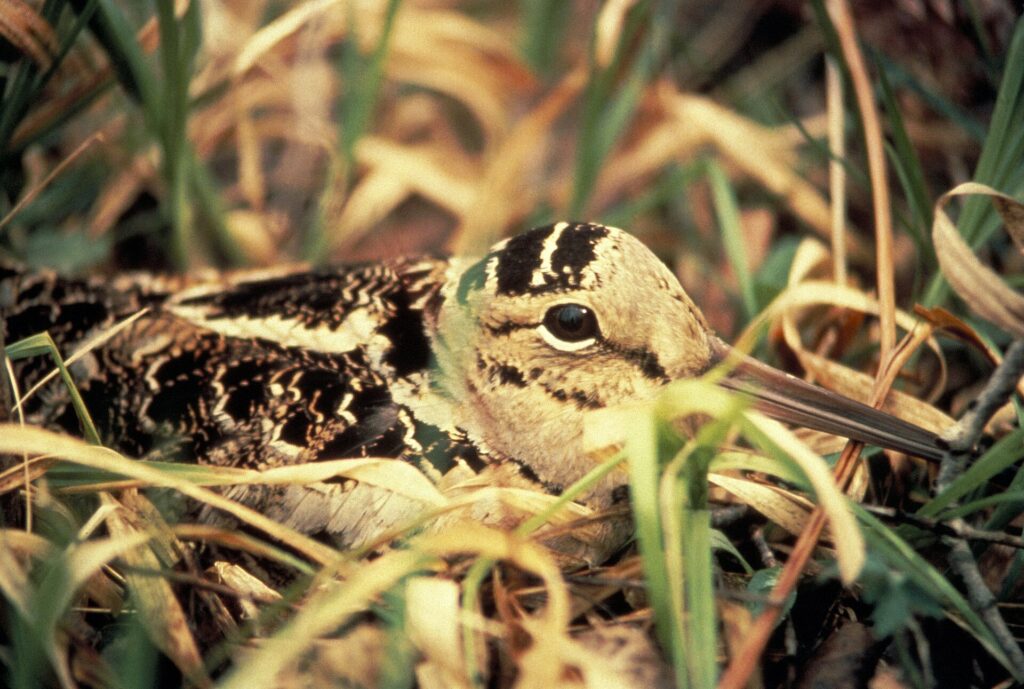
- American Woodcock. In spring, males give a buzzy, nasal peent from the ground at dawn and dusk, then spiral skyward. Cornell explains the twittering comes from air rushing through three narrow outer wing feathers, followed by musical chirps as the bird zigzags down. Look for it in young forests and shrubby old fields across eastern North America.
- Common Nighthawk. Its call is a sharp, electric peent. In spring and summer, males dive and flex their wings to make a booming whoosh. Cornell says nighthawks are most active from about half an hour before sunset to an hour after, and again before sunrise. In cities they’ve nested on flat gravel rooftops and hunt insects around streetlights and stadium lights.
- Killdeer. Cornell calls the Killdeer’s high, plaintive voice “a common sound even after dark,” often given in flight as the bird circles overhead. Killdeer use lawns, golf courses, and athletic fields, so a shrill call over a lit ballfield at night is often this plover.
- Northern Mockingbird. Mockingbirds sing “sometimes at night,” per Cornell, more often around a full moon, and most night singers are unmated males. Because mockingbirds copy other sounds, a mimicked squeak or whistle can pop out of the middle of a long, varied song.
Night sounds that seem like birds but aren’t
Some squeaky night sounds come from mammals and frogs. Rule these out before you blame an owl.
- Flying squirrels. The North Carolina Wildlife Resources Commission says flying squirrels make “a birdlike chirping sound.” Maryland DNR describes a loud tseep alarm call, chittering, and chuckle-like noises. According to the National Wildlife Federation, the southern flying squirrel lives throughout the eastern U.S., and the northern species occurs in the Northeast, along the West Coast, and into Idaho and Montana. Both are nocturnal, and they sometimes move into attics.
- Bats. Most bat echolocation is too high-pitched for people to hear, but bats also make lower-frequency social calls to each other. Squeaks near a roost at dusk can be bats.
- Tree frogs. The Missouri Department of Conservation calls the gray treefrog’s song “a musical birdlike trill” and notes people often mistake it for a bird. Males call from early April into July on nights of 60°F or warmer. In the Southeast, the bird-voiced treefrog gives a birdlike whistle repeated 20 or more times, mid-April through August, according to the Tennessee Wildlife Resources Agency.
- Foxes. Red foxes have a big vocabulary, from barks and whines to shrieks and screams, and they’re loudest during courtship in late winter and early spring. A fox scream is much harsher than a squeak, but a yipping fox can surprise you.
Squeaky night sounds by season and region: quick ID table
| Sound description | Likely source | Season/time | Where in US |
|---|---|---|---|
| Steady, whistled toots about 2 per second; whines and squeaks | Northern Saw-whet Owl | Jan–May for song; all night | Northern and mountain conifer forests; much of the U.S. in winter |
| Piercing, repeated begging scream or screech | Young Great Horned Owl | Late spring through summer; all night | Nearly everywhere, including towns and cities |
| High squeak like a rusty gate | Young Long-eared Owl | Summer; late evening and night | Scattered; secretive and uncommon |
| Hissing “snore”; harsh screech | Barn Owl (chicks and adults) | Nesting season; early evening onward | Open country, barns, old buildings |
| Descending whinny or even trill | Eastern Screech-Owl | Year-round; night | East of the Rockies, including suburbs |
| Buzzy peent, then twittering and chirps overhead | American Woodcock | Spring; dusk and dawn | Eastern North America, shrubby fields |
| Sharp peent; whooshing boom | Common Nighthawk | Spring and summer; dusk and dawn | Widespread; cities with gravel roofs and bright lights |
| High, shrill kill-deer in flight | Killdeer | Any season; after dark | Lawns, fields, ballfields |
| Long, varied song with mimicked squeaks | Northern Mockingbird | Breeding season; night, often near full moon | Widespread, especially where mockingbirds live year-round |
| Birdlike chirps, tseep, chittering | Flying squirrel | Year-round; night | Eastern U.S.; Northeast and West for northern species |
| Musical birdlike trill or whistle | Gray or bird-voiced treefrog | April–August; warm nights | Eastern and central U.S.; swamps in the Southeast |
| Barks, shrieks, screams | Red fox | Late winter and early spring; night | Widespread |
How to identify a bird sound at night
You’ll rarely see the animal, so a recording is your best evidence.
- Record it with your phone. Step outside, point the phone toward the sound, and keep recording. The Ontario Breeding Bird Atlas recommends getting as close as you can without disturbing the animal and recording for at least 30 seconds.
- Run Merlin Sound ID. Cornell’s free Merlin app lists possible species as it listens. Cornell says it turns sound into a spectrogram, a picture of pitch, volume, and duration, and uses eBird data to weigh which birds are likely where you are. It also saves recordings so you can replay them.
- Double-check the answer. Merlin only knows birds, so it can’t flag a flying squirrel or tree frog. The Ontario atlas advises verifying every suggestion yourself.
- Compare with Macaulay Library recordings. Cornell’s Macaulay Library is a free online archive of animal sounds, and it’s the source of the recordings Merlin was trained on. Search a species name and listen to several recordings, including begging calls, which Cornell’s species pages often include.
- Write down the details. Note the date, time, weather, and whether the sound moved. A sound that shifts from tree to tree in July points to fledgling owls. A sound that rises into the sky at dusk in April points to a woodcock.
For daytime practice, our guide to identifying birds by their songs and calls covers the basics. A night listening walk is also a great way to get kids interested in birdwatching.
Frequently asked questions
What bird squeaks like a dog toy at night in summer?
In summer, the best bet is a young owl begging for food. Great Horned Owl fledglings can beg all night for weeks, and young Long-eared Owls make a squeak often compared to a rusty gate.
What bird makes a repeated beeping or tooting sound at night in winter?
A steady, whistled tooting from late winter into spring is the classic Northern Saw-whet Owl song, especially near conifers. Saw-whets turn up across much of the U.S. in winter.
Is a squeaky noise at night a sign an owl is nesting nearby?
Repeated begging calls in late spring or summer usually mean a family of owls is using the area. Keep your distance, keep pets inside at night, and enjoy the show. Cornell notes adult Great Horned Owls snap their bills when people approach their young. A bird-friendly garden with mature trees helps owls and their prey.
Can Merlin identify owls at night?
Merlin Sound ID works on any bird sound it has been trained on, day or night. It won’t identify mammals or frogs, so compare its suggestions with Macaulay Library recordings before you settle on an answer.
Curious what the owls you hear at night are hunting? See what owls eat.
Bottom line
A squeaky-toy sound at night is most often a Northern Saw-whet Owl in late winter and spring, or begging young owls in summer. Eastern Screech-Owls, woodcocks, nighthawks, Killdeer, and mockingbirds are next in line. If Merlin comes up empty, consider flying squirrels, tree frogs, bats, or foxes, and confirm with a Macaulay Library recording.