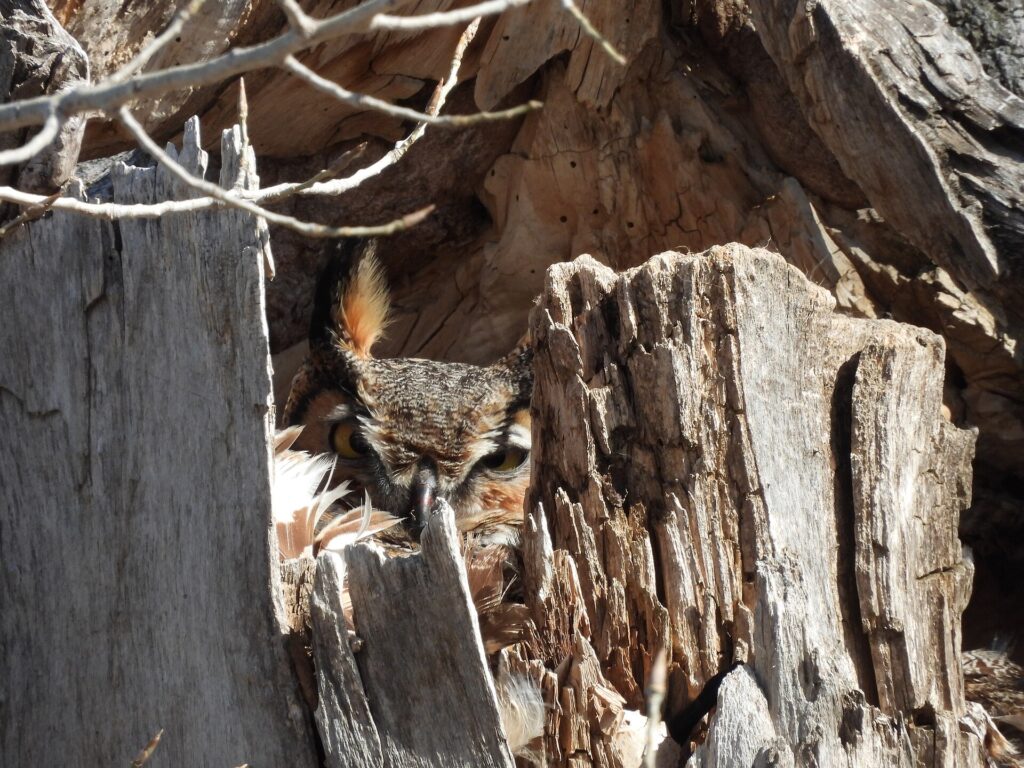
Owls are meat eaters. Most North American owls live mainly on small mammals like mice, voles, rats and rabbits, but many also take birds, insects, frogs, reptiles and even fish or crayfish, depending on the species and what’s around. A tiny screech-owl might dine on beetles and earthworms, while a Great Horned Owl can take prey as big as a skunk.
Below, we break down how owls find their food, what the owls most likely to visit a US backyard actually eat, and what pellets can tell you about any owl living near your home.
How do owls hunt at night?
Owls rely on hearing as much as sight. The round, dish-shaped face of an owl, called the facial disk, collects sound and channels it toward the ears, which sit hidden under the feathers on each side of the head. In many owls the two ear openings are set at different heights, so a sound reaches one ear a split second sooner and a little louder than the other.
That tiny difference lets the owl pinpoint where a rustle is coming from, both left to right and up and down. A Stanford University essay on owl hunting reports that Barn Owls can locate and catch prey by sound alone in lab tests. The Cornell Lab of Ornithology calls the Barn Owl’s ability to find prey by sound “the best of any animal that has ever been tested.”
Silent flight is the other half of the trick. The leading edge of an owl’s outer wing feathers is serrated like a comb, which breaks up the air flowing over the wing and muffles the whoosh you’d hear from other birds. The prey doesn’t hear the owl coming, and the owl can keep listening as it closes in.
Hunting styles vary. Screech-owls usually sit on a low branch and wait, then drop onto whatever passes below. Barn Owls fly slowly and low over open fields. Great Horned Owls watch from a perch and will even walk along the ground to reach small prey.
What are owl pellets and what do they reveal?
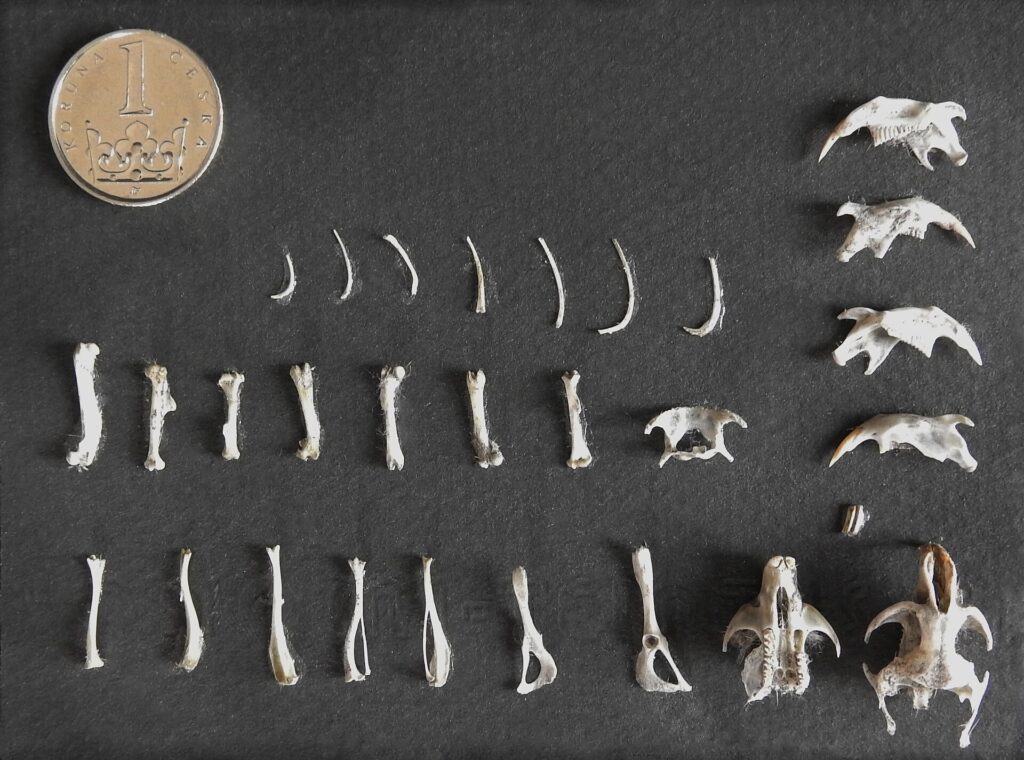
Owls often swallow small prey whole. Their digestive system keeps the useful soft tissue and packs the parts it can’t digest, such as fur, bones, teeth and feathers, into a tight oval. Hours later, usually while the owl rests during the day, it coughs up that bundle. That’s an owl pellet.
Because owls don’t tear small prey apart the way hawks do, the bones inside a pellet are often surprisingly complete. Researchers pick them apart to learn exactly what an owl has been eating, down to the species of mouse or vole. If you find a scatter of gray, furry pellets under a tree, Audubon notes that it’s a good sign an owl roosts above.
Owl pellet dissection: a great kids’ activity
Pulling apart an owl pellet is a classic science lesson for a reason. Audubon describes students puzzling over the bones “like forensic detectives.” Kids can count skulls to figure out how many animals the owl ate, then match jaws and leg bones to a bone chart.
For home or classroom use, get pellets from an educational science supplier. Science World, a science center, explains that these pellets have been dried and treated to kill bacteria and parasites. Here’s a simple setup:
- Gloves, tweezers, a wooden probe or toothpick, and a paper plate or tray
- A printed bone-sorting chart for mice, voles, shrews and small birds
- Have kids guess what’s inside first, then tease the bones out of the fur
- Sort bones into skulls, ribs, vertebrae and limbs, then glue a skeleton to a card
It pairs nicely with other hands-on projects in our guide to getting kids interested in birdwatching.
What do common backyard owls eat?
Five owls account for most backyard sightings in the US. Here’s what each one eats and where you’re likely to find it, based on the Cornell Lab’s species accounts.
| Species | Main prey | Typical US range |
|---|---|---|
| Great Horned Owl | Rabbits, hares, rodents, skunks, ducks, crows, other owls; also reptiles, insects, fish | Nearly all of the US, from deserts and forests to suburbs and cities |
| Barred Owl | Squirrels, chipmunks, mice, voles, rabbits, birds, frogs, fish, crayfish | Eastern US in mature forest near water; has spread into the Pacific Northwest and California |
| Eastern Screech-Owl | Mice, moles, songbirds, insects, earthworms, crayfish, frogs, lizards | East of the Rocky Mountains, including suburbs and city parks |
| Western Screech-Owl | Deermice, pocket mice, shrews, woodrats, bats, crayfish, insects, worms | Western states, especially wooded canyons, streamsides, suburbs and deserts |
| Barn Owl | Voles, mice, rats and other rodents; also shrews, bats, rabbits | Widespread in open country: farmland, grassland, marsh and desert |
Great Horned Owl
The Cornell Lab says this owl has the most varied diet of any North American raptor. Its menu runs from scorpions and mice to rabbits, geese, porcupines and skunks. It will also eat other owls, including screech-owls, and hawks.
Barred Owl
Barred Owls eat mostly small mammals, but they’re also comfortable fishing. Cornell notes they wade into shallow water or drop from a perch to grab fish and crayfish. Look for them in mature woods near a creek or swamp.
Eastern and Western Screech-Owls
These small owls are generalists. Eastern Screech-Owls eat a surprising number of earthworms and insects along with mice and songbirds, and they’ll strike the water’s surface for tadpoles and crayfish. Western Screech-Owls hunt mice, shrews and woodrats, and snatch bats and flying insects in midair.
Barn Owl
Barn Owls are rodent specialists. A University of Florida IFAS fact sheet says voles are their most common prey in northern North America, while in South Florida they take bigger rodents such as cotton rats, roof rats and rice rats. That appetite for rodents is why many farmers welcome them.
Do owls eat cats or small dogs?
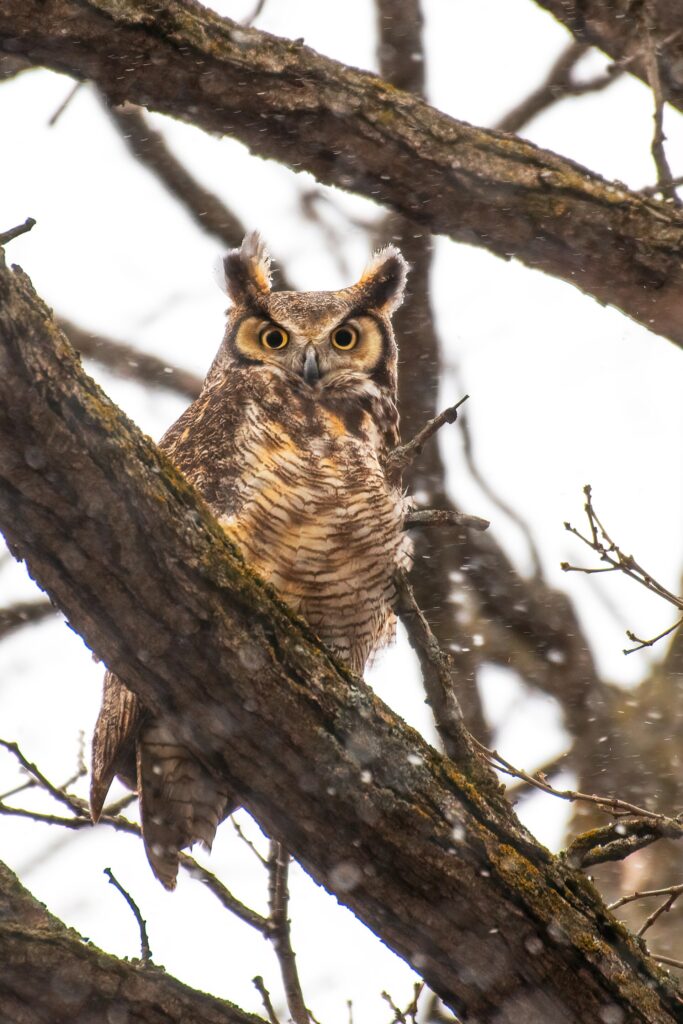
It can happen, but it’s rare. The Cornell Lab lists house cats among the prey Great Horned Owls have taken. The International Owl Center says large owls “on rare occasions” try to catch small cats and very small dogs, and that pets face greater danger from cars and disease.
The center’s advice is simple: don’t leave cats or dogs of about 5 pounds or less outside unattended, especially at dusk and at night. Keeping cats indoors and dogs leashed protects pets and owls alike. For a similar look at another raptor, see are hawks dangerous to humans.
Do owls come to bird feeders?
Owls don’t eat seed, so they won’t come for the feeder itself. But a feeder area can still put food on an owl’s table. Cornell’s Project FeederWatch explains that rodents are drawn to seed dropped under feeders, and mice and rats are exactly what many owls hunt.
Songbirds can be on the menu too. Audubon points out that in suburbs, backyard feeders supply screech-owls with small feathered prey. If rodents are becoming a problem, FeederWatch suggests pausing feeding for a couple of weeks and catching spilled seed with a tray you clean out often. Our guide on how to clean a bird feeder covers keeping the area tidy.
How to attract owls to your yard
You can’t feed owls, but you can give them a place to live and a safe food supply. Two steps matter most.
Put up a nest box
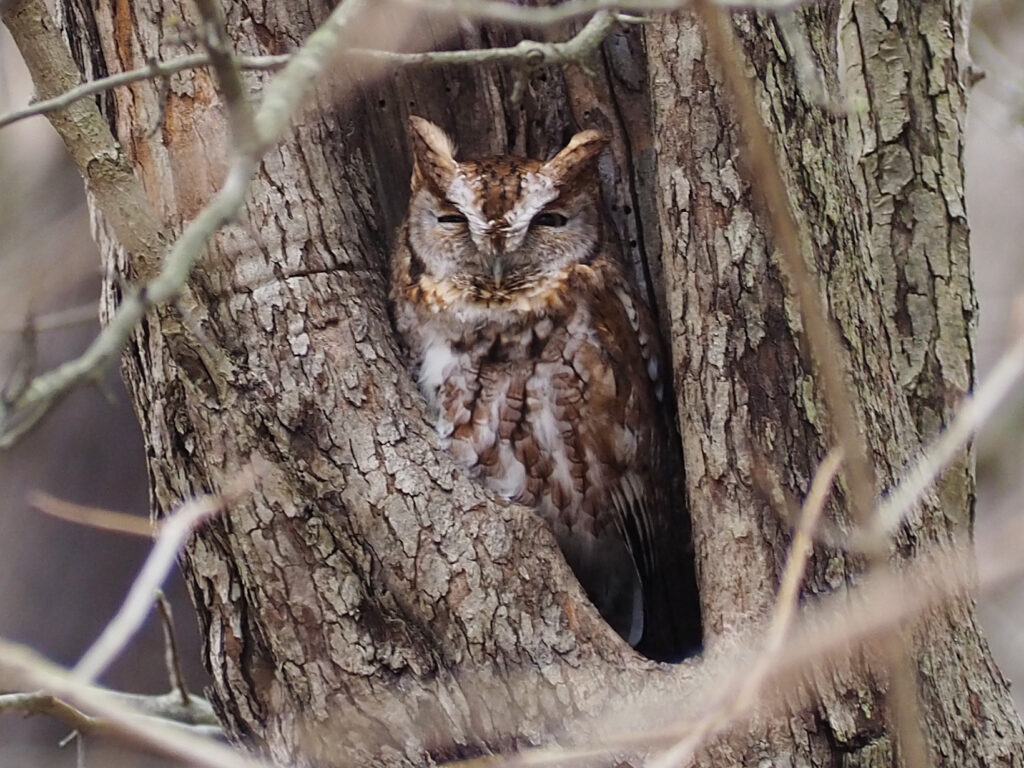
Screech-owls nest in old woodpecker holes and other cavities, and Cornell says both Eastern and Western Screech-Owls readily use nest boxes. Audubon’s build plan calls for an 8-inch-square floor, a 3-inch entrance hole, a couple of inches of wood chips inside, and mounting about 10 feet up, facing east or south if possible.
Barn Owls need a much larger box and open land to hunt over, so they suit farms and rural lots. Cornell credits properly sized nest boxes with helping Barn Owl populations recover where natural nest sites were scarce. It also advises putting boxes up well before breeding season and adding a predator guard.
Skip rat poison
This is the big one. Many rodent poisons are anticoagulants, which stop blood from clotting. A poisoned mouse doesn’t die right away, and a slow, sick rodent is easy prey. When an owl eats it, the owl takes in the poison too. This is called secondary poisoning.
A 1980 federal study published by the US Geological Survey found owls died of internal bleeding after eating rats killed with bromadiolone, brodifacoum or diphacinone. Mass Audubon reports that a Massachusetts wildlife clinic found these “second-generation” poisons in every Red-tailed Hawk it tested in a 2020 study. Mass Audubon urges homeowners to choose wildlife-safe, poison-free pest control instead.
Beyond that, leave some big trees standing and let a corner of the yard stay a little wild. Our bird-friendly garden guide covers plantings that support the insects and small animals owls feed on.
Frequently asked questions
Do owls eat other birds?
Yes. Screech-owls take songbirds, Barred Owls take birds up to about the size of a grouse, and Great Horned Owls eat ducks, crows, hawks and even other owls, according to the Cornell Lab.
Do owls eat snakes?
Some do. Cornell lists reptiles in the diets of Great Horned and Barred Owls, and Eastern Screech-Owls eat lizards. Reptiles are a smaller share of the diet than rodents for most species.
Do owls hunt during the day?
Most hunt from dusk through the night, but Cornell notes that Great Horned and Barred Owls sometimes hunt in daylight. Learning their calls is the easiest way to know they’re nearby; see our guide to identifying birds by their songs and calls.
To sort out the other sounds you hear after dark, see night birds that sound like squeaky toys.
Owls sometimes turn up in surprising places: read about the barn owls nesting in Manhattan and what a barn owl sounds like.
Bottom line
Owls eat mostly small mammals, topped up with birds, insects, frogs, reptiles and, for some species, fish and crayfish. Pellets under a roost tell you exactly what a local owl has been catching. If you’d like owls in your yard, put up a nest box, keep feeder areas clean, and skip the rat poison.