Most of the small brown birds hopping under your feeder this winter are native sparrows, and a handful of species are the ones worth learning first. Look at three things: the head (cap color, stripes, a white throat), the breast (streaked or plain, with or without a dark center spot) and the bill color. A rusty cap with a plain gray breast and a dark center dot is an American tree sparrow. Bold black-and-white head stripes with a white throat and a yellow spot by the eye is a white-throated sparrow; the same stripes with a gray throat and a pink or yellow bill is a white-crowned sparrow. Heavy streaks that run into a central spot mean a song sparrow, and a big, rusty sparrow kicking through leaves is a fox sparrow. Here is how to tell them apart, plus two lookalikes that often cause confusion.
The short version
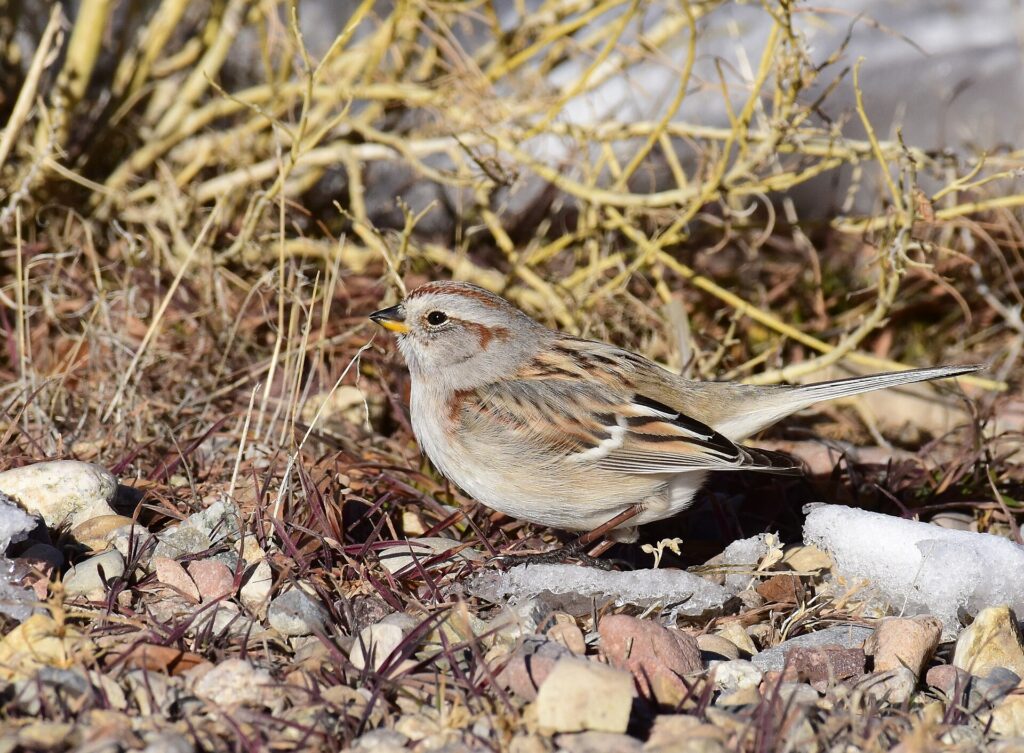
- Rusty cap, rusty line behind the eye, plain gray breast with a dark center spot, two-tone bill: American tree sparrow (northern states in winter).
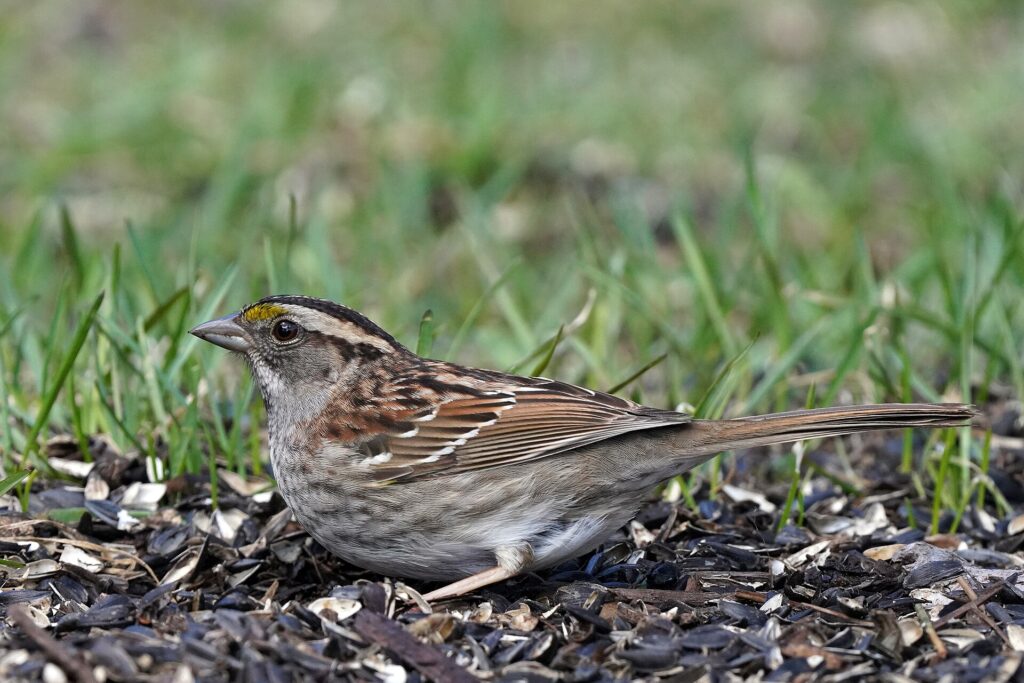
- Black-and-white (or tan) head stripes, bright white throat, yellow spot between eye and bill: white-throated sparrow (East, South and California).
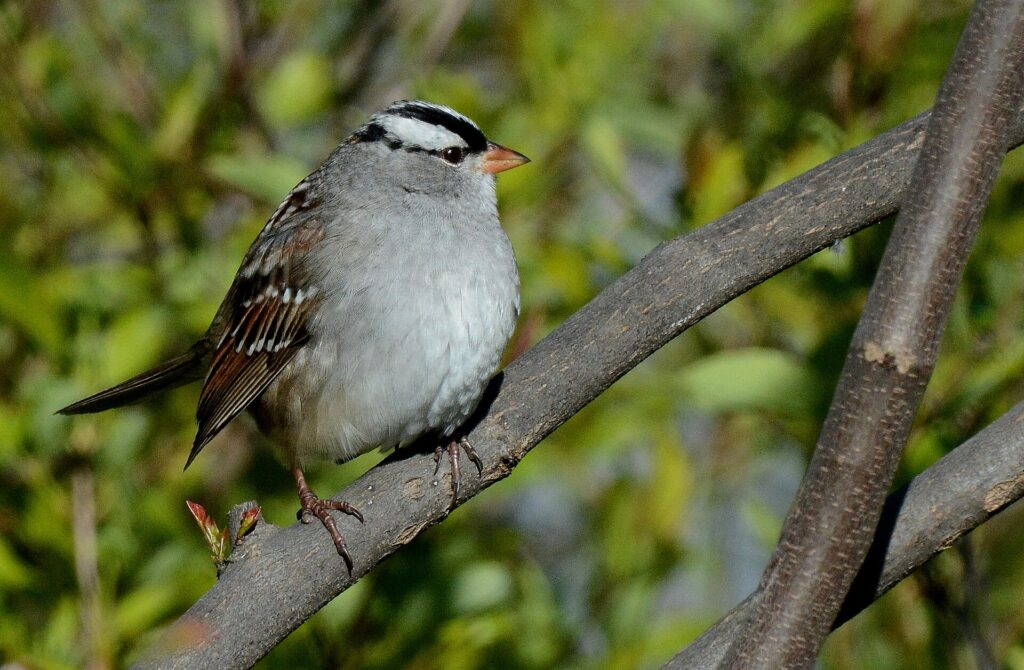
- Bold black-and-white crown, gray throat and breast, pink, orange or yellow bill: white-crowned sparrow (much of the U.S.).
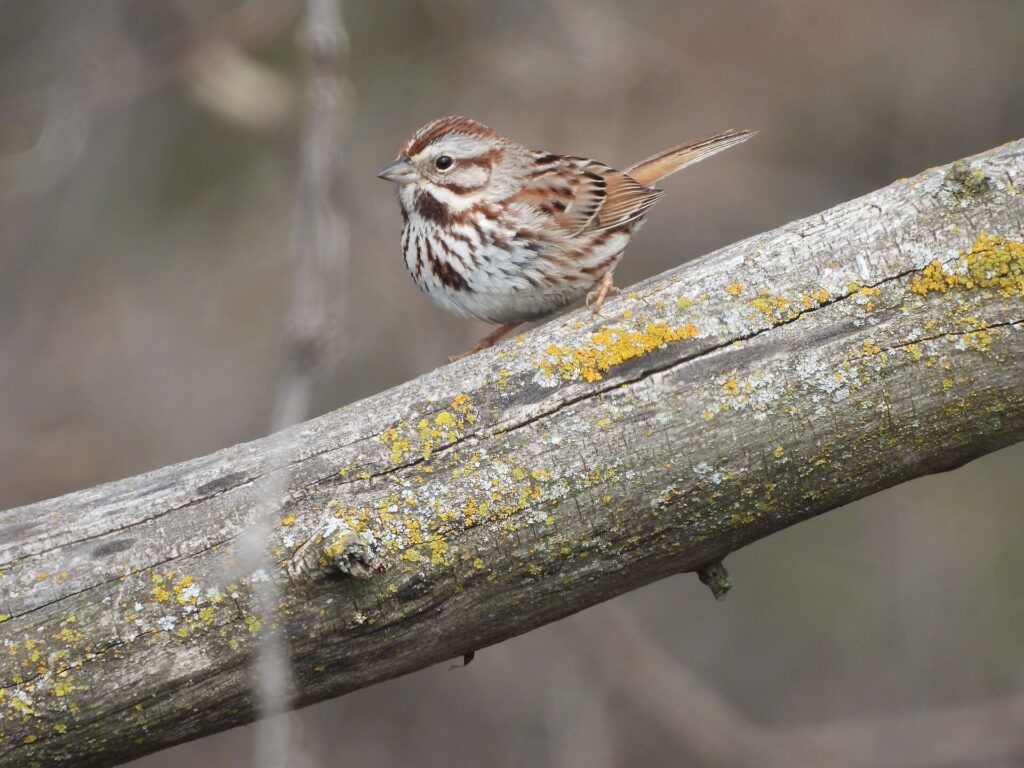
- Thick brown streaks that merge into a center spot, tail pumps in flight: song sparrow.
- Larger, rusty or dark brown, heavy blotches on the chest, kicking up leaves: fox sparrow.
- Slim, small, dark line through the eye, plain belly: chipping sparrow (mostly the southern states in winter).
American tree sparrow: the rusty cap of the North
If you live in the northern half of the country and a rusty-capped sparrow shows up when the snow does, this is your bird. Cornell Lab’s All About Birds says American tree sparrows breed in the far north and spend the winter in southern Canada and the northern United States, so most people only ever see them between late fall and early spring.
Look for a rusty crown, a rusty (not black) line behind the eye on a gray face, a bicolored bill, a white wing bar, and a smooth gray to buff breast with no streaks. Many have a dark spot in the middle of the breast. It’s about the size of a house sparrow, at roughly 5.5 inches long, and often looks round and fluffed up in the cold. Tree sparrows forage on the ground in small flocks, and Cornell says they “readily visit backyards, especially if there’s a seed feeder.”
Don’t confuse it with: a chipping sparrow, which also has a rusty cap in summer. In winter the chipping sparrow’s cap turns brownish, but its eyeline stays dark, its belly is plain with no center spot, and Cornell says northern chipping sparrows head south for the winter, to Florida, Baja California and Mexico. A rusty-capped sparrow in a snowy northern yard in January is most likely a tree sparrow.
White-throated sparrow: the white throat and yellow spot
Across the East, the South and California, this is a sparrow to expect under your feeder in winter. It breeds mostly across Canada, and Cornell says white-throats are “familiar winter birds across most of eastern and southern North America and California.”
The giveaways are a bright white throat outlined by a thin black whisker stripe and a yellow spot between the eye and the grayish bill. The head has bold stripes, and they come in two forms: white-striped birds have crisp black-and-white stripes, while tan-striped birds have brown and buff stripes and look duller. Cornell notes the two forms almost always pair with the opposite form. The breast is gray, and the bird is a bit bigger than a song sparrow, about 6.3 to 7.1 inches long.
White-throated sparrows stay close to the ground and cover, scratching through leaves with a two-footed hop. They readily take millet and sunflower seed, either at feeders or on the ground beneath them. They also sing in winter: a thin, wavering whistle that Cornell renders as Oh-sweet-Canada-Canada.
White-crowned sparrow: the crisp gray one
Cornell says white-crowned sparrows spend the winter across much of North America, and for much of the U.S. winter is when you’re most likely to see one. In parts of the West, along the coast and in the mountains, some populations live there year-round.
Adults have bold black-and-white head stripes, a pale pink, orange or yellow bill, and what Cornell calls a “crisp gray breast.” They’re slightly larger than a song sparrow, about 5.9 to 6.3 inches, with a long tail. Young birds in their first winter are easy to miss: they have rusty-brown and gray head stripes instead of black and white, but the same plain gray breast and pale bill.
They usually stay low, hopping on the ground at the edge of brushy cover, and Cornell suggests you can “coax them into the open with backyard feeders.”
White-throated or white-crowned? Check the throat and the bill. A white-throated sparrow has a sharply outlined white throat, a yellow spot in front of the eye and a gray bill. A white-crowned sparrow has a gray throat that blends into the gray breast, no yellow spot, and a pink, orange or yellow bill.
Song sparrow: the streaky one with a center spot
Cornell describes the song sparrow as one of the most widespread and common sparrows in North America, and calls it a “resident to medium-distance migrant”: many stay put, while birds from the far north move to the southern U.S. and northern Mexico. If you only learn one streaked sparrow, learn this one.
The breast is white with thick brown streaks that “converge into a central spot.” The head has russet stripes, a grayish face and a broad dark mustache stripe. In flight, watch the long, rounded tail: it pumps downward on short, fluttering flights. Song sparrows vary a lot by region. Cornell notes coastal and northern birds tend to be darker and streakier, while southern and desert birds are paler. It sits between a chipping sparrow and a junco in size.
Song sparrows commonly visit feeders, and in winter they eat mostly seeds and fruit. Project FeederWatch notes they “will readily eat fallen seed” from the ground beneath feeders.
Fox sparrow: the big rusty leaf-kicker
Fox sparrows are big for sparrows: 5.9 to 7.5 inches long and larger than a junco. Cornell says many people see them in winter, when they move into backyard thickets and kick around under feeders. They use their strong legs to scratch away leaf litter, so listen for rustling under shrubs.
The red form, widespread across the northern forests where fox sparrows breed, is rusty above with a gray head and heavy rufous blotches on a pale breast. Western birds look different: the sooty form on the Pacific Coast is very dark brown, and the slate-colored form of the interior West mountains is gray above with brown spots. Whatever the form, look for a big, round sparrow with heavy splotches that bunch up in the middle of the chest. Song sparrows are smaller and slimmer, with finer streaks.
Chipping sparrow: the winter southerner
In summer the chipping sparrow is easy: a bright rusty cap, a black line through the eye and a clean gray belly. In winter it’s much plainer. Cornell describes the nonbreeding bird as having “more subdued colors, especially on the head,” with a brownish crown, a dark eyeline that stays, an unstreaked belly and a pink bill instead of black.
Where you are matters. Cornell says chipping sparrows in the southern U.S. typically stay year-round, while northern breeders fly south to Florida, Baja California and Mexico. They’re small and slim, “slightly larger than a chickadee” and shorter-tailed than a song sparrow, and they feed on the ground near trees and shrubs.
Two lookalikes: the junco and the house sparrow
Dark-eyed junco. Cornell calls the junco a “medium-sized sparrow,” even though it doesn’t look like the brown ones. It’s gray or brown with a pink bill, and it flashes white outer tail feathers when it flies. Cornell says juncos spread across the rest of North America for winter and feed on the ground with the other sparrows. Our dark-eyed junco guide covers the regional forms.
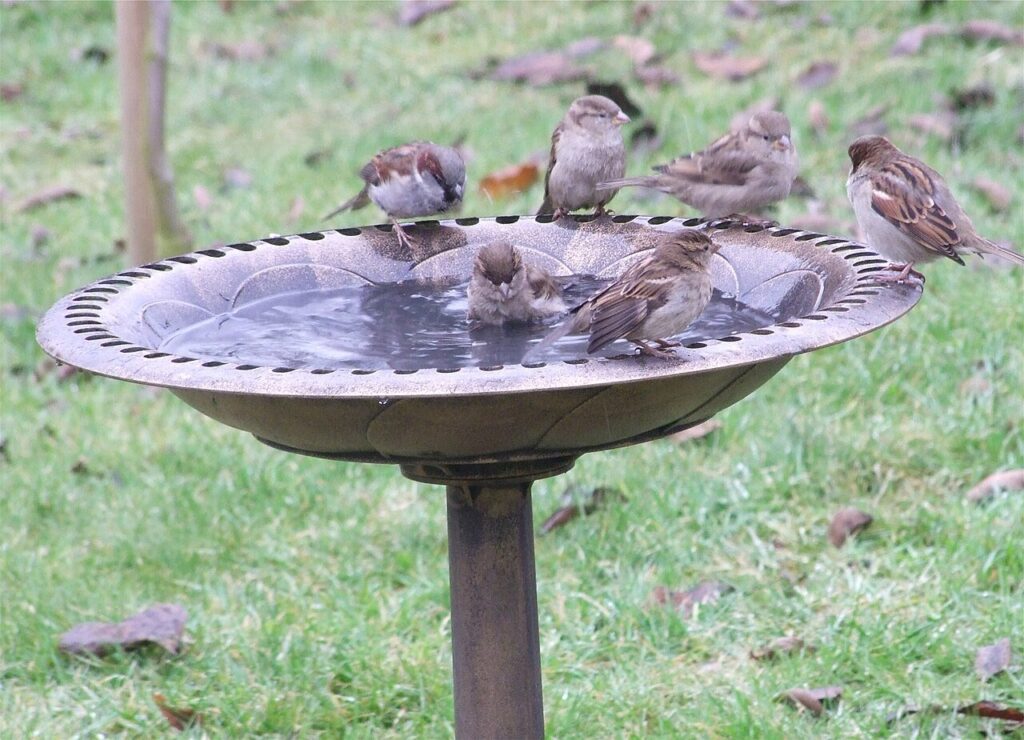
House sparrow. A common “sparrow” at many feeders isn’t one of ours. Cornell says house sparrows aren’t related to other North American sparrows. They’re stockier, with a bigger, rounder head, a shorter tail and a heavier bill. Males have a gray crown, white cheeks, a black bib and chestnut on the neck. Females are plain buffy-brown with dingy gray-brown underparts and no bold markings, which is what can get them mistaken for a native sparrow.
Winter sparrows side by side
| Bird | Where in winter | Length | Head | Breast | Bill |
|---|---|---|---|---|---|
| American tree sparrow | Northern U.S. and southern Canada | about 5.5 in | Rusty cap, rusty eyeline, gray face | Plain, dark center spot | Two-tone |
| White-throated sparrow | East, South, California | 6.3–7.1 in | Black-and-white or tan stripes; white throat; yellow spot | Gray, plain | Grayish |
| White-crowned sparrow | Much of the U.S. | 5.9–6.3 in | Black-and-white stripes (brown in young birds) | Crisp gray, plain | Pink, orange or yellow |
| Song sparrow | Most of the U.S. | 4.7–6.7 in | Russet stripes, broad mustache | Thick streaks into a center spot | Short, stout |
| Fox sparrow | Varies by form | 5.9–7.5 in | Rusty and gray (red form) | Heavy blotches, bunched in center | Yellowish to gray |
| Chipping sparrow | Southern states | 4.7–5.9 in | Brownish cap, dark eyeline | Plain | Pink in winter |
| Dark-eyed junco | Most of the U.S. | 5.5–6.3 in | Gray or dark hood | Plain gray or white belly | Pink |
Want a printable version to keep by the window? Our free backyard bird ID chart sorts common feeder birds by color, and the free backyard bird life list gives you a place to check off each sparrow as it shows up. Both are free to download, no signup.
How to bring more sparrows to your yard
Most winter sparrows are ground feeders, so meet them there.
- Offer millet low. Project FeederWatch calls millet “a favored food of many smaller, ground foraging birds,” naming juncos and sparrows, and suggests sprinkling a handful on the ground. It’s also in most seed mixes; our bird seed guide lists blends that include it.
- Use a low platform. FeederWatch says a platform feeder near the ground is “most likely to attract juncos, doves, and sparrows.” Pick one with drainage holes, and a roof helps keep seed dry. See our platform feeder picks.
- Keep cover nearby. Tree, white-crowned and fox sparrows all stay close to shrubs, thickets and brush. A brush pile or a hedge a short dash from the feeding area gives them a quick place to hide.
- Don’t rake every leaf. White-throated and fox sparrows find food by scratching through leaf litter, so a leafy bed under shrubs gives them a reason to stay.
- Keep it going all winter. Sunflower in a sturdy feeder brings the white-throats and song sparrows up off the ground; our winter feeder guide covers feeders that hold up to snow.
Common questions
What is the little brown bird with a rusty cap at my feeder in winter? In the northern states, most likely an American tree sparrow: look for the rusty line behind the eye and the dark spot on a plain breast. In the South, it’s more likely a chipping sparrow in its duller winter plumage.
What sparrow has a white throat and yellow by the eye? The white-throated sparrow. The yellow spot sits between the eye and the bill.
What sparrow has a streaked breast with a dark spot in the middle? The song sparrow. American tree sparrows also have a center spot, but their breast is plain gray with no streaks.
Are house sparrows real sparrows? Not in the American sense. Cornell says they aren’t related to North American sparrows.
Why do sparrows feed on the ground instead of the feeder? Most native sparrows are ground foragers. FeederWatch notes song and fox sparrows readily eat seed fallen beneath feeders, so scatter some millet or use a low platform.
For winter birds that aren’t sparrows, see winter backyard birds by region and our roundup of 18 common gray birds.
Bottom line
Start with the head and the breast. A rusty cap over a plain breast with a center dot is a tree sparrow. A white throat and yellow spot is a white-throated sparrow; bold stripes over a clean gray throat and a pink or yellow bill is a white-crowned sparrow. Streaks that run into a center spot mean song sparrow, and big, rusty and blotchy means fox sparrow. Sprinkle some millet near a shrub, leave a few leaves, and you’ll likely see several of them in the same morning.